The train: an alternative to flying
 By Maxime
I was a guest on the SNCB podcast to discuss the train as an alternative to flying: cost, journey time, the last kilometre and slow travel. Here are my thoughts, and the episode to listen to.
A few weeks ago, the SNCB invited me onto its podcast Bienvenue à bord to discuss a topic that’s been close to my heart ever since Wildhartt began: the train as a genuine alternative to flying. I was joined by Tom Guillaume, the SNCB’s spokesperson. We spoke frankly about cost, journey times, the obstacles, and what’s currently changing. I’ve put the episode right here for you , you can listen to it on the train, of course.
Why I believe in trains
Wildhartt was born from a simple idea: there’s a world of things to do right on our doorstep. And for us, that doorstep is our little corner of Europe , Belgium, the Netherlands, France, and a little beyond. You don’t need to travel halfway round the world to have an adventure that matters. And if the destination is nearby, then the question of ‘how do we get there’ becomes obvious.
That’s why, for every expedition, we explain how to get there by train. We do our very best to ensure our adventures start from a station: you’ll meet your guide on the platform. This isn’t just a detail. It’s a way of telling our travellers that the train isn’t just a chore before the holiday , it’s already part of the journey.

Photo: Unsplash
‘Trains are expensive and take ages’ – really?
That’s the phrase we hear most often. And honestly, it’s sometimes true. But less and less so.
On the subject of price, Tom said something I think is important: if flying is so cheap, it’s partly because kerosene is neither taxed nor subject to VAT, whereas the electricity that powers trains is. A €19 ticket to the other end of Europe is tempting , but that price hides part of the cost: the environment, and often low-cost models where working conditions aren’t always what you’d expect. When you pay for a train ticket, you’re also paying for the infrastructure, the stations, the rolling stock, and the people who keep it all running. That’s the fair price for a journey across a continent.
Over time, the price gap narrows quickly. The train to Paris isn’t just the Eurostar: there’s now Ouigo, which connects Brussels to Paris in around three hours, at an affordable price. There’s also the Brussels–Amsterdam route. And, most importantly, you arrive right in the city centre. No need to factor in a 40-minute shuttle bus journey from some remote airport. When you add it all up, the train becomes a viable option far more often than you might think.
What’s changing
The figure that struck me in this episode: from Brussels-Midi station, there are already more than 3,600 destinations within six hours, with at most one change. The SNCB’s ambition is to reach 8,000 destinations by 2032. And passengers are following suit: in 2024, Belgium recorded 18 million international passengers, a significant increase.
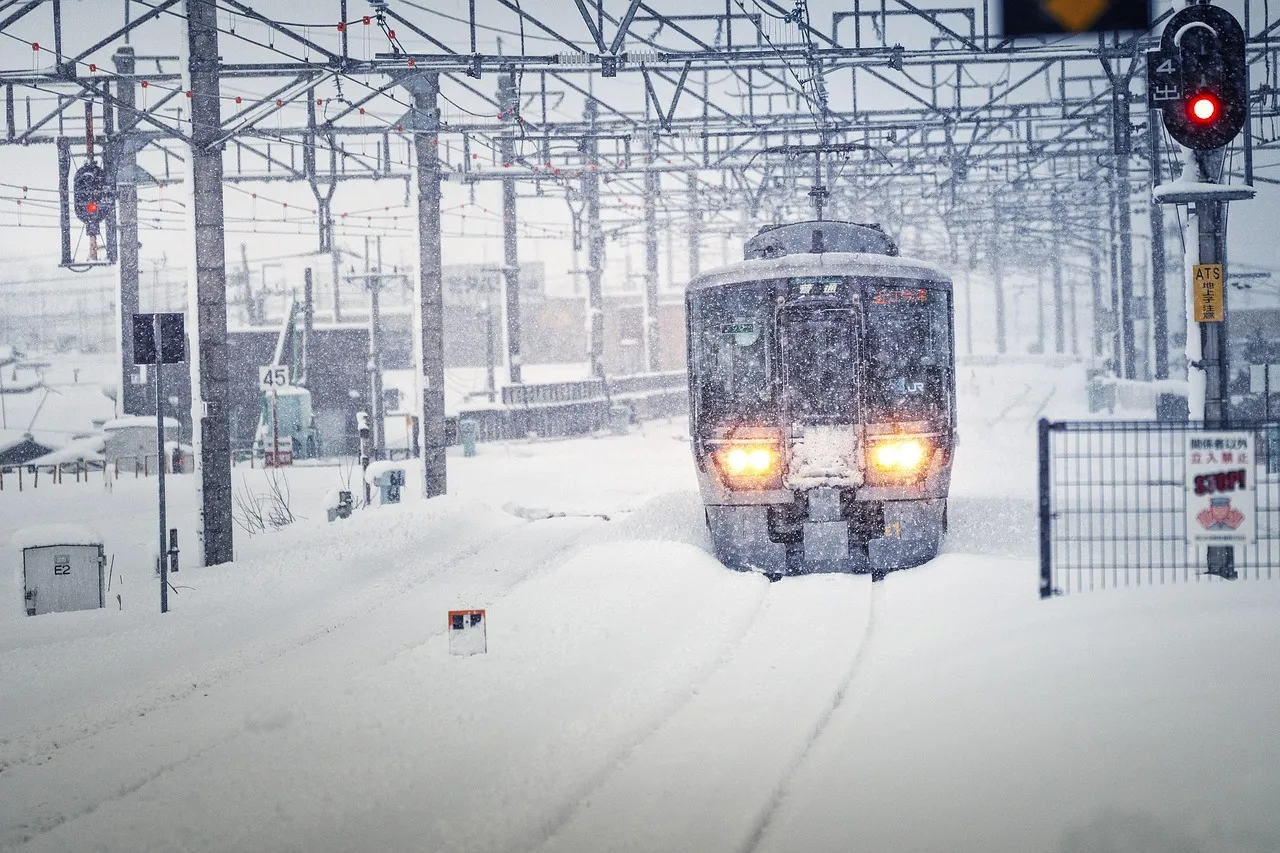
Routes are reopening, and night trains are once again connecting European capitals. It’s clear that the train is replacing what Tom calls ‘short hops’: those short flights, taking less than five hours by train, that people used to take on autopilot and for which there’s actually no reason to fly.
The real headache: the last kilometre
Where many people get stuck isn’t the main journey: it’s the last kilometre. Between the arrival station and the actual starting point of the adventure – often in the middle of nowhere – how do you get there?
At Wildhartt, we have a simple solution: the guide, who lives locally, picks you up from the station and takes you to the starting point. This solves the problem without needing a private car, and gets the adventure off to a good start with a friendly meet-up rather than logistical stress. When that’s not possible, we’ll help you out: carpooling, cycling, walking , we’ll show you the options in practical terms. Because most of the time, those daunting final few kilometres are much easier to sort out than you might think.
Travelling by train, in practice, with Wildhartt
Here are a few real-life examples of what we offer when it comes to rail travel:
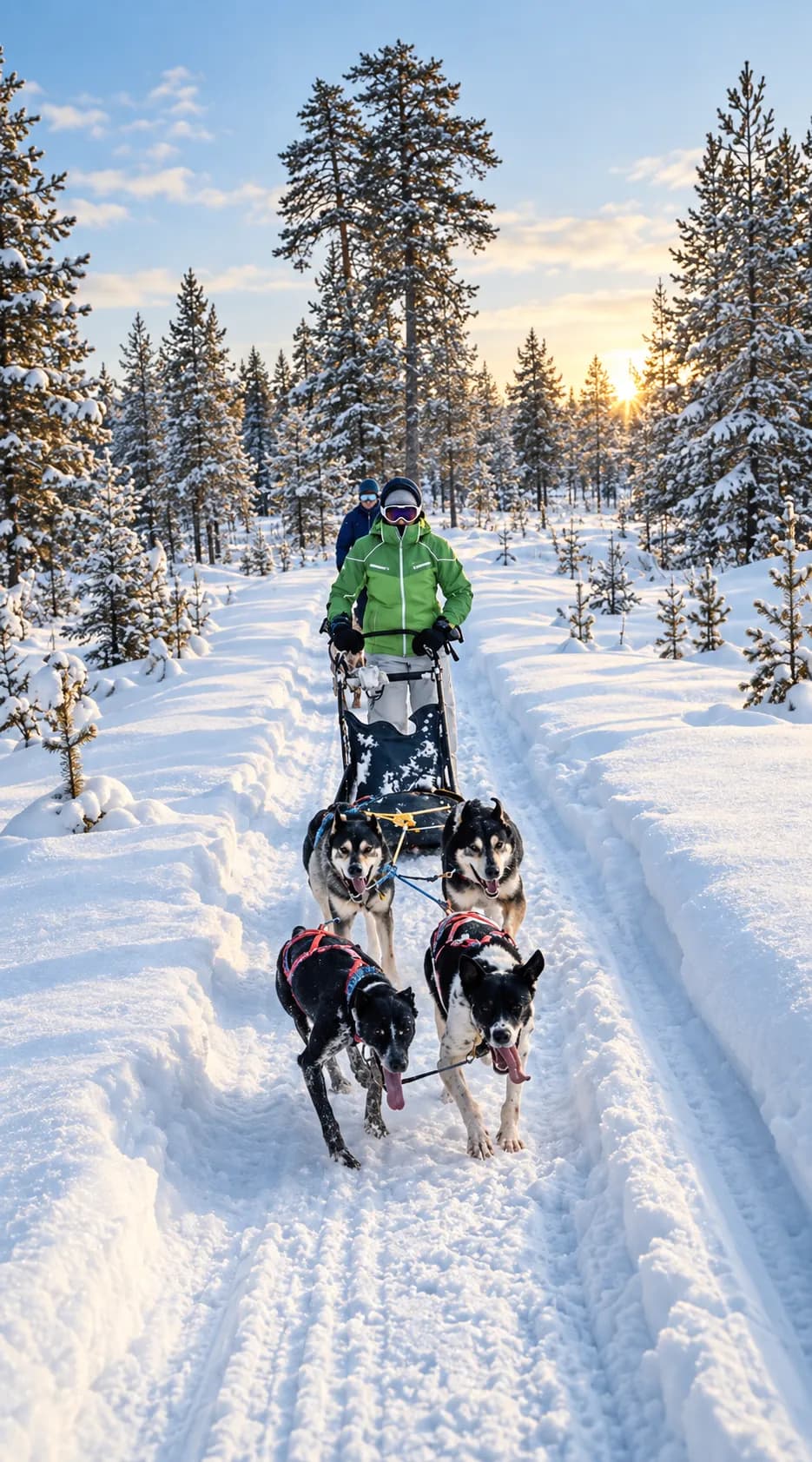
- Lapland by train. We’ve partnered with Real Trip Travel, a company specialising exclusively in rail travel. They organise the entire train journey up there, and our guides take over once you arrive for around ten days of activities , dog sledding, snowshoeing.
- From station to station, by bike. We’ve got a three-day trip starting from Liège that follows the Vennbahn – a former railway line turned cycle path – through the Hautes Fagnes, with Kenneth, our local guide. You set off from a station, explore by bike, and return by train. That’s what intermodality is all about: combining sustainable modes of transport rather than relying on the car.
- The Kungsleden. This winter, two families set off by train to tackle the ‘Royal Trail’ in Swedish Lapland on snowshoes. It’s not yet the majority of our travellers , but it shows that it’s possible, and that it makes sense.
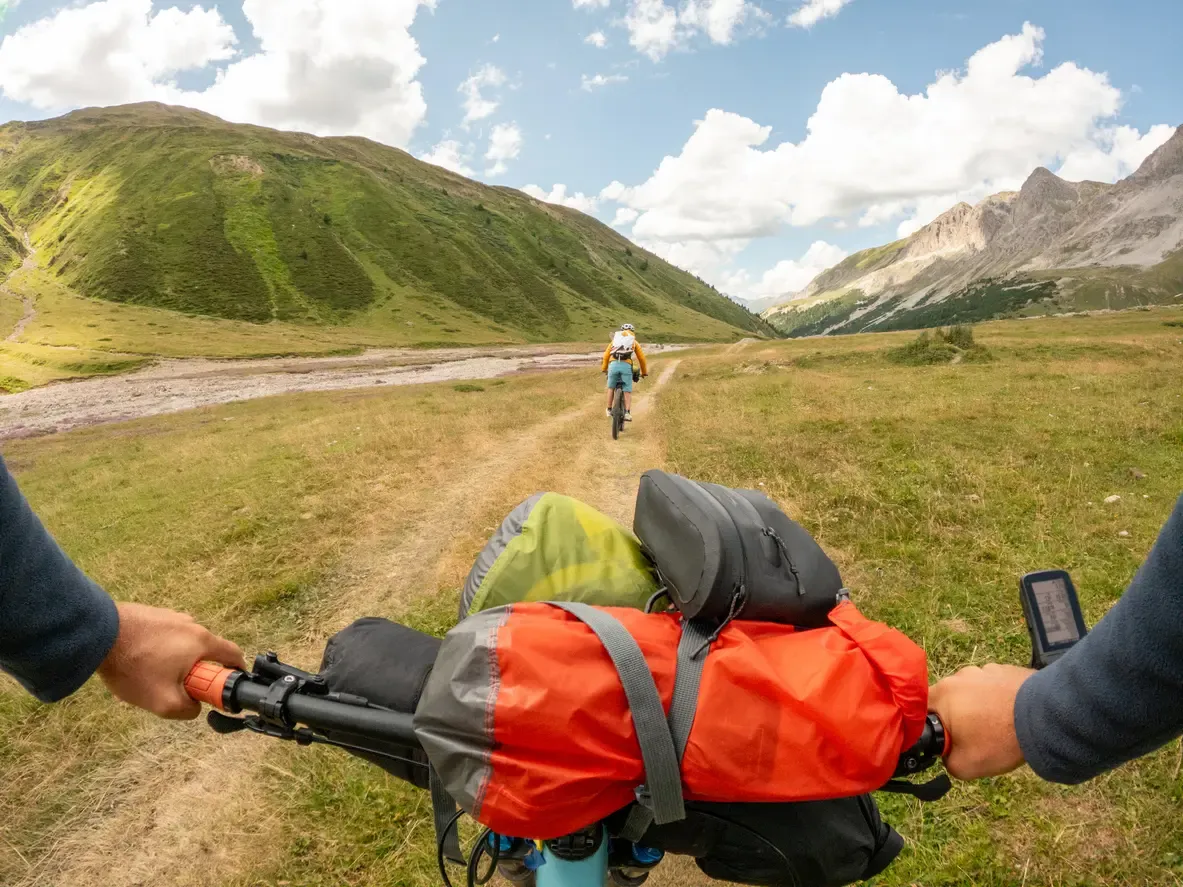
And for every expedition, we calculate and display the trip’s carbon footprint. Not to lecture anyone: but so that everyone can make an informed choice, knowing the facts.
It’s not just about transport
For me, slow travel boils down to one thing: putting the experience back at the centre, rather than the destination. A ‘traditional’ holiday involves travelling far away only to end up doing nothing more than lazing about on a beach. What we advocate is the opposite: going out to enjoy an activity, an adventure , and being able to do so just a stone’s throw from home.
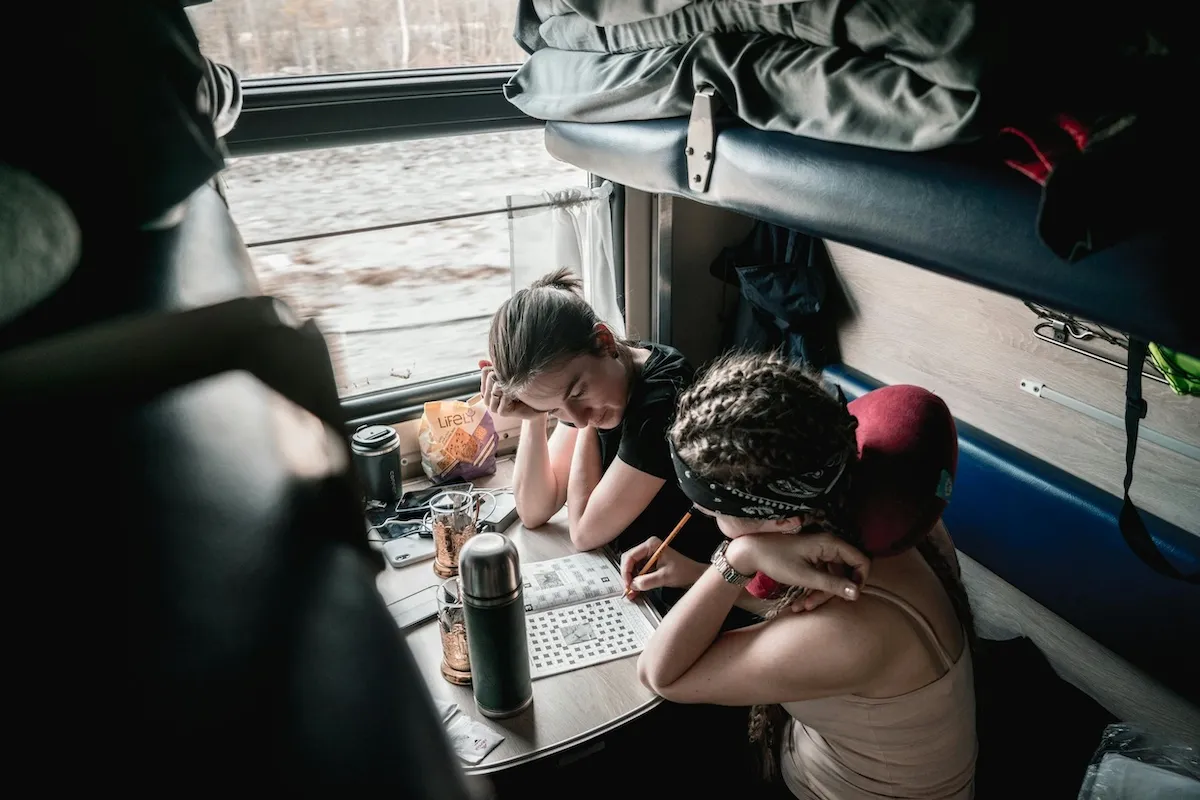
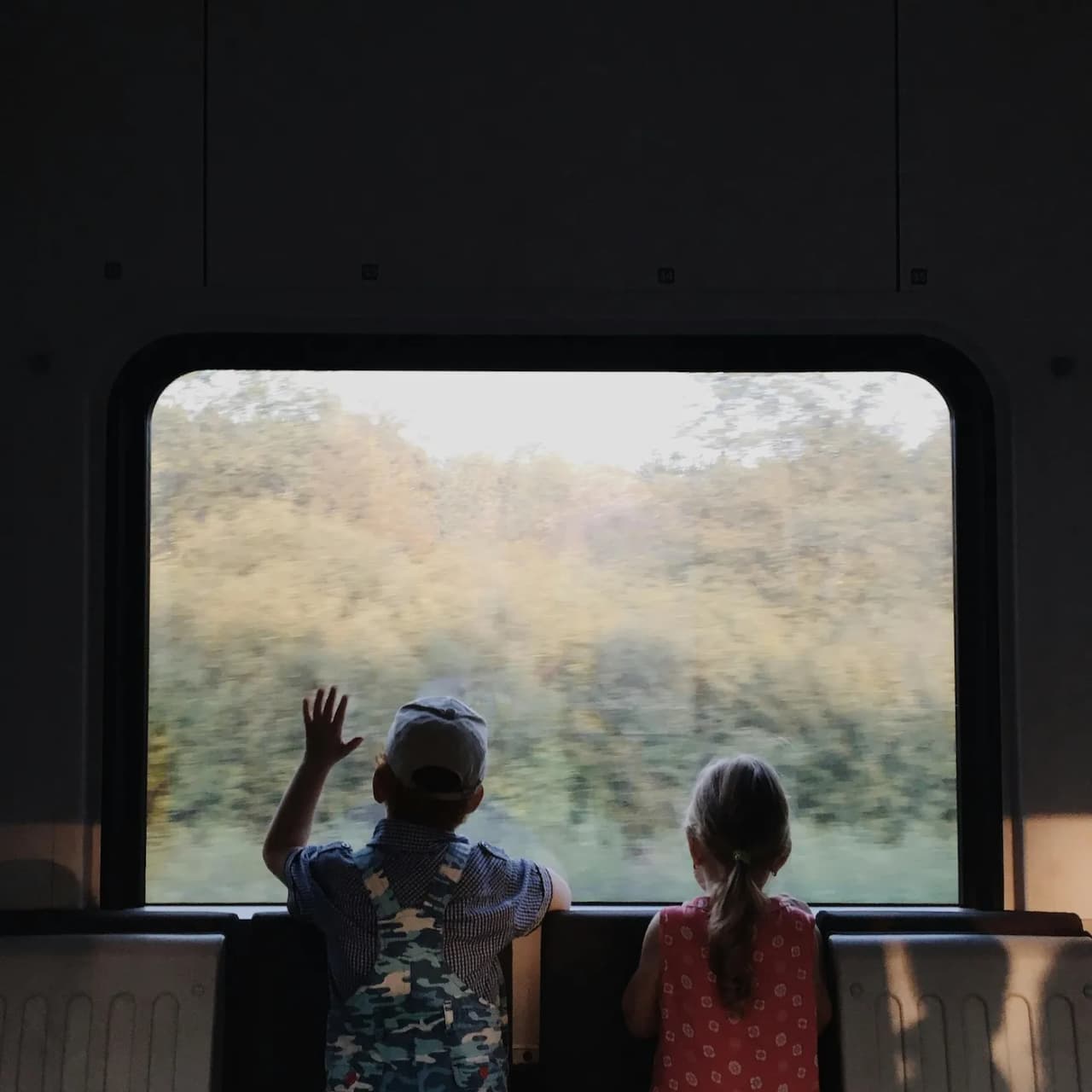
The train fits perfectly into this. It doesn’t shorten the journey; it extends it in the best possible way: you watch the scenery roll by, you read, you chat, and you already feel a bit like you’re somewhere else. And I can see around me that attitudes are changing for good , some companies are offering extra days off to those who choose not to fly, whilst others are turning team-building events into train journeys simply as a matter of common sense.
Doing business responsibly isn’t about offsetting your negative externalities once they’ve already occurred. It’s about measuring them, controlling them and reducing them as much as possible. For us, the train is one of the most practical ways of doing just that.
So next time you’re planning an adventure, ask yourself first: is there a train? There probably is. And have a good journey , or, as we say in the podcast, may the rails carry you.
, Maxime Mertens - cofounder Wildhartt

Find your next adventure
Browse curated expeditions matching the categories of this article and start planning your next trip.
Find your dream adventure
 Find your dream adventure
You might also like these adventures …
Hand-picked to echo the spirit of this article.




More to discover
Keep exploring with these pages and stories picked for you.
Train travel: the eco-friendly way to explore Europe
Discover how to travel across Europe by train with ease. Tips, eco-friendly routes, and Wildhartt adventures designed for low-impact exploration.
Good train deals: 7 platforms I recommend
Discover our top tips for budget-friendly train travel in Europe. Access exclusive rail deals, smart itineraries and money-saving advice for every journey.

Is rail travel the way of the future?
Tomorrow's journeys will undoubtedly be made mainly by train. What are the future challenges for rail transport?
Creating and organising a low-carbon trip: our case study
What is low-carbon travel and what are the main emitters of travel? Here's our case study for more responsible travel.
5 tools for low-carbon travel
Tourism has contributed to global warming. However, there are tools available to help you travel more responsibly.
Travelling close to home: what for?
Travelling close to home saves you time on the ground, reduces your carbon footprint and boosts the local economy.
