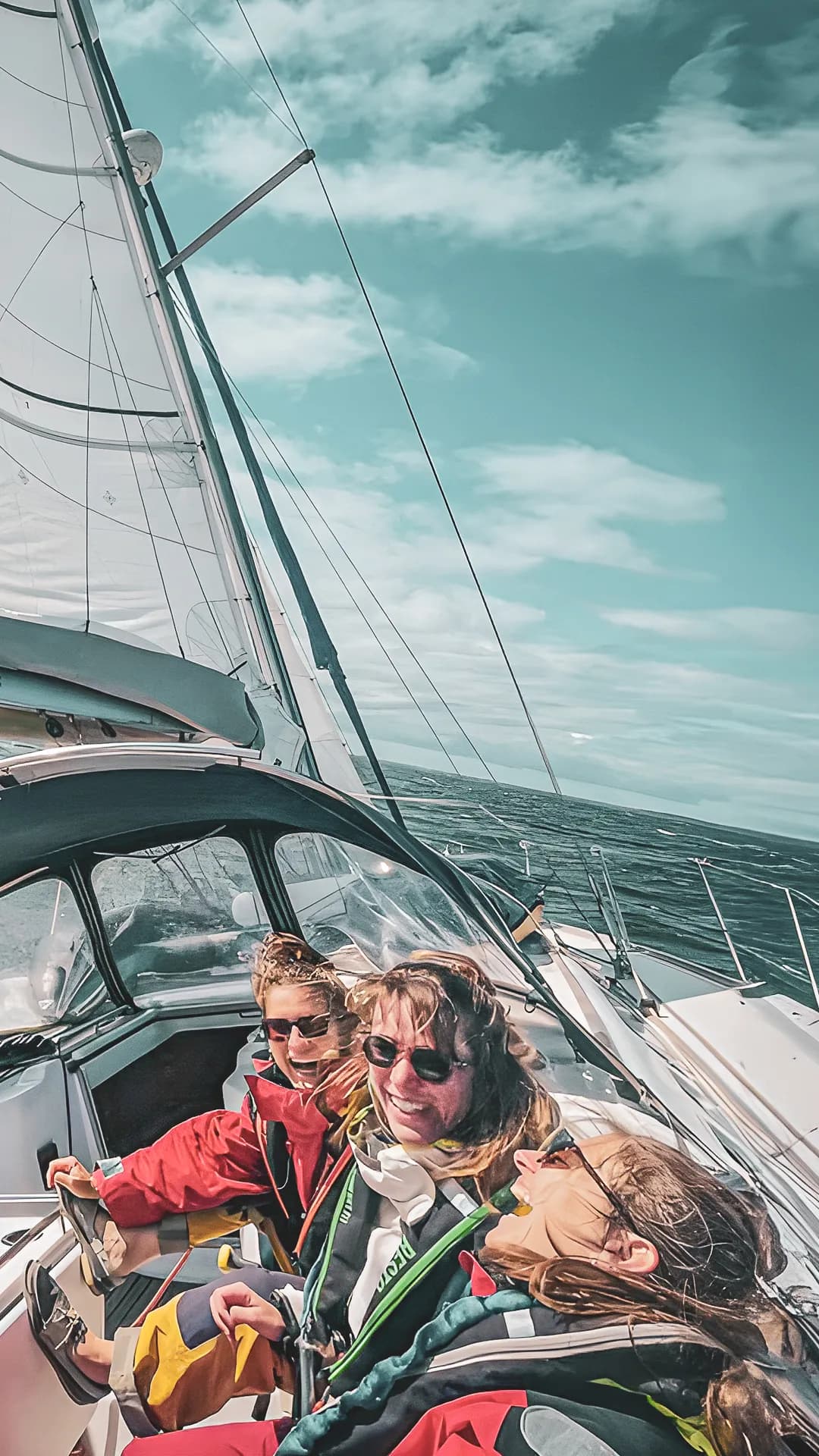
Beginner Sailing Course: Weekend or Full Week, How to Choose
 By Maxime
A beginner sailing course can last a weekend or a full week. See the real differences, the level required and the budget before you book.
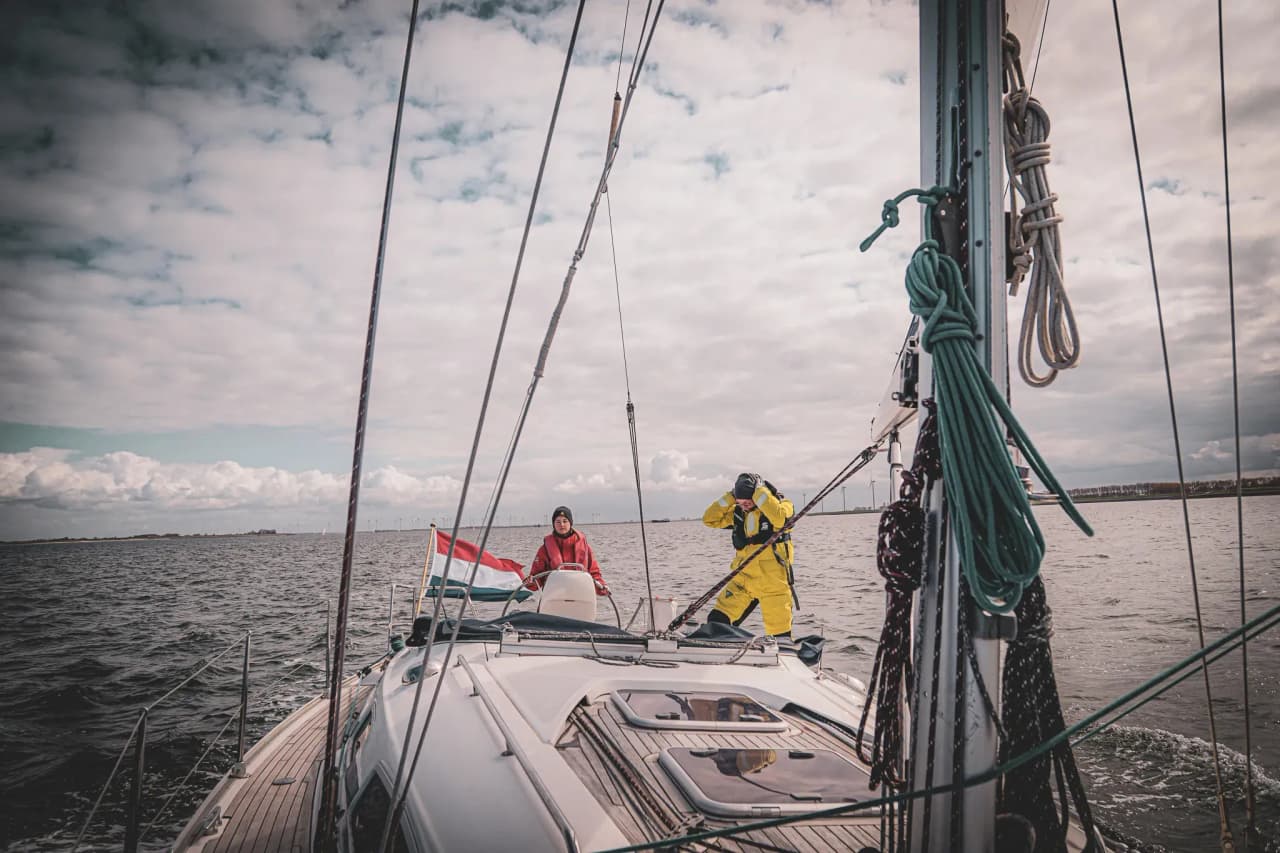
A beginner sailing course can mean two very different things: a weekend of discovery on calm water, or a full week at sea where you actually take part in the decisions. Both are good starting points, but they don't answer the same question. If you've never sailed before and you're hesitating between the two, here's how to choose based on your time, your budget, and what you actually want to walk away knowing how to do.
Weekend or week: the real difference between the two course formats
In a weekend, you learn the basic moves on calm water, guided the whole time by a skipper. It takes a full week to start making your own decisions at sea: reading a chart, watching the weather, handling a night watch.
It's not about which format is "better", it's about what you're looking for. A weekend is enough to find out whether sailing is really for you, without a big commitment of time or money. A week gives you real progression, with enough days at sea for the movements to become second nature.
| Format | Duration | What you learn | Indicative budget |
|---|---|---|---|
| Discovery weekend | 2 to 3 days | Steering, trimming sails, tacking, life on board | Around €350 to €400 |
| Week-long course | 6 to 7 days | Offshore navigation, watches, reading the weather, autonomy | Around €900 to €950 |
Both formats really exist at Wildhartt: a weekend in Zeeland to discover sailing, a week in the Balearics to progress. Details on both below.
Are you at the right level to start without ever having sailed?
Good news: never having sailed before is not a problem for a beginner course. The real question isn't your experience, it's your relationship with water and boats.
You're at the right level for a discovery weekend if you're comfortable with a gentle activity on the water, you can spend several hours on a boat and live aboard for two days, and you're not particularly prone to seasickness. That's it. Everything else, steering, sail trimming, reading currents, is learned on the spot.
For a full week, you also need to be comfortable with more variable conditions, simpler comfort (limited space, irregular routine) and the idea of sleeping several nights on board. It's a step up, not a different world.
What you actually learn in a weekend introduction
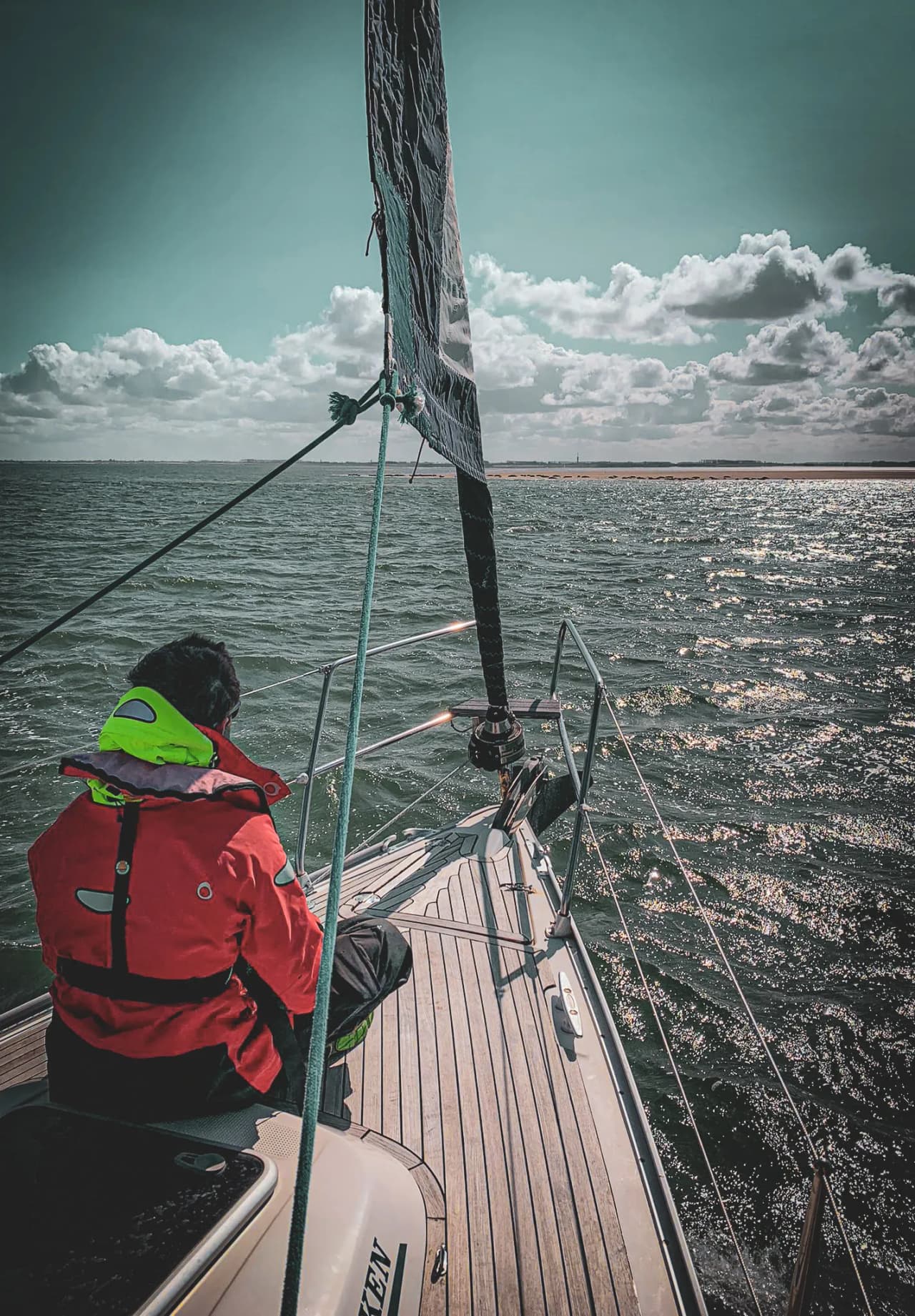
Take the example of a weekend in Zeeland, in the calm Oosterschelde estuary. On the first evening, you board the boat, get your bearings, and have dinner together. The next day starts with a full safety briefing, then you take an active part: trimming sails, steering a course, tacking, reading the beacons.
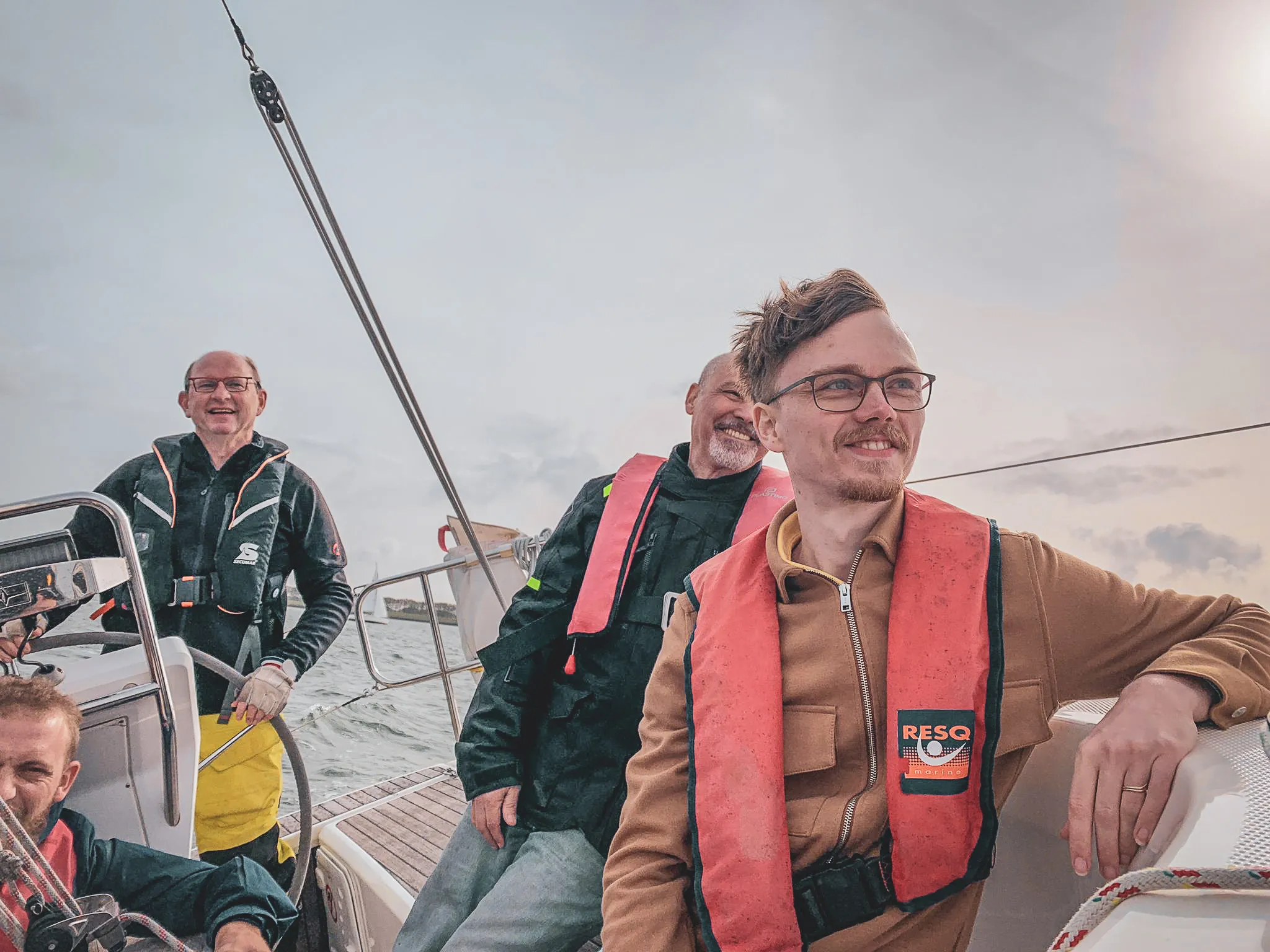
On the last day, you adapt your departure to the tide times, choose the passages together with the crew, and finish with a real understanding of sailing in tidal waters, not just a memory of a nice boat ride. The course runs in a small group (5 to 6 people), guided by one skipper from start to finish.
Raphaelle, who did this weekend in Zeeland, sums up the spirit well: "We had an excellent weekend in Zeeland with Tom, our skipper! Learning to sail with no pressure and in a great mood. Would do it again!"
And if you want to go further: a week to really decide at sea
A week, like the one organised between Mallorca and Menorca in the Balearics, changes the nature of the learning. The first days are spent getting to grips with the boat: steering, sail trimming, basic manoeuvres. Then comes the real shift: a crossing between the two islands where everyone takes part in steering, reads the chart and watches the weather.
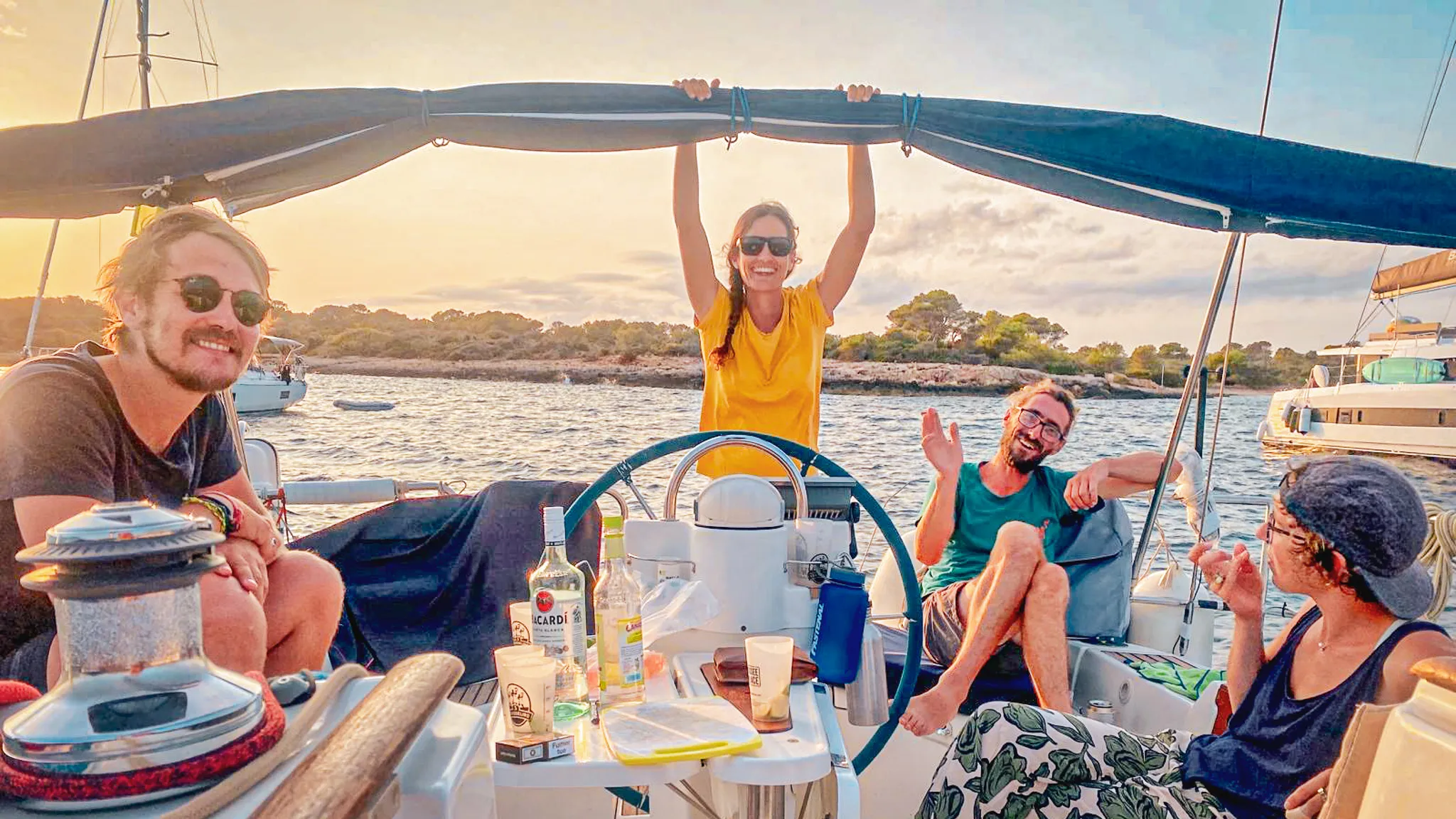
Over the whole week, the programme adapts to the level and preferences of the group: coastal sailing along the Serra de Tramuntana, anchoring in coves you can't reach by road, then a real debrief of the skills practised at the end of the trip.
Anne, a past participant, says: "An extraordinary trip, and I always felt safe thanks to our guide, who really impressed me!"
How much does a beginner sailing course cost, and what's actually included
On the market, prices for a sailing course roughly range from €250 for a short introduction to over €800 for a full week, depending on the destination and type of boat. What really varies is what's actually included.
For the weekend in Zeeland (€380), guiding by a skipper, two nights aboard a liveaboard sailing yacht and safety equipment are included. Transport to the port and meals (managed through a shared kitty of around €25/day) are your own responsibility.
For the week in the Balearics (€920), same logic: guiding, accommodation on board for 6 nights, and even a paddleboard and kayak are included. Transport and meals (a shared kitty of around €140 for the week) stay outside the listed price.
In both cases, the shared kitty isn't a hidden cost, it's simply the fairest way to split food and fuel across the whole crew.
Basic sailing vocabulary to know before you go
You don't need to know a single word of sailing vocabulary before a beginner course, the skipper explains everything on the spot. But a few words will help you follow what's happening around you faster:
- Port / starboard: the left and right of the boat when you're facing the bow.
- The helm: the boat's steering wheel. Taking it means feeling the boat come alive under your hands.
- Mainsail and genoa: the two main sails, the boat's engine.
- Sheet: the line used to trim a sail, on board nobody ever calls it a "rope".
- Sheet in / ease: pulling a sail closer to the boat's centreline, or letting it out.
- Tacking: the manoeuvre to change direction by turning through the wind.
- Heeling: the boat leaning over under the push of the wind. Impressive at first, quickly exhilarating.
- Anchorage: where the boat drops anchor for the night, often a sheltered cove.
This vocabulary comes straight from the currents and tides you'll meet in Zeeland or the Mediterranean. If you want to check tide times before you go, the French SHOM publishes official forecasts for all French coasts.
Our sailing trips to get started or to progress
If you want to see dates and availability straight away, the sailing weekend in Zeeland is still the gentlest way in to discover the discipline in a small group. Looking for something longer and more involved, with offshore sailing and a first night watch? The week in the Balearics isn't the only option: our island-hopping trips, from Brittany to Greece, cover other destinations once you've got the basics.
Looking for a comparison of destinations to learn sailing instead? We've already covered 3 destinations in Europe for that. And for some general tips before your first outing, our article on getting started with sailing is a good starting point.
Frequently asked questions about beginner sailing courses
Will I actually sail, or just watch the skipper do it?
You're a full participant from the very first departure: trimming sails, steering, tacking. The skipper guides you step by step and lets you take the helm as soon as conditions allow. Everyone progresses at their own pace, without pressure.
What's life like on board?
Simple and friendly. Meals are prepared together, chores are shared, and nights are spent in port or at anchor, in calm, sheltered spots.
Should I worry about seasickness?
Beginner courses deliberately take place in sheltered areas (estuaries, coves) with calm to moderate conditions. If you know you're prone to it, tell your skipper before you set off, they'll adapt the pace.

Find your next adventure
Browse curated expeditions matching the categories of this article and start planning your next trip.
Find your dream adventure
 Find your dream adventure
You might also like these adventures …
Hand-picked to echo the spirit of this article.
Learn to Sail in a Weekend in the Oosterschelde National Park

Sail the fjords of Tromsø in search of Orcas

Learn to sail between the Peloponnese and the Greek Islands