Canoeing the Dordogne: Routes, Rentals and Budget
 By Thibault
Canoeing the Dordogne: the best-known sections, where to rent a canoe or bivouac, the real budget, and the best time of year to go.
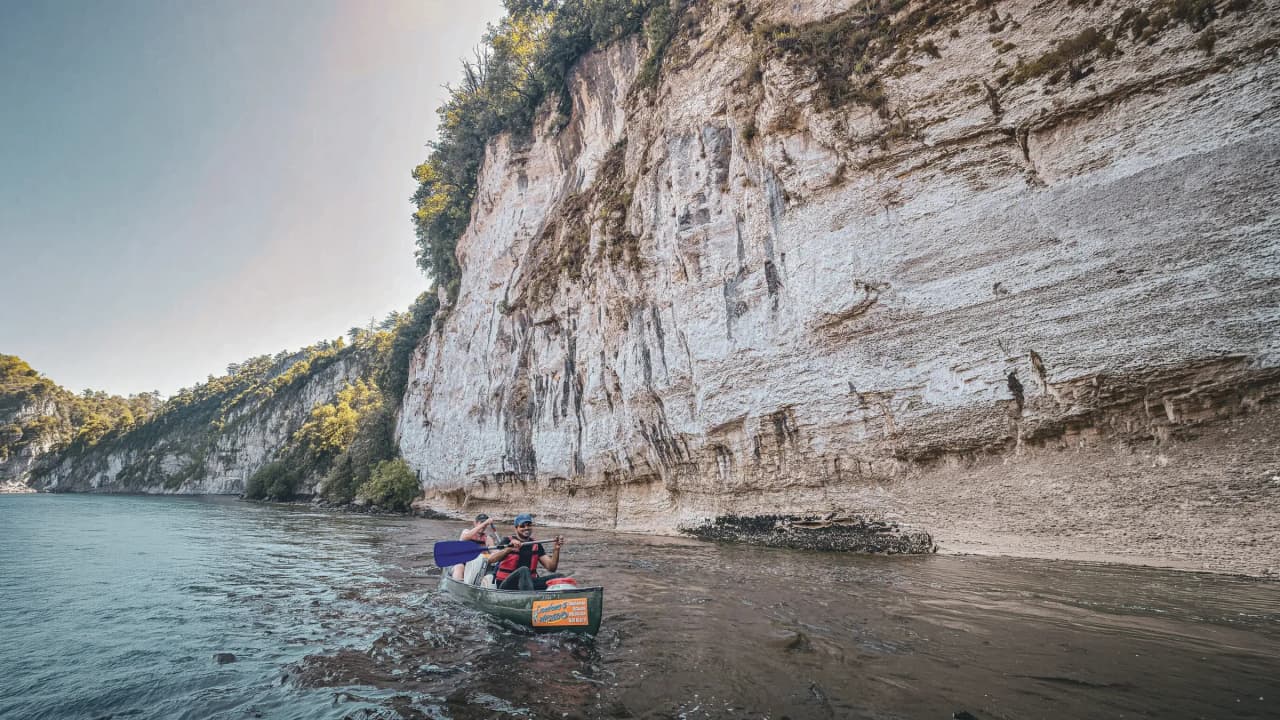
The Dordogne river is paddled by canoe from May to October, on stretches ranging from a two-hour rental to a full three-day self-supported or guided journey with bivouac nights. This guide covers the best-known sections, the right time to go, where to rent a canoe or sleep along the way, and a realistic budget whether you go it alone or with a guide.
Contents
- Three ways to explore the Dordogne by canoe
- The best-known sections
- When to go
- Renting a canoe on your own
- Where to sleep along the river
- Real budget: self-supported or guided
- Our 3-day self-supported route
Three ways to explore the Dordogne by canoe
The river works at three different levels of commitment. A short rental, two to five hours on a single stretch with a return shuttle included by the outfitter, is the simplest option for an afternoon. A self-organised multi-day trip, over two to four days, linking several stretches and sleeping in a bivouac or campsite along the water, gives more freedom but means handling all the logistics (gear, shuttle, bivouac) yourself. And a guided trip, where the route, bivouac and meals are taken care of, lets you experience the river over several days without planning it all.
The best-known sections
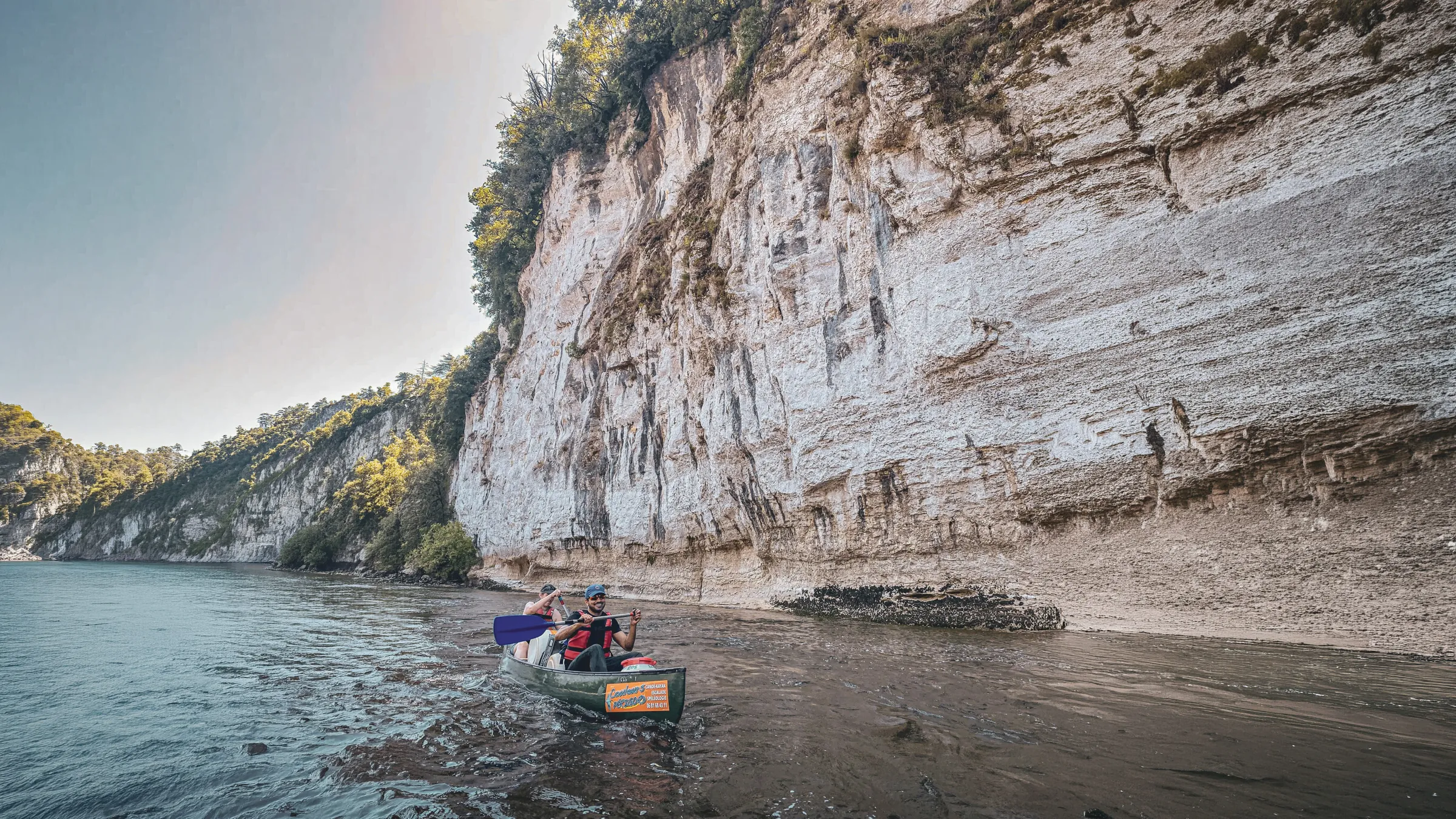
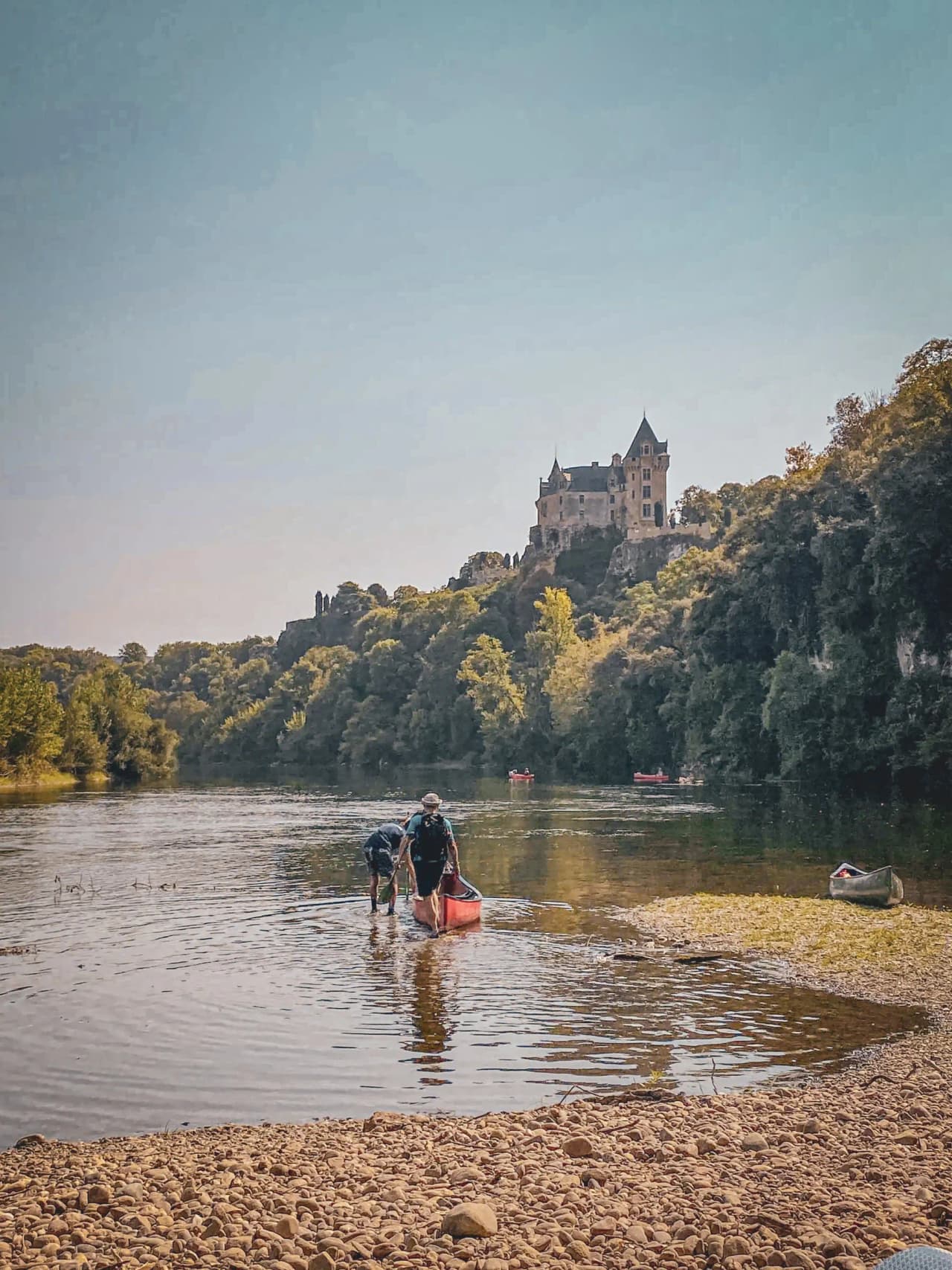
Between Souillac and Beynac, the Dordogne crosses its most iconic scenery: limestone cliffs, river bends known as "cingles", and villages perched above the water. The area around La Roque-Gageac, one of France's most beautiful villages, built into the cliff face with its own troglodyte fort, marks the shift toward castle country: Castelnaud-la-Chapelle, visible straight from the water, then Beynac-et-Cazenac, whose fortress towers over the river. Further upstream, the fortified village of Domme, perched on its own promontory, gives a view over the whole valley. These landmarks show up on almost every route, whether it lasts two hours or three days, only the length of the stretch changes.
When to go
The Dordogne is mostly paddled from May to October. Water levels are usually more comfortable early in the season, before the summer drop; July and August stay the busiest months, with more people on the water and in the villages. For a quieter trip, late spring or September often strike the best balance between good weather and a less crowded river.
Renting a canoe on your own
Plenty of outfitters are set up along the river, notably around Vitrac, La Roque-Gageac, Beynac and Carsac-Aillac, with offers ranging from an hourly rental to a full day. Most include safety gear (life jackets, paddles, waterproof containers) and a shuttle back to the start, which keeps a short outing simple. For a multi-day self-supported trip, though, you'll need to organise transporting your bivouac gear between stops yourself, or find an outfitter offering that specific format, less common than day rentals.
On safety, this stretch of the Dordogne stays a calm river with no dangerous rapids, manageable as soon as you can swim. A life jacket is always provided by outfitters and is strongly recommended even on the calmest sections, especially with kids on board.
Where to sleep along the river
A one-night bivouac is tolerated on the riverbanks under the same conditions as anywhere else in France, away from private property and protected areas, pitched late and taken down in the morning. Our full guide to bivouac in France covers the exact rules to know before setting up on a natural beach. Several proper campsites also line the valley if you'd rather have a more conventional option between two days of paddling.
Real budget: self-supported or guided
For a 3-day trip on the Dordogne, two approaches:
| Item | Guided trip (all-inclusive) | Self-supported |
|---|---|---|
| Guiding and logistics | Included | Not applicable |
| Canoe and safety gear | Included | 3-day rental: roughly €60 to €100 |
| Bivouac gear (tent, sleeping bag, mat) | Included | Rental or starter gear: roughly €50 to €150 |
| Meals (3 days) | Included | Roughly €30 to €50 (groceries and picnics) |
| Local transfers | Included | To organise yourself (shuttle, carpooling) |
| Estimated total | €410 | Roughly €140 to €300 depending on what you already own |
The "self-supported" figures are rough estimates, not Wildhartt pricing. The gap with a guided trip is real, but it's mostly explained by what self-supported travel doesn't easily replace: shuttle logistics between start and end points over several days, often the hardest part to organise yourself on a river this length.
Our 3-day self-supported route
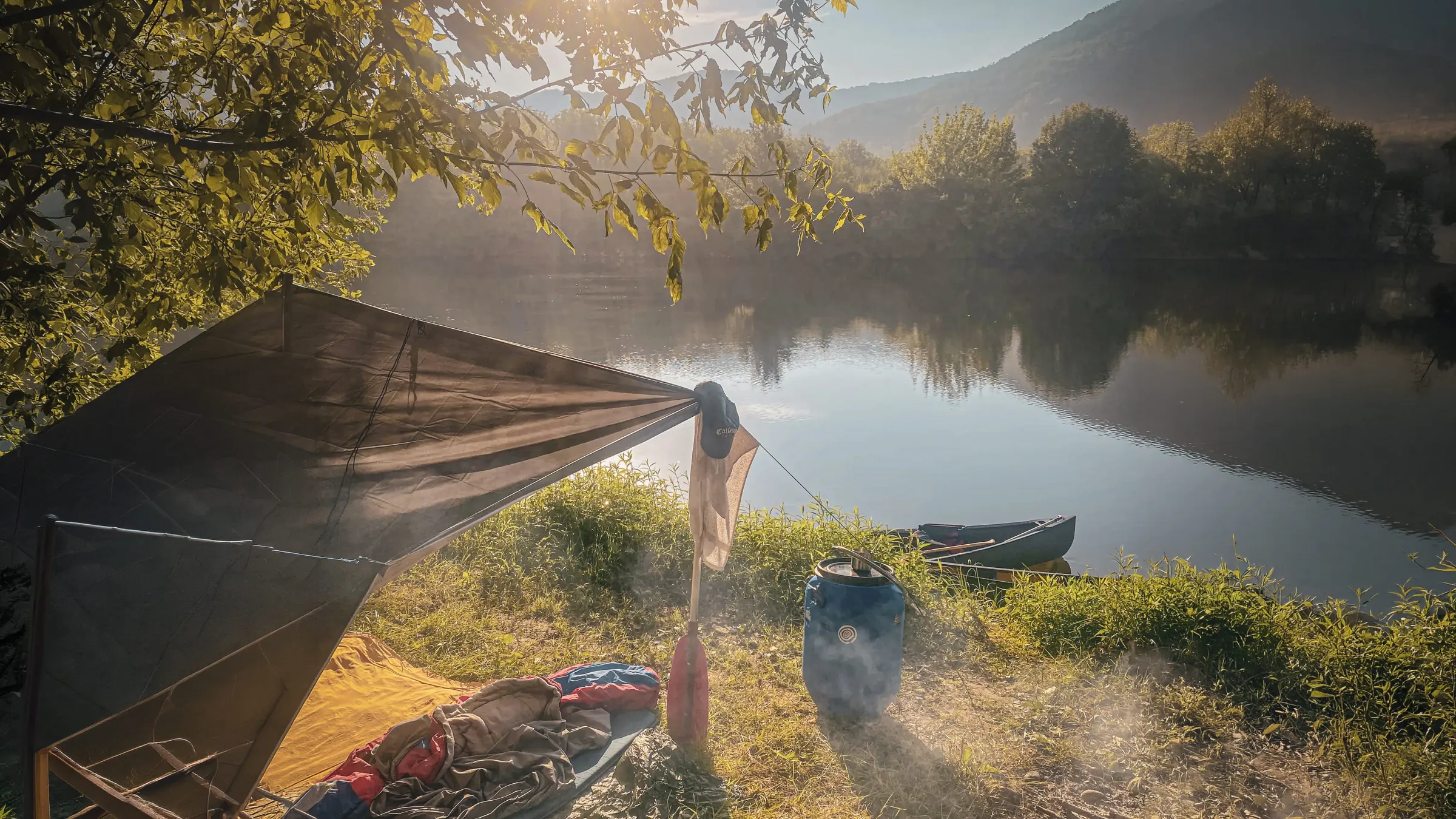
With Hugo as guide, our canoe and bivouac trip on the Dordogne links Souillac to Vézac over 3 days, with two nights bivouacking by the water and gear carried straight in the canoe, no portage involved. The first camp is set up near Cazoulès, the second at Vitrac, before a final morning that passes below Domme, follows La Roque-Gageac, then reaches Castelnaud and Beynac. It's a recent addition to our catalogue, without published reviews yet, built for a first experience of multi-day canoeing: level 1, no need to be an experienced paddler, with swimming and fishing breaks (spoon or fly) built into each day, and a 60-litre waterproof container provided to keep your gear dry the whole way down.
Looking for something more self-supported than a calm river? Our first-time canoe weekend guide compares other rivers to get started, and our canoe and kayak trips page groups all our guided routes across France and Europe.
Find your next adventure
Browse curated expeditions matching the categories of this article and start planning your next trip.
Find your dream adventure
 Find your dream adventure
You might also like these adventures …
Hand-picked to echo the spirit of this article.


More to discover
Keep exploring with these pages and stories picked for you.
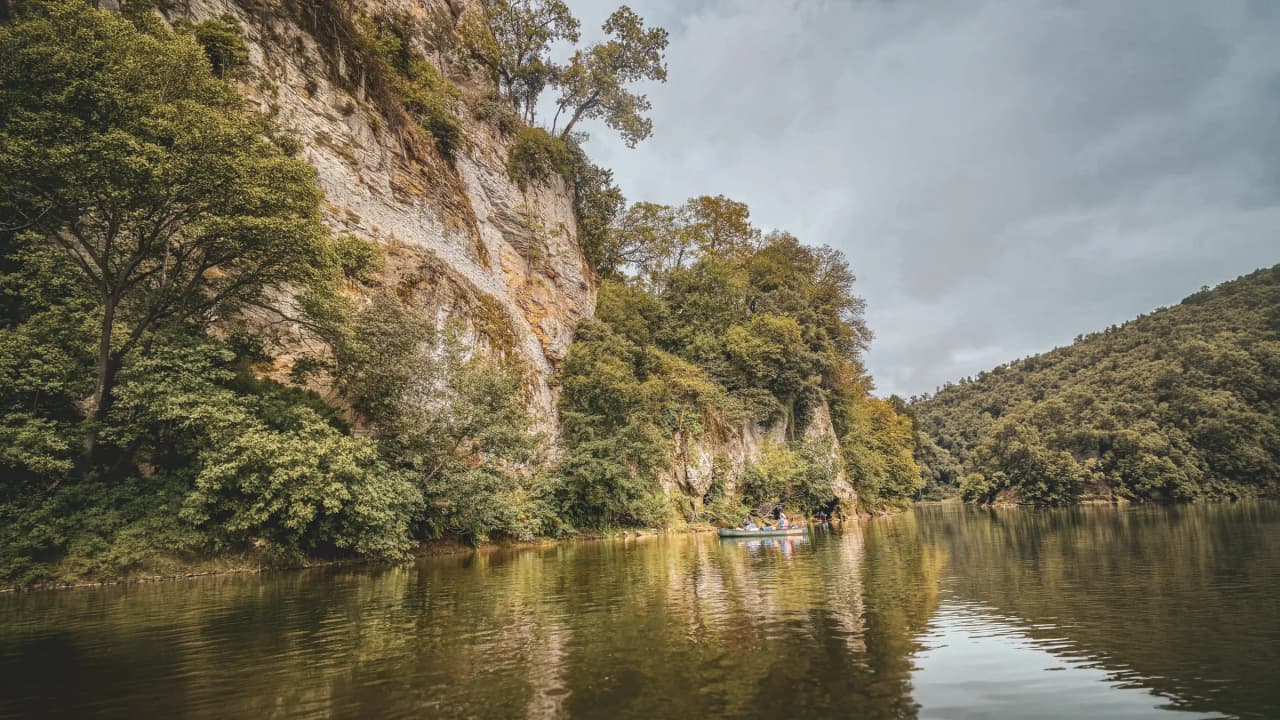
Beginner canoe weekend: best rivers to get started
No experience needed for a first canoe weekend. How to choose your river, between the Dordogne and the Allier, and what to really expect.
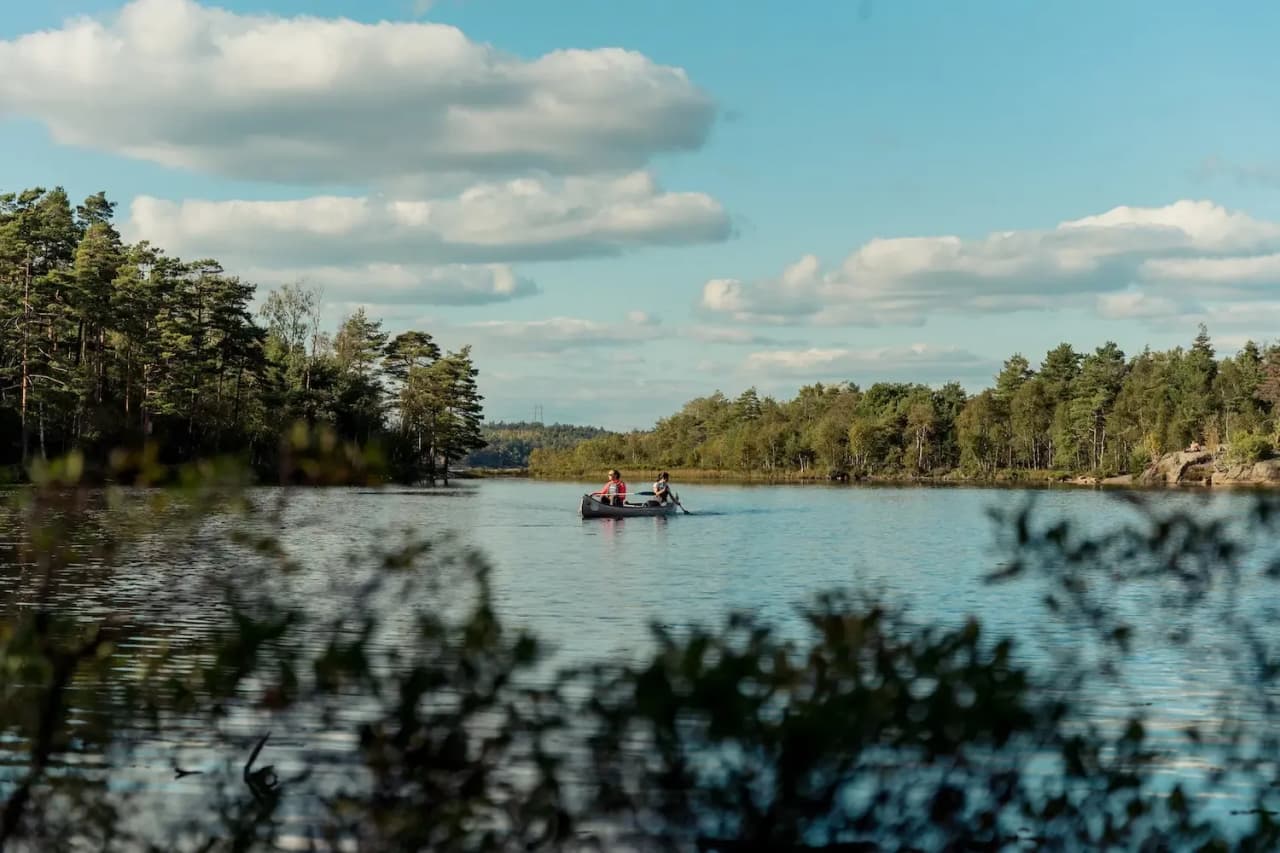
The complete guide to canoeing
Canoeing is an exciting activity that lets you enjoy the beauty of the countryside from a different angle. Here is the complete guide to canoeing.
Adventure weekends in France, guided hiking, canoe and snowshoeing
Beginner friendly adventure weekends in France, 2 to 5 days. Join guided hiking, canoe bivouacs, snowshoe trips, wildlife and yoga retreats with local pros.
Canyoning and via ferrata adventures in France and Sweden
Discover canyoning and via ferrata across France and Sweden. Climb granite and limestone, packraft and canoe wild waters with expert local guides.
The Verdon Gorges: a Packrafting Gem
Guided packraft expedition in the Verdon gorges. Discover the Verdon gorges and the Verdon Grand Canyon on a packraft expedition.
Packraft trail: the ultimate guide to getting started in a day
Discover the packraft trail: the ultimate guide to hiring, choosing the right kit and setting off with confidence from your very first day on the water.
