The Haute Route Chamonix-Zermatt: a day-by-day glacier programme
 By isabelle
The Haute Route Chamonix-Zermatt day by day: glacier techniques, rope skills and high-altitude huts across 7 alpine stages.
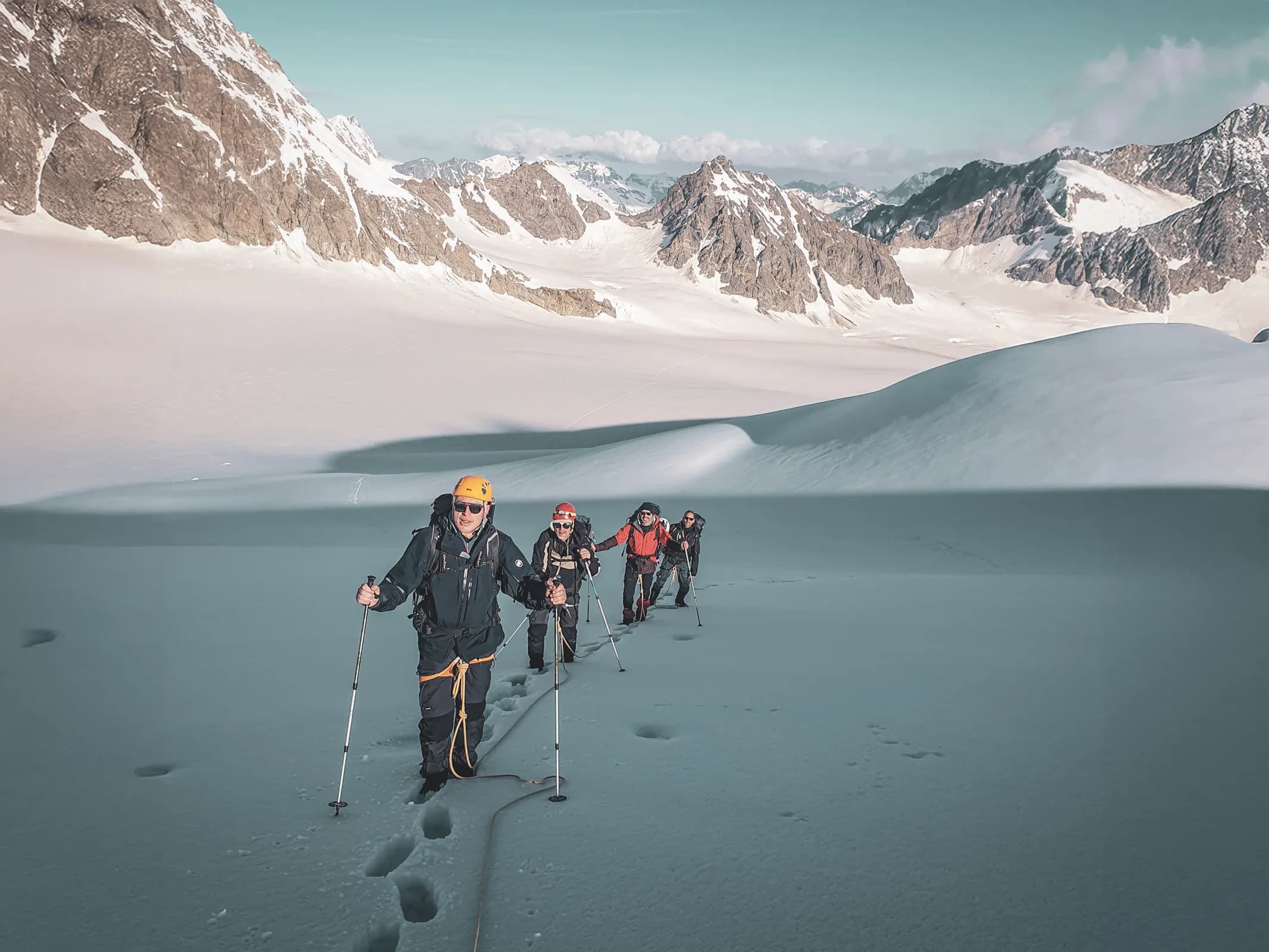
The Haute Route Chamonix-Zermatt is one of the great glacier traverses in the Alps: seven days between two legendary valleys, at altitude, on terrain that shifts every morning. This is not a hut-to-hut walk with a few snowfields to cross. It is a full mountaineering itinerary, where every day between Chamonix and Zermatt teaches a precise alpine technique that you immediately put to work on real terrain. On The Haute Route Chamonix - Zermatt via the glaciers, you move from a first crevassed plateau to a hut reached by ladders, then a summit day and a complex crevasse field descent. Here is exactly which skills you use and when, without turning it into a classroom.
Why the Haute Route remains a benchmark in alpinism
The Haute Route entered mountaineering legend in the late 19th century, when the first alpinists linked Chamonix to Zermatt by staying high and avoiding the valleys. Since then, the glacier traverse , not to be confused with the ski version , has never lost its reputation: it is one of the most complete itineraries for learning to move roped on mountain terrain where decisions carry real weight.
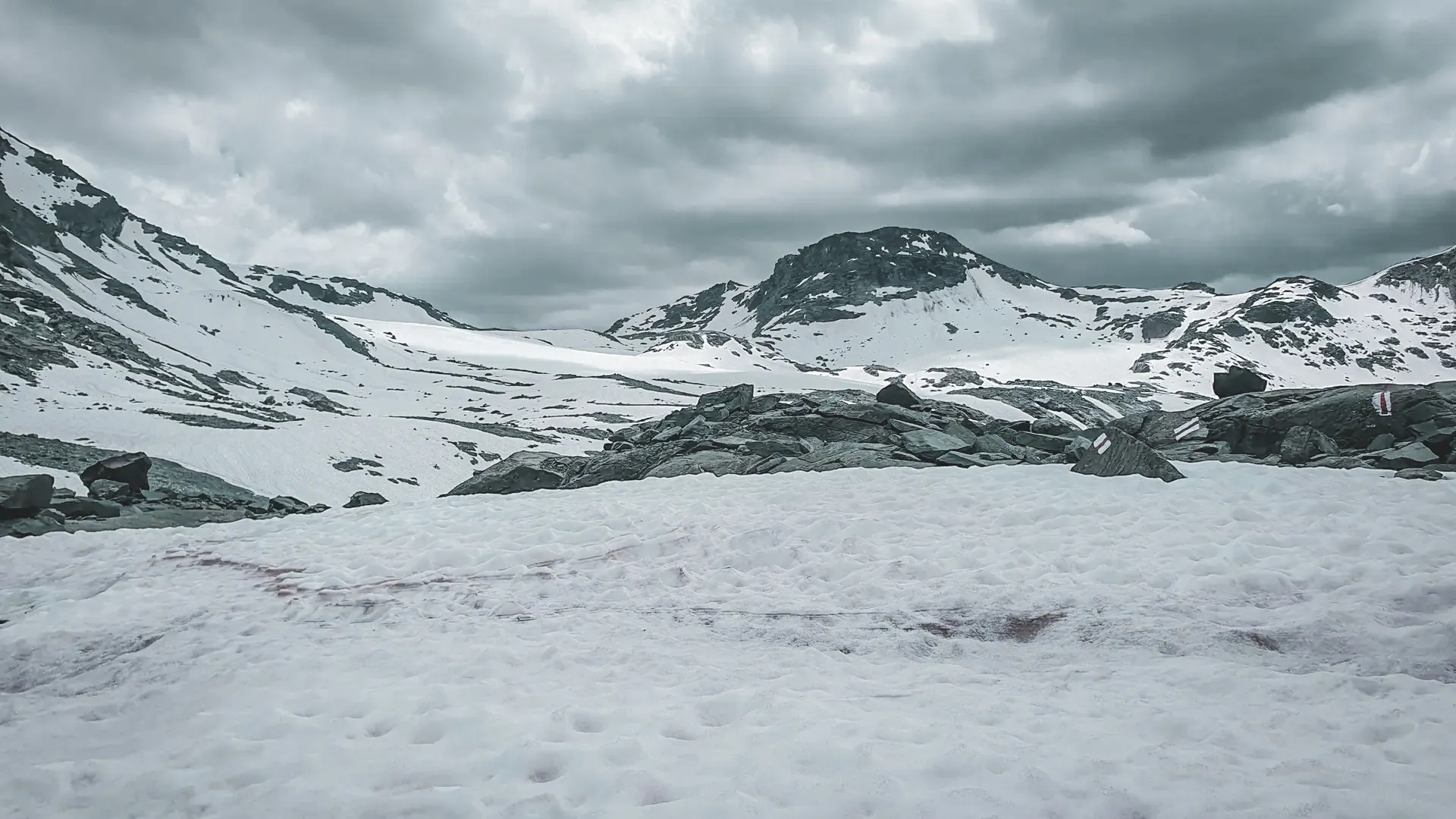
What sets the Haute Route apart from other traverses is the variety of terrain and the continuity of effort. Over seven days you cross glaciers of every kind , flat and heavily crevassed like the Otemma, steep and technical like the Mont Miné , pass cols above 3,000 m, sleep in huts at 3,400 m and finish with a summit at 3,650 m. Each stage has its own logic and its own lesson. That progression is what experienced mountaineers remember about the Haute Route: an exceptional school ground, set against a landscape between Chamonix and Zermatt that stays with you.
Haute Route: what level do you need to take it on?
The Haute Route is for people in good physical shape who can walk six to eight hours a day with a 12–15 kg pack on varied terrain. Mountain experience is an asset but not a prerequisite: the programme is designed to teach glacier techniques from day one, progressively, on terrain of increasing difficulty.
What matters most is arriving without excessive apprehension about exposed ground, being comfortable with nights in high-altitude huts, and having a genuine capacity to listen and communicate in a rope team. The group is capped at four to six participants with a certified guide: enough time to correct and explain, so nobody is left alone facing a hard call in the field.
Days 1–2: foundations and your first crevassed glacier
Day 1 starts at Montroc and the Charamillon lift, then a short balcony walk to the Albert 1er hut. Your guide reviews harness setup, rope coils, carabiners and prusiks, and runs through movement commands and spacing. You also fine‑tune crampon fit and how to carry and place the ice axe so you move efficiently rather than force it. The goal is simple: be smooth at dawn.
On Day 2, you climb scree to the Col du Tour and step onto the Glacier du Trient. A short abseil drops you to the plateau, a reminder that transitions between rock and ice need order and calm. The crossing to the Col Blanc is where you really walk roped on glacier: dial in spacing based on crevasse patterns, keep the rope clear, and rehearse team arrest. Reading snow bridges, flat‑foot technique on low angles and a consistent cadence carry you through the day, then the long descent to Champex locks those habits into muscle memory.
Days 3–4: efficiency and rescue skills on the Otemma
Day 3's approach to the Chanrion hut from the Mauvoisin dam is gentler, ideal for revisiting knots, coils and clean rope carry. Late afternoon at the hut is the right time for a structured crevasse rescue session: building a simple snow or ice anchor, taking rope tension, clear communication and the logic of a basic haul. You are not becoming a guide in an hour, but you do learn your role in a team and how to save minutes when it matters.
Day 4 is the Otemma, almost flat yet vast, one of the best classrooms for movement economy. Over roughly seven kilometres you practice pace setting, trading off the lead, timing breaks and holding a straight line if the light goes flat. These hours teach what matters most on glaciers: steady output, clean trajectory and choosing when to shorten or lengthen the rope. The final turn toward the Vignettes hut, perched on a rocky spur, adds another transition: crampons on slabs, ice‑axe support and neat protected movement near the hut. Repeating these micro‑transitions is what keeps you composed when weather squeezes the schedule.
Day 5: a glacial col, a big descent and ladders
The early climb to the Col de l'Évêque lets you settle uphill cadence, adjust crampon technique as the angle changes and manage temperature from predawn chill to mid‑morning sun. Dropping onto the high Arolla glacier sharpens your judgement on snow bridges: rope tension, decisive foot placements and clipped, clear calls. The space is wide, so you can compare route options and see why one line is safer or faster.
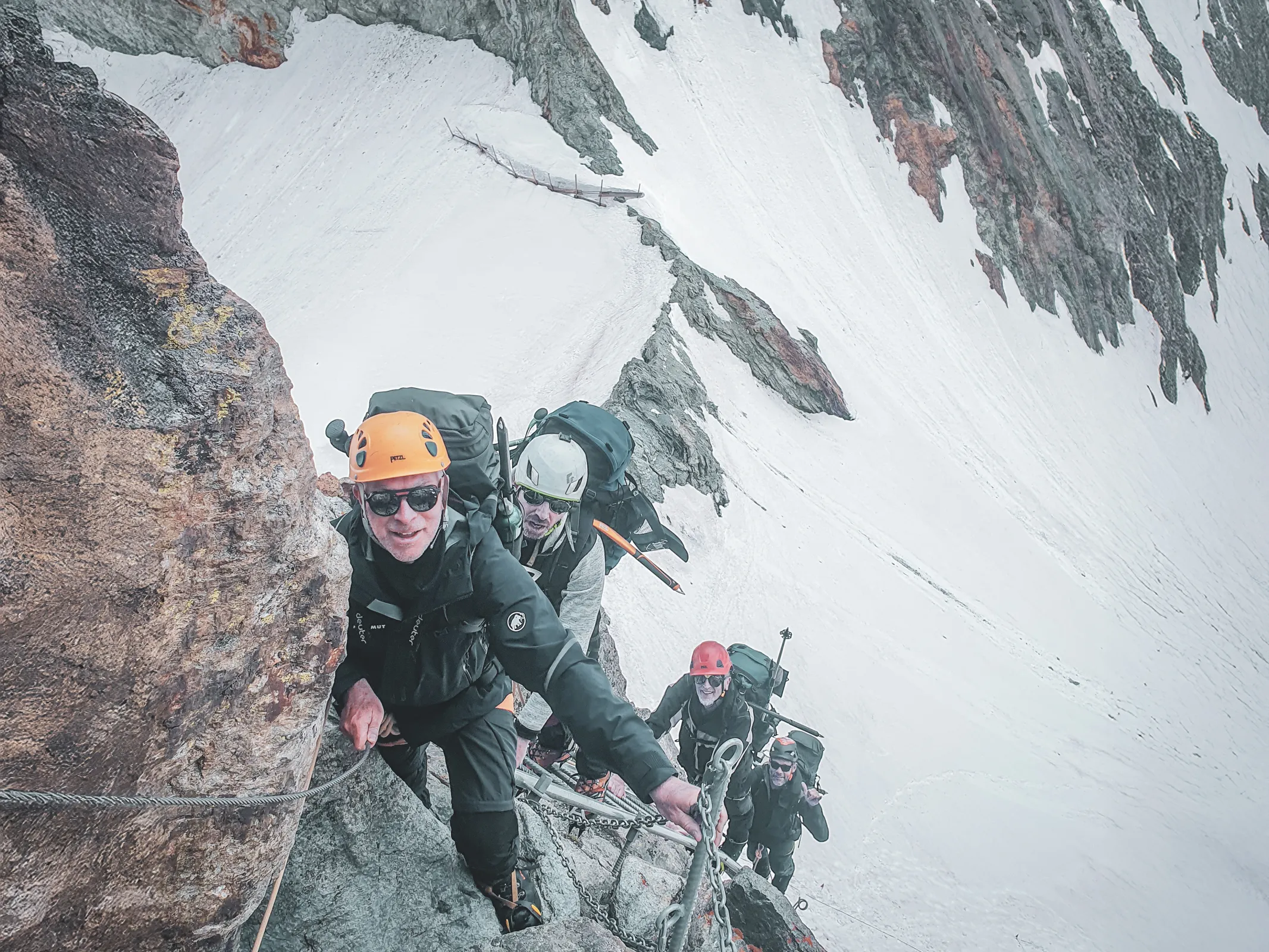
The final access to the Bertol hut by a series of metal ladders teaches clean movement with an alpine pack on fixed infrastructure. You clip in where required, keep three points of contact and manage the rope so the next person is not fighting tangles. It is not complicated, but done sloppily it costs time and attention when you are tired.
Days 6–7: summit craft and a fractured descent
Day 6 on the Mont Miné glacier to the Tête Blanche tests your placement and pacing. You switch between flat‑footing and more front‑pointed steps if the snow is firm, keep conversions efficient and hold a clean bearing to the summit while skirting broken zones. On top, you run a short summit routine: wind management, layers and gloves sorted, rope checked, then a clear brief for the descent.
The Stockji that follows is the most formative piece of the week, a cracked glacier that rewards quiet, consistent teamwork. You apply what you have built since Day 2: appropriate spacing, pauses in the right places, micro‑protections where useful and a line that avoids traps. Joining the Schönbiel glacier and reaching the hut gives space for a candid debrief: what worked, what to sharpen tomorrow.
Day 7 is mostly trail, a gentle exit to Zermatt past the Zmutt meadows and old moraines. You are off glacier, yet the mindset remains: control the timetable, read terrain and place your feet carefully when fatigue bites. Reaching town late morning leaves time to sort gear and fix in your head the key takeaways from the week.
What seven days on the Haute Route change for good
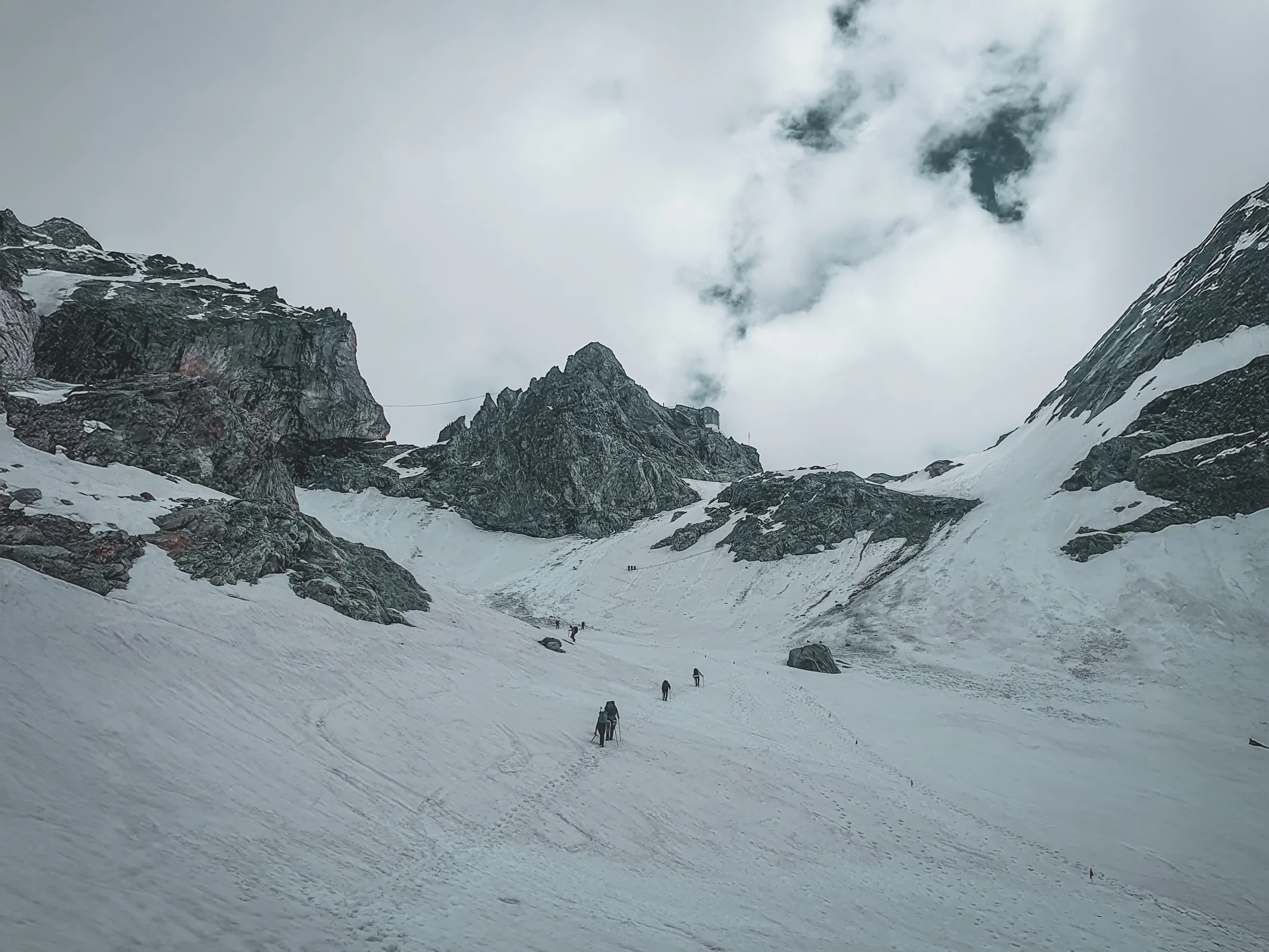
By the end of these seven days you are not just reciting technique names, you own the skills for Haute Route you actually used: moving smoothly as a rope team, choosing and holding a safe line, handling transitions without fuss and contributing meaningfully to group safety. Those reflexes travel well to other alpine routes, where judgement and tidy execution are worth more than any gadget.
The Haute Route is also a mountain experience in its own right: seven days lived at hut pace, reading the weather each morning, making collective decisions in a spectacular environment between Chamonix and Zermatt. What you take away from the Haute Route is as much a way of reading the Alps as a set of techniques. And that does not fade after the descent to Zermatt.
If you are thinking about doing the Haute Route this summer or next, check the available dates and the full Haute Route Chamonix-Zermatt programme with Wildhartt. Groups are small (four to six people), the pace is progressive, and your guide adapts each day to real terrain conditions.

Find your next adventure
Browse curated expeditions matching the categories of this article and start planning your next trip.
Find your dream adventure
 Find your dream adventure
You might also like these adventures …
Hand-picked to echo the spirit of this article.


More to discover
Keep exploring with these pages and stories picked for you.
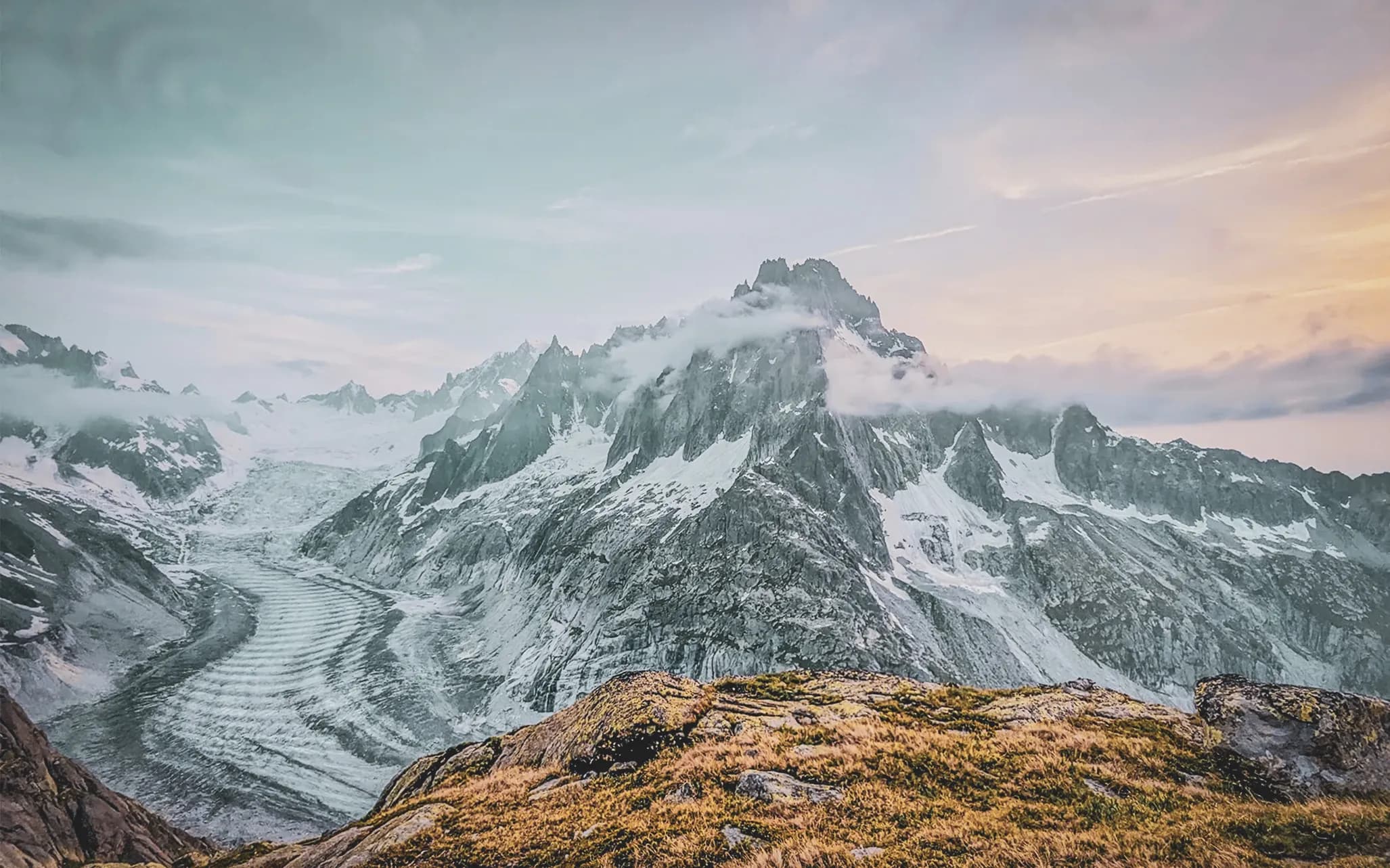
Chamonix-Zermatt Haute Route: Guide and History
Explore the Chamonix-Zermatt Haute Route, its history and the ways to approach this classic Alpine traverse.
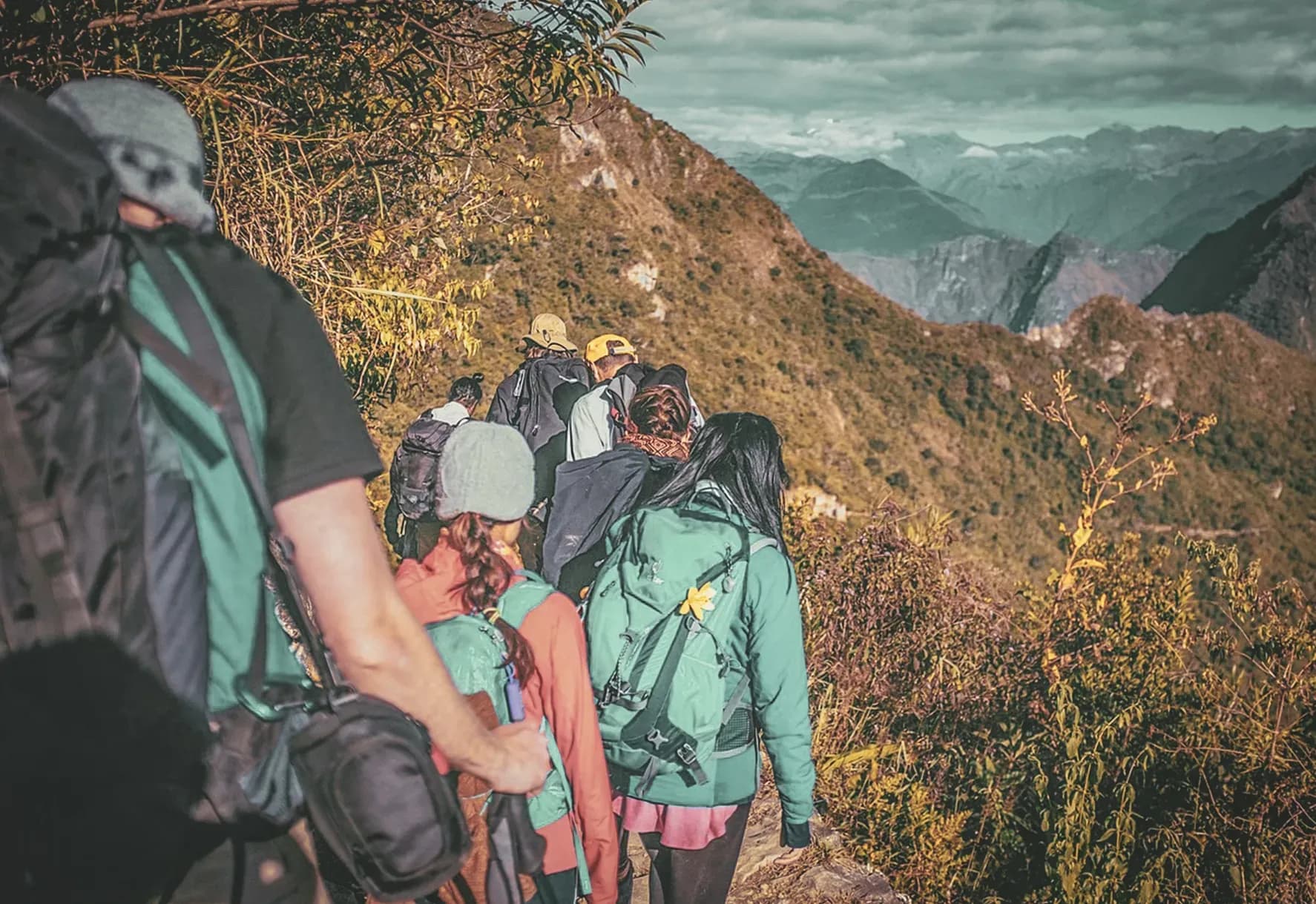
Tour du Queyras in 5 days: how to prepare your legs for the GR58
An 8-week plan for the GR58: hut nights at 2580 m, an optional summit at 3025 m, and legs ready for the descent into the wild Bouchouse valley.
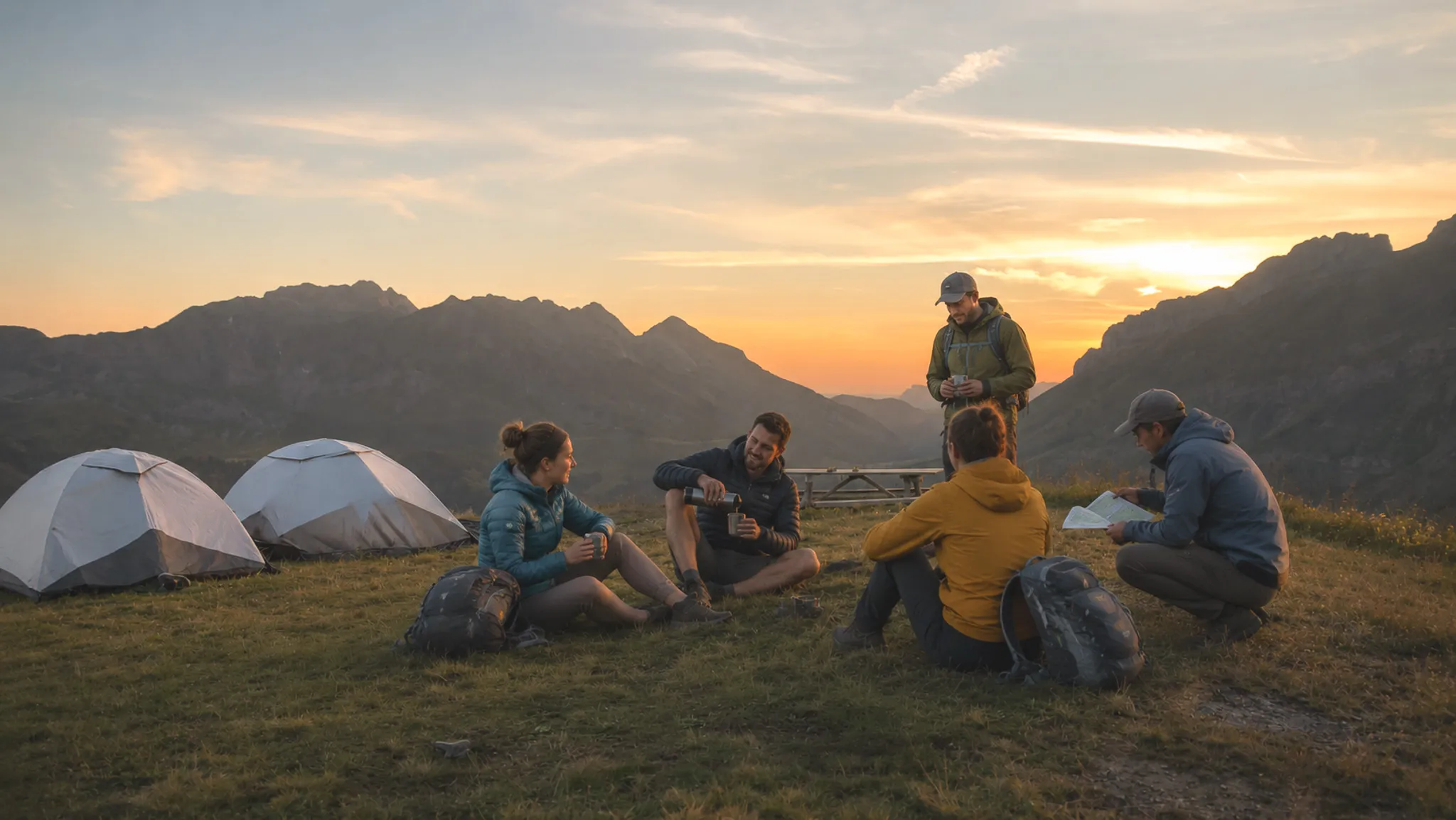
Mont Blanc or the Arves: choose your ideal alpine traverse
Compare three advanced Alpine formats, technical ridge, high bivouac and ridge-and-hut, across four real itineraries, to match your season, effort and style.
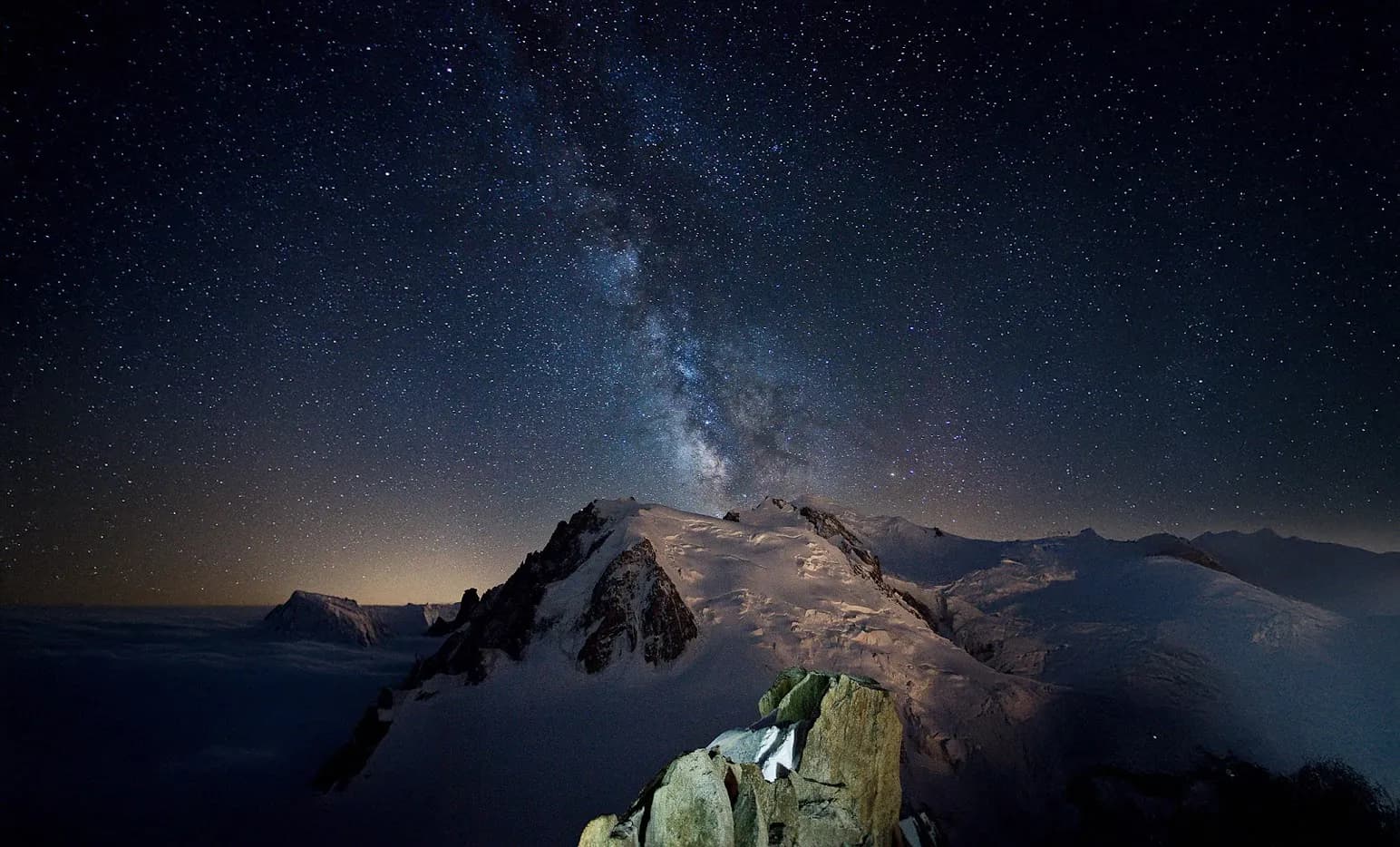
Mont Blanc Climbing: The Complete Guide
Plan a Mont Blanc ascent with clear guidance on preparation, routes, equipment and the realities of climbing Europe’s highest Alpine peak.
Dents du Midi: A 5-Day Itinerary, Day by Day
Plan a five-day Dents du Midi hike with stage details, elevation, tougher sections and highlights for experienced hikers.
Wildhartt alongside the Compagnie des Guides de Chamonix
Discover the partnership between Wildhartt and the Compagnie des Guides de Chamonix, a collaboration based on high mountains, local expertise and alpine adventure.
