Where to Spot Wildlife in Belgium: A Guide to the Hautes Fagnes and the Semois Valley
 By isabelle
A complete guide to spotting wildlife in Belgium without disturbing it: the best hike-accessible spots in the Hautes Fagnes and the Semois Valley.
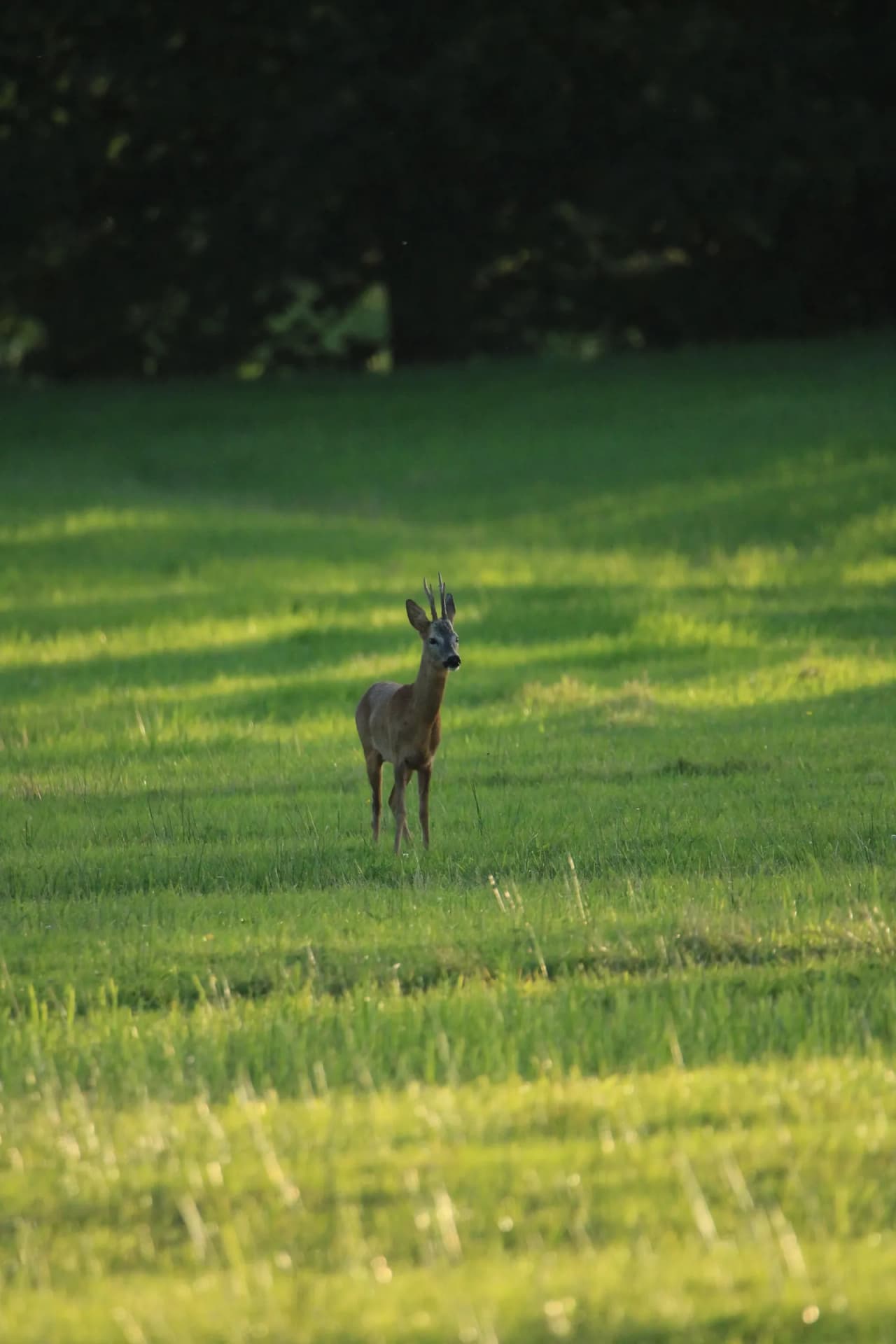
The Hautes Fagnes and the Semois Valley offer the best chances of encountering wildlife in Belgium, provided you know where and how to look. In both areas, a core of nature is left to evolve freely: no human intervention, no management, just time doing its work. You never walk directly into that core, but marked trails let you skirt or look down onto these protected zones, and that's exactly where signs of wildlife are most plentiful.
A few simple rules before setting off, valid for both areas:
- Stay on marked trails. In the Hautes Fagnes, the reserve is split into zones A (open access), B (marked paths only), C (access with a nature guide) and D, strictly off-limits: this is the zone left to evolve freely.
- In the Semois Valley, check the national park's interactive map before setting off: some sectors can be temporarily closed for hunting, forestry work or the presence of a sensitive species.
- Keep your distance, binoculars are always better than getting closer.
- Keep dogs on a lead, especially near forest edges and wetlands.
- Avoid noise, music and bright torches at dusk, the most active hours for wildlife.
- Never feed the animals, and check the Fagnes' access flag before setting off (red: entry temporarily forbidden, fire risk).
Comparison table: 5 spots to watch wildlife at the edge of free-evolution zones
The five spots below run alongside or overlook a sector left to evolve freely, in the Hautes Fagnes or the Semois Valley. None requires leaving the marked trails to see something.
| Spot | Zone and landscape | Access | Best time | Wildlife, common signs | Key rule |
|---|---|---|---|---|---|
| Fagne de la Poleur (Hautes Fagnes) | Open peat bog, boardwalk, edge of the strict reserve | Easy, car park at Mont-Rigi, zones A and B | Early morning, late summer and autumn for light and mist | Deer tracks, fen birds, dragonflies over pools | Never leave the boardwalk, zone D is a few metres away |
| Baraque Michel – Botrange (Hautes Fagnes) | Plateau, low heathland, spruce stands, Lovers' Cross | Easy to moderate, marked zone B paths | Year-round, avoiding red-flag days | Pipits and warblers at the edge, roe deer tracks | Check the access flag before setting off |
| Frahan and the Tombeau du Géant (Semois Valley) | Steep river bend, wooded slopes in a nodal zone | Moderate, ridge path from Rochehaut | Sunrise, autumn for the rutting call | Roe deer and wild boar (signs), hunting birds of prey | Watch from the viewpoint, don't go down to the river bend |
| Botassart and the Roche à l'Appel (Semois Valley) | Rocky outcrop, forest reclaiming farmland | Easy, nearby car park and short path | Sunset, avoiding weekends | Buzzards, black woodpeckers, edge tracks | Stay on the developed rock, don't cut through young woodland |
| Herbeumont, GR16 sector (Semois Valley National Park) | State forest, valleys, a nodal zone of the national park | Moderate, GR16 markings | Early morning, after light rain for tracks | Footprints and trails, woodpeckers, deer in autumn | Check the interactive map before setting off, some sectors close |
If you want to grasp what free evolution means in a single outing, the Fagne de la Poleur is the most instructive: you walk a few metres from a strictly closed zone. If you're after wide views over a valley that's slowly closing back in, Frahan and Botassart are the two must-sees of the Semois.
1. The Fagne de la Poleur (Hautes Fagnes)

Photo: Unsplash
The Fagne de la Poleur is the best place to understand what a free-evolution zone is, because you literally walk along its border. The boardwalk crossing the peat bog follows the old via Mansuerisca route, and it separates zone B, where you move freely, from sectors classified as zone D: no intervention, no foot traffic, the peat and heath have been evolving on their own for decades.
A simple short walk
- Set off from Mont-Rigi or Baraque Michel early in the morning, when the wind drops and birds show themselves at the edge.
- Follow the boardwalk without leaving it, the peat degrades quickly under foot traffic and the rules forbid it anyway.
- Pause at an open junction, back to the wind if possible, and watch for 10 to 15 minutes before moving on.
- Take a different stretch back to cross a wooded edge, where ground signs are often clearer.
You'll read the fen through small clues: deer tracks in the mud beside the boardwalk, dragonflies over the pools, pipits and warblers singing in the open areas. Check the weather before setting off, fog makes finding your way harder even on a marked route, and bring waterproof footwear. For access times and flag status, check the Hautes Fagnes-Eifel Nature Park website.
2. Baraque Michel and the Botrange plateau (Hautes Fagnes)

Photo: Unsplash
Between Baraque Michel and the Signal de Botrange, the plateau alternates low heathland, spruce stands and damp edges, on a network of zone B trails that in places run alongside more closed-off sectors. It's a good starting point if you want to vary habitats in a single outing without any technical difficulty.
Where to look to see more, without getting closer
- The edges between spruce stand and open heath concentrate most of the activity, especially late in the day.
- The area around the Lovers' Cross gives enough open ground to watch without moving for a long while.
- The path towards the Bayehon waterfall, from Longfaye, crosses undergrowth where roe deer and wild boar tracks are common after rain.
The main constraint here is weather and regulation: in strong wind or dry periods, a red flag can temporarily close certain access points, as the area remains sensitive to peat fires. Before setting off, check conditions on the Hautes Fagnes-Eifel Nature Park website, and stay on the marked routes for each sector.
3. Frahan and the Tombeau du Géant (Semois Valley)

Photo: Unsplash
The Tombeau du Géant viewpoint, above Rochehaut, overlooks the Frahan river bend and offers a rare overview of the valley: continuous wooded slopes, few visible clear-cuts, and sectors classified as a nodal zone by the Semois Valley National Park, where the forest is left to evolve with minimal intervention.
Watching from the ridge, without going down to the bend
- Reach the viewpoint via the ridge path from Rochehaut, arriving at daybreak if possible.
- Stay on the developed promontory: going down towards the bend or the riverbanks means cutting across the corridors used by roe deer and wild boar.
- Settle in for 20 to 30 minutes at the same spot, binoculars ready, to spot a bird of prey hunting over the valley.
- In autumn, listen rather than look: the stags' rutting call can sometimes be heard from the viewpoint, depending on the year.
Avoid midday and summer weekends, the crowds around Frahan and Rochehaut are heavy and make wildlife more discreet, even nocturnal. Before setting off, check for temporary sector closures on the interactive map of the Semois Valley National Park.
4. Botassart and the Roche à l'Appel (Semois Valley)
Photo: Unsplash
A few kilometres from Bouillon, the Roche à l'Appel offers a second vantage point over a bend in the Semois, in an area where forest is reclaiming former farmland. The stepped edges, tall grass then young trees then mature woodland, attract passerines, woodpeckers and hunting birds of prey.
A short outing that pays off
- The car park and access path are short, allowing you to arrive discreetly before sunrise.
- Stay on the developed rock and the marked path, don't cut through young woodland to save time.
- After a damp night, look for trails in the tall grass beside the path, often visible without straying from it.
- Sunset works just as well as sunrise, with fewer people than during the day.
As at Frahan, the rule stays the same: watch from a fixed, open spot, don't go down to the riverbanks. For access conditions and any seasonal restrictions, check the Semois Valley National Park website.
5. Herbeumont, on the GR16 (Semois Valley National Park)

Photo: Unsplash
The forested Herbeumont sector, crossed by the GR16, is one of the most representative nodal zones of the national park: fewer visible clear-cuts, deadwood left in place, thickening edges. It's a good choice if you prefer slow forest walking to wide viewpoints.
Reading the forest through tracks
Move slowly, in 60- to 90-minute stretches, taking a long pause at every clearing or edge you come across. Look for footprints on muddy paths after light rain, trails through the ferns, rub marks on young trunks, and wild boar digging marks in the undergrowth. In autumn, fallen leaves make these signs especially easy to read, and it's also the rutting season.
Before setting off, check the interactive map of the Semois Valley National Park to see whether the sector you're aiming for is open that day: some stretches close temporarily for hunting or forestry work. On site, stick to the GR16 or local trail markings, and keep your distance if you come across a signposted quiet zone.
For a simple next outing: choose a short there-and-back on one of these five spots, and spend half the time watching from a stationary position rather than walking. You'll come home with fewer kilometres, more clues, and a real sense of what it means to leave nature to evolve freely.

Find your next adventure
Browse curated expeditions matching the categories of this article and start planning your next trip.
Find your dream adventure
 Find your dream adventure
You might also like these adventures …
Hand-picked to echo the spirit of this article.

More to discover
Keep exploring with these pages and stories picked for you.
Res Nullius: why wild nature is never far away
The documentary Res Nullius follows a wild boar spotted in Brussels. A reminder that real Belgian wildlife is closer than you think.
Deer rut etiquette in the Vosges: how not to disturb them
The French forestry service's official rules for not disturbing the stags during the Vosges deer rut, 5 recommended spots, and the right dates to go.
7 not-to-be-missed hiking destinations in the Vosges
Discover 7 magical hiking locations in the Vosges, inspired by Wildhartt adventures. The ultimate wilderness experience!
Top 7 hiking destinations in the Vosges
Our top 7 hiking trails in the Vosges, hand-picked by the Wildhartt guides for every level, from calm lakeside walks to vertigo-inducing summits.
Hiking in Luxembourg’s Little Switzerland
Hike through Luxembourg’s Little Switzerland on the Mullerthal Trail. Explore sandstone gorges, enchanted forests and hidden paths with or without a guide.
The 6 most beautiful trails in Belgium
Here are the 6 most beautiful trails in Belgium. Discover them by hiking or running in the great outdoors.
