Alpine ridges or pastures: choose your trek by effort and season
A clear comparison of ridge treks in huts versus wild bivouacs and longer pasture circuits. Pick by elevation gain, accommodation style and the best season.
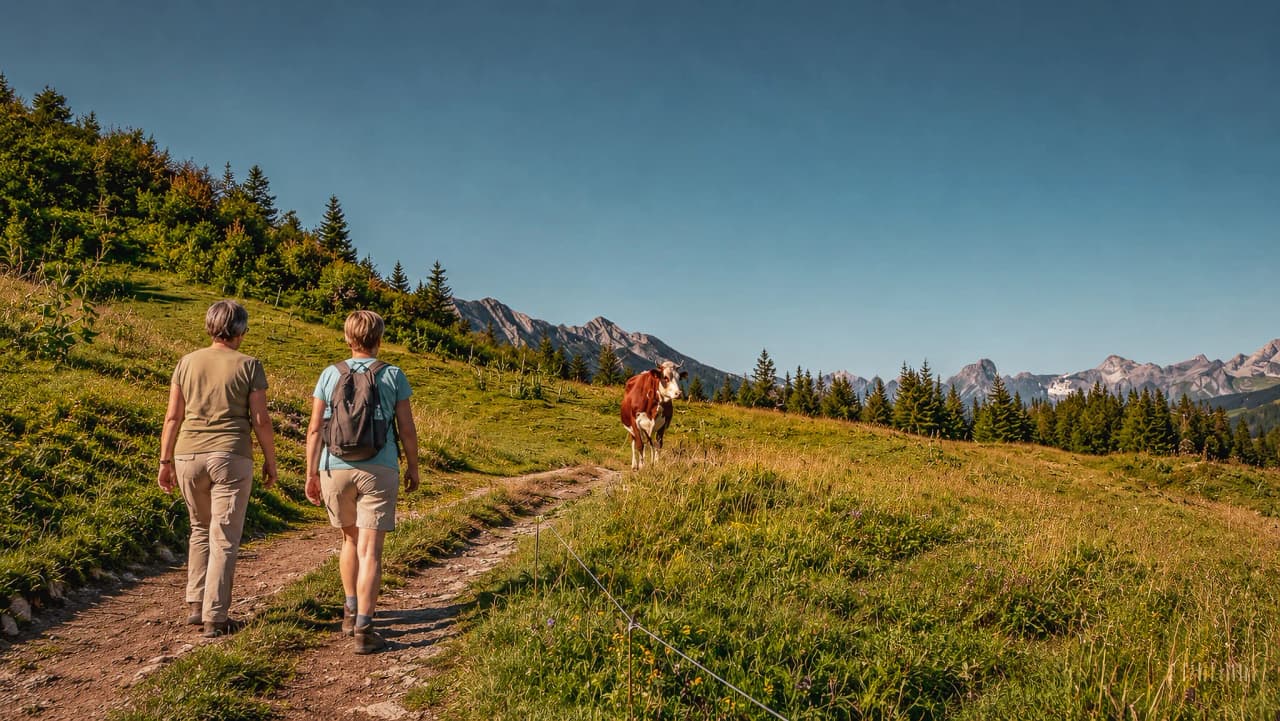
If you already hike at an advanced level, the decisive filters for an alpine trek are daily effort, the kind of nights you want and the time of year. With those three levers, you can aim for a ridge‑forward itinerary in huts close to the rock, choose a wilder bivouac loop with more autonomy, or go for a longer pasture tour that flows steadily day after day. The concrete programs below are your yardstick: Trek the Aravis: from pastures to peaks, A 5-day tour of the Beaufortain, Trek the tour des Dents du Midi in 5 days, Hiking and bivouac around the Aiguilles d'Arves and Surge to Pic du Mas beneath La Meije.
Effort and elevation: read the real demand
Elevation gain and terrain type tell you more than a generic difficulty label. As a rule of thumb, smooth pasture traverses sit at the low end of fatigue, mixed alpine ground with longer climbs lands in the middle, and any day with exposed ridges or very stony sections slows you down regardless of the raw numbers. On five days, Trek the tour des Dents du Midi in 5 days concentrates roughly 5,000 meters of ascent, close to 1,000 meters per day on average, but the real bite comes early: Day 1 includes the Pas d’Encel above the Saufla torrent before you reach the Susanfe hut, and Day 2 can stretch if you add the Haute Cime at 3,257 meters before crossing the Salanfe basin to the lakeside inn.
Ridge seekers will feel that same pattern in the Aravis. On Trek the Aravis: from pastures to peaks, Day 2 links the Aiguille Verte above Lac de Lessy to the limestone around the Pointe Percée and finishes at Refuge Gramusset. The mix of lapiaz and narrow paths demands precise footwork after a full day out. The next morning you drop to the Col des Annes and roll into the quieter Reposoir side where summits like Tête du Château or Pointe d’Areu are on the table, a fine example of alternating pastoral ground and airy sections that keep the intensity variable.
If you want a compact four‑day hit with sustained altitude, Hiking and bivouac around the Aiguilles d'Arves stacks key cols: after the warmup to the Signal de La Grave and a first night by the turquoise Goléon lake on Day 1, you climb the Col du Goléon at 2,873 meters on Day 2, then the Col de l’Épaisseur at 2,891 meters on Day 3 with the option to push to the Pointe de la Pierre Fendue above 3,000 meters before traversing to the Col du Gerbier and a quiet camp at Rieu Blanc. Here the trail is sometimes discreet and the ground mineral, so even similar ascent figures bite harder with a loaded pack.
Prefer your effort spread more evenly across five days without losing the alpine feel? A 5-day tour of the Beaufortain strings together crêtes and alpages with steady profiles. From the first day up to the Col de Véry, then Day 2 along the Col du Joly into the La Gittaz valley, through the historic Col du Bonhomme and Croix du Bonhomme on Day 3, to the Cormet d’Arêches and Col de la Louze on Day 4, the itinerary rewards pace management more than raw explosiveness. Finally, Surge to Pic du Mas beneath La Meije leverages the Plateau d’Emparis logic: mostly horizontal days across open ground, then a true summit day to the Pic du Mas de la Grave above 3,000 meters, which asks for a steady climb and breath control with a heavier bivouac load.
Self‑check on three points before you choose: can you hold a stable ascent rate for 800 to 1,000 meters with a loaded pack, tolerate hours on scree and rough limestone without losing precision, and finish your day with careful foot placement after long descents. If any of those are marginal, pick an itinerary that spreads the load across stages rather than front‑loading big, technical gains.
Ridge trekking in huts: when exposure becomes the main job
Walking along a crest, threading a lapiaz field or crossing a tight col cuts your speed and narrows your weather margin. Huts make that manageable. In the Aravis, the approach to the Pointe Percée area and the rocky passages on Day 4 between cols, scree and limestone justify overnight anchors like Refuge Gramusset that pin your start time and reduce the urge to press on late. You move light, start early and give complicated ground the time it needs.
The Dents du Midi circuit shows similar alpine variety. The Pas d’Encel on Day 1 is short but focused, and the optional Haute Cime on Day 2 turns a normal stage into a longer mineral day before you descend toward Salanfe. None of this requires mountaineering gear, but it does require accuracy and the willingness to slow down when the path gets thin. Huts and inns at Susanfe, Salanfe, Chindonne and Anthème give you regular recovery after those slower sections so you can keep Day 3’s big drop to Mex and the following climb to Chindonne under control.
By contrast, a wild bivouac loop like the Aiguilles d’Arves does not put you on a knife‑edge all day, but it does keep you in raw terrain where the trail can fade. Day 3, up to the Col de l’Épaisseur and possibly the Pointe de la Pierre Fendue, is more about reading the ground than continuous exposure, yet the heavier pack affects balance in the rubble. As a general rule, the more continuous and airy the ridge, the more a hut‑based schedule increases your safety and consistency.
Refuge or bivouac: how your nights set the pace
Huts lighten the pack and structure your hours. On A 5-day tour of the Beaufortain and Trek the Aravis: from pastures to peaks, you carry a compact 30 to 40 liter pack, sleep in dorms, eat hot meals and leave early. That rhythm suits long balcony traverses and rolling crests, and your storm plan is straightforward because the refuge is a reliable evening shelter. The trade‑off is a fixed schedule and reservations that need to be secured in the busiest weeks.
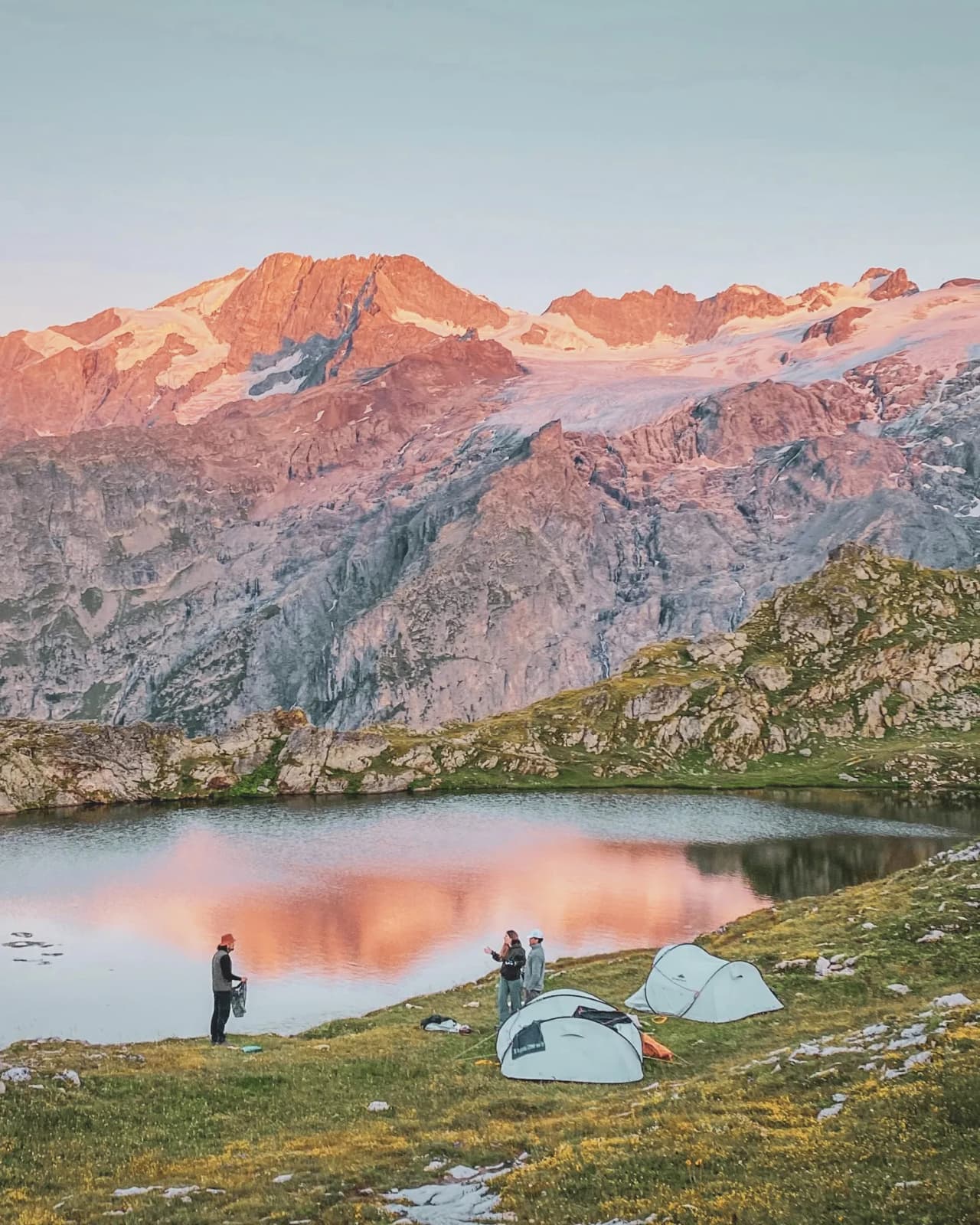
Bivouac gives you freedom at the price of weight and logistics. Hiking and bivouac around the Aiguilles d'Arves means tent, bag and cooking kit in roughly a 50 liter pack. You can linger for a swim at Lac du Goléon at the end of Day 1, shift your start around the morning light, or push a little after Bonnenuit on Day 2 if everyone feels strong. You also have to manage water, wind and your impact on pastoral land. Surge to Pic du Mas beneath La Meije is a gentle version of that approach: mellow plateau days and three wild nights deepen immersion, framed by one proper summit day that reminds you why the pack was a little heavier.
From a safety angle, a hut is a solid fallback if a late storm builds. Bivouac asks for closer weather reading and a clear exit route. If you are undecided, a mixed formula can work: book one key refuge below a slow rocky stage, then keep a tent night on a plateau or by a lake where retreat options are simple.
Season window and your final pick
All these itineraries run from June to September, but the nuance matters. Early June can hide old snow on cols like l’Épaisseur or slow you down on Aravis lapiaz. July and August bring the leanest snow cover along with afternoon storms and busy huts. September is often cooler and steadier, good for crêtes and sustained walking, with colder nights to factor in if you bivouac above 2,000 meters. Choose your slot by the key altitude of your stages and whether your slowest ground is rocky and exposed or grassy and fast.
Three practical scenarios
Scenario A, short and wild in four bivouac days: Hiking and bivouac around the Aiguilles d'Arves. Expect one high col per day, an optional 3,000‑plus summit on Day 3, discreet paths in mineral terrain, a heavier pack and autonomy for water and meals. Best window is mid‑July to early September when the cols are clear; main risks are wind, cold nights and slower progress on talus under load.
Scenario B, moderate and mixed on an open plateau: Surge to Pic du Mas beneath La Meije. Most days are horizontal across Emparis, then one genuine summit day over 3,000 meters. Exposure is moderate, but water planning and portage still count. June to September works, with attention to lingering snow early in the season. Do not underestimate the altitude and pack weight on the Pic du Mas day.
Scenario C, five hut nights and a steadier flow: choose between A 5-day tour of the Beaufortain and Trek the tour des Dents du Midi in 5 days. The Beaufortain favors panoramic crests with effort smoothed across stages, ideal if you want to string days together without a heavy pack. The Dents du Midi steps up the sport factor with technical passages and summit options, supported by well‑placed cabanes that help you recover after long climbs and drops. If the pull of airy crests is strong, Trek the Aravis: from pastures to peaks is the most ridge‑oriented of the lot.
Five questions to lock your choice
- How much daily ascent can you sustain on stony ground with 8 to 12 kilos on your back?
- What is your comfort level with exposure on crests, lapiaz and narrow cols?
- Do you want the structure and comfort of huts, or the autonomy and freedom of a bivouac?
- Is your slot before mid‑July or after mid‑September, with a risk of old snow and colder nights?
- Do you prefer simple logistics with reservations, or are you happy to manage water, portage and fallback plans?
Match your answer to the terrain and nights you want, then crosscheck daily elevation, expected technical sections and season. Start with an itinerary that fits your main goal for the year, leave a weather margin, and keep Day 1 conservative so you can adjust the pace before the key stages arrive.
Find your next adventure
Browse curated expeditions matching the categories of this article and start planning your next trip.
Find your dream adventure
 Find your dream adventure
You might also like these adventures …
Hand-picked to echo the spirit of this article.

More to discover
Keep exploring with these pages and stories picked for you.
Mont Blanc or the Arves: choose your ideal alpine traverse
Compare three advanced Alpine formats, technical ridge, high bivouac and ridge-and-hut, across four real itineraries, to match your season, effort and style.
Devoluy or elsewhere? Pick your ideal alpine trek
Compare four similar alpine itineraries by effort, terrain, shelter style and season to choose between the mineral Devoluy and close alternatives.
Northern lights or high lakes: choose your hike by effort and aim
Compare the daily effort and real aim of five real trips, from Valgaudemar to Senja, and pick observation or itinerant performance to match your level and season.
Hiking with donkeys in the Ecrins or an alpine trek
Hiking with donkeys in the Ecrins or an alpine trek? Compare pace, effort, pack weight, nights and season to pick a trip that fits your level.
Tour du Queyras in 5 days: how to prepare your legs for the GR58
An 8-week plan for the GR58: hut nights at 2580 m, an optional summit at 3025 m, and legs ready for the descent into the wild Bouchouse valley.
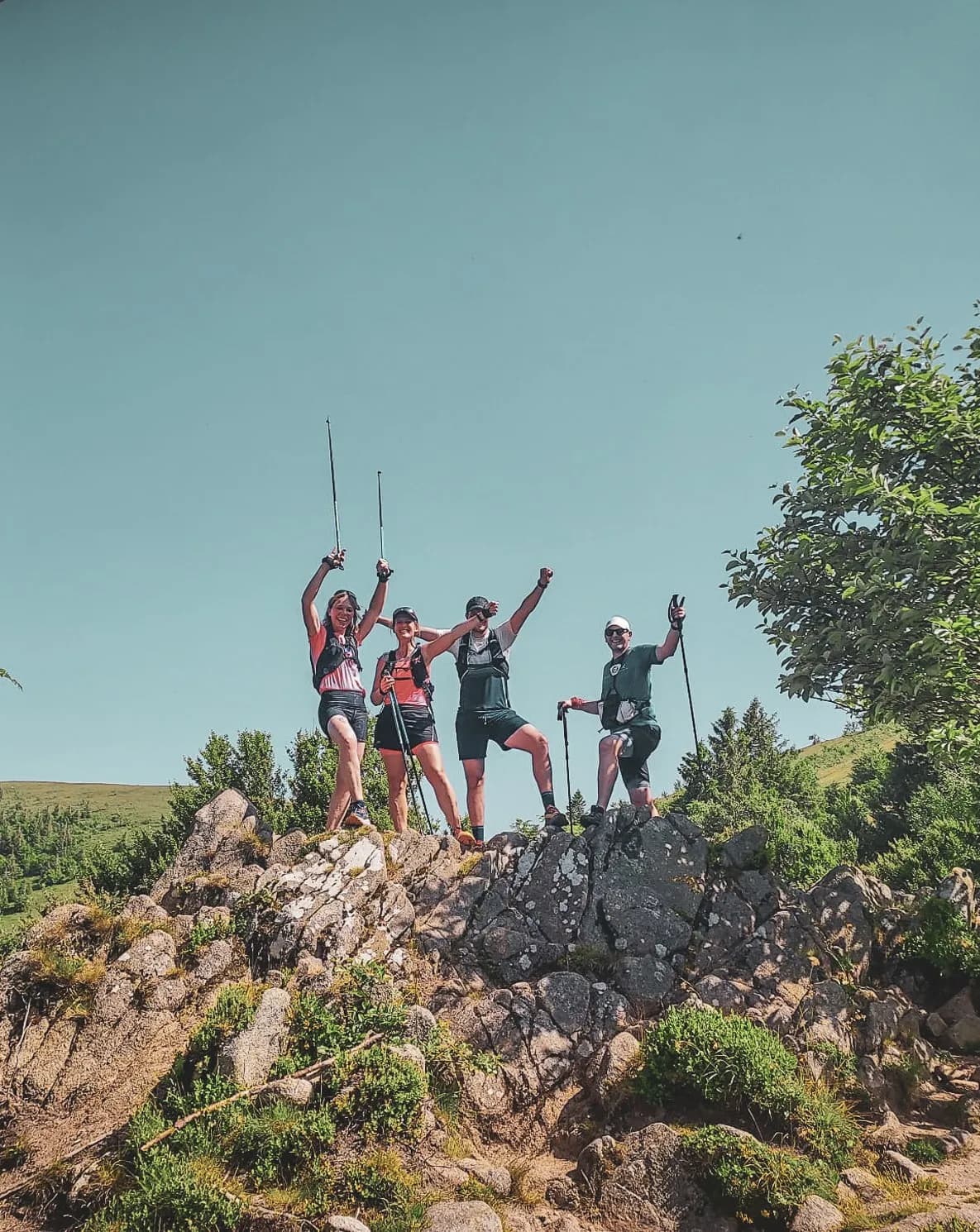
Trail running camps with mountain huts and guesthouses
Explore trail running camps in the Vosges, Chamonix, the Pyrenees, Chartreuse and the Jura, 3 to 4 days with nights in huts or guesthouses.
