Climbing for beginners: gym or rock, gear, first routes
 By isabelle
Fear of heights, gym or rock, gear to rent: the complete guide to taking your first steps in climbing with confidence.
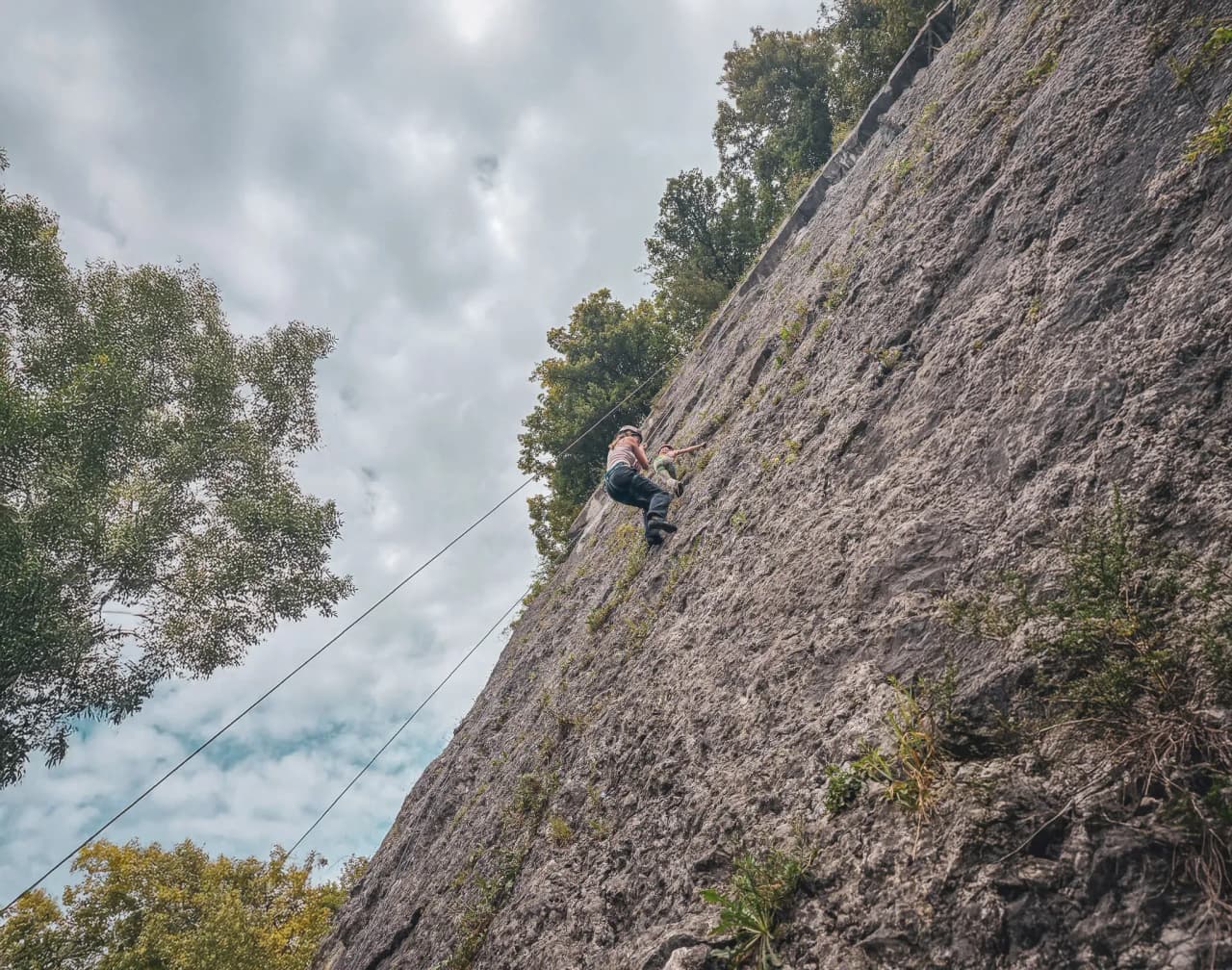
“What if I get vertigo?” That’s the question we hear most often before a first climbing session. Good news: a fear of heights and a fear of climbing aren’t the same thing. Most people who think they’re afraid of heights have actually never given it a go under guiding, wearing a harness and with someone belaying them. Here’s how to take your first steps without making any mistakes.
Indoor climbing centre or crag: where to start?
For a genuine first time, the climbing centre remains the simplest choice: a gradual introduction, equipment available to hire on site, and an instructor on hand at all times. This is where you learn the basics – roping up, belaying, controlled falls – without the hassles of the weather or transport.
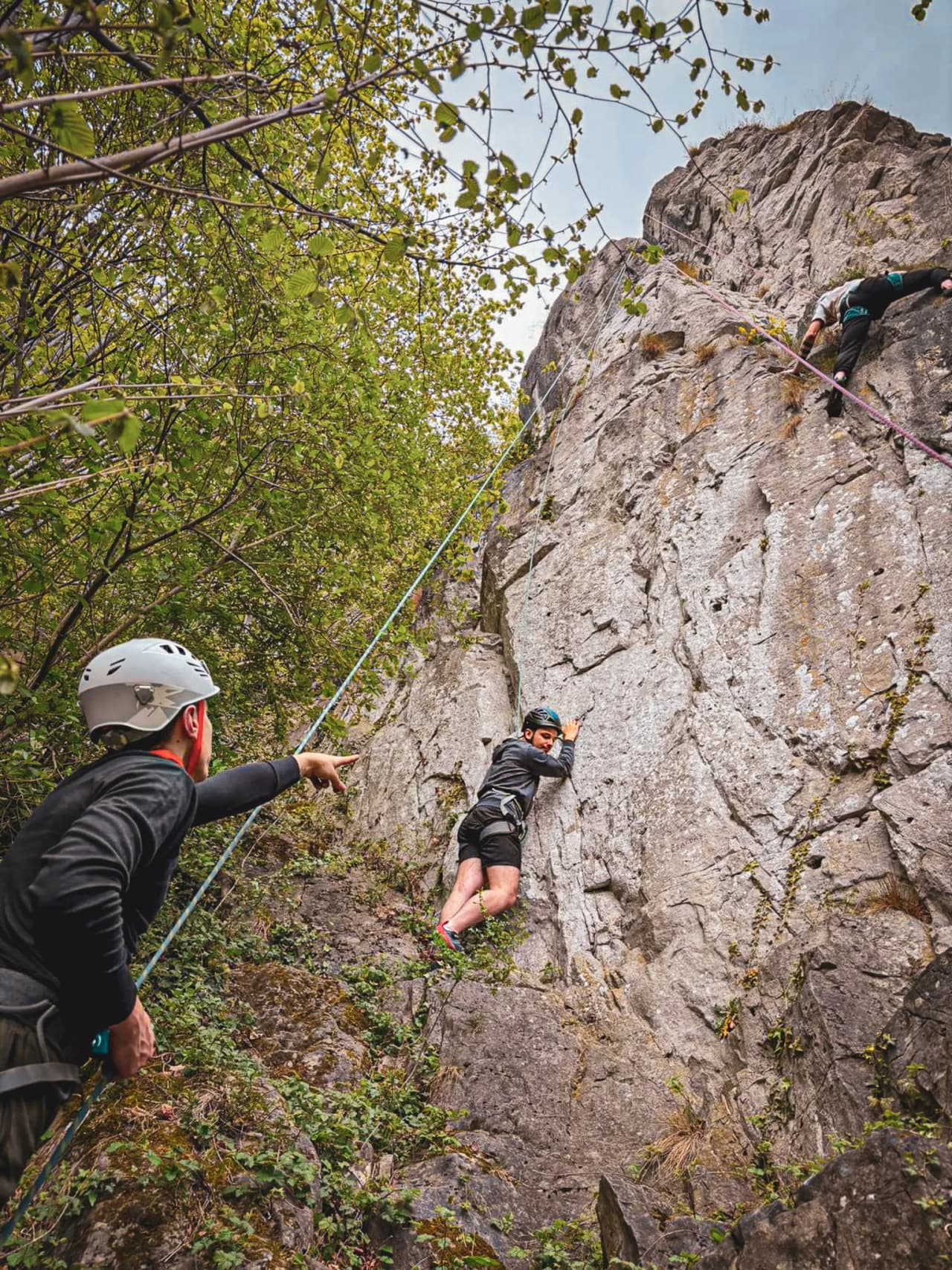
The crag comes next, once you’ve got the hang of these skills. It requires a bit more organisation (access, weather, technical kit), but it offers a much more complete experience: reading the rock, managing exposure, and the feeling of really being outdoors. Guiding an introduction to crag climbing, such as the one offered in Yvoir, Belgium, allows you to skip this stage entirely in complete safety, with an instructor managing safety whilst you concentrate on the climb.
Equipment: what you really need to know
To get started, there’s no need to buy anything: a harness, helmet, rope, quickdraws and a belay device (Grigri or Reverso) are always available to hire, both at indoor climbing centres and during guided introductory sessions on the crag. The only personal kit generally required is climbing shoes, which can often be hired on site for your first few sessions.
Simply wear loose-fitting clothing that doesn’t restrict your movements, and for a crag outing, comfortable trainers for the approach, a fleece and something to protect you from the sun – you can’t control the weather outdoors in the same way as you can indoors.
What it really takes, level by level
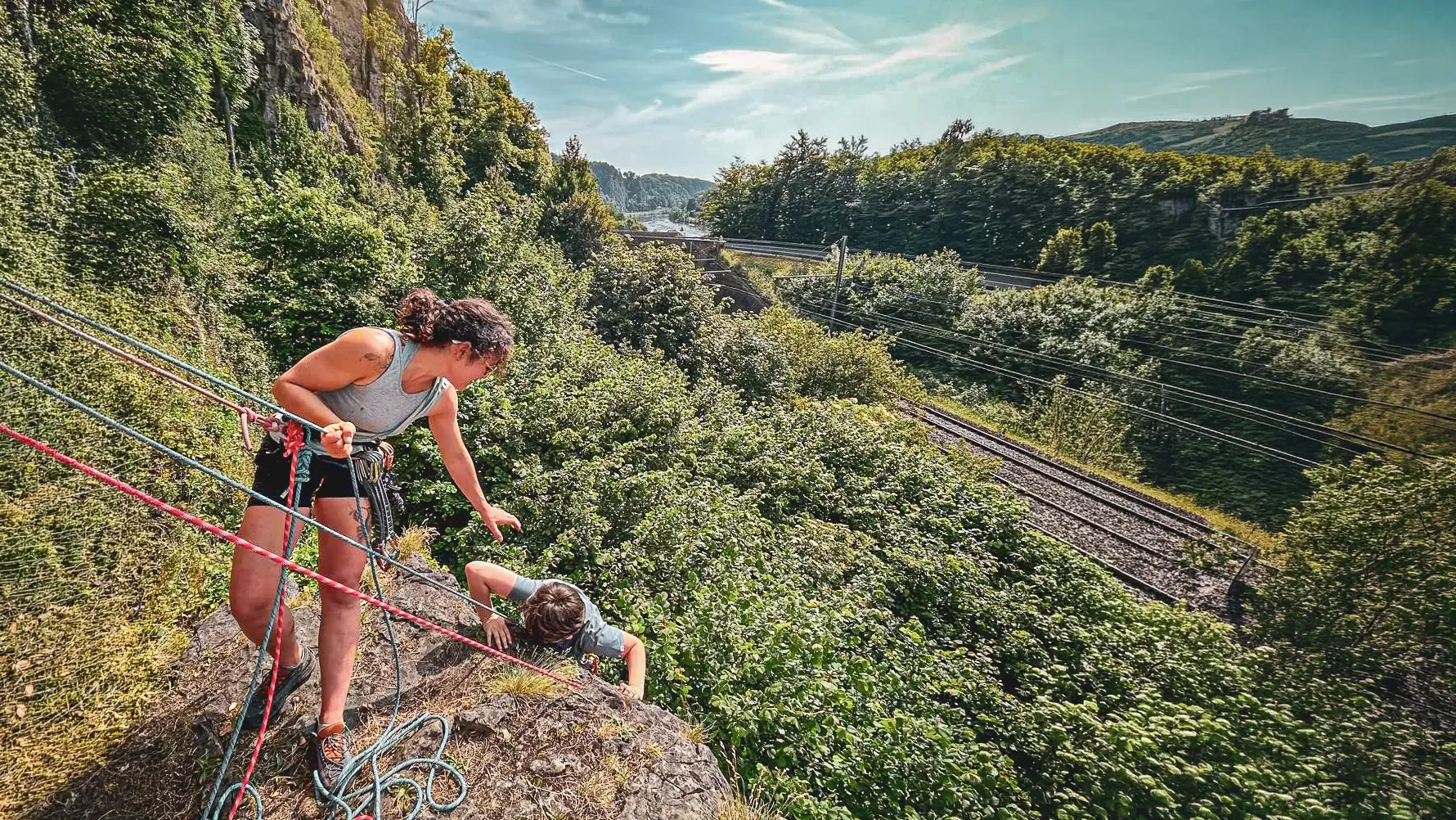
For a first introduction to crag climbing, such as at Yvoir, no experience is required: there’s no minimum level, just a head for heights and the desire to give it a go. In small groups (maximum 5 people), the instructor adapts the routes and the pace to each individual, with a genuinely progressive learning process: safety, top-roping on suitable routes, then an introduction to lead climbing in the afternoon if the group is ready.
To take it a step further, an experience such as spending the night in a portaledge suspended above the abyss requires a 6A level in the climbing gym, some prior experience of rock climbing, and, above all, a complete lack of fear of heights: this is typically the logical next step once the basics have been mastered.
What those who’ve tried it say
“An excellent experience from start to finish – I’d highly recommend it. We were able to try our hand at climbing straight away and quickly find what we wanted from the experience. The guide adapted to our different levels and put us at ease throughout.” — Louis, participant in the introductory climbing course at Yvoir
“A wonderful experience for my 16-year-old son alongside other friendly beginner climbers. A ‘family-friendly’ introduction to climbing given the limited number of participants.” — Cyrian, participant in the introductory climbing session at Yvoir
Take the first step
If you’ve always put off your first session, an introductory course in rock climbing in Belgium, at Yvoir, lasts just one day, takes place in a small group, and requires no prior experience. To take things further once you’ve learnt the basics, ‘Climbing by day, portaledge by night’ offers a night suspended above the void – a rather unique experience in Europe. To explore all our climbing and mountaineering trips, head to the mountaineering & climbing section.
Fancy delving deeper into the sport? Our article on the 5 reasons to take up climbing explains why this sport is so appealing once you’ve taken that first step.

Find your next adventure
Browse curated expeditions matching the categories of this article and start planning your next trip.
Find your dream adventure
 Find your dream adventure
You might also like these adventures …
Hand-picked to echo the spirit of this article.



More to discover
Keep exploring with these pages and stories picked for you.
Beginner outdoor climbing: where to go for your first day
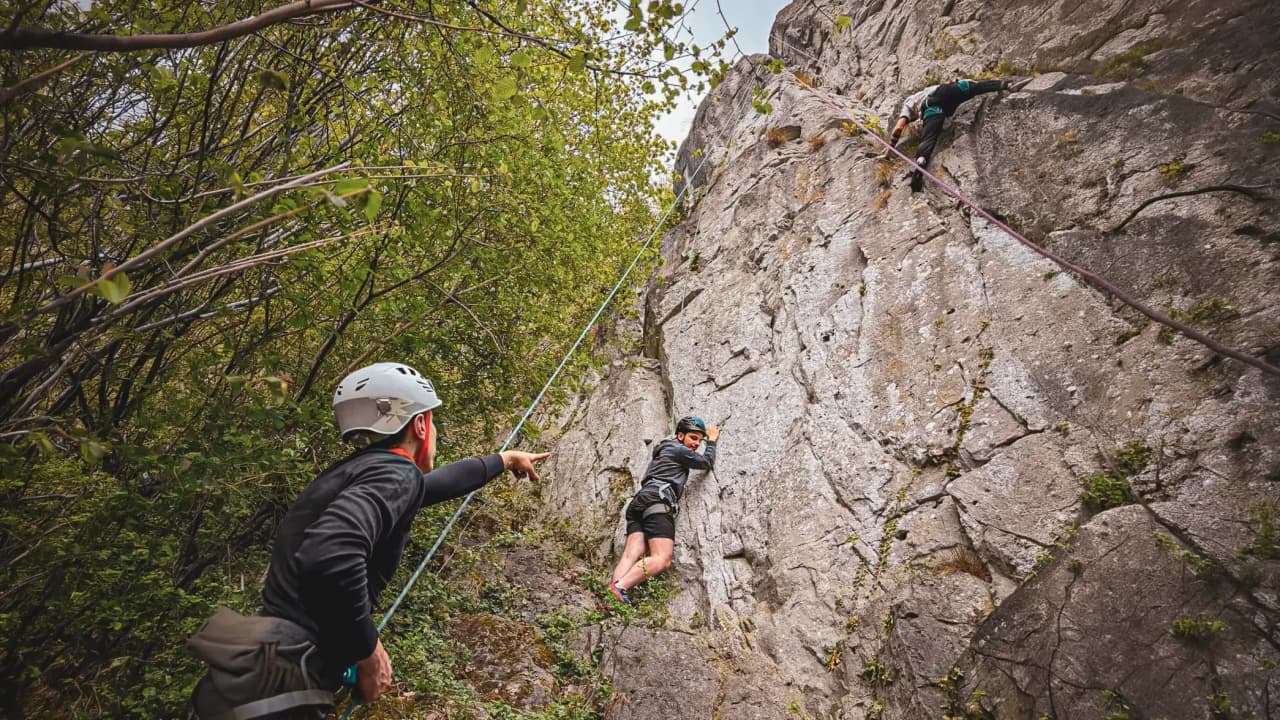
Gym or crag? Gear, grading and 3 real spots for your first day outdoor climbing, plus the next step, in Belgium and France.
How to Start Mountaineering: 5 Tips from a Guide
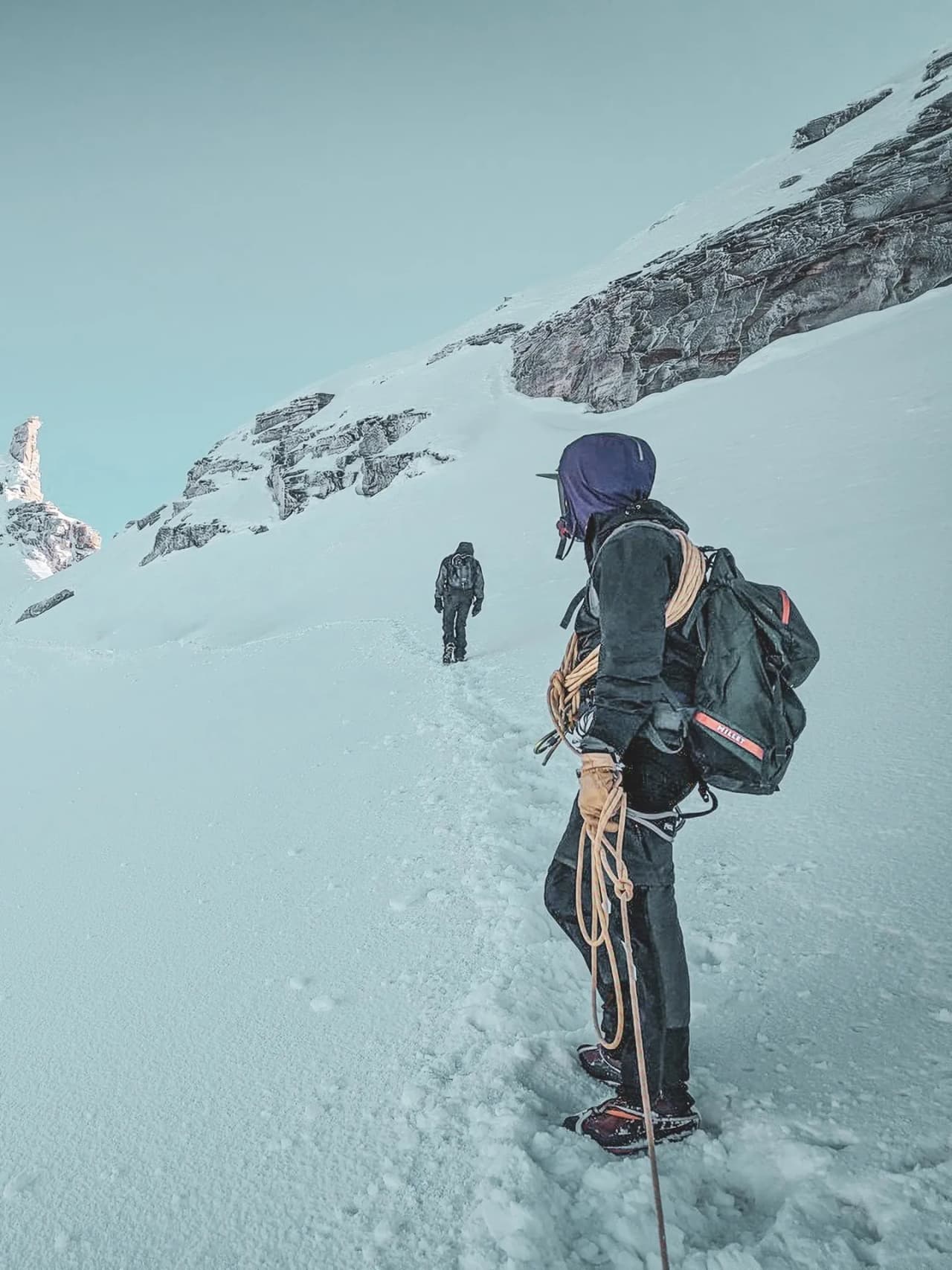
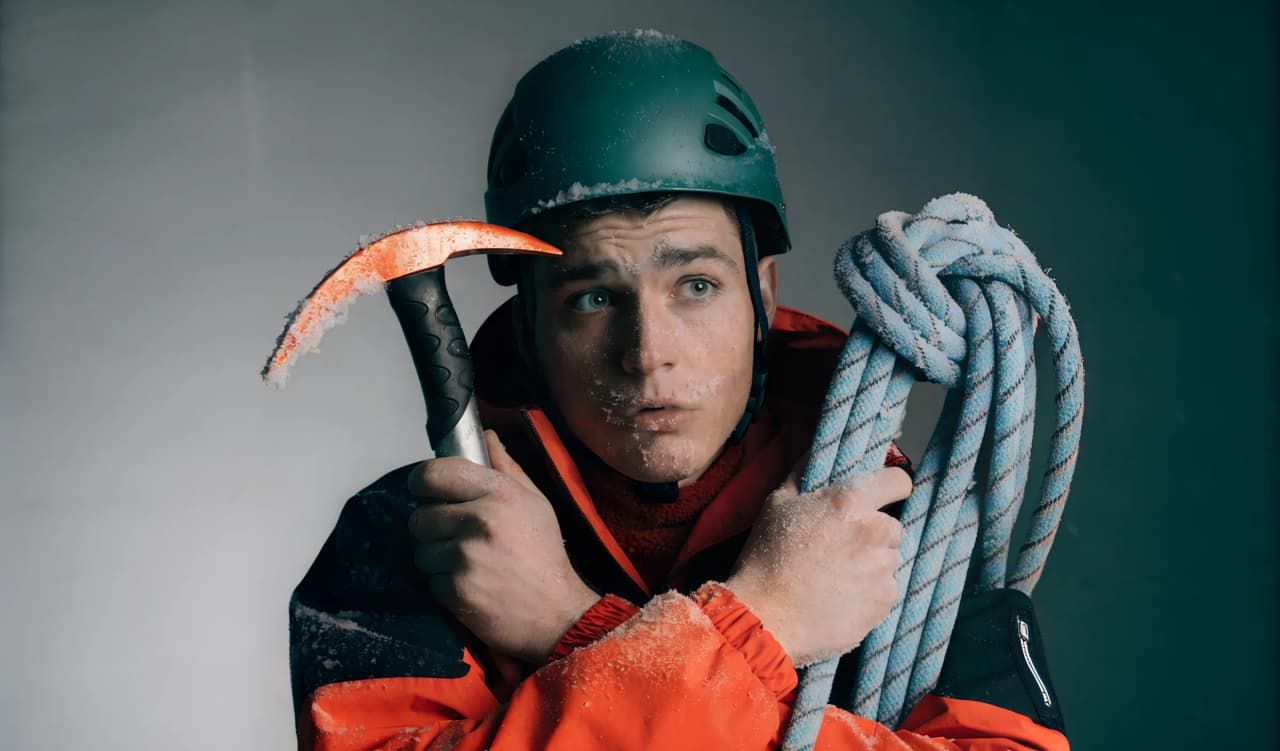
Five practical tips for starting mountaineering safely, from learning core skills to planning a first guided ascent.
A Brief Guide to Mountaineering
Dreaming of taking up mountaineering? Why not start with a mountaineering course to learn the basic techniques.
4 Beginner-Friendly Summits for First-Time Mountaineers
Four accessible Alpine summits for a first mountaineering experience, with practical advice on preparation, terrain and guided ascents.
5 reasons to start climbing
Why you should start climbing, how to go about it, where to climb, we explain everything about this vertiginous outdoor sport.
Top 5 Best Mountaineering Courses to Start Your Alpine Journey
Discover the 5 best mountaineering courses for beginners: accessible formats, advice on progress and easy summits to aim for after your introduction.
