Beginner outdoor climbing: where to go for your first day
 By isabelle
Gym or crag? Gear, grading and 3 real spots for your first day outdoor climbing, plus the next step, in Belgium and France.
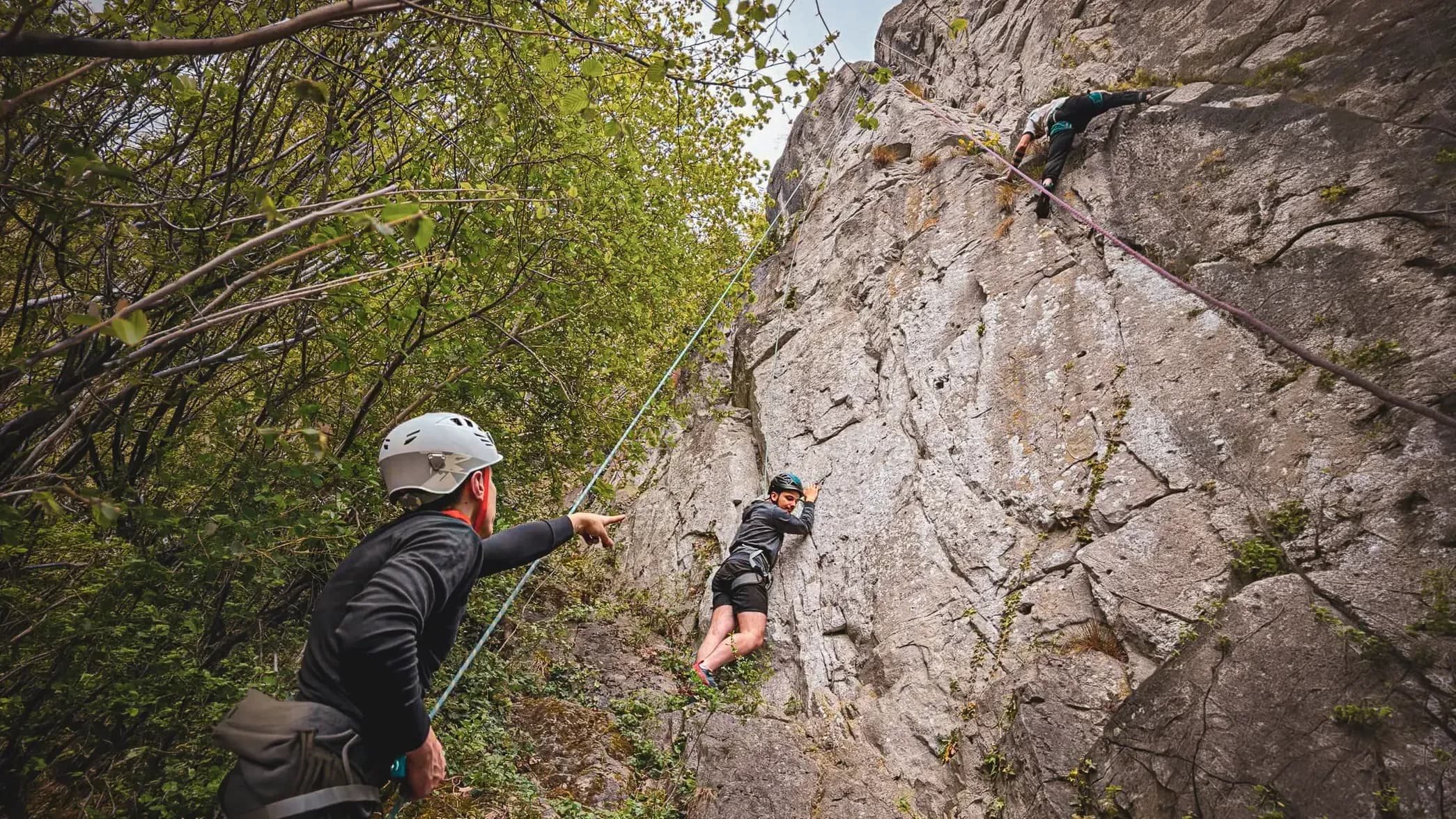
Been climbing indoors for a few months and ready to finally touch real rock? Outdoor climbing takes different prep than a gym session: you need the right gear, you need to understand grading to pick a route that matches your level, and above all you need a genuinely beginner-friendly site for your first day out. This guide covers all three, with 3 real spots to start at in Belgium and France, plus the natural next step once you're climbing more confidently.
Gym or crag: what actually changes
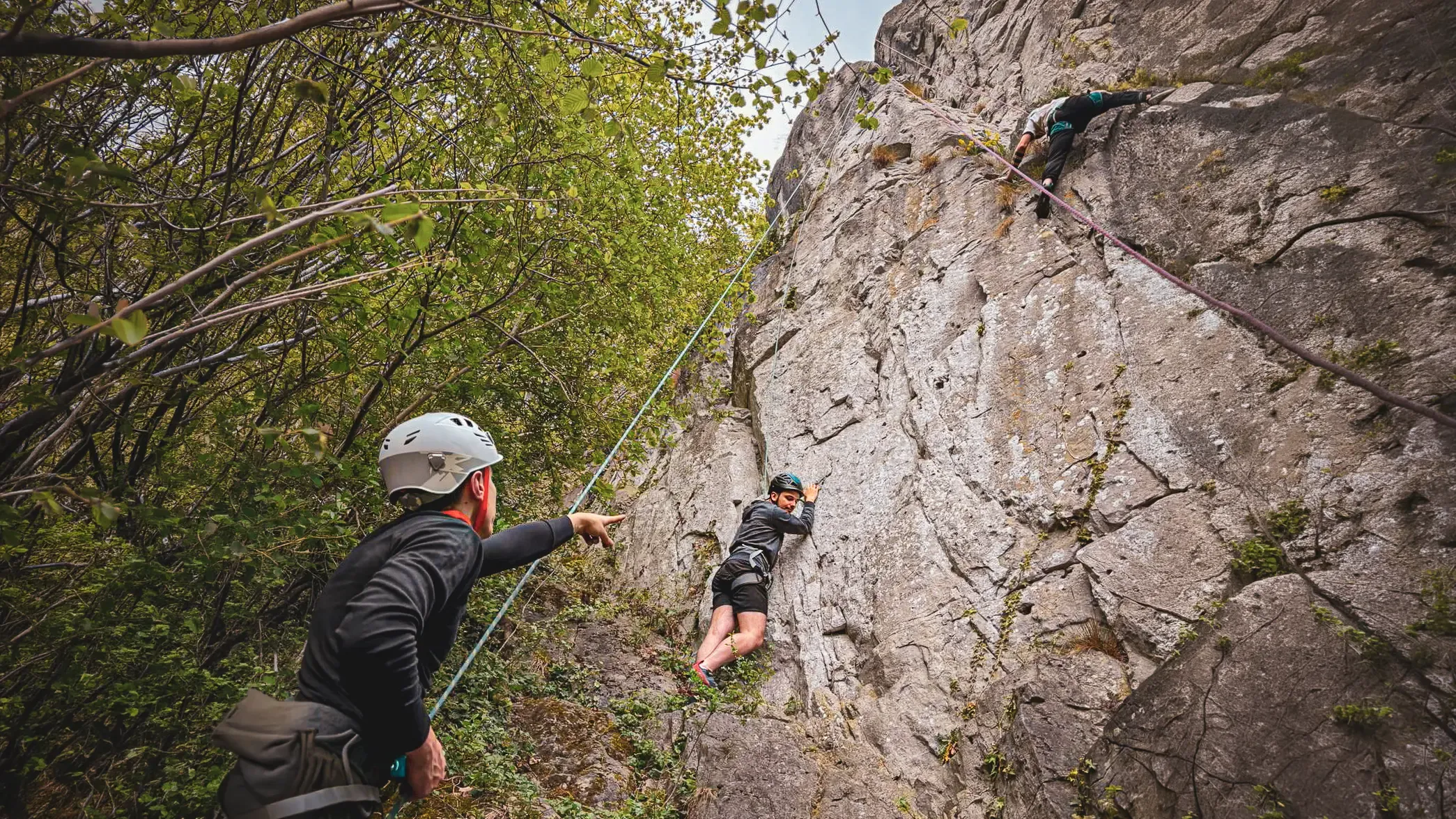
Indoors, holds are color-coded, the route is marked, and the floor is padded. Outdoors, you read the rock yourself, deal with wind and sun-baked holds, and the rope isn't always pre-set. On most beginner crags you'll start top-roping: the rope already runs through an anchor at the top of the route, and your only job is to climb while someone belays from the ground. Lead climbing, where you clip the rope into quickdraws as you go, comes later, once the safety basics are truly second nature.
Gear for your first day at the crag
You don't need to buy everything for a first try: harness, helmet and rope are easy to rent at most sites, and both expeditions below provide all the technical gear. Here's what a day at the crag involves:
- Harness and helmet (the helmet protects against falling rock, something you'll almost never wear indoors)
- Dynamic rope to standard, a belay device (grigri or tube), and locking carabiners
- Quickdraws, to clip the rope into the route's protection points
- Climbing shoes and chalk, usually still on you even on a guided trip
Shoes are often the one thing you'll actually need to bring yourself. Everything else can be rented or comes included on a guided outing.
Understanding grading to pick a route at your level
In both France and Belgium, outdoor routes are graded from 3 to 9, with letters a, b, c refining each level (3a, 4c, 5b...). A beginner typically aims for grade 4 to 5a: holds stay plentiful and the wall rarely overhangs. From grade 5 up, holds get smaller and further apart, and route-reading becomes a real skill. That's why most guided outings require a minimum indoor level before taking you outside: Yvoir asks for 4C-5A indoors, and a more committing trip like the Verdon asks for 5c. The full French grading scale (the system used across France and Belgium) helps you place yourself before choosing a route.
3 real spots for your first day at the crag
Here are three concrete options, in Belgium and France, genuinely built for a first outdoor climbing day.
Yvoir, Belgium: guided, from indoor level 4C-5A

The cliffs at Yvoir, along the Meuse river, host one of the few guided outdoor climbing intro days in Belgium. Our introduction to rock climbing in Belgium runs in small groups of up to 5, with all technical gear included (harness, helmet, quickdraws, rope), shoes on you. The site is reachable by train, Namur station then Yvoir station in 24 minutes. Julie, a past participant, put it well: "Great day learning to climb outdoors! Everything was perfect, Alban was a great guide."
Le Saussois, Burgundy: France's best-known beginner crag
Near Merry-sur-Yonne, about 2 hours from Paris, Le Saussois is one of the most popular beginner spots in France. Its "Montagne des gosses" and "Ovni" sectors are known for easy routes graded from 3a on clean, well-bolted limestone. It's an open-access site: unlike Yvoir, there's no guide on-site, so it's best visited with someone who already knows how to set up an anchor and manage safety, or through a club. The full Le Saussois topo breaks down the sectors and access.
Orpierre, in the Hautes-Alpes: the village built for climbing
Orpierre grew up around climbing: the village is nicknamed "the climbing village" and offers a very wide range of levels on its limestone cliffs, with genuine easy routes for beginners and families. We mentioned it in our roundup of France's most beautiful climbing sites, which otherwise leans toward experienced climbers: Orpierre is precisely the accessible exception on that list.
Once you're climbing 5c: head to the Verdon Gorges with a guide
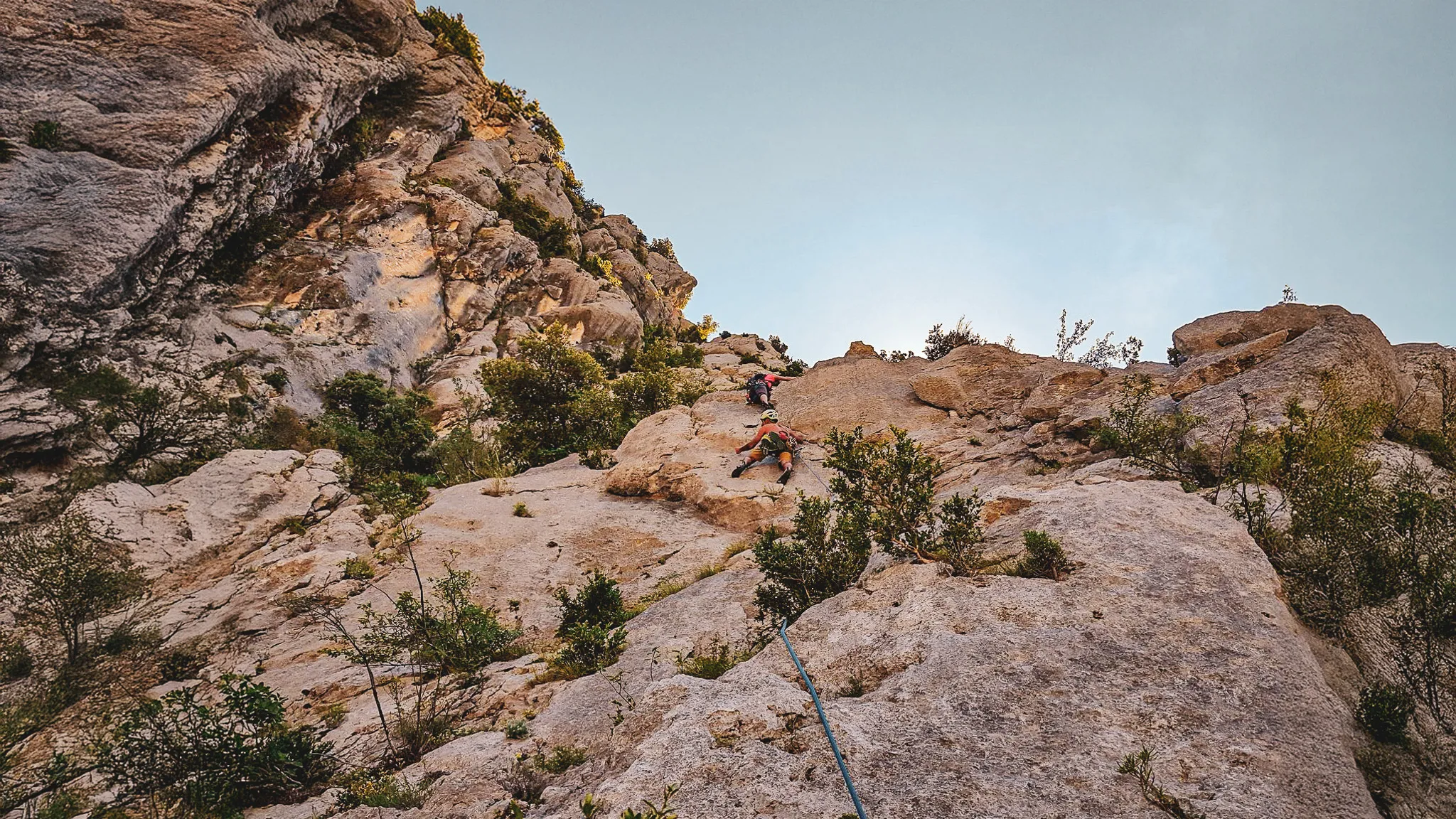
Once you're climbing 5c indoors, or you've already had at least one real rock session and want to build confidence, our climbing trip in the Verdon Gorges, guided by Patrick, a mountain guide, is the natural next step after a first day like Yvoir. Over 5 days, you climb different crags around the Verdon, cross the gorge on a suspended cable to the mythical Hulk cave, and finish with a hike on the Martel trail. Technical gear, accommodation at a hostel in La Palud-sur-Verdon and meals are included; only your own shoes, harness and helmet stay on you. To keep progressing in this range, our other guided mountaineering and climbing trips cover further crags at the same level.
Safety and site etiquette: the habits worth taking with you
Never climb alone at a crag: if something goes wrong with the rope or you fall, you need someone trained on the ground to belay and react. Check the forecast before heading out, recent rain makes rock slippery and some routes dangerous even once dry. On site, a few simple habits keep it in good shape for the next climbers: don't pull at vegetation growing in cracks, pack out your trash, and brush holds gently instead of wearing them down with chalk. These are the same rules our guides follow on every trip.
Frequently asked questions
Can you start outdoor climbing without ever having climbed indoors?
No, neither the Yvoir day nor the Verdon trip are open to complete beginners: guides need you to already know the basics (tying in, reading holds) so they can focus on outdoor-specific safety rather than the fundamentals.
Do you need a certification to climb outdoors?
No, but training with a certified instructor or guide is strongly recommended for your first day: belaying and anchor-building techniques outdoors are learned in person, not from a video.

Find your next adventure
Browse curated expeditions matching the categories of this article and start planning your next trip.
Find your dream adventure
 Find your dream adventure
You might also like these adventures …
Hand-picked to echo the spirit of this article.


More to discover
Keep exploring with these pages and stories picked for you.
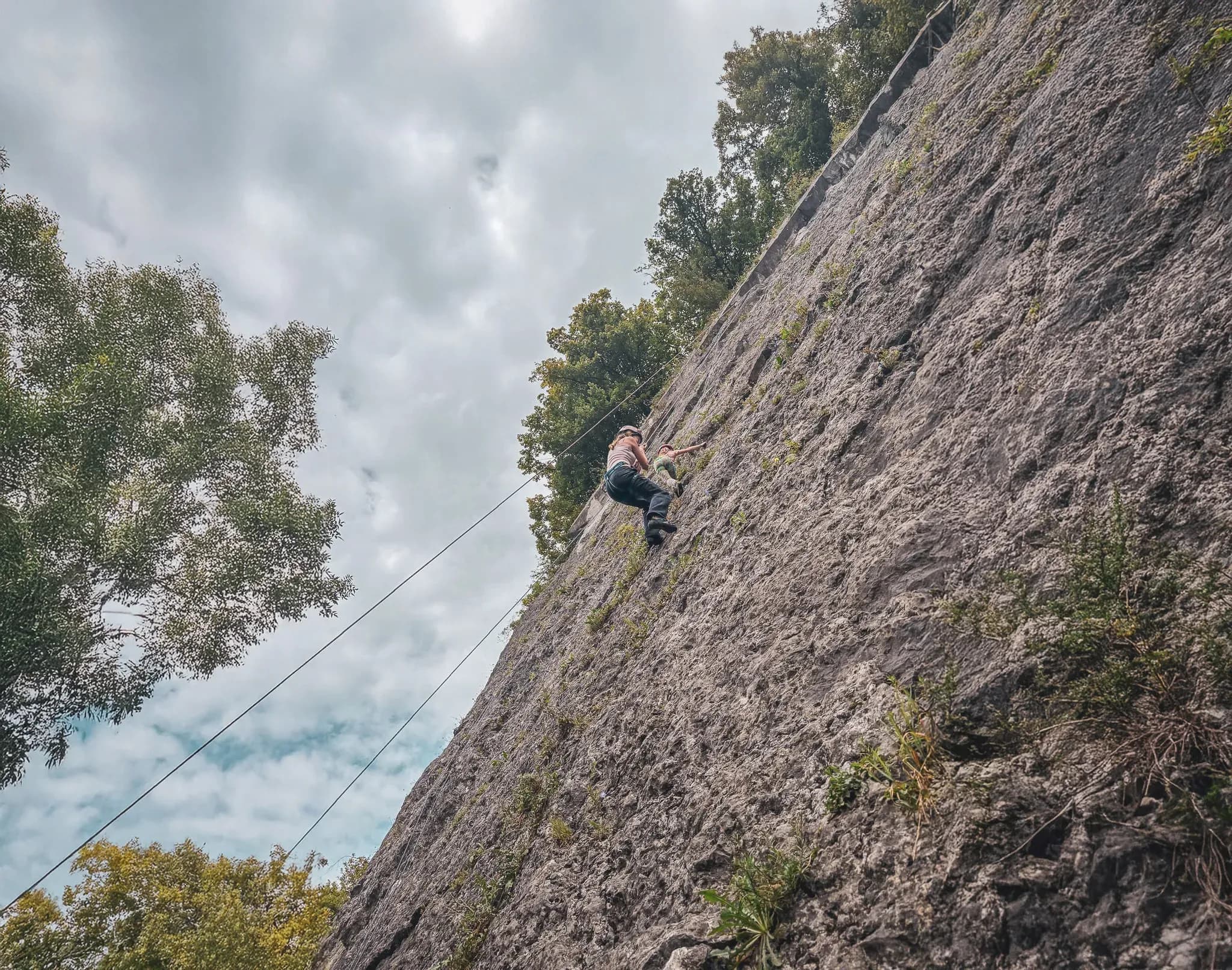
Climbing for beginners: gym or rock, gear, first routes
Fear of heights, gym or rock, gear to rent: the complete guide to taking your first steps in climbing with confidence.
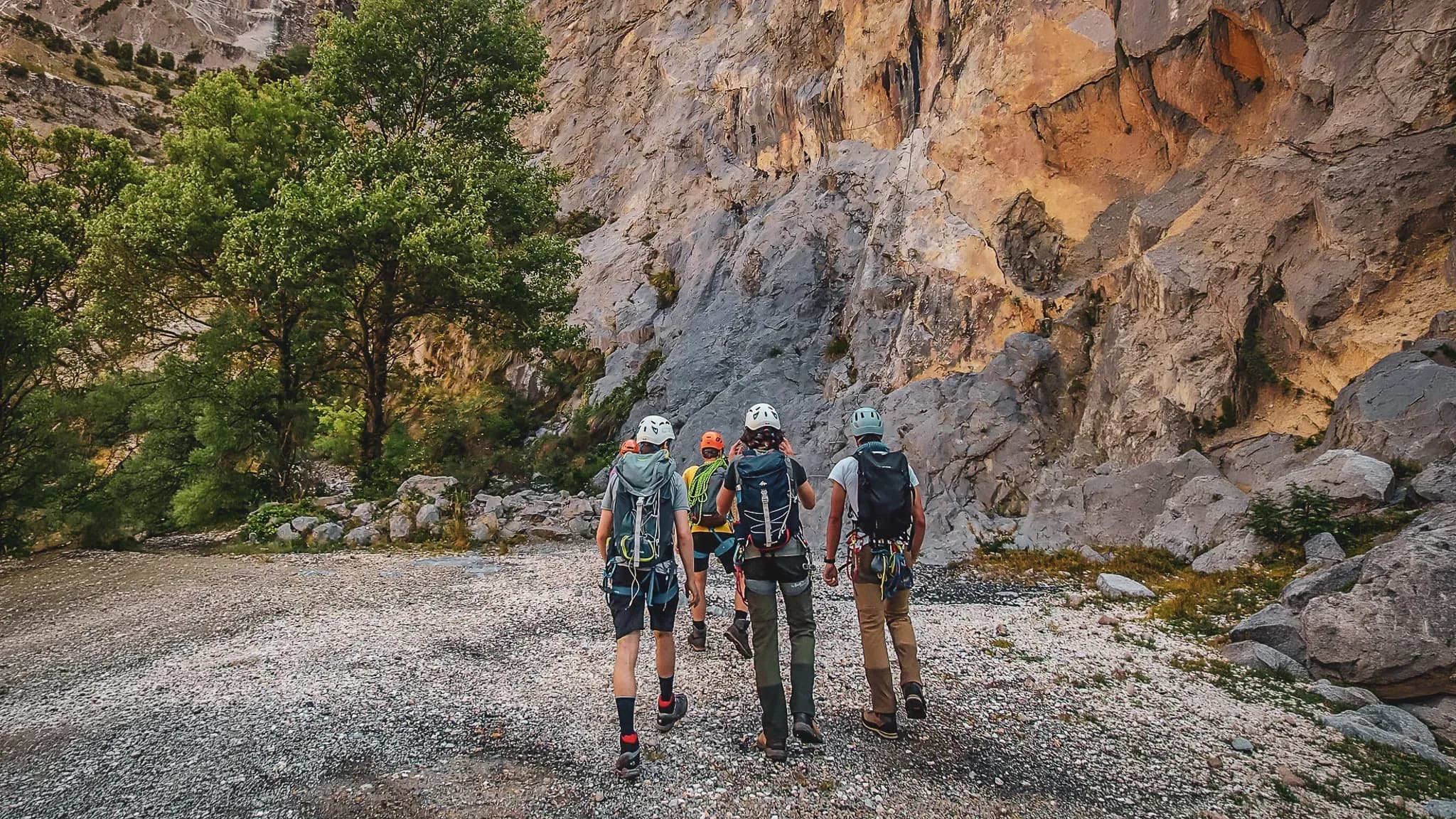
Via Ferrata for Beginners: Gear, Safety and Cost
Grading, gear and cost: everything you need to prepare your first via ferrata and start safely with a guide who knows the terrain.
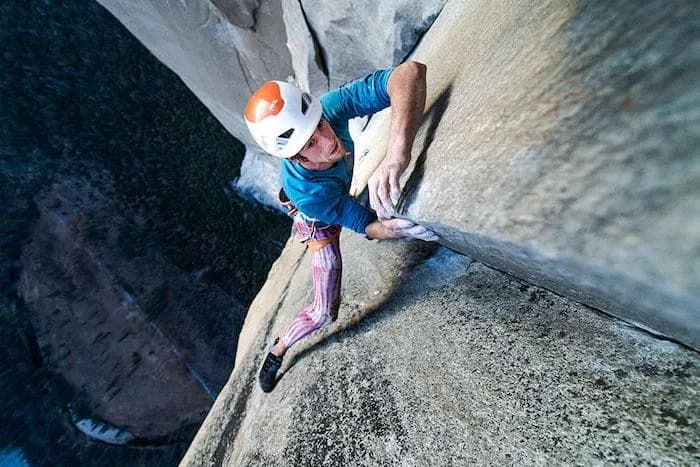
The 5 most beautiful climbing sites in France
Find out which are the 5 most beautiful climbing sites in France, how to get there and who to contact to get started and hire equipment.
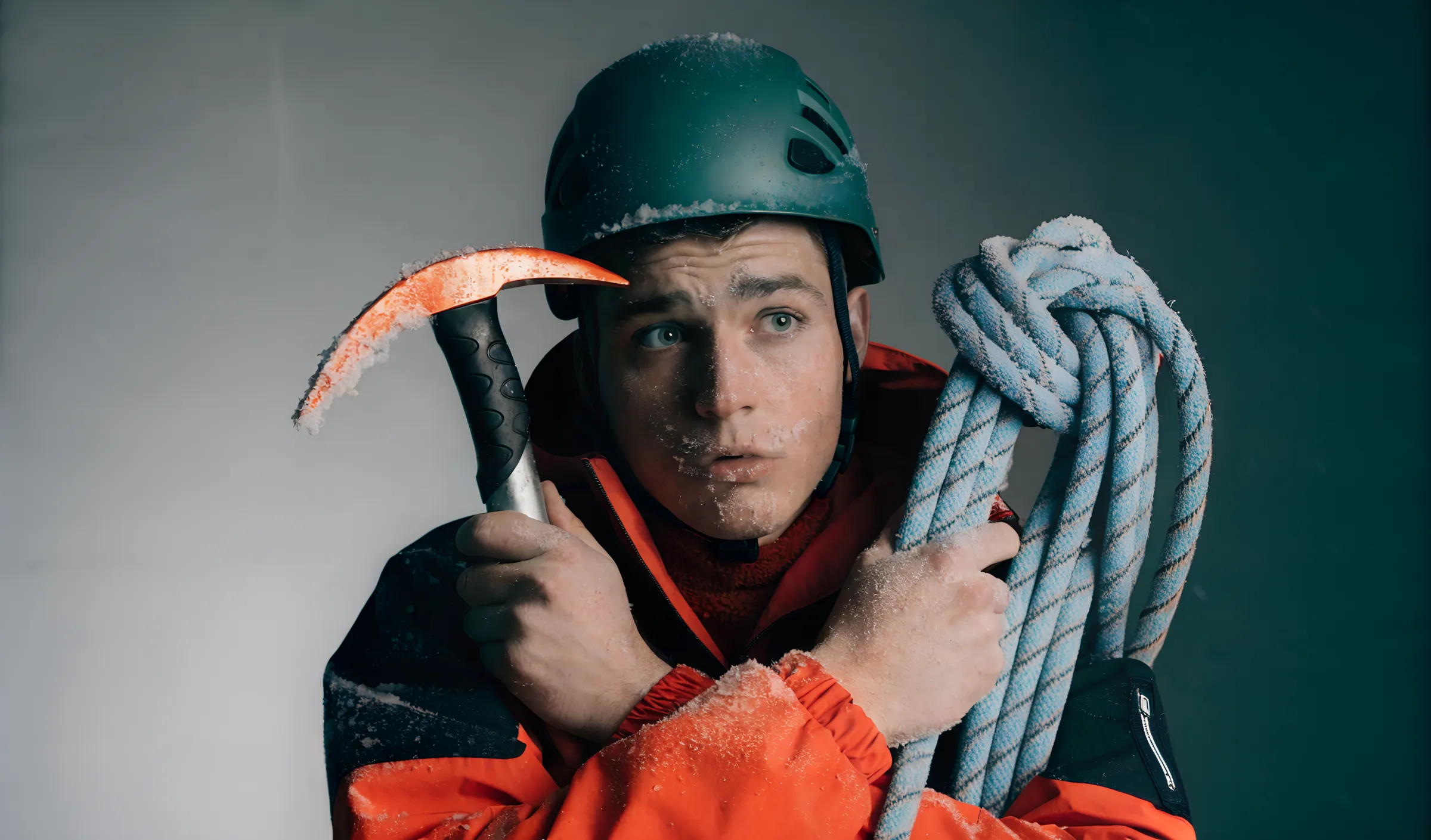
How to Start Mountaineering: 5 Tips from a Guide
Five practical tips for starting mountaineering safely, from learning core skills to planning a first guided ascent.
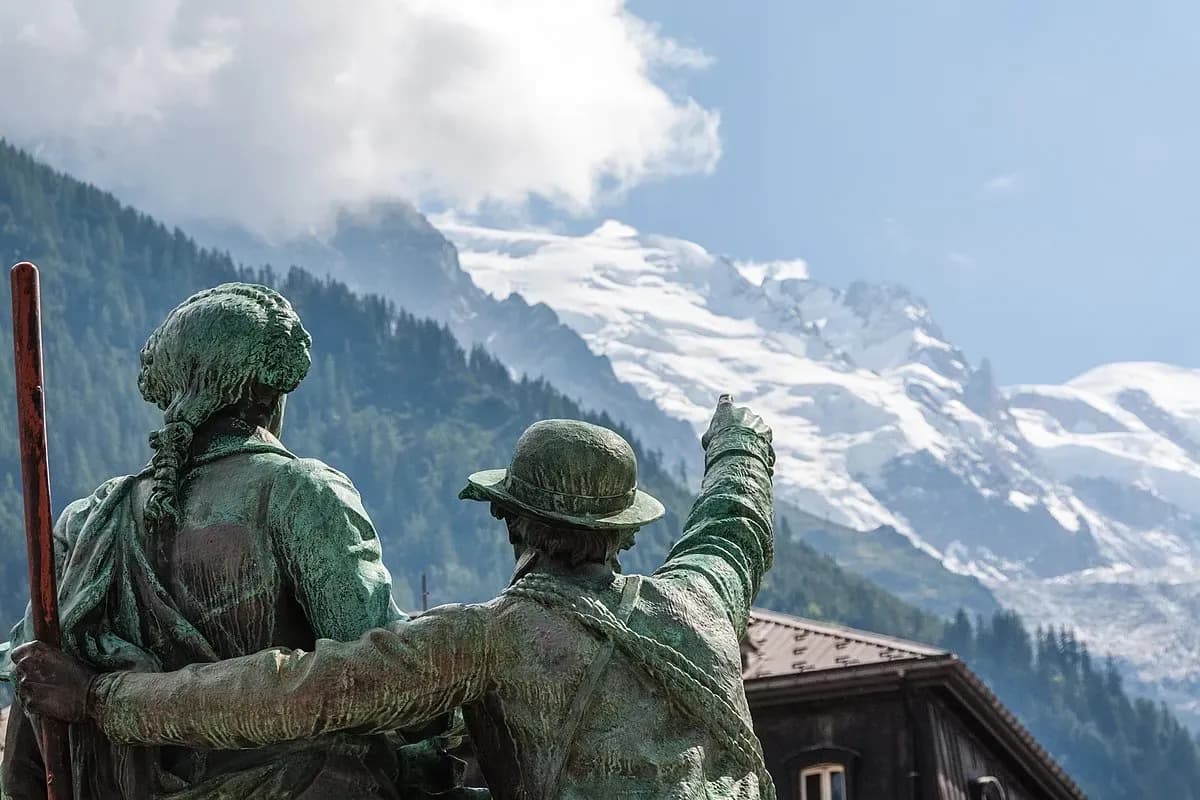
A Brief Guide to Mountaineering
Dreaming of taking up mountaineering? Why not start with a mountaineering course to learn the basic techniques.
Rock climbing and mountaineering in France, 3 to 5 day trips
Discover rock climbing and mountaineering in France on guided 3 to 5 day trips from Vercors to Chamonix, Pyrenees and Verdon. Small groups, pro guides.
