Mont Blanc Ski Touring: A 6-Week Training Plan
 By Maxime
Prepare for a four-day Mont Blanc ski-touring raid with a six-week plan built around real terrain, altitude and long days.
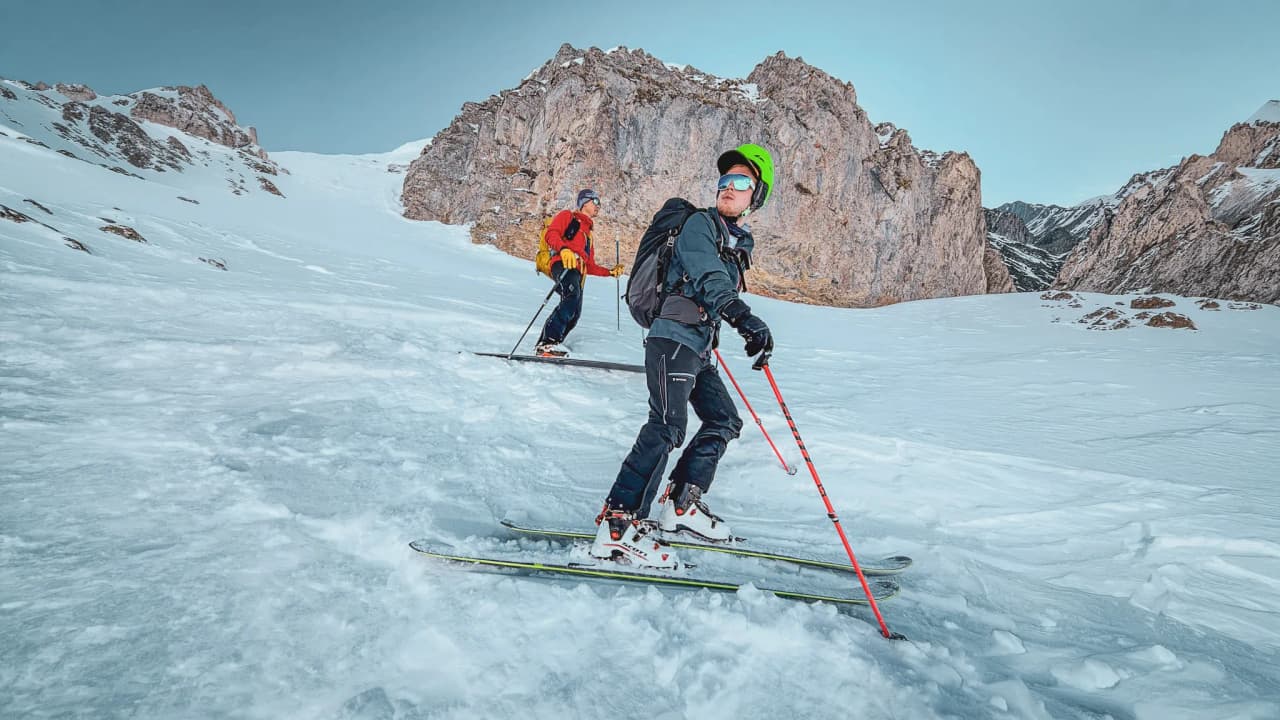
First Ski Touring Summits Around Mont Blanc runs from January to April, in a small group of four to six people guided by Olivier. It is an intermediate level, four day raid with a clear shape: day 1 at Les Contamines toward Mont Truc to get comfortable with the gear, day 2 from Notre-Dame de la Gorge up to Refuge des Prés with laps around the hut, day 3 to Col de la Cicle (2467 m) then across to Col de la Gittaz (2359 m), day 4 over Col de la Fenêtre (2245 m) and a long descent to the car park. Here is how to match your training to what each day genuinely asks of you.
What each day actually asks of you
Day 1 at Les Contamines is deliberately easy: two to three hours toward Mont Truc, enough time to learn or refresh your transceiver drills, get used to skins and kick turns, then a first descent on untracked snow. Nothing to prove that day, just steady breathing and clean movement rather than speed.
Day 2 steps things up. From Notre-Dame de la Gorge to Refuge des Prés expect four to six hours of combined effort depending on the group and the weather, with a slightly heavier pack for the overnight. In the afternoon you ski more laps on friendly slopes around the hut. You need a base of endurance that holds over distance, controlled gliding in changing snow, and growing ease with the transceiver, shovel and probe you carry all day.
Day 3 is the toughest of the four, both in distance and in technique. The steady climb to Col de la Cicle, then the traverse to Col de la Gittaz, add more vertical, possible wind exposure and firmer snow. You need clean kick turns even on steeper ground, the reflex to fit ski crampons without hesitation if the surface hardens, and steady fuelling so your legs are still there on the way back down to the hut.
Day 4 closes the loop: the climb to Col de la Fenêtre, then a final descent to Notre-Dame de la Gorge. Three days of accumulated fatigue makes the climb feel heavier, and the descent asks for legs that are still mobile and a clean line all the way to the car park.
A six week plan built around that route
Weeks one and two lay the foundation. Aim for three aerobic sessions of 45 to 75 minutes at an easy pace, running, cycling or brisk hiking, plus two short strength sessions for legs and trunk: squats, lunges, glute bridges, planks, ankle work. Add one hike with a light pack, it wakes up the balance and footwork you will need on the changing terrain of day 3.
From week three, get specific. Fit in one or two long outings each week with real elevation, on skis if you can or on steep trails otherwise, so your body gets used to the four to six hours of days 2 and 3. One hill interval session, six to ten repeats of two to three minutes at a hard effort, prepares you directly for the climb to the Cicle. Shift your strength work toward walking lunges, Bulgarian split squats and controlled jumps, and once a week carry a 10 to 12 kilogram pack on a climb to rehearse what you will actually carry to the hut.
Weeks five and six sharpen without tiring you out. Skin once or twice if you can, the movement pattern grooves better on snow than in a gym. Run one simulation day of three to five hours with real food and water stops and repeated transitions from skinning to skiing. Cut total volume by 20 to 40 percent in week six, keep a short touch of intensity, and protect sleep along with hip and ankle mobility. As a guide: most sessions stay easy, intervals stay genuinely hard, and one day each week is a true rest day.
Technique, avalanche safety and a steady head
The moves that need to become automatic
Set aside one technique session a week: skins fitted cleanly, a light step into every kick turn, crampons on and off, quick transitions at the top. In variable snow, drill rounded turns and speed control through the heels rather than through raw speed. These are exactly the moves you will repeat between the Cicle and the Gittaz.
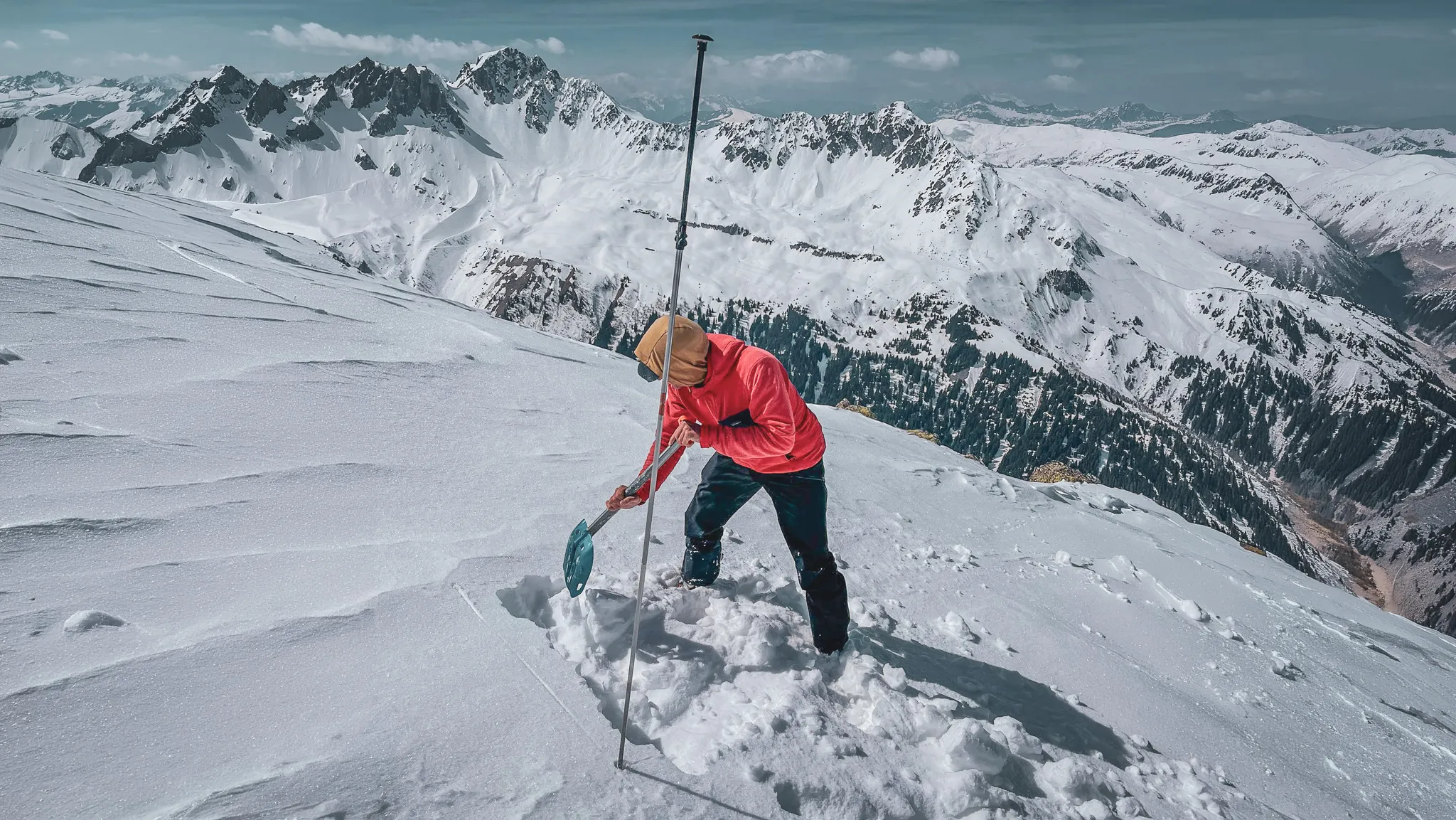
During the specific phase, add three to four mini transceiver scenarios a week, even in a garden: switch to search, find, probe, dig as a team, time it, reset. Read the daily avalanche and weather bulletin, learn to notice changes in slope angle, and agree on a simple group plan: spacing out in doubtful terrain, pausing at safe islands, decisions said out loud. Olivier checks in with the group each morning on the day's conditions, but that habit of deciding together is built before departure, not improvised on the mountain.
Staying clear-headed once fatigue sets in
Two or three times a week, visualise the actual days ahead: day 1 at Les Contamines, patient and calm; day 2 to Refuge des Prés, a steady cadence; day 3 between the Cicle and the Gittaz, long sustained work with nasal breathing on the climb; day 4 to the Fenêtre, energy held back for the final descent. Before each training climb, run a short routine: a few slow breaths, a thirty second body scan, one simple goal for the section ahead. At the end of a hard session, when you are tired, take two minutes to settle on a plan A and a plan B. That habit is what matters on the day you are genuinely tired on the Col de la Fenêtre.
What Wildhartt takes care of once you are there
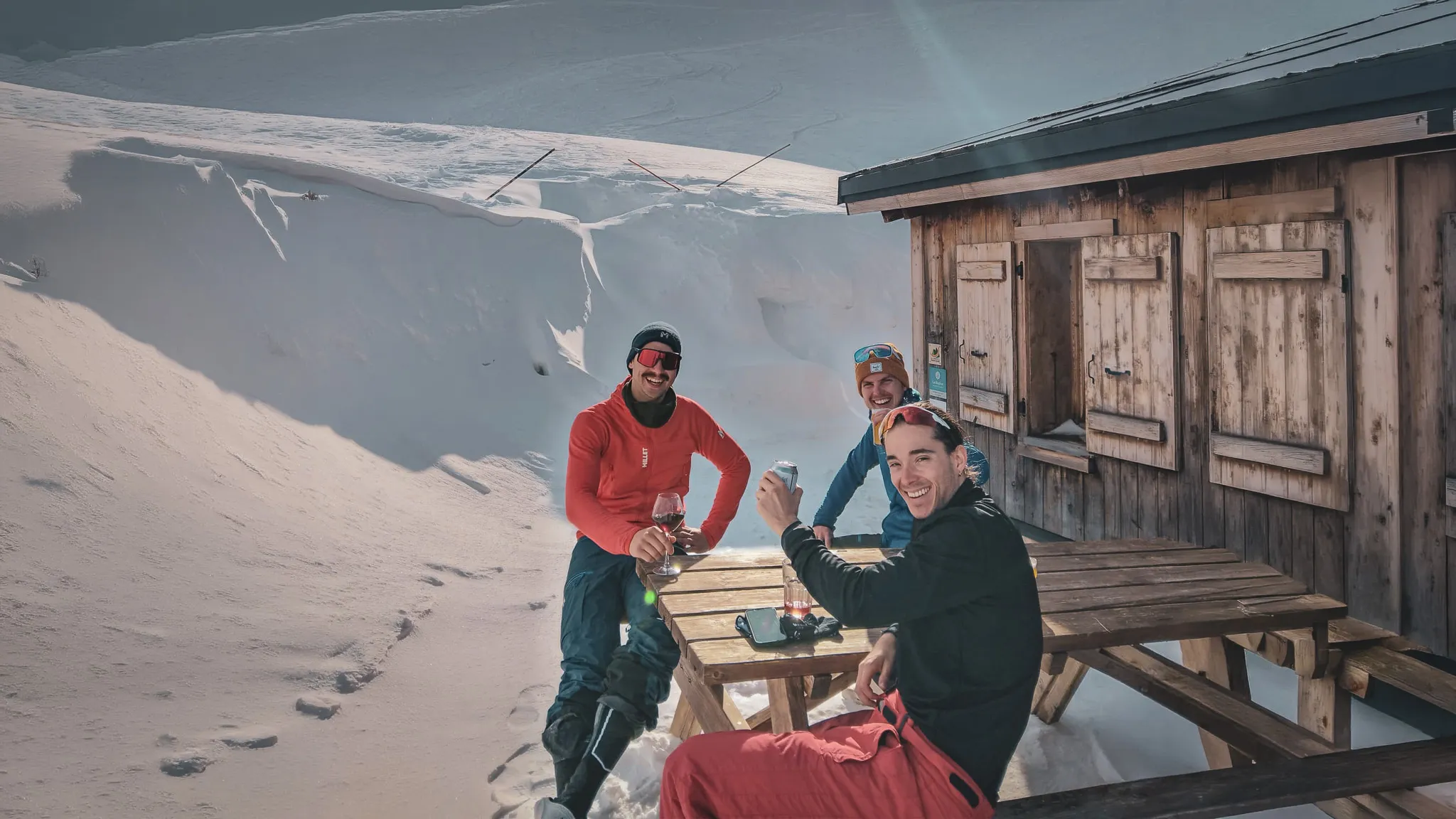
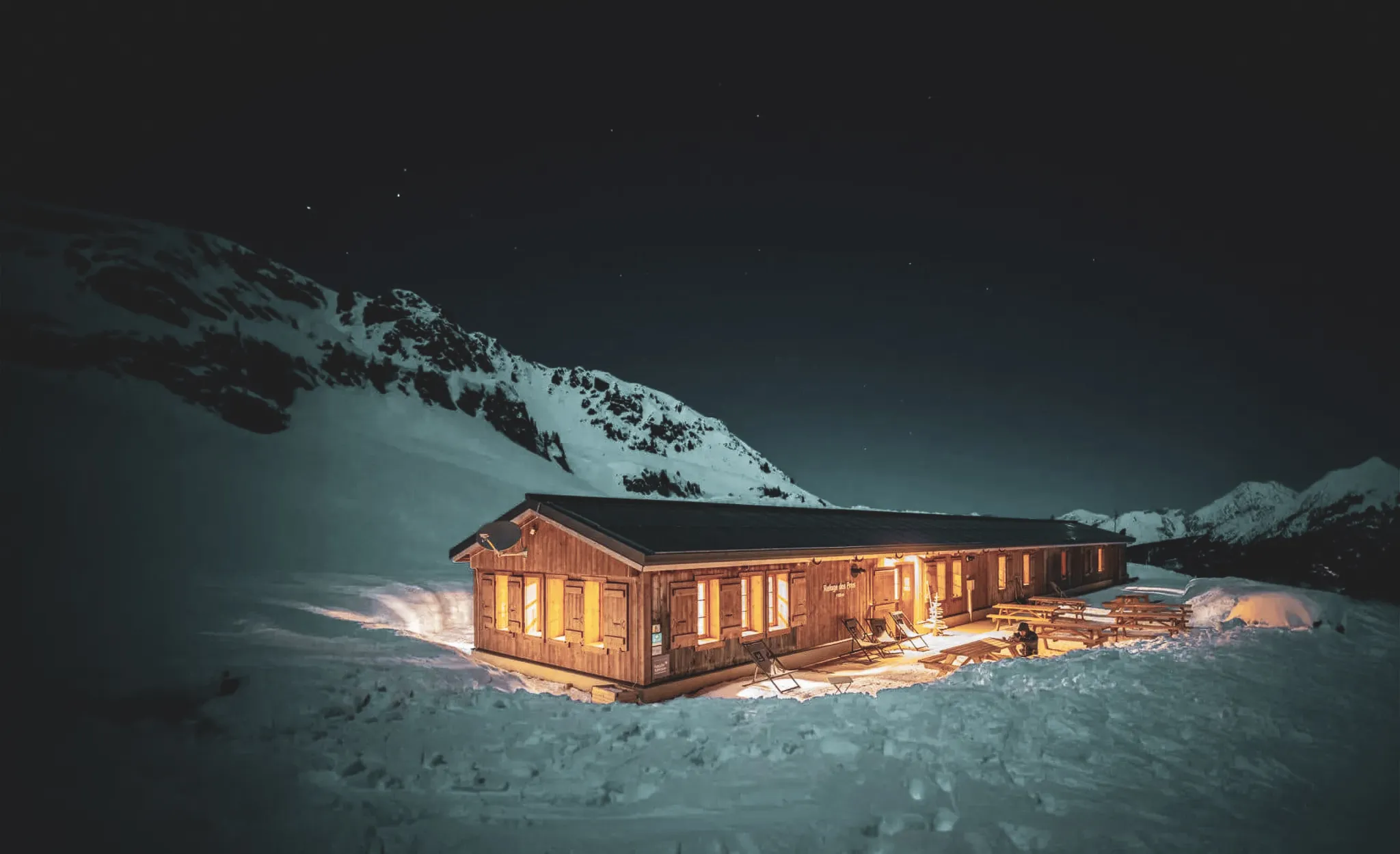
The raid runs in a small group, four to six people at most, with Olivier. You sleep one night in a chalet at Les Contamines, then two nights in dormitory beds at Refuge des Prés, right in the heart of the Contamines nature reserve facing the Mont Blanc range. All meals are covered from the first evening meal through to the picnic on the last day, except for day one's picnic, which you bring yourself. Technical gear, skis, boots, skins, crampons, poles, transceiver, shovel and probe, can be hired locally if you do not own it yet: no need to invest before you know whether this kind of trip suits you.
To reach Les Contamines, the train to St Gervais-les-Bains-le-Fayet followed by a direct bus connection works well if you would rather skip the drive. By car, a free car park is waiting at the meeting point, and a WhatsApp group opens ten days before departure so participants can organise carpooling together.
A weekly template you can copy
Here is a template you can adapt to your own schedule. Keep one full rest day and adjust pace to how you are feeling that week.
- Monday: active recovery 30 to 45 minutes, hip and ankle mobility
- Tuesday: easy cardio 45 to 60 minutes plus 25 minutes lower body strength
- Wednesday: skinning technique and kick turns for 60 minutes, transceiver practice 15 minutes
- Thursday: hill intervals 30 to 45 minutes at a hard effort, 10 minutes of core work
- Friday: rest, 10 minutes of visualisation, gear check
- Saturday: long outing 3 to 5 hours with elevation, snacks every 45 to 60 minutes
- Sunday: easy hike with a pack or gentle ski 90 minutes, light stretching
Short on time? Compress into four weeks, two foundation weeks then two specific weeks, cutting volumes by 20 to 30 percent. First timer? Keep the same structure but shorten sessions by a quarter, run only one interval session a week, and prioritise technique repetitions on gentle slopes.
Day by day on the raid, what to expect
Day 1, keep the intensity low: your job is to get comfortable with the transceiver, the skins and your first kick turns toward Mont Truc, roughly two to three hours of activity. Eat a slow carb breakfast, pack simple snacks, sip water regularly, and set your boots for the climb without pinching the instep.
Day 2, hold a steady effort on the climb from Notre-Dame de la Gorge to Refuge des Prés, with short regular pauses: keep a constant cadence, use ski crampons if needed, and leave some energy for laps around the hut in the afternoon. Plan roughly 200 to 300 kilocalories per hour depending on your build, alternating a sweet drink with salty snacks, and check your headlamp battery before the evening at the hut.
Day 3, more sustained, between the Cicle and the Gittaz. Break the climb into sections in your head, add a layer before you feel cold, and anticipate fitting crampons if the snow turns firm. On the descent back to Refuge des Prés, eat before you feel hungry and loosen your buckles at the right time to keep your legs available.
Day 4, a constant effort to Col de la Fenêtre, then a shift in focus to a clean line on the final descent to Notre-Dame de la Gorge. Return to the basics: eyes up, weight centred, progressive flexion and extension, steady energy all the way to the car park.
In the week before departure, keep it simple: halve your training volume, sleep more, finalise your logistics, test your boots and binding settings, put skins on and off in the cold, run through the transceiver, shovel and probe, and pack your 30 litre bag the same way each day so it becomes automatic.
Preparing for this raid is about linking fitness, technique and decisions. With this plan you arrive in Les Contamines with an aerobic engine that is ready, kick turns that flow, and a clear head to enjoy Olivier's guidance. If this is your first time, add a half day of transceiver practice and a technique session before you leave. First Ski Touring Summits Around Mont Blanc gives you a well guided setting to put all of this into practice safely, and a chat with Olivier beforehand lets you fine tune the pace if you have specific needs.

Find your next adventure
Browse curated expeditions matching the categories of this article and start planning your next trip.
Find your dream adventure
 Find your dream adventure
You might also like these adventures …
Hand-picked to echo the spirit of this article.

More to discover
Keep exploring with these pages and stories picked for you.
Tour du Queyras in 5 days: how to prepare your legs for the GR58
An 8-week plan for the GR58: hut nights at 2580 m, an optional summit at 3025 m, and legs ready for the descent into the wild Bouchouse valley.
Queyras autonomy or glacier traverses: pick your ski raid
Compare a five-day Queyras autonomy course with glacier traverses from Mont Blanc to the Haute Route to choose the season, effort and skills that fit your goal.
Train in 6 Weeks for the Wild Vercors High Plateaus Trek
Carrying 8 to 10 kg for four days in a row takes real preparation. Here is the full 6 week training plan for the Vercors High Plateaus trek, day by day.
Climbing the Verdon Gorges: your 6-week training plan
A 6-week plan for the Verdon: the Couloir Samson cable crossing, nights in an inn on the edge of the gorges, a small group guided by Patrick.
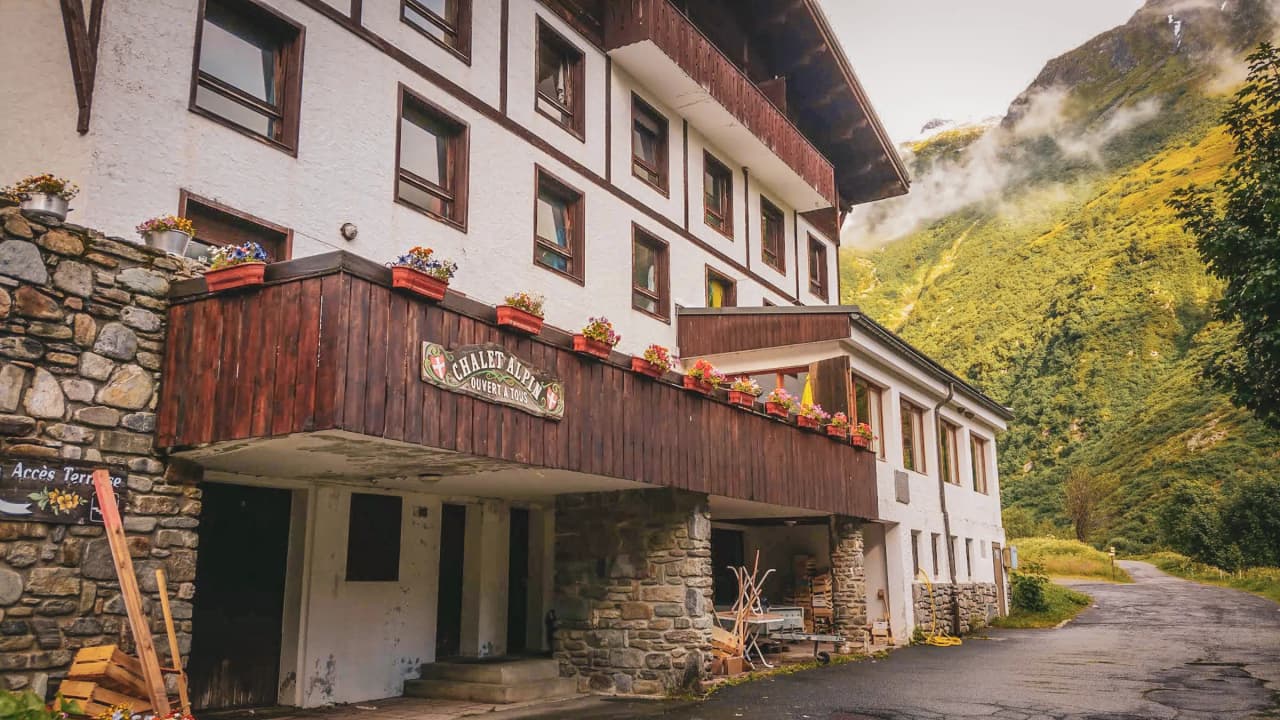
Train for the 3-day Chamonix trail camp in 6 weeks
A gentle six week plan to arrive ready for the Chamonix trail camp with Violette: basic climbing and descending technique, no performance chasing.
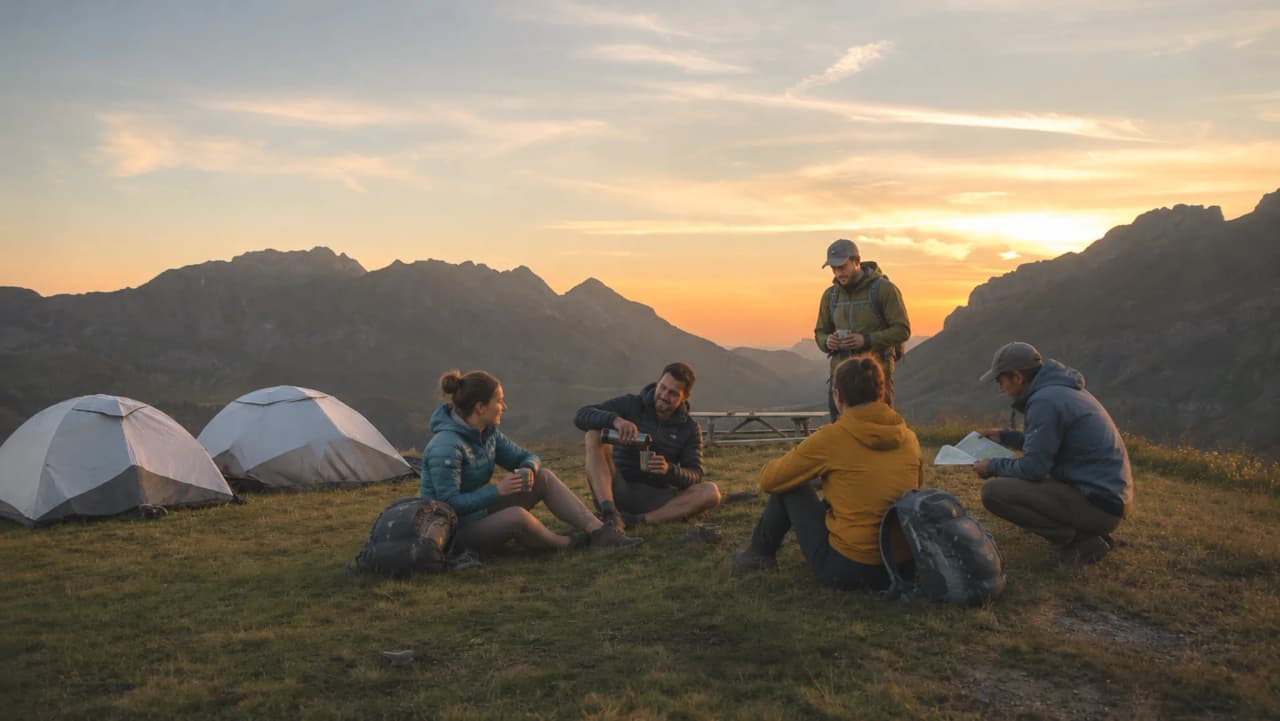
Mont Blanc or the Arves: choose your ideal alpine traverse
Compare three advanced Alpine formats, technical ridge, high bivouac and ridge-and-hut, across four real itineraries, to match your season, effort and style.
