Ice climbing course for beginners: 1 day or 6, and the cost
 By Maxime
€145 for a day, €399 to €599 for 2-3 days, €1,100 for a week in a hut. Prices checked in October 2026, and what each format actually teaches you.
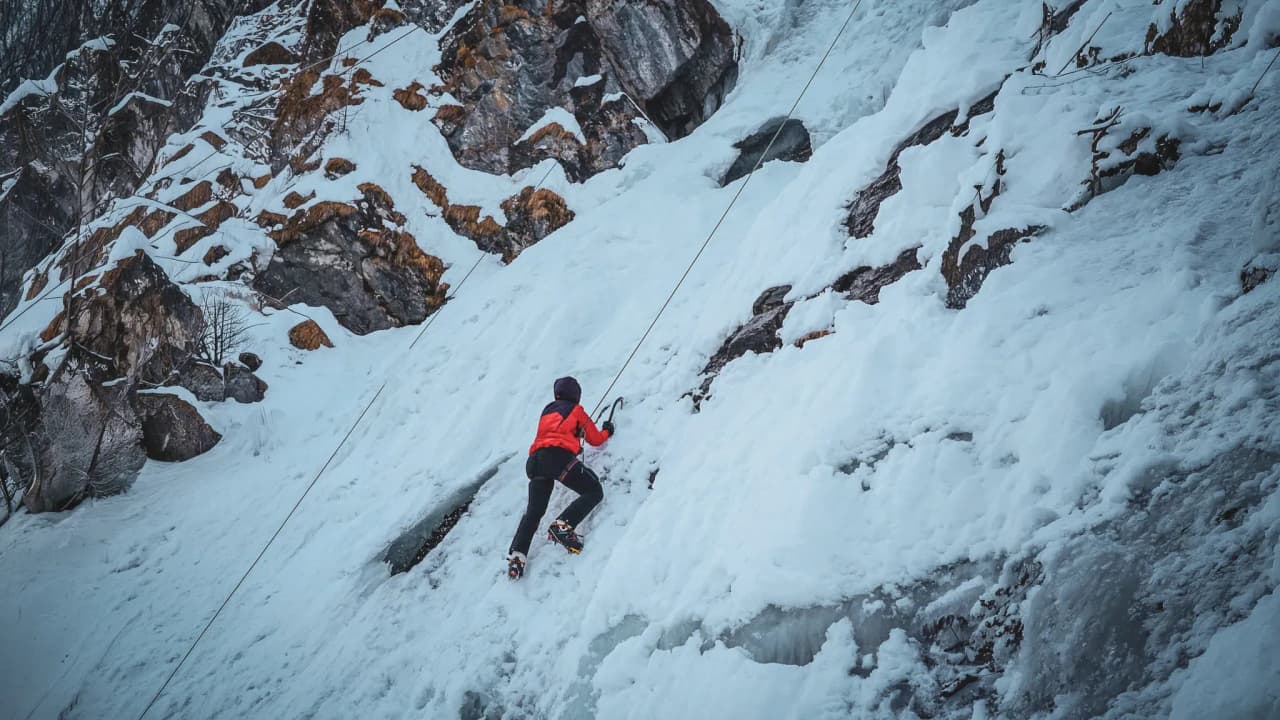
An ice climbing course for beginners runs on a top rope, with a guide and the technical gear provided. As for cost, count €145 for a day, €399 to €599 for a 2 to 3 day course, and €1,100 for our 6-day week in a mountain hut, meals and lodging included. A single day tells you whether you enjoy climbing ice. Several days tell you whether you can get better at it.
Here is what each format gives you, with the prices we found at French operators in October 2026, and the detail of our course in the Italian Alps.
A one-day introduction: what you do, what you pay
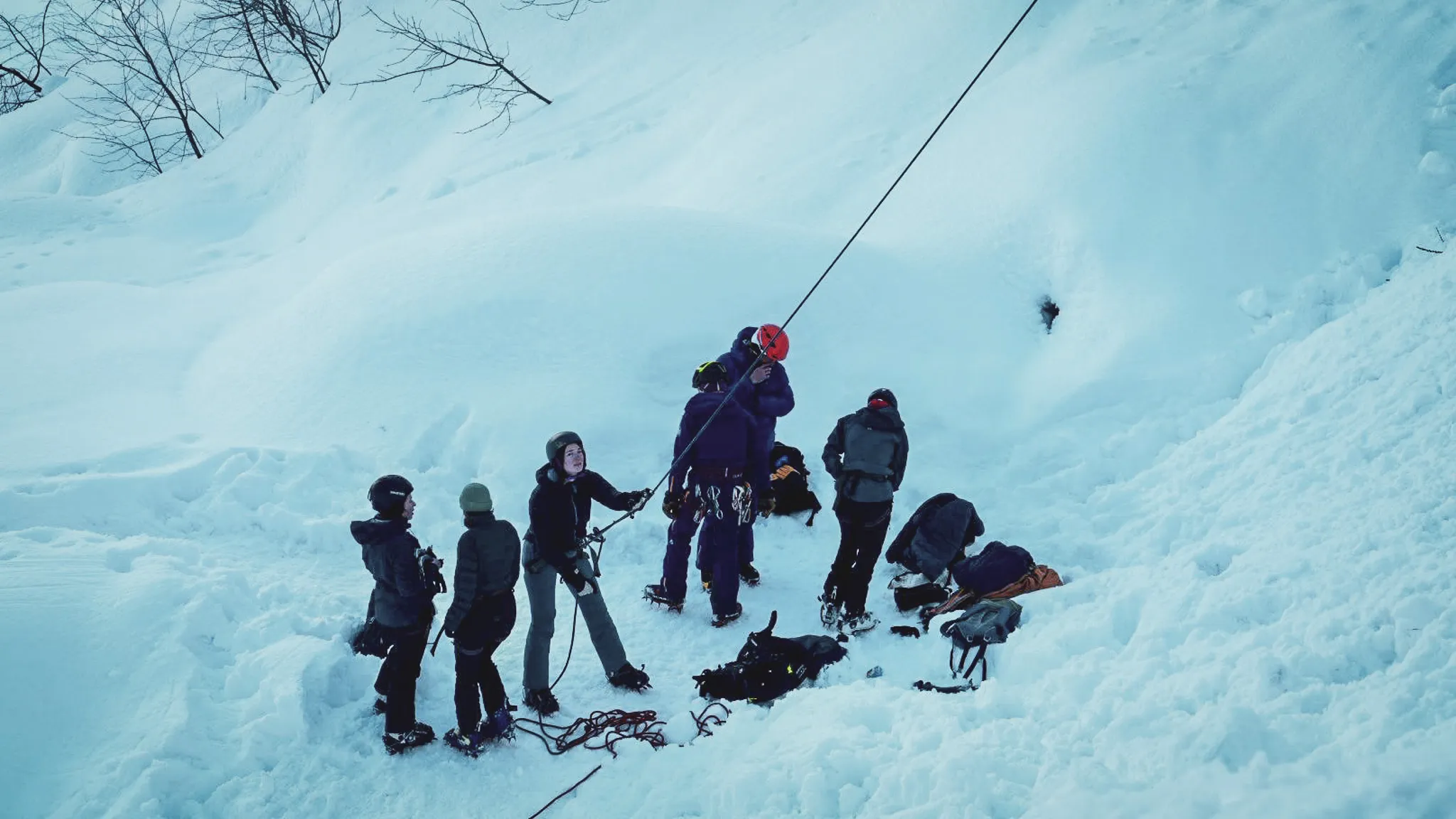
The day runs on a top rope: the rope is fixed at the top of the waterfall, the guide belays you from above, and you only deal with your feet and your ice axes. You learn to kick your crampons into the ice, to plant each axe with a firm swing, and to string together your first moves. On our course, the first session on ice looks exactly like that: placing your feet, planting your axes, trying out basic moves, always supervised.
A one-day introduction is listed between €145 and €480 depending on the offer. Ice-Fall, in the Écrins, charges €145 per person for a day in a group of 6, equipment included. The Annecy mountain guides bureau lists a day in the Aravis massif from €480, without stating the group size or the equipment on its page. Before comparing two offers, ask for those two details, and look at the massif.
One day, 2-3 days or a week: what duration changes
Going from a day to a course does not lower the daily price: €145 for one day, about €200 a day on a 2 or 3 day course at Ice-Fall, where the group also drops from 6 to 4 people. The daily price comes back down over 5 days, to about €158. Our week works out at about €183 a day, with meals and nights in the hut included.
| Format | Price found (October 2026) | Per day | Group | What you get out of it |
|---|---|---|---|---|
| 1 day, Écrins (Ice-Fall) | €145 / person, equipment included | €145 | 6 people | Finding out whether ice suits you |
| 2 days, introduction (Ice-Fall) | from €399 / person | about €200 | 4 people | Repeating the moves over two days |
| 3 days, introduction (Ice-Fall) | from €599 / person | about €200 | 4 people | Several waterfalls over three days |
| 5 days (Ice-Fall) | from €789 / person | about €158 | 4 people | The lowest daily price of the dedicated courses |
| 6 days, Conca del Pra (Wildhartt) | €1,100 / person, lodging and meals included | about €183, all inclusive | 4 to 8 people | Ice and ski touring, hut-based |
Multi-day course prices at an operator do not always say whether lodging and meals are included: ask before comparing with an all-inclusive trip. More days means more repetitions of the same moves, and the chance to move from top rope to a first lead pitch once the guide thinks you are ready, as on the fourth day of our week.
Where to swing your first ice axes
Artificial and semi-artificial waterfalls are often used as training grounds. Objectif Alpinisme lists several: the Claux waterfall at Pelvoux-Vallouise in the Écrins, the Barmette rock at Bessans, the Aiguilles waterfall in the Queyras and the Bérard waterfall near Chamonix. A small contribution is sometimes asked at the entrance, around €4 a day, according to the same site.
Natural waterfalls call for more judgement. Ice only exists in the deepest cold, generally from late January to late February, and a waterfall that has warmed up too much can break during the climb. That is why we recommend learning with a guide, who reads the state of the ice before every climb. During our course, the guide picks the safest option each day among the Val Pellice waterfalls: the Pis, the Artia d'Amunt or the Jervis waterfall.
Our course in the Conca del Pra: six days, two half-days on ice
Our ice climbing and ski touring introduction course takes place at the Willy Jervis mountain hut (1,738 m), in the Val Pellice, Italy. It combines two disciplines: over six days, ice takes up two half-days, and the rest of the programme is ski touring. If ice is your only goal, a dedicated 2 or 3 day course concentrates your days better. If you want ice inside a week in the mountains, with the hut and the skiing, this is our format.
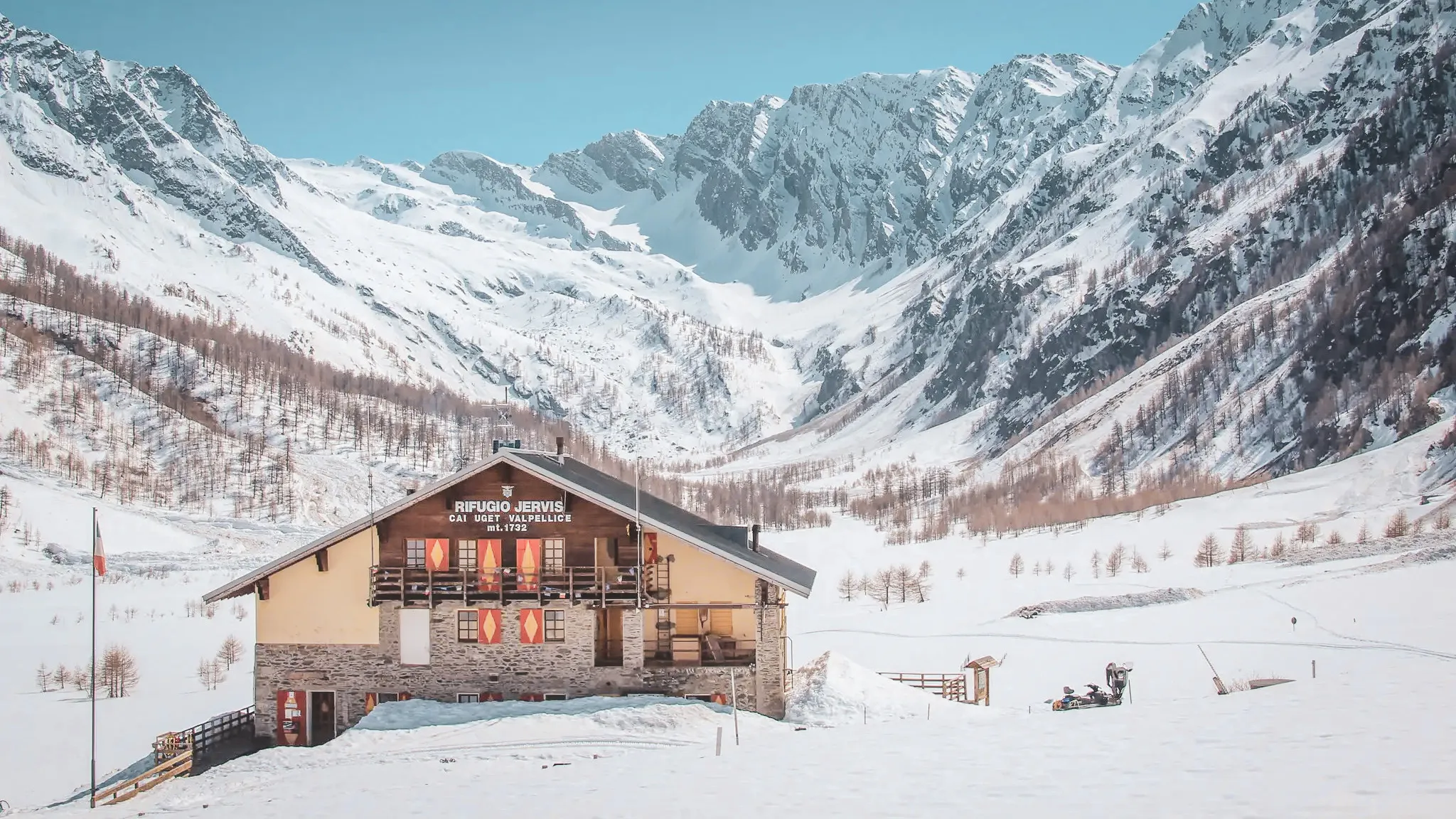
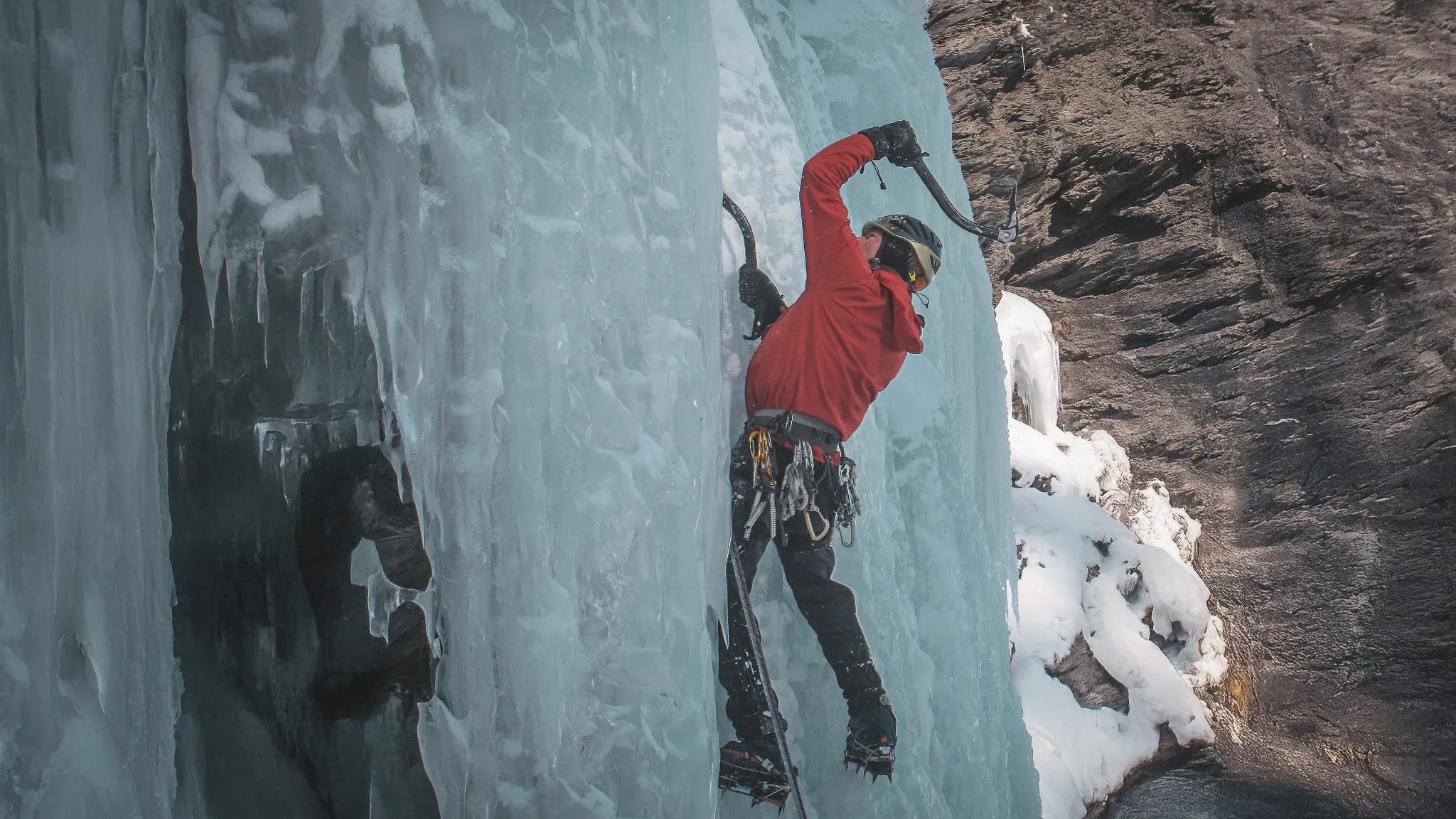
You meet at 3pm at the Villanova car park, at the end of the Val Pellice road. The walk up to the hut is on foot or on snowshoes depending on the snow, along a forest path, and dinner is cooked with local produce. The second day starts with mountain safety: reading the snowpack, avalanche transceiver, shovel and probe. In the afternoon, a first waterfall suited to beginners, the Pis or an equivalent depending on conditions, on a top rope. The third day is for ski touring, towards the Col Barant if the snow allows, with Monte Viso as a backdrop. On the fourth day, another morning on ice: depending on the group's level, a confident participant can try a first lead pitch, under the guides' eye. Marco and Jean, IFMGA-certified mountain guides, look after the group.
The last two days go back to skiing, on the Queyras side. Depending on the weather, the avalanche risk and the group's energy, the fifth day can turn into a mini-traverse with a night in a hamlet or a mountain gîte (L'Échalp or Ristolas). The way back crosses the Col d'Urine to Villanova, around 3pm. The guides adjust the route to the snow, sometimes the evening before.
You do not need previous ice climbing or ski touring experience. You do need to be comfortable off-piste in all snow conditions, able to ski 6 to 7 hours a day and climb between 500 and 900 m of elevation. The course is level 2, with 4 to 8 participants and departures from January to March.
The €1,100 price covers guiding, five nights (four in the hut dormitory, one in a gîte), all meals from dinner on day 1 to lunch on day 6, hire of the ice gear (harness, helmet, crampons, ice axes) and avalanche safety equipment. It does not cover transport to the meeting point or your ski touring gear (skis, skins, ski crampons, boots, poles, helmet). The Val Pellice has few rental shops: book your hire in advance.
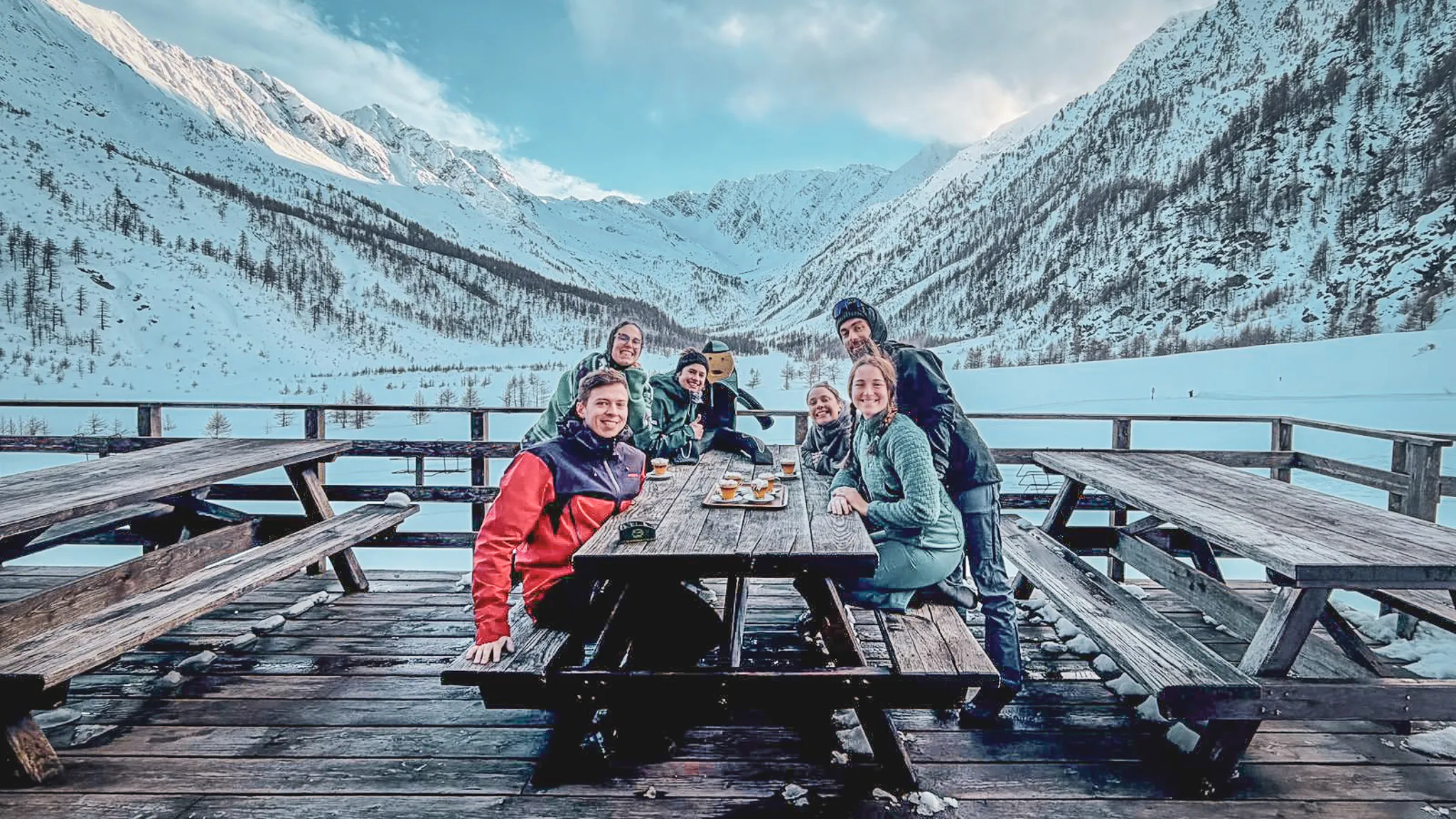
In his review, Arnaud, who did the week, remembers the hut and the guide: "A magnificent ski touring experience, in an idyllic hut far from the resort crowds and a guide who knows how to adapt to the group, to the weather and to the mountain so that everyone has a great week!"
Gear: what is provided, what you bring
On an introduction day, technical gear is generally provided: at Ice-Fall it is included in the €145. You mainly bring what keeps you warm and dry: waterproof clothing, warm gloves, a hat. On our course, you do not need to bring ice axes, crampons, a harness or a mountaineering helmet, and our packing list asks for warm gloves plus a spare pair.
If you want to keep going, our article on ice climbing equipment covers crampons, ice axes, helmet, harness and rope. Hire first, buy later: you will have tested what suits you.
Which format to choose
If you have never held an ice axe, start with a single day: it costs the least and settles the question of whether you want more. If you are already convinced and want several waterfalls to lock in the moves, aim for a 2 to 3 day course. If you already ski off-piste and enjoy sleeping in a hut, our week in the Conca del Pra combines both. To compare ice climbing with snowshoeing, ski touring or dog sledding, our comparison of winter mountain activities sets the criteria side by side.
Frequently asked questions
What level do you need for an ice climbing introduction?
No ice experience is needed for an introduction day: the guide belays you on a top rope. You only need the fitness for a day in the mountains in winter. Our course, which adds ski touring, asks for the level 2 described above.
Is ice climbing dangerous?
The introduction happens with a guide, on a top rope, and a helmet is essential because pieces of ice can fall. The guide judges the state of the ice before climbing, which takes a lot of experience. That is why we recommend starting with a guide. Our article getting started with ice climbing goes back over these points.
When should you do an ice climbing introduction?
The best period generally runs from late January to late February, when it is cold enough for the water to freeze. Our departures run from January to March and the programme adapts to the conditions of the moment.

Find your next adventure
Browse curated expeditions matching the categories of this article and start planning your next trip.
Find your dream adventure
 Find your dream adventure
You might also like these adventures …
Hand-picked to echo the spirit of this article.