Winter mountain activities: which one should you try first?
 By Thibault
Snowshoeing, ski touring, dog sledding or ice climbing? Compare winter mountain activities and find the one that fits your level and budget.
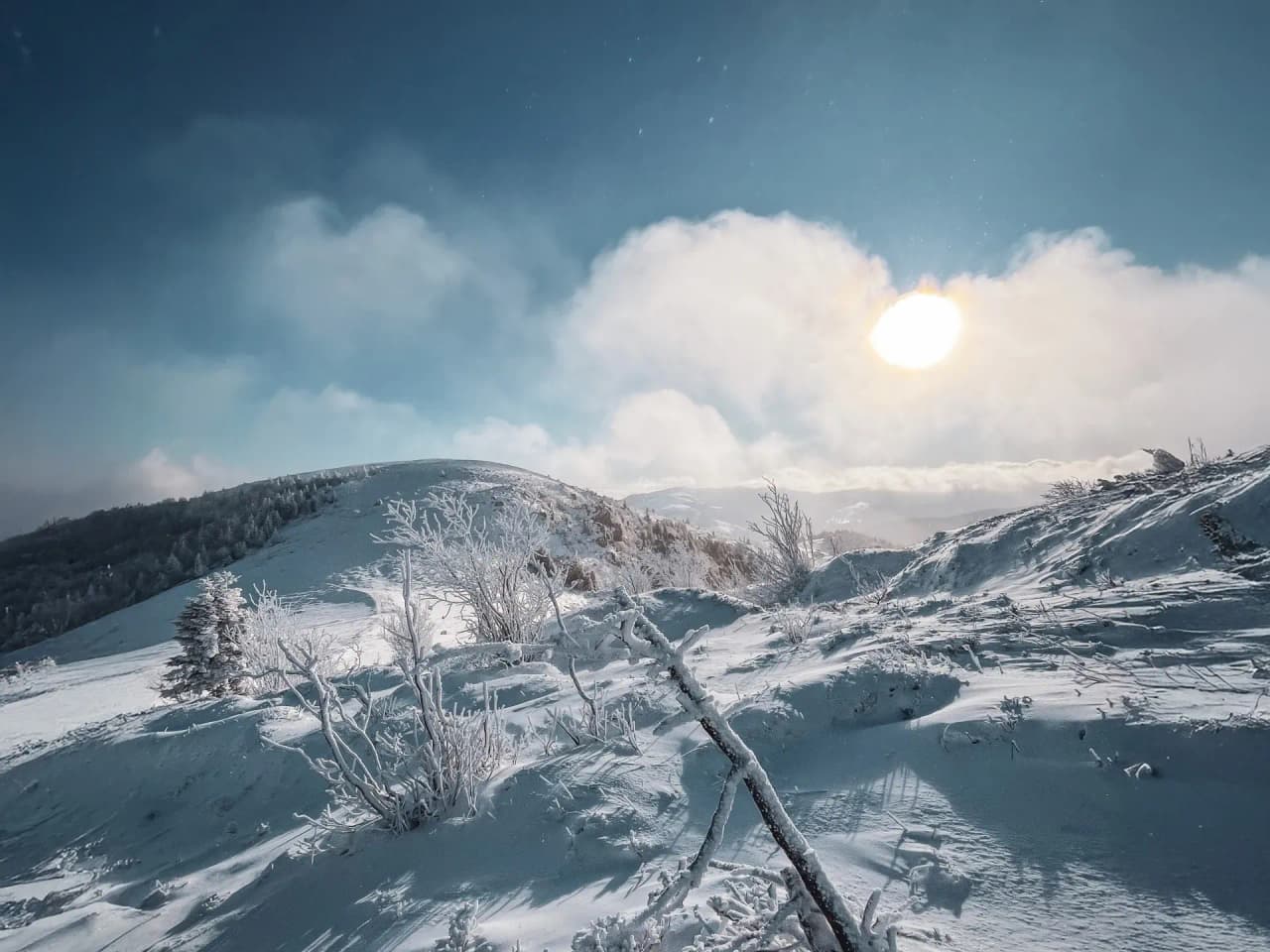
Picking a winter mountain activity, when resort skiing isn't your thing, can quickly feel like a lottery: snowshoeing, ski touring, dog sledding, ice climbing... All four happen in the snow, but they demand very different levels, budgets and mindsets. This guide compares them with real criteria, so you choose the one that matches your winter rather than the one with the prettiest photos.
The mountains in winter, without a ski pass
Every activity compared here happens away from groomed slopes: no ski lifts, no queues, no lift pass. What changes is the effort required, the technique you need on day one, and the atmosphere you're after. Two questions settle it: what is your actual level today (not the one you're aiming for), and are you looking for a discovery weekend or a real expedition? The four sections below answer both questions for each activity, using the real numbers from our trips.
Snowshoeing: the simplest way in
Snowshoeing is the only activity on this list that requires no prior experience: if you can walk, you can snowshoe. On our snowshoe weekend in the Vosges (3 days, €460, level 1), the pace is around 10 km a day with 350 m of climbing, snowshoes and poles are provided, and you sleep at the same mountain hut every night, the Sotré at 1,200 m, so there's no heavy pack to carry during the day. Corine, a participant on a previous departure, summed up the real content of the trip in her review: "We covered 38 km and 1,100 m of positive elevation gain", guided all the way to the Hohneck, the highest peak in the Vosges at 1,363 m.
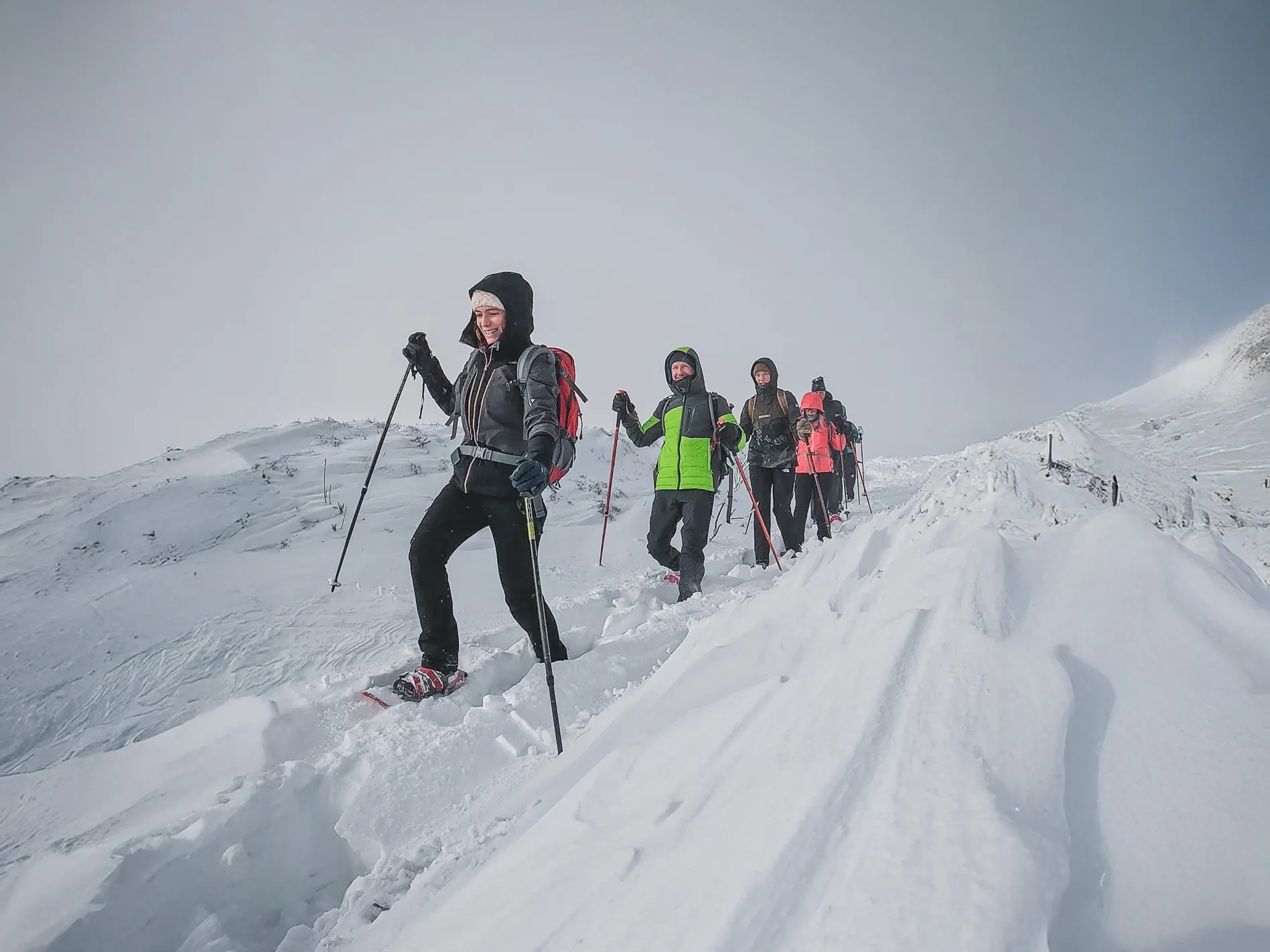
Sophie, after a first departure: "A wonderful first snowshoeing experience under a big blue sky." This is the activity to pick if you want a first winter in the mountains with zero prerequisites.
Ski touring: for confirmed skiers ready to leave the slopes
Let's be honest, because this is the most common mistake: ski touring is not a discovery activity, it's a progression for already solid skiers. Even a very good piste skier isn't ready without real off-piste experience: the descent happens in every snow quality (powder, crust, wind-packed), and it's the descent that demands the real skill, not the climb. On our first ski tour at the Grand-Saint-Bernard pass (4 days, €985), the prerequisites are explicit: comfortable on black runs in all conditions, prior off-piste experience, and able to climb 500 to 900 m of elevation a day.
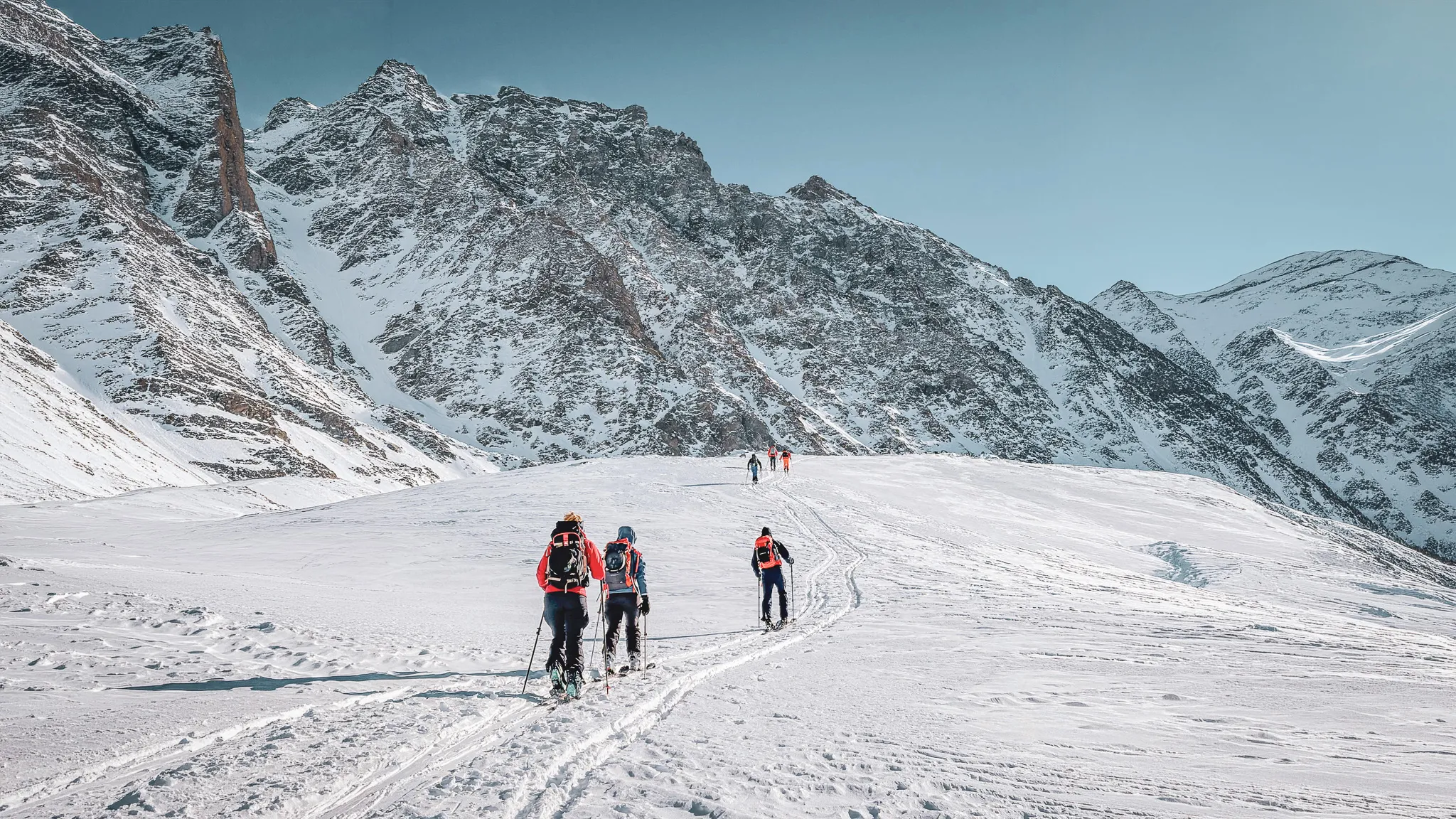
If you have that level, the reward is real: hut-to-hut touring, powder far from the crowds, and a final night at the historic Hospice du Grand-Saint-Bernard, dinner with the monks included. Catherine, after her first departure: "First experience on a 4-day introductory ski touring expedition. A wonderful experience: our guide Thibault is a top-level professional who gave the group confidence."
Dog sledding: the Great North adventure, open to everyone
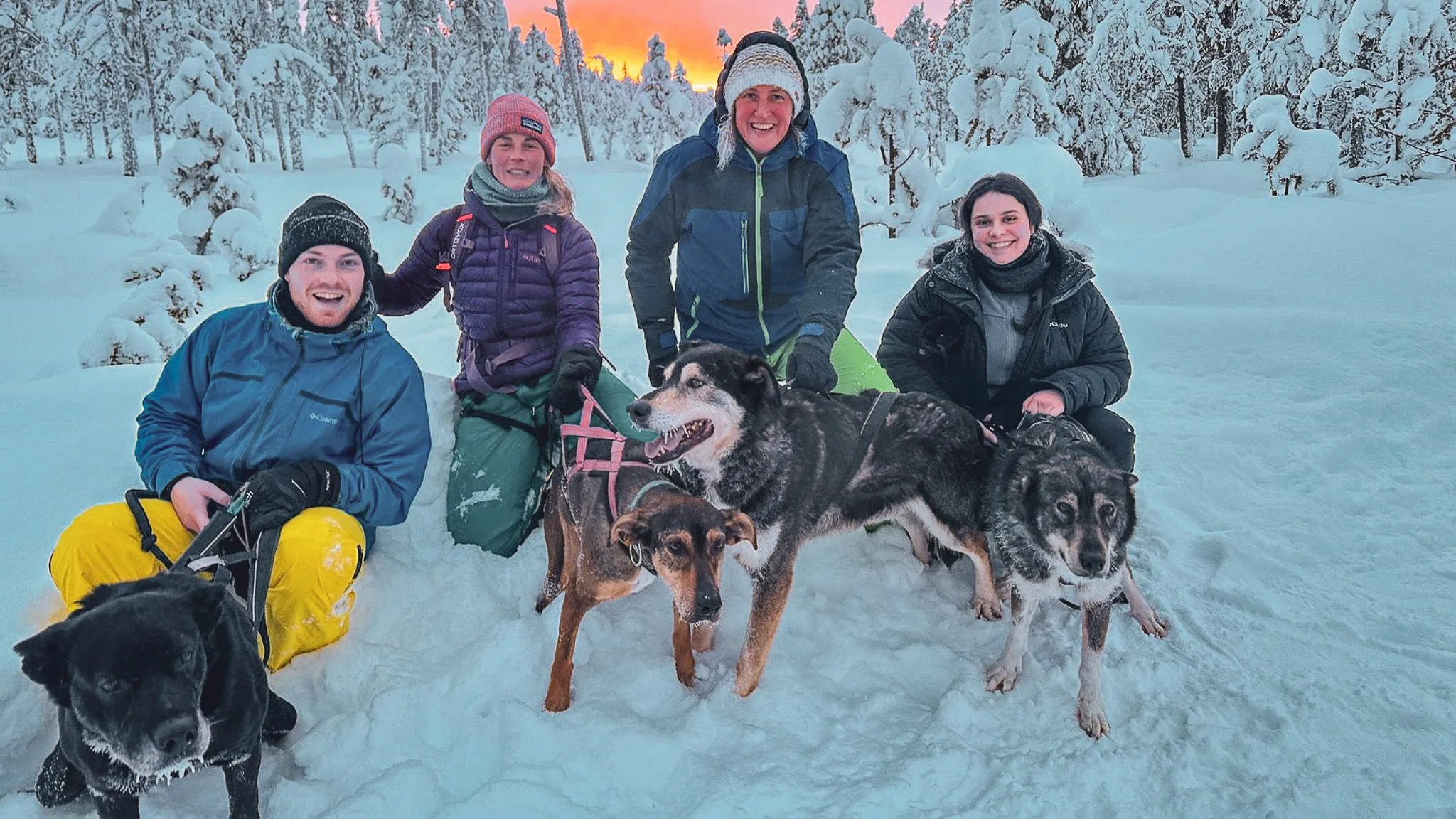
Physically, this is the most accessible option after snowshoeing: on our snowshoeing and huskies trip in Finnish Lapland (8 days, €2,450, level 1), you need to be able to walk 4 hours a day with at most 200 m of climbing, nothing more. No experience required: you learn to drive your own dog team during a briefing with the mushers before heading into the forest. The real decision criterion here isn't your level, it's the format: dog sledding is a long, faraway expedition, not a weekend outing. The extreme-cold pack (parka, mittens, boots) is provided, and evenings alternate between the Finnish sauna and watching for the northern lights from the chalet terrace.
Ice climbing: the most spectacular, supervised from the first move
Climbing a frozen waterfall, ice axes in hand, sounds reserved for alpinists: in reality, the introduction happens on a top rope, accessible from your very first try. The honest nuance: our ice climbing and ski touring course in the Italian Alps (6 days, €1,050) combines both disciplines, so the ski touring prerequisites apply here too: comfortable off-piste, 500 to 900 m of climbing a day. All the technical ice gear (harness, helmet, crampons, ice axes) is provided, the week is based at the Willy Jervis mountain hut in the wild cirque of Conca del Pra, and it includes genuine avalanche safety training: reading the snowpack, transceiver, shovel and probe.
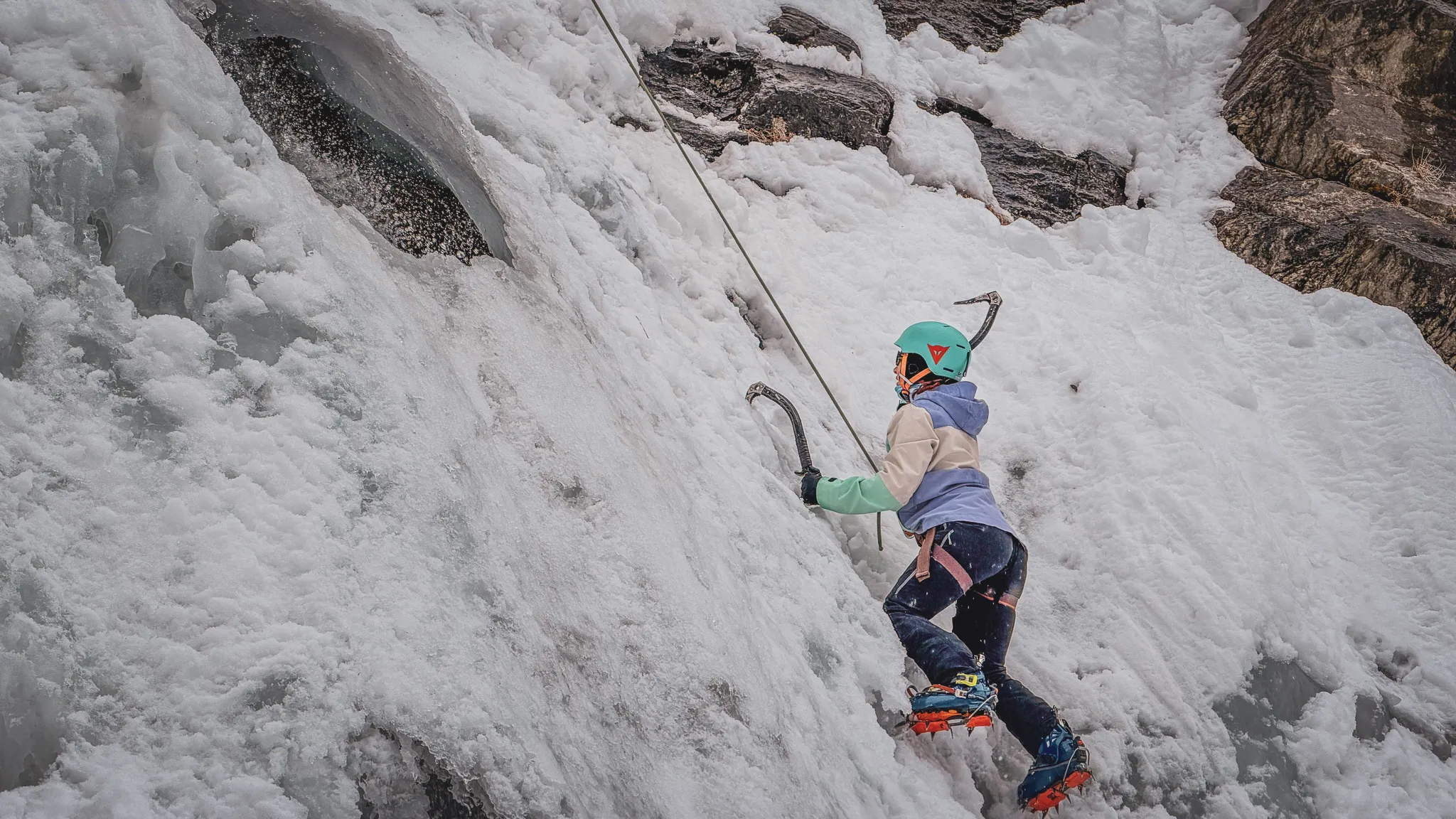
Arnaud, a participant on a previous course: "A magnificent ski touring experience, in an idyllic hut far from the resort crowds, with a guide who knows how to adapt to the group."
The table to decide
All four activities at a glance, using the real data from the trips mentioned above:
| Activity | Level required | Ideal first format | Budget of the trip cited | Best for |
|---|---|---|---|---|
| Snowshoeing | None: walking 10 km/day is enough | 3-day weekend | €460 | A very first winter in the mountains |
| Ski touring | Black runs + real off-piste experience | 4 days hut to hut | €985 | Confirmed skiers who want to tour |
| Dog sledding | None: max 4 h walking/day | 8-day expedition | €2,450 | Great North dreamers, no athletic bar |
| Ice climbing | Solid off-piste skier (course combined with ski touring) | 6-day course | €1,050 | Sporty types curious about a technical discipline |
A simple rule emerges: if you're a complete beginner, start with snowshoeing or dog sledding; if you already ski well off-piste, ski touring and ice climbing open up the vertical side of winter.
Discovery weekend or real expedition?
One last criterion, often overlooked: duration. A 2-3 day snow weekend close to home (Vosges, Jura, Ardennes) is plenty to find out whether an activity suits you, on a contained budget and without taking leave. A long expedition (Lapland, the Italian Alps) is for an activity you're already sure about, or a journey where the atmosphere matters as much as the sport. Our honest advice: test on a weekend first. Winter mountains aren't tamed in a single outing, and that's exactly as it should be.
Whichever activity you choose, you'll find the same things at Wildhartt: a small group, a guide who knows their terrain by heart, and technical gear provided or rentable so you don't have to invest before you're sure. Enjoy your winter.
Find your next adventure
Browse curated expeditions matching the categories of this article and start planning your next trip.
Find your dream adventure
 Find your dream adventure
You might also like these adventures …
Hand-picked to echo the spirit of this article.

New Year: Snowshoeing and a New Year's Eve celebration in a mountain hut in the Clarée valley
Snowshoeing with cosy mountain-hut nights in the Vosges
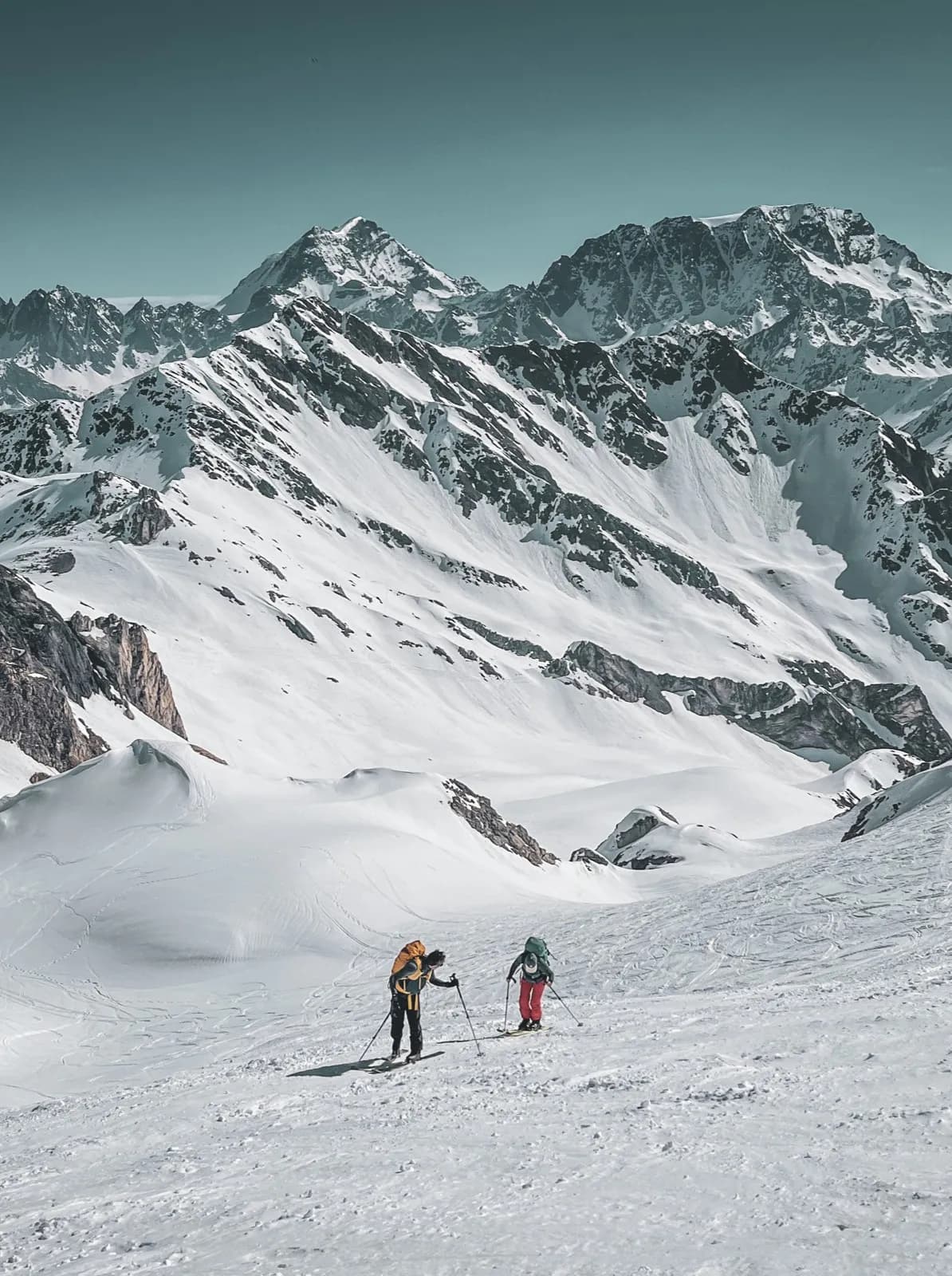

Your first ski tour at the Great St Bernard Pass
Snowshoeing and a night in an igloo facing the Meije
More to discover
Keep exploring with these pages and stories picked for you.
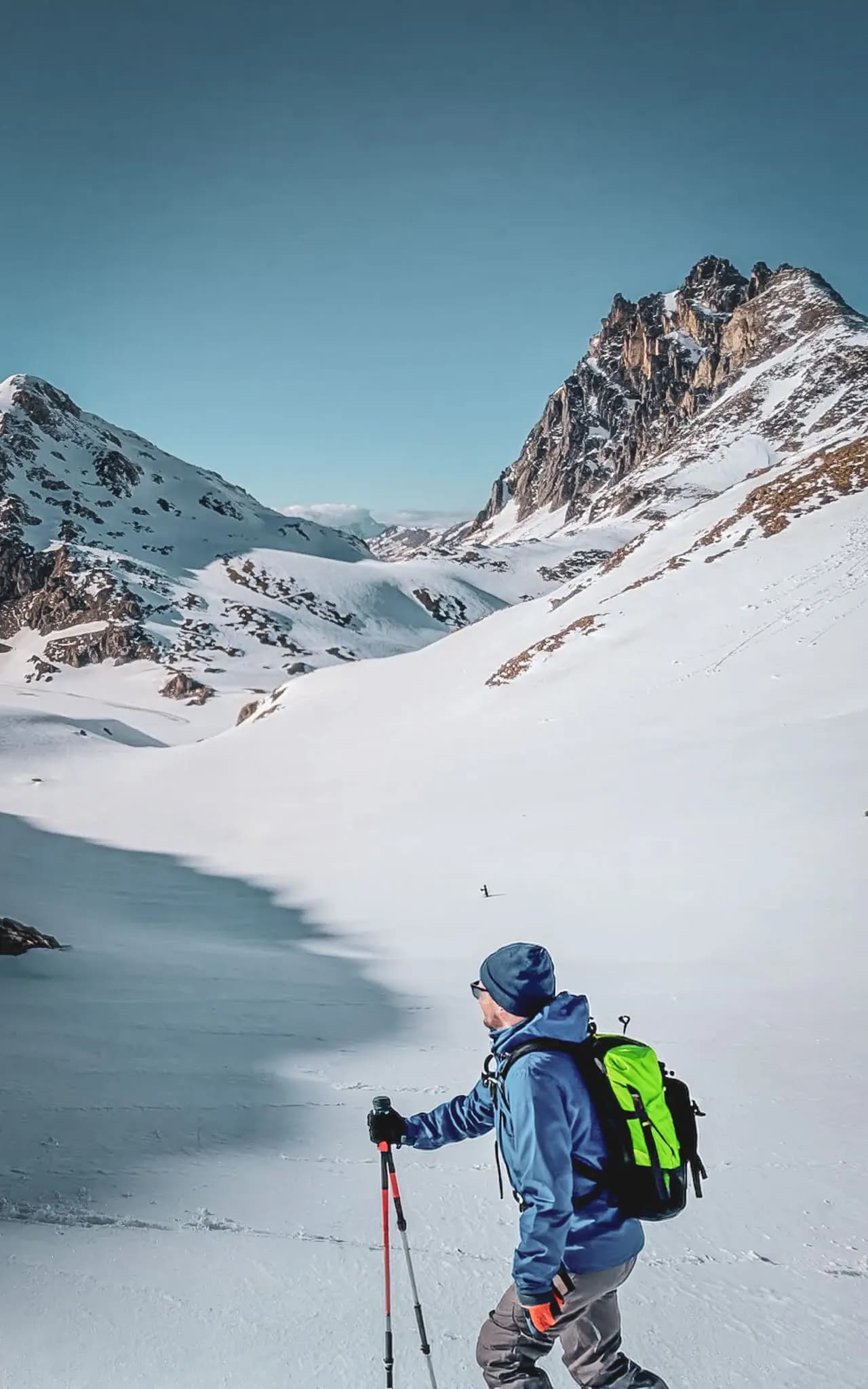
Ski touring trips, snowshoe and pulka itineraries in France
Explore ski touring trips, snowshoe pulka raids and winter bivouacs across the French Alps, guided in small groups from 2 to 5 days.
Snowshoeing: the ultimate guide to the best routes by region
Discover the most beautiful snowshoe walks by region. Get ready for your adventure with our exclusive advice and experience winter in a whole new way!
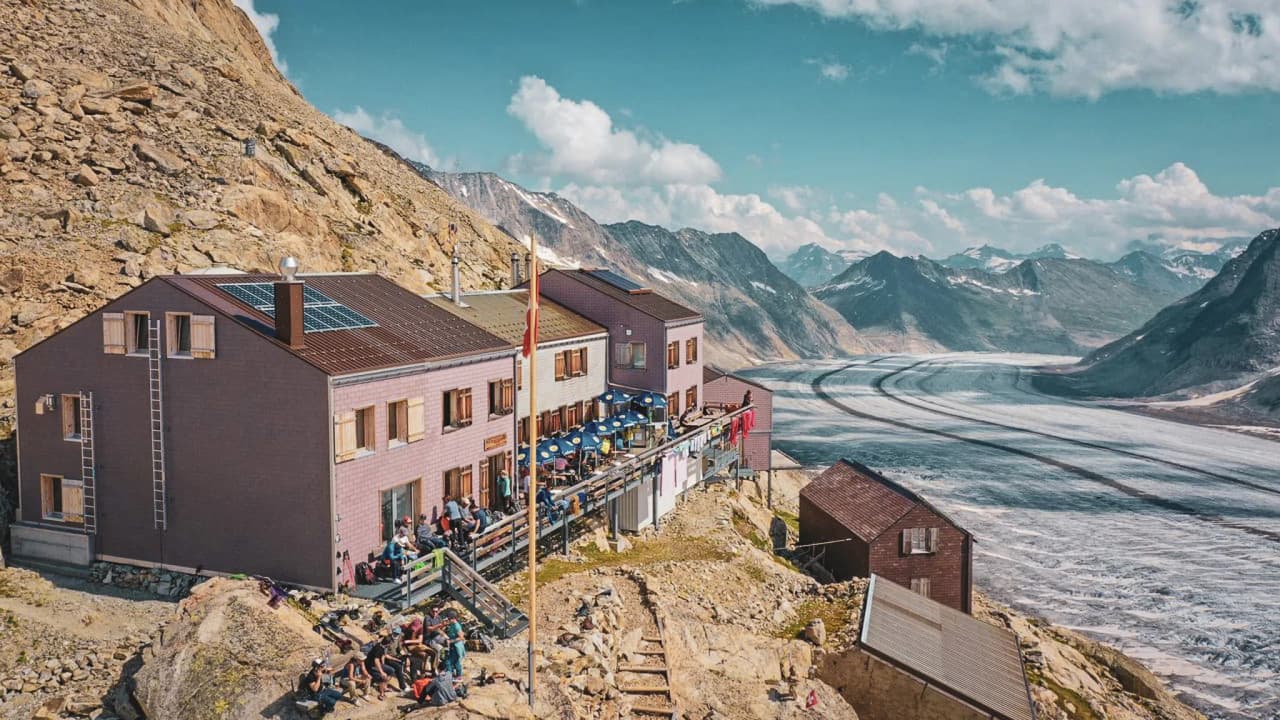
Types of summer mountaineering: how to choose by level
Glacier hike, traverse, first 4,000m summit, iconic peak, ridge climb: the 5 types of summer mountaineering, by level, with real Wildhartt trips.
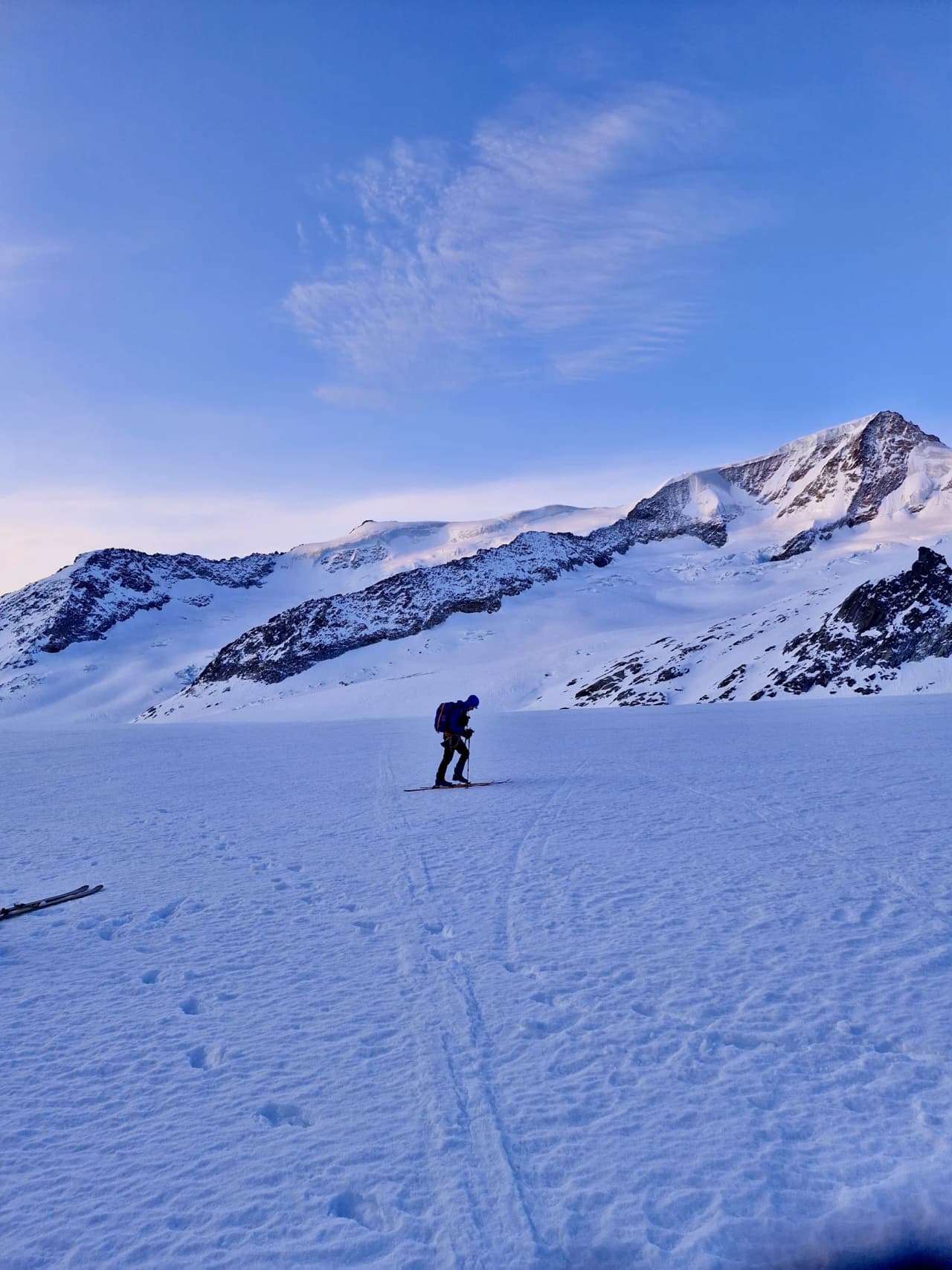
Top 7 ski touring itineraries for a start in 2026
Start ski touring! Discover the best 2026 beginners' itineraries with advice, safety and Wildhartt guides.
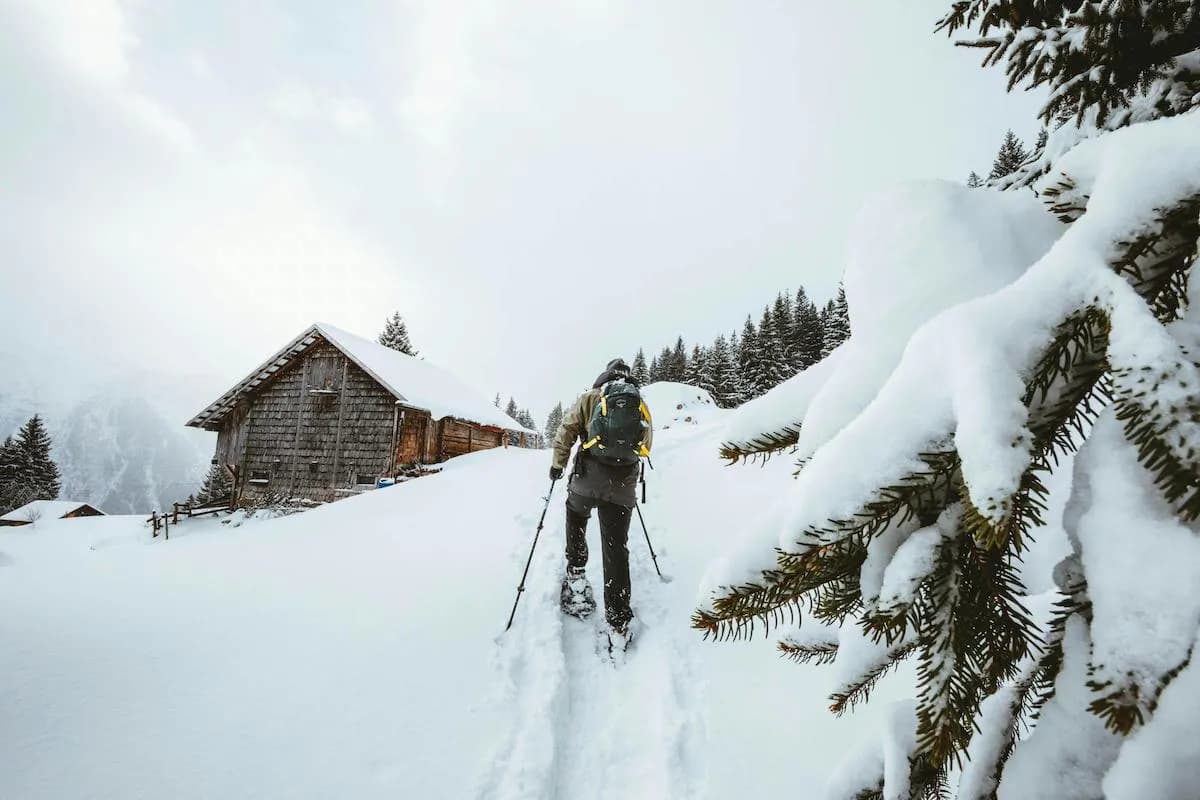
The Ultimate Guide to Snowshoeing: Advice, Equipment and Destinations
Set off on a snowshoeing adventure with our advice, top spots and tips for unforgettable winter walks!
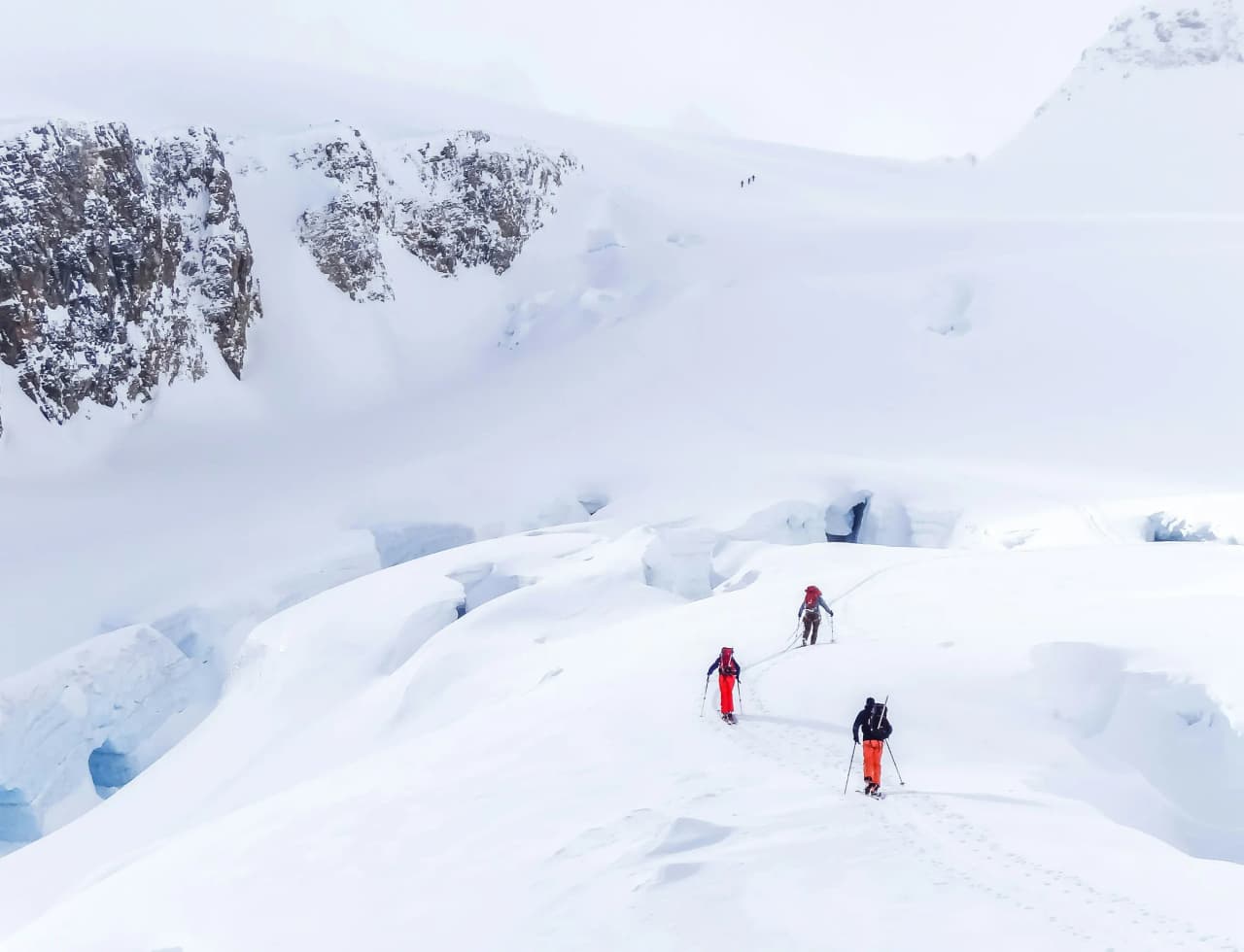
Ski Touring: A Beginner's Guide to Getting Started and Finding the Right Guide
How do I start ski touring? What level is required and what are the advantages? We explain it all here!
