Snowshoeing for beginners: rent, choose, get started
 By Maxime
Discover why snowshoeing is so easy to start, how to choose your pair, and whether to go solo or with a guide for your first outing.
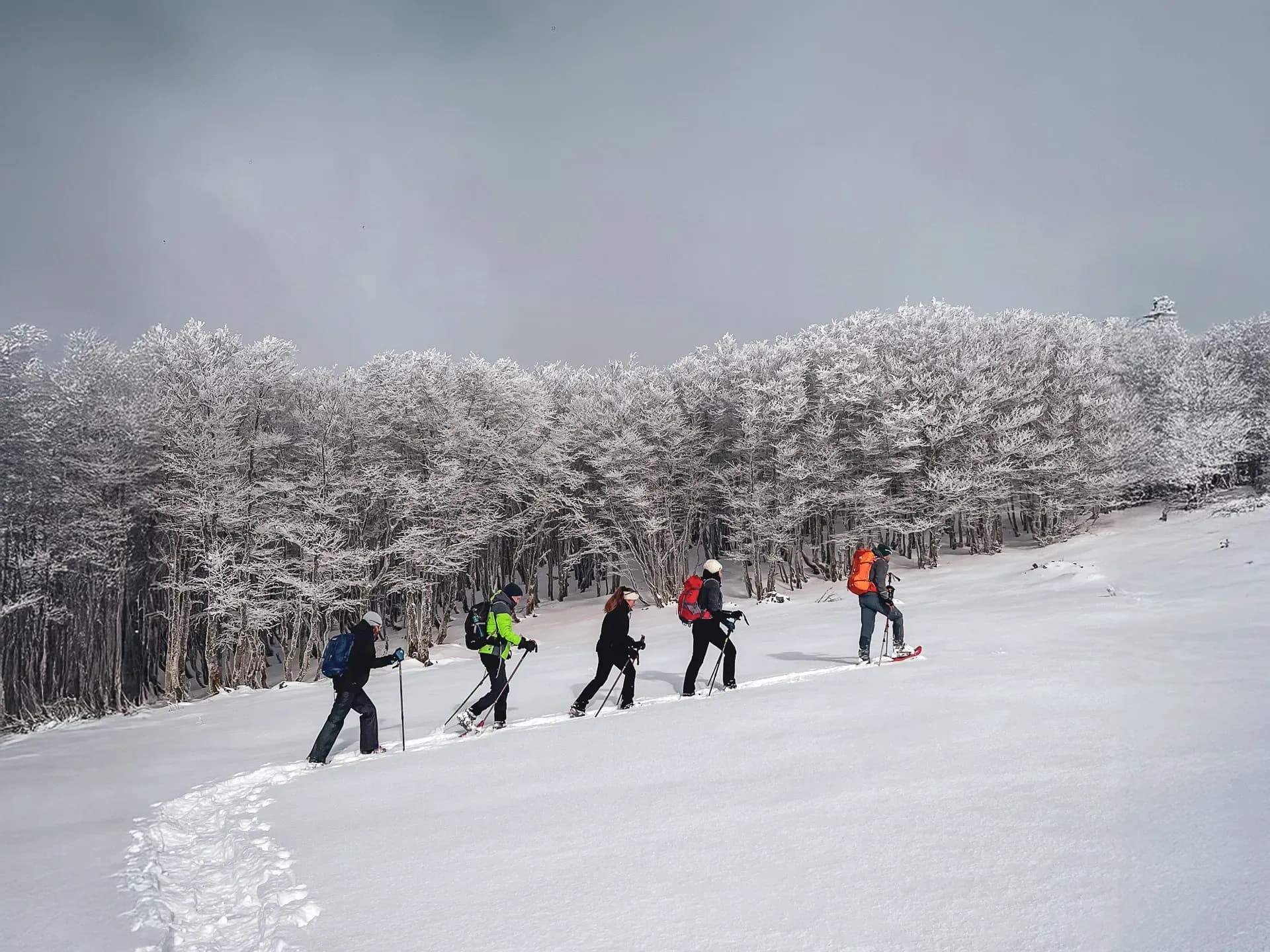
Snowshoeing is probably the easiest winter activity to pick up. There's no technique to learn, no expensive gear to own, and no high fitness level required: you just walk, and the snow stops being an obstacle even off the groomed trails. That's exactly why we often recommend it as a first winter outing, before ski touring or mountaineering.
In this guide, we answer the practical questions you'd ask before your first outing: should you rent or buy snowshoes, how do you pick the right size, and is it better to go solo or with a guide.
Contents: Why it's so accessible · Rent or buy · Choosing your pair · Solo or guided · A first guided trip in the Vosges · Where to try snowshoeing · FAQ
Why snowshoeing is so accessible
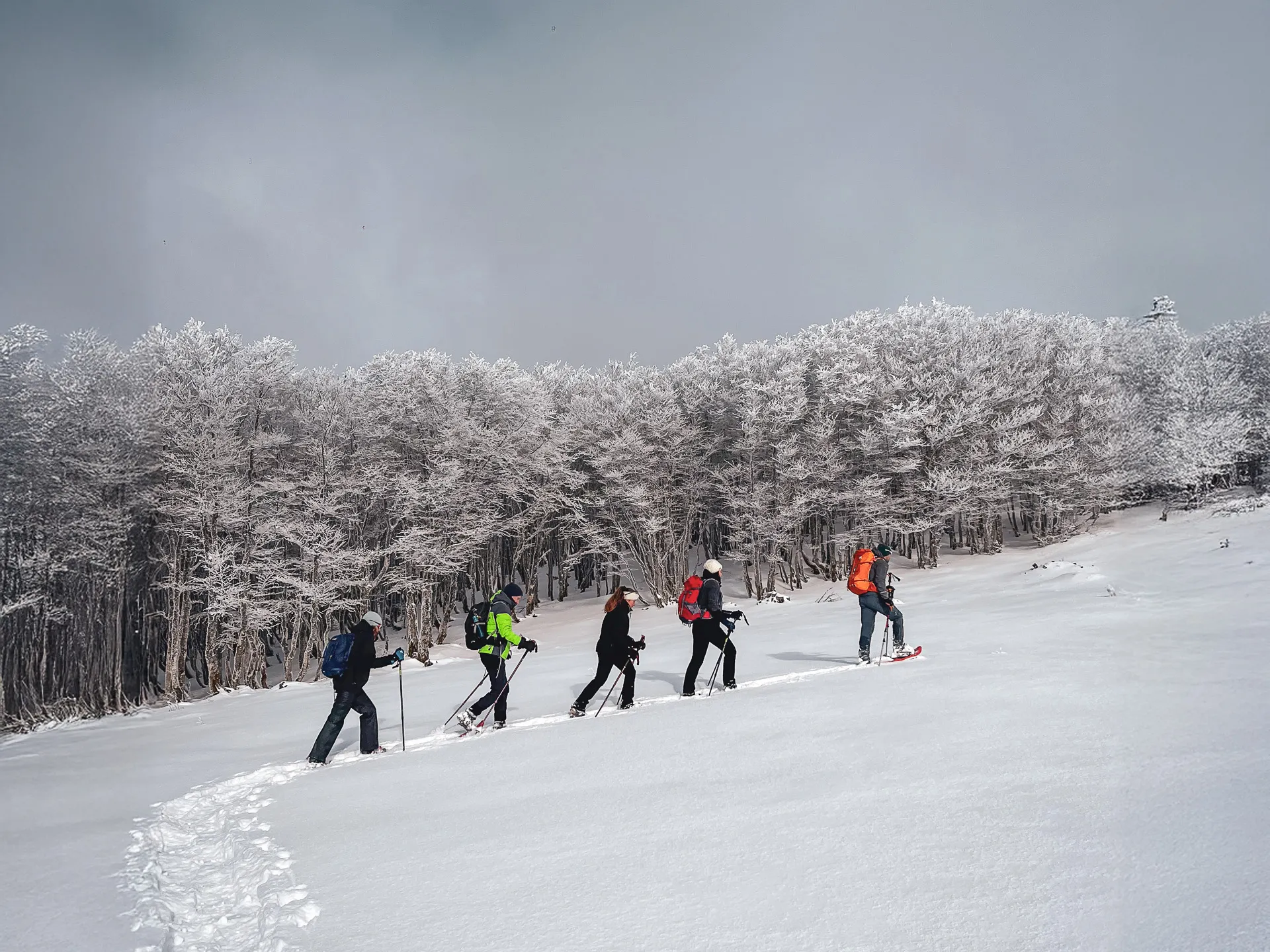
Unlike ski touring, snowshoeing doesn't require any technical learning curve: if you can walk, you can snowshoe. The movement is the same as regular hiking, the only difference is that deep snow spreads your weight so you don't sink in. That's one reason so many of our participants pick it as their very first winter mountain activity, before moving on to ski touring or mountaineering.
The other advantage is the entry cost: no lift pass, no technical gear worth hundreds of euros. A pair of snowshoes is enough, and you can rent them for a single outing. If you're still torn between different winter mountain activities, snowshoeing is the one that asks the least preparation before you get going.
Renting or buying your snowshoes
For a first outing, renting is almost always the right call. At a rental shop like Easygliss in Besançon, a pair of snowshoes goes for around €13 a day, €21 for the weekend and €42 for the week (2025/2026 season rates)[1]. Buying, an entry-level new pair starts around €150 to €200[2].
| Option | Rough cost | Best for |
|---|---|---|
| Weekend rental | ~€21 | A first try, 1 to 3 outings a winter |
| Entry-level pair | €150 to €200 | Several outings every winter, over several seasons |
Only buy once you already know you'll head out several times this winter. Otherwise, renting costs three to four times less to try out the discipline without committing any gear budget.
Choosing your pair of snowshoes
You don't need to master every bit of outdoor-shop jargon to choose well. Two criteria are enough for a first outing.
The type of snowshoe for your terrain
On flat or gently rolling trails, a simple snowshoe with light crampons is enough. On steeper terrain or hard snow, look for a model with more grip underfoot for traverses and side-slopes.
Sizing, based on your weight and pack
Snowshoe size is chosen based on your total weight, backpack included: the heavier and more loaded you are, the bigger the snowshoe needs to be to keep you afloat on deep snow. Most rental shops and retailers will ask for this weight before recommending a size, that's completely normal.
Going solo or with a guide for your first outing
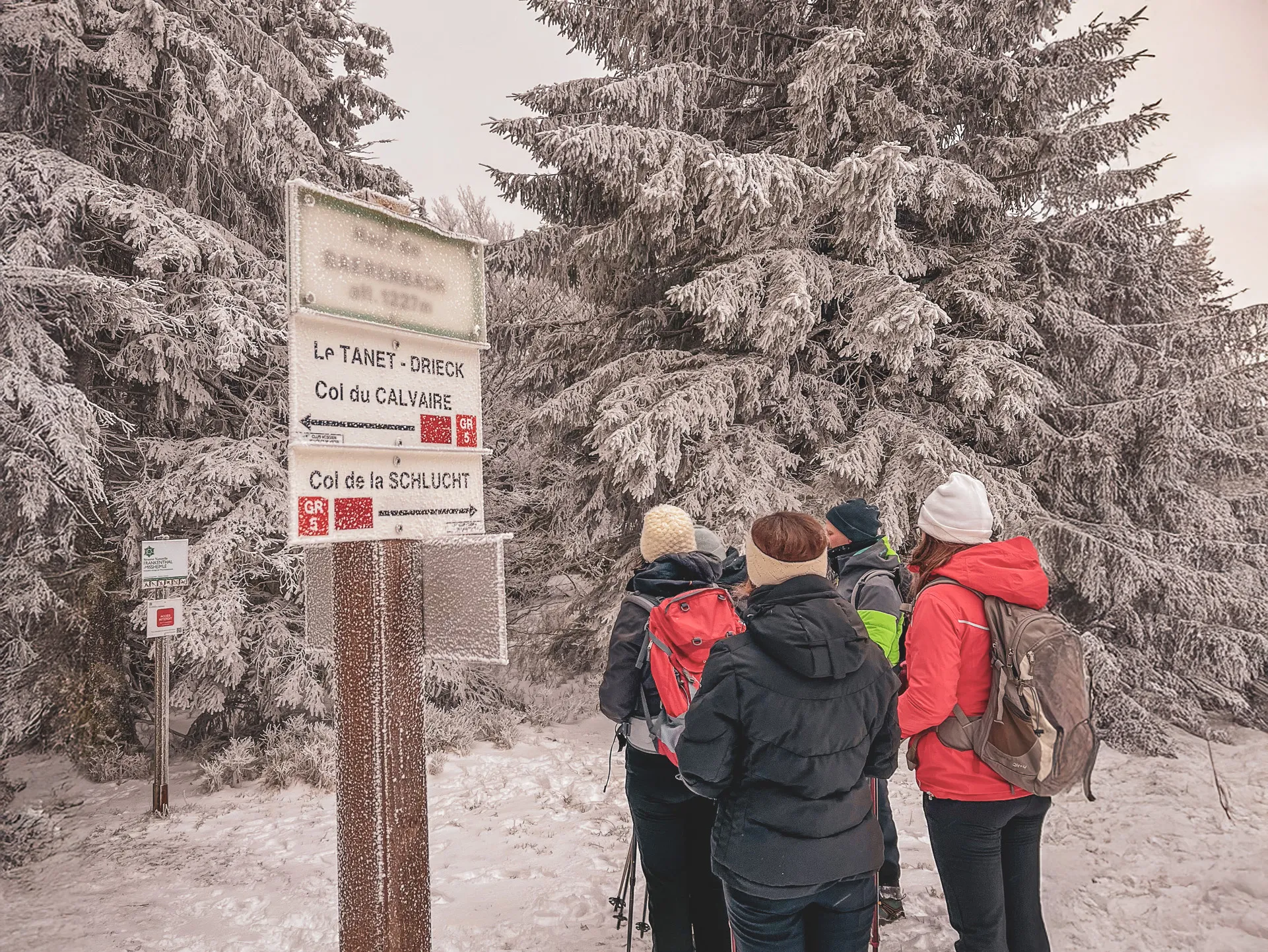
For a few hours on a marked, well-travelled trail, going solo isn't a problem. For a real weekend in the mountains, sleeping in a refuge and walking off the marked paths, a guide mainly changes two things: they know the terrain and adapt the route to the day's weather, and they handle all the logistics (refuge, meals, gear).
Here's what that looks like in real numbers, for a 3-day, 2-night weekend in a refuge in the Vosges:
| Item | On your own | With Wildhartt |
|---|---|---|
| Snowshoe rental (weekend) | ~€21 | Included |
| 2 nights in a refuge, half-board | ~€110 to €160 (€55 to €80/night)[3] | Included |
| Packed lunches | ~€30 for 3 days | Included |
| Guide and adapted route | No | Included |
| Total | ~€160 to €210 | €460 |
The gap, roughly €250 to €300 for a weekend, comes almost entirely from the guide and the full logistics, not from gear or lodging: those are actually what costs the most to add, not the snowshoes themselves. For a first time, many people are happy to pay that difference so they don't have to pick a snow-terrain route suited to their level on their own.
What a guided first outing looks like: our weekend in the Vosges
Our snowshoeing weekend in the Vosges is built specifically for first-timers: no experience required, and since the group sleeps in the same refuge every night, nobody carries a backpack during the outings. It starts at the Col de la Schlucht, off the beaten track, climbing towards ridges that open onto views of Alsace and the Black Forest, then towards the Hohneck, the highest peak in the Vosges at 1,363 metres, for a 360-degree panorama. Nights are spent in a family-run refuge, in a shared room, with a dinner of local Vosges specialities each evening.
Nicolas, who took part in this trip, sums up what many first-timers are looking for: "A really lovely experience, with explanations for the questions you'd naturally have on a first trip. A guide who was always attentive, pointing out animal tracks, the wildlife and the plants. Beautiful scenery."
Where to try snowshoeing in France
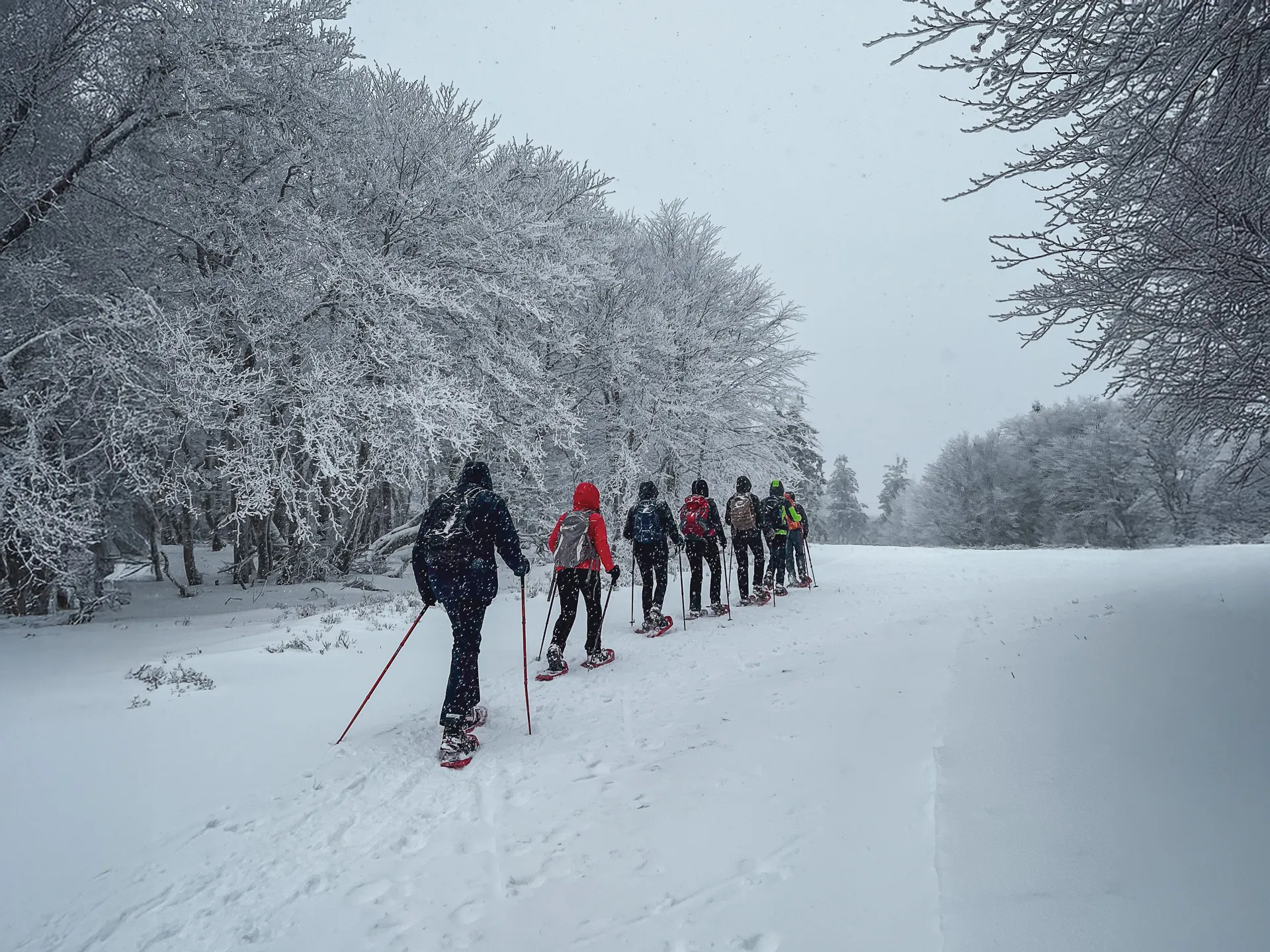
The Vosges, with their gentle ridges and cosy refuges, are a great place for a first time. Once you're hooked, you'll find a route suited to your level among our guided snowshoe trips across France and Europe, from a comfortable refuge weekend to multi-day snowshoe and pulka expeditions for those looking to build up to full winter self-sufficiency. If you're heading out on your own and just need route ideas by region, our pick of snowshoe routes across France is a good starting point.
Frequently asked questions
What are the best snowshoes for beginners?
For beginners, a simple snowshoe with light crampons is enough on flat to rolling terrain. There's no need to invest in a technical model until you actually know how many outings you'll do each winter.
What shoes should you wear with snowshoes?
Waterproof, high-top hiking boots, ideally already broken in. They need to support your ankle well, since the ground under the snow is uneven.
Do you need a guide to go snowshoeing?
Not for a short walk on a marked, busy trail. For a weekend in the mountains, off the usual paths or with a night in a refuge, a guide mainly brings knowledge of the terrain and the day's weather, on top of handling all the logistics.

Find your next adventure
Browse curated expeditions matching the categories of this article and start planning your next trip.
Find your dream adventure
 Find your dream adventure
You might also like these adventures …
Hand-picked to echo the spirit of this article.
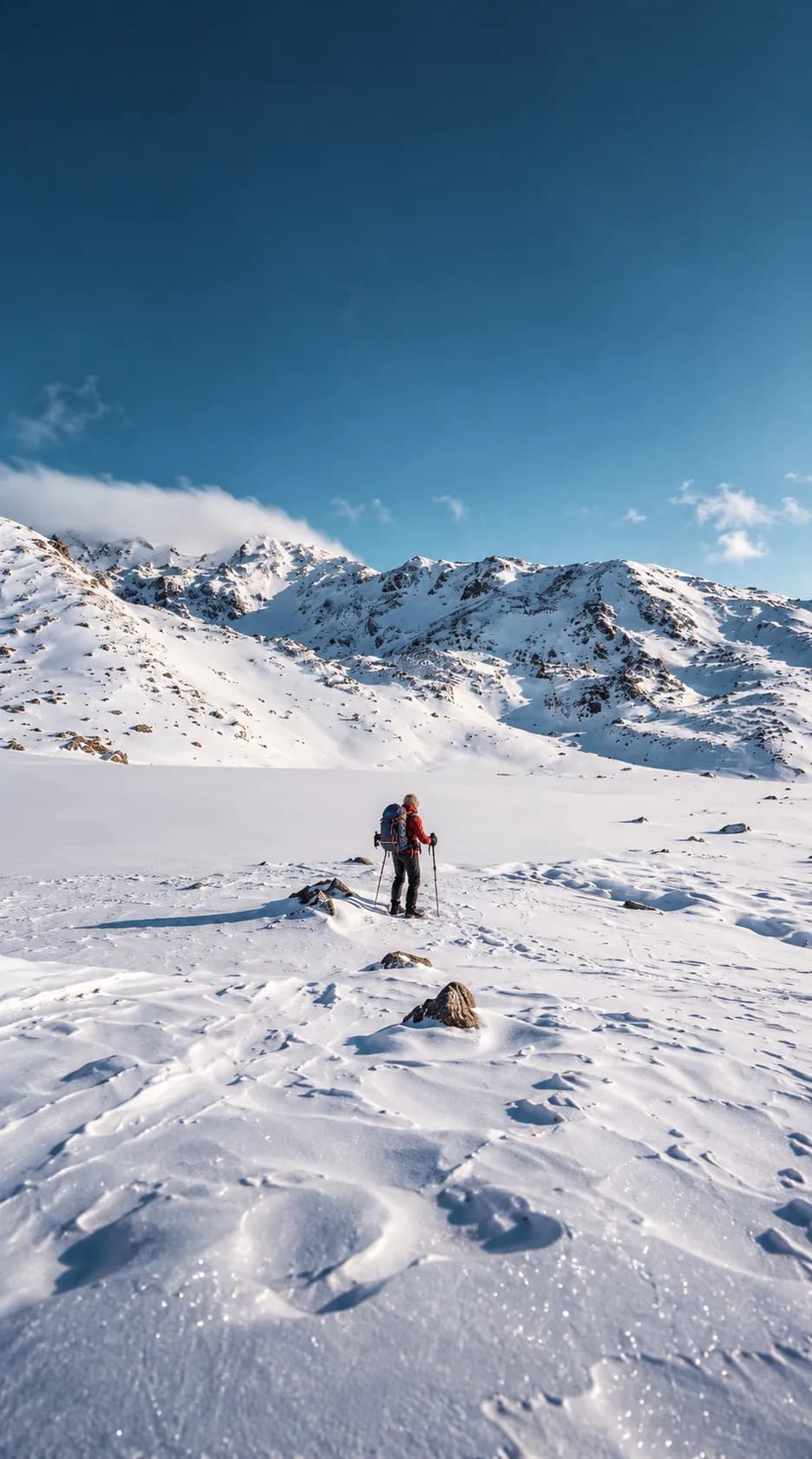

New Year: Snowshoeing and a New Year's Eve celebration in a mountain hut in the Clarée valley
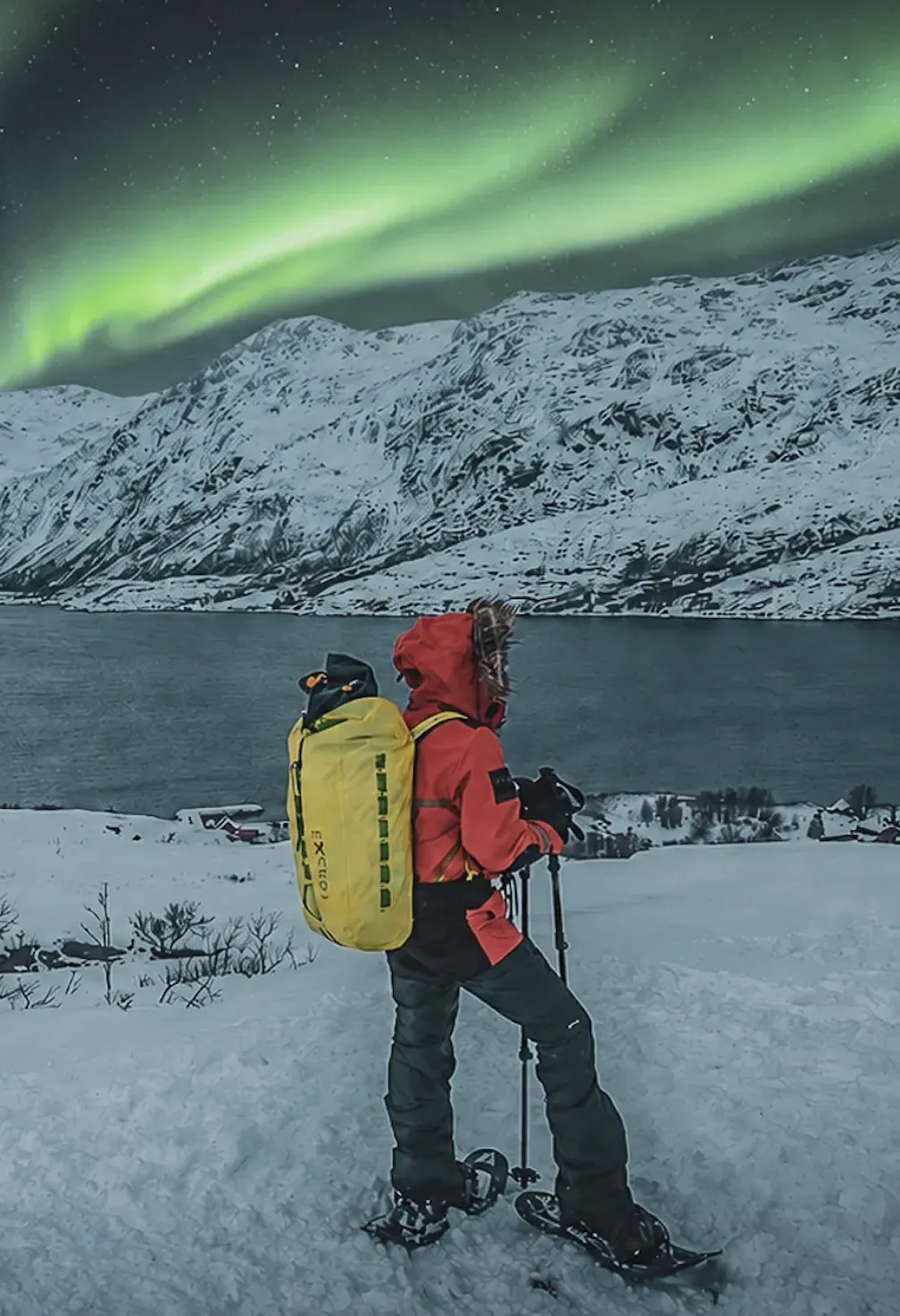
Snowshoeing, sledging and cross-country skiing in Norwegian Lapland
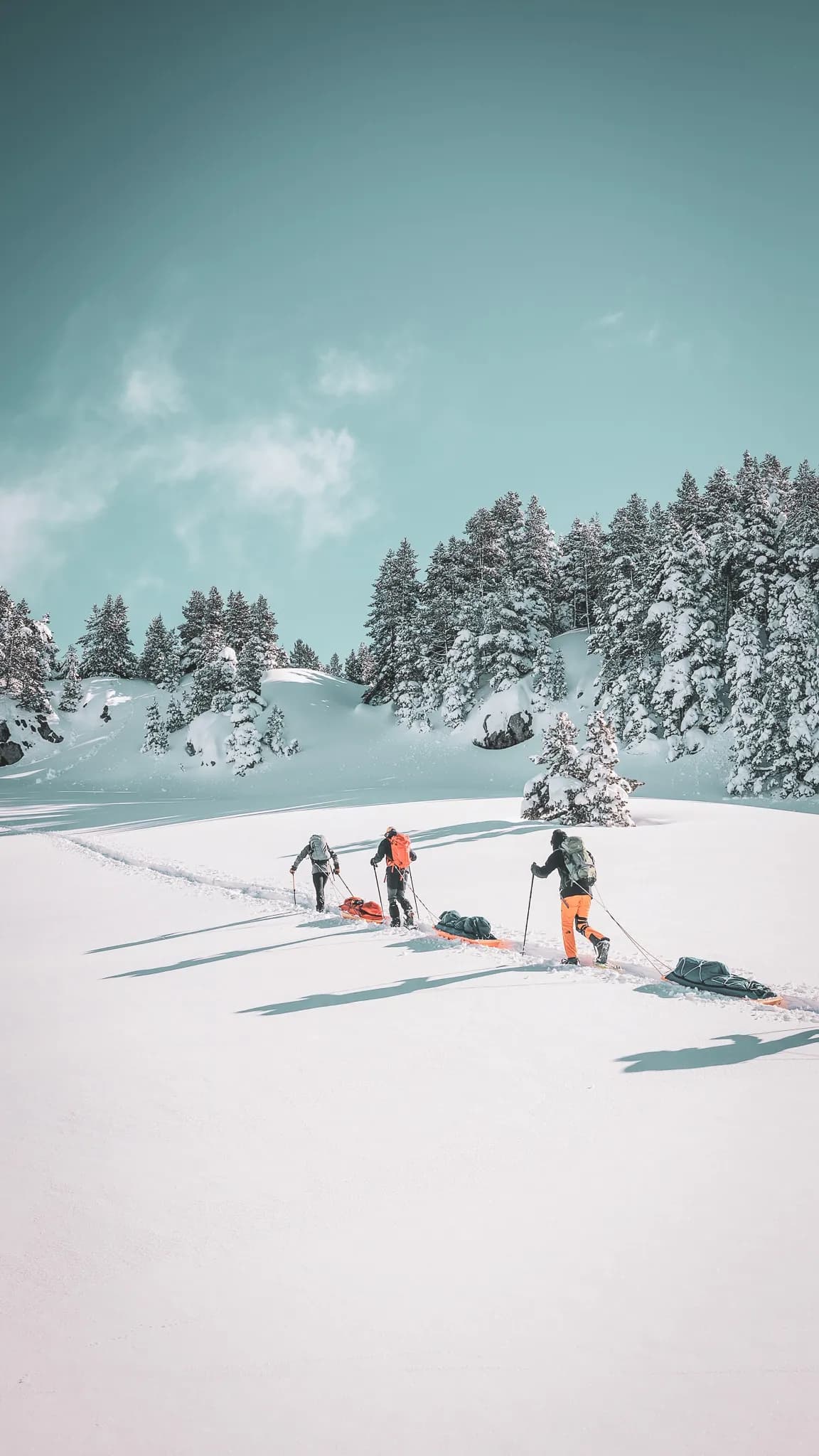
Wild Vercors: snowshoe trek with pulka and tipi nights
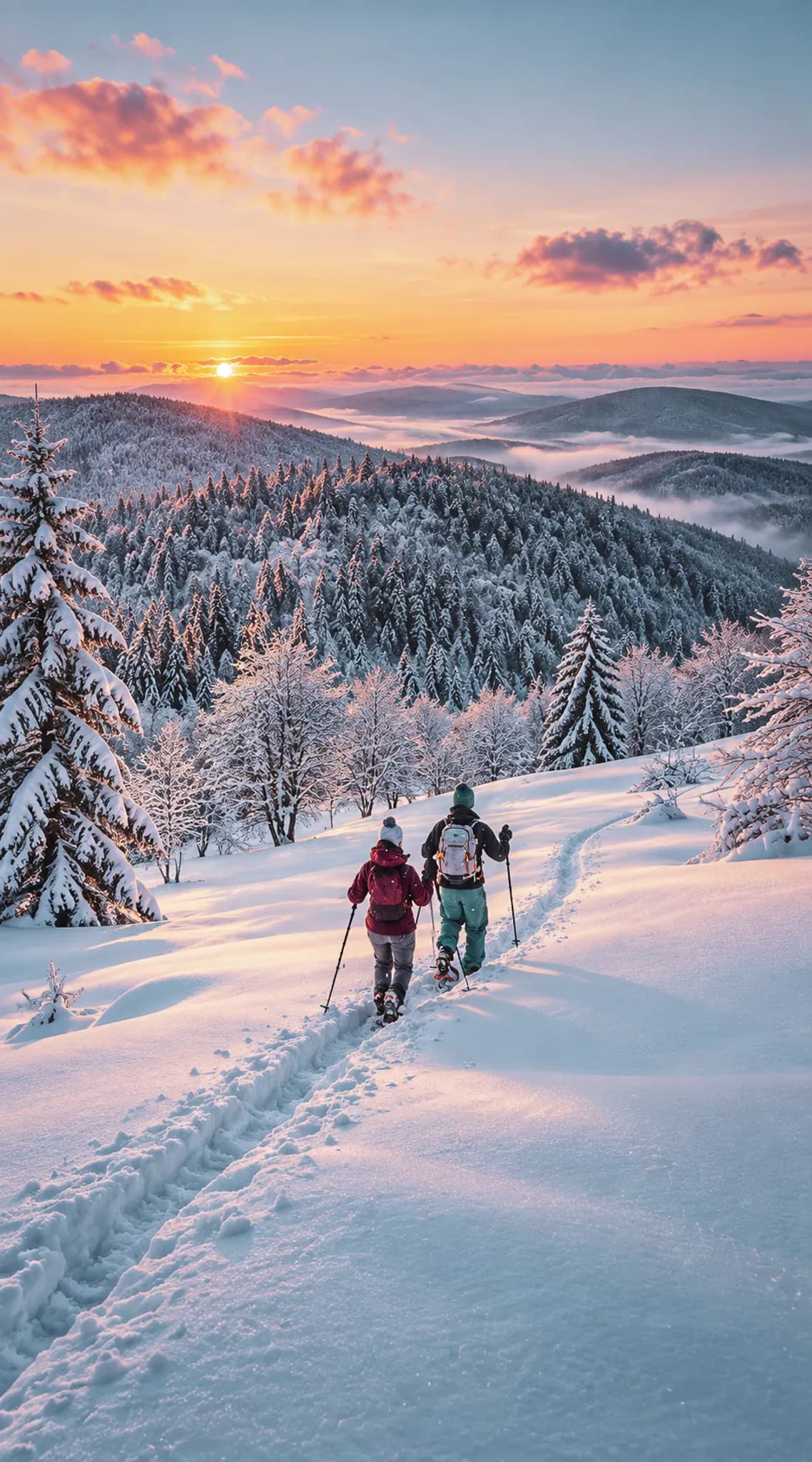
Snowshoeing with cosy mountain-hut nights in the Vosges
More to discover
Keep exploring with these pages and stories picked for you.
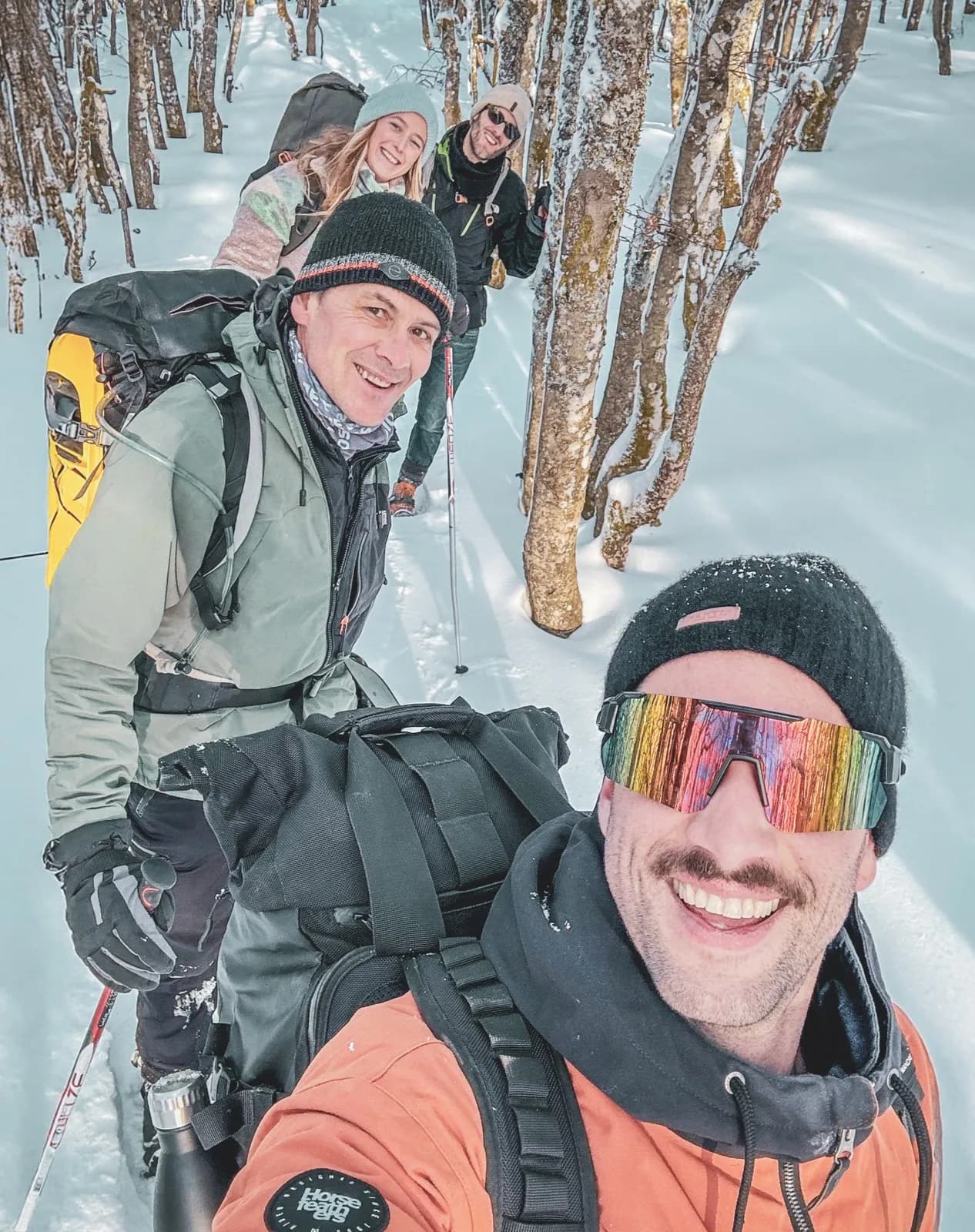
Guided snowshoe trips with hut stays in France and Switzerland
Discover guided snowshoe trips from December to March, with welcoming hut stays across the Vosges, Clarée, Haute Ubaye and the Swiss Jura.
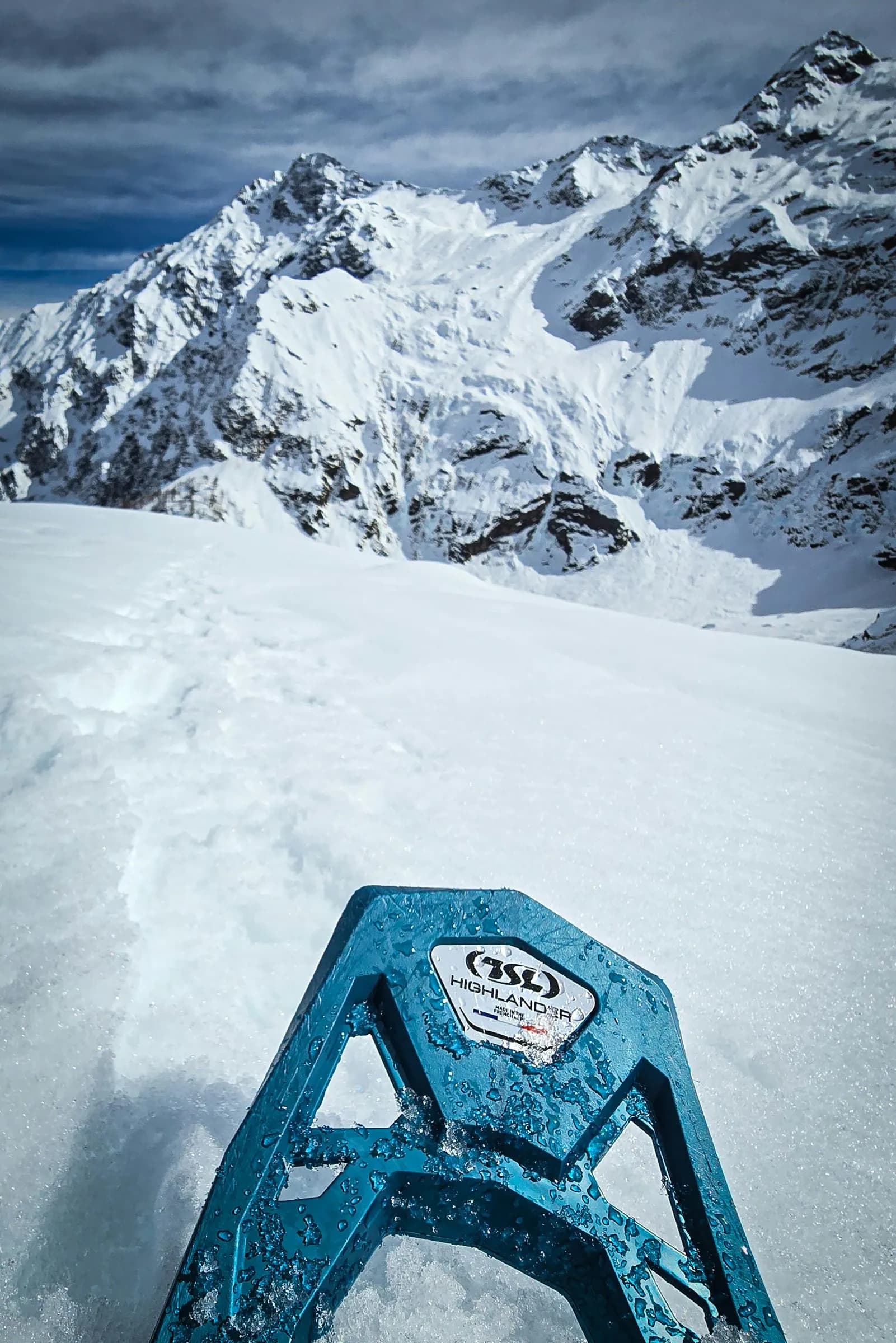
Snowshoeing: the ultimate guide to the best routes by region
Discover the most beautiful snowshoe walks by region. Get ready for your adventure with our exclusive advice and experience winter in a whole new way!
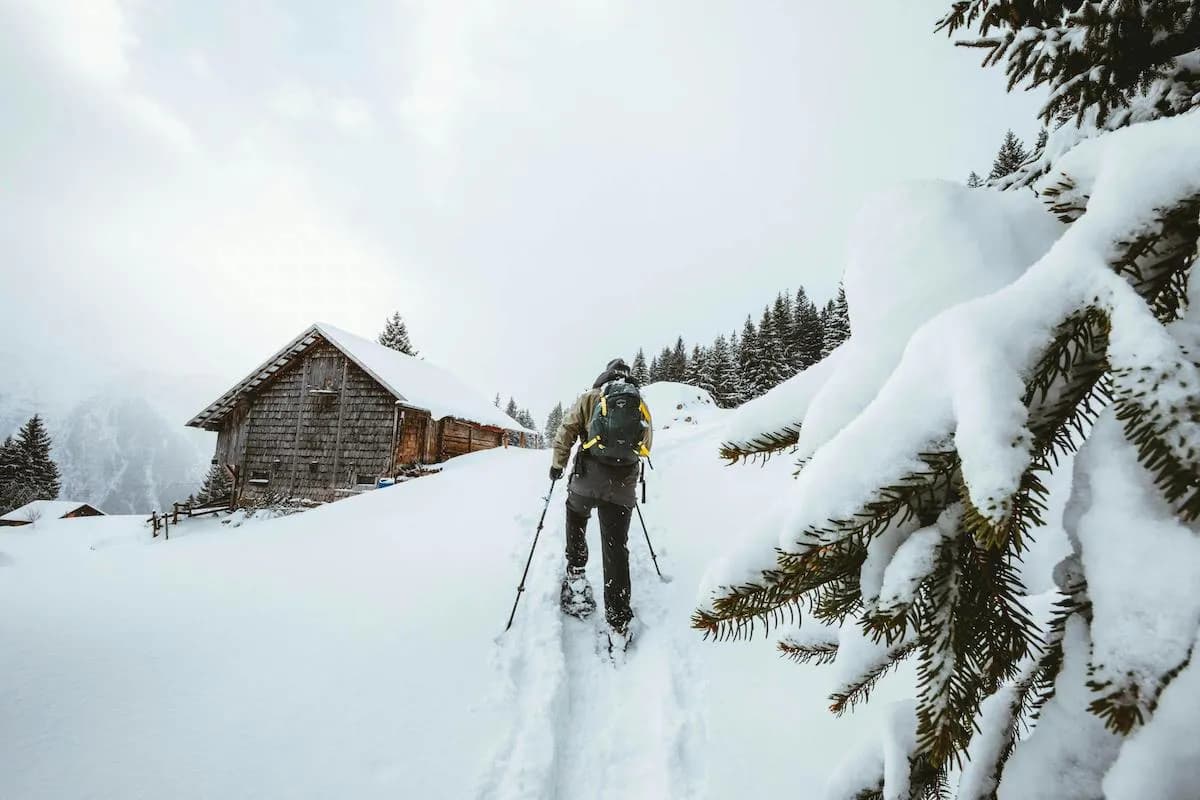
The Ultimate Guide to Snowshoeing: Advice, Equipment and Destinations
Set off on a snowshoeing adventure with our advice, top spots and tips for unforgettable winter walks!
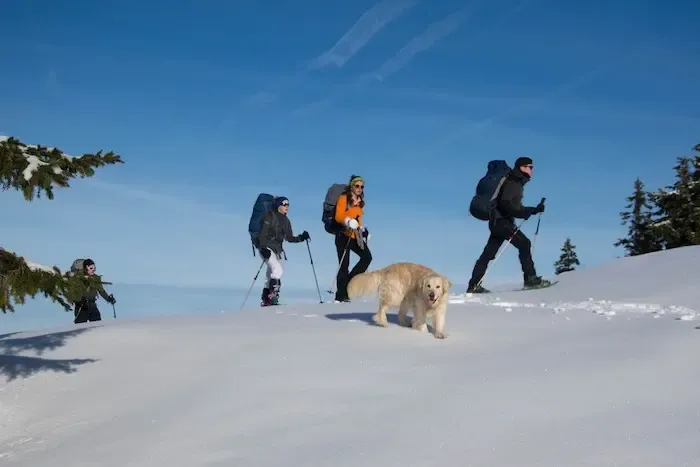
10 Benefits of Going into the Mountains with a Guide
Snowshoe trekking with a guide: a safe adventure in snow-covered landscapes. Opt for the complete experience with our experts!
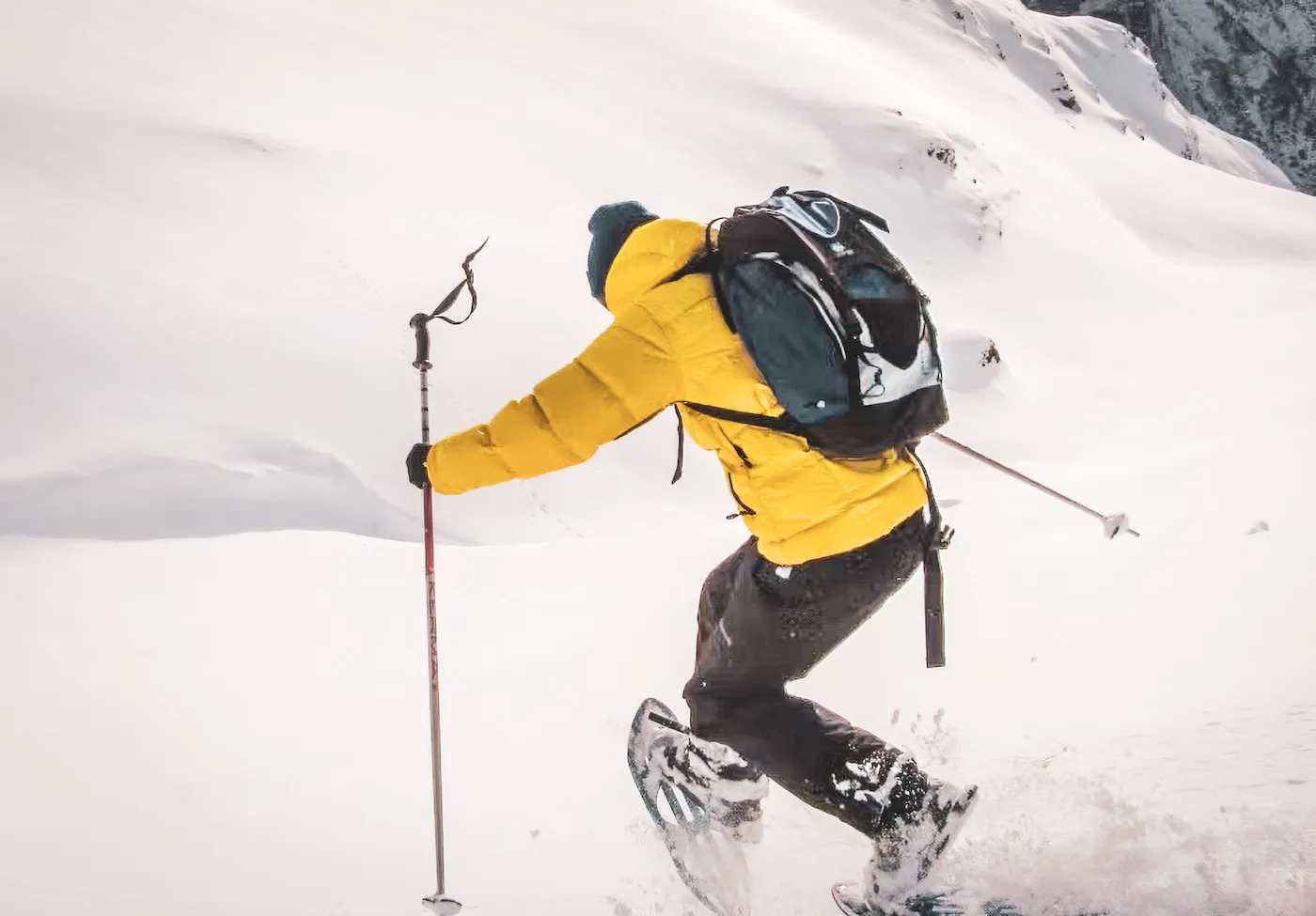
Snowshoeing Checklist: What to Pack for a Safe Day Out
Prepare for a snowshoe hike with a practical checklist covering clothing, safety gear, food and navigation.
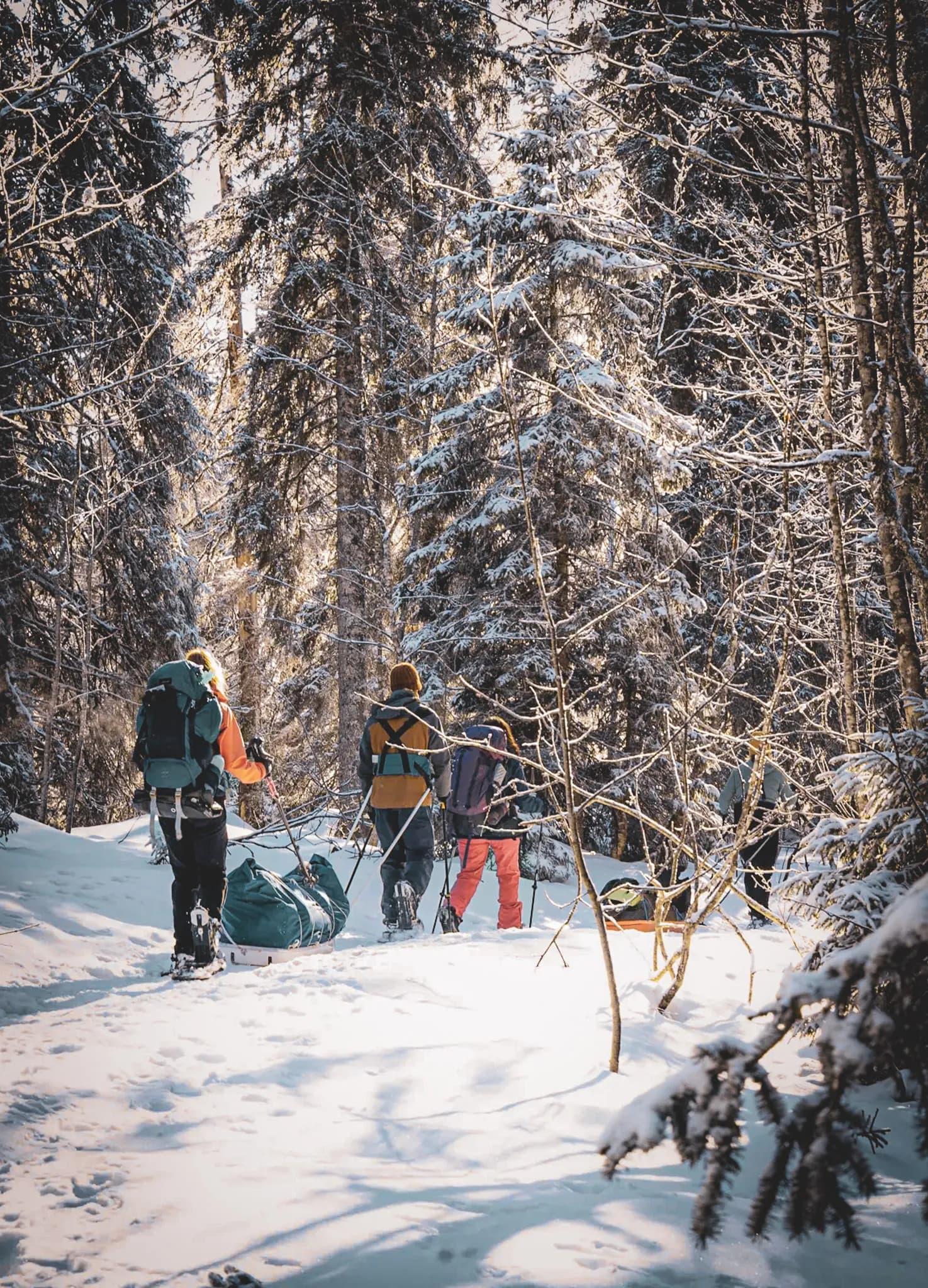
Guided ski touring and snowshoeing in Switzerland, 3 to 4 days
Guided ski touring and snowshoeing in Switzerland. 3 to 4 day adventures from Great St Bernard to the Swiss Jura, with expert guides, cosy huts and easy gear rental.
