Tour du Mont Blanc: real difficulty, real alternatives
 By Marie
The Tour du Mont Blanc has a mythic reputation. What it really demands day by day, plus a grid for choosing a shorter trek without losing intensity.
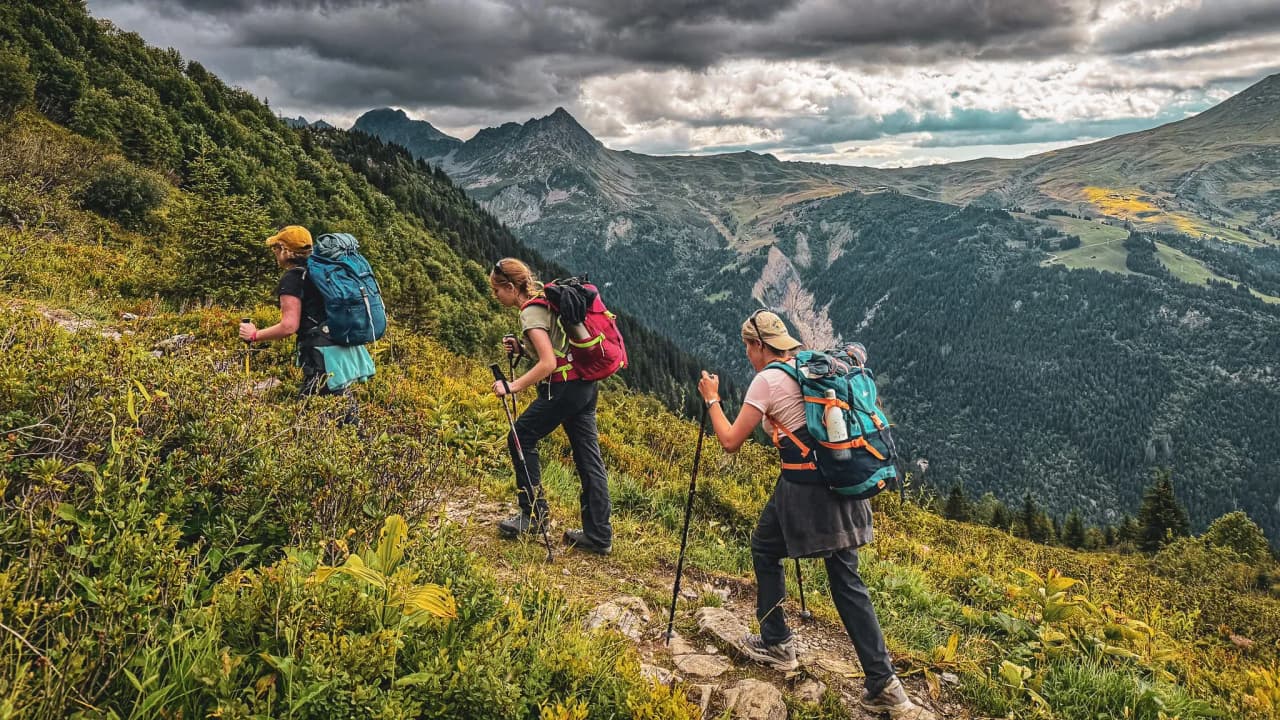
The Tour du Mont Blanc has a reputation that precedes it: it shows up on every alpine hiking bucket list out there, treated as the ultimate mountain trek. But what does it actually take to walk it? And if you don't have ten straight days free this summer, what do you really give up by choosing a shorter trek elsewhere in the Alps, and what should you never compromise on? We're going to take the myth apart, look at the real demand day by day, then lay out a decision grid that works for any alpine trek, not just the Tour du Mont Blanc. The concrete examples come from real Wildhartt-guided itineraries: Trek the tour du Mont Blanc: The full circuit, Tour of the Aiguilles d'Arves in 5 days, Hiking and bivouac around the Aiguilles d'Arves, Surge to Pic du Mas beneath La Meije and Trek the tour des Dents du Midi in 5 days.
The Tour du Mont Blanc, beyond the myth
In practice, the Tour du Mont Blanc is roughly 170 km over ten stages that loop the whole massif through France, Italy and Switzerland. Col du Bonhomme at 2329 m on Day 3, Col de la Seigne at 2516 m carrying you into Italy on Day 4, the Grand Col Ferret at 2537 m opening onto Switzerland on Day 6: the route strings together passes rather than throwing one single technical wall at you. There's no rope and no crampons to plan for in season. The most committing stretch of the whole circuit is the ladders up to Lac Blanc on Day 10, an airy moment that asks for calm footwork but no mountaineering gear. So the myth of the Tour du Mont Blanc is less about technical difficulty than about cumulative endurance across eleven days including arrival, sleeping in a hut every night and getting back on your feet the next morning with yesterday's legs.
The real demand, day by day
On the ten-day version Wildhartt runs, you walk 5 to 7 hours a day, with 700 to 1450 m of ascent depending on the stage, and your pack stays at 7 kg because huts take care of meals and bedding. The toughest day is arguably Day 8, which climbs to a 2665 m col in the middle of the Trient moraines: the ground there is blocks more than trail, and your footing has to stay precise all the way to the top of the col. Beyond that, most of the difficulty is cumulative. Ten days of walking back to back asks something of a body that's sometimes never held more than two or three linked hiking days before.
That's where the question of level gets personal. Holding that pace for ten days means you've already walked several days in a row with real elevation gain, without necessarily having a high-mountain background. A shorter but more technical trek, like the crossing of the Col de l'Épaisseur at 2891 m on the Aiguilles d'Arves loop, asks for less cumulative endurance but more immediate comfort on scree and unstable ground. Two different kinds of difficulty, not two points on the same scale, and that's exactly what should guide the choice.
What if you don't have ten days?
This is the question a lot of hikers curious about the Tour du Mont Blanc quietly avoid asking: is ten days of huts and linked passes the only way to get a real alpine experience in the French or Swiss Alps? No, as long as you accept a clear trade-off. A four or five-day trek won't give you the continuous story of a full circuit, the feeling of crossing three countries, or the slow build of fatigue and scenery that makes a long circuit what it is. In exchange, it concentrates the intensity: more technical elevation per day, terrain that's often wilder because it's less walked, and the freedom to sleep in a bivouac by a high-altitude lake instead of a hut dormitory.
What should you never compromise on, whichever format you pick? First, real margin on the ground: a 2900 m col on loose scree doesn't forgive the same sloppiness as a waymarked trail. Second, how you sleep, hut or bivouac, which changes both the weight on your back (from a 7 kg pack to a full one with tent and sleeping bag) and the whole mood of the trip. And finally the season: most of these routes are really only open from June or July to September, with lingering snow possible early season on cols above 2800 m.
A grid that works for any alpine trek
Two axes are enough to clarify a choice that applies to any massif, not just Mont Blanc. The first is the time you actually have: can you block out ten straight days, or only four to five? The second is the kind of night you're after: the relative comfort of a hut, where you sleep light and eat hot without cooking, or the autonomy of a bivouac, heavier on the shoulders but pitched exactly where the view hits hardest.
- Time available: can you hold the pace over roughly ten days at altitude, or would you rather concentrate the intensity into 4 to 5 days?
- Technical comfort and exposure: at ease on ladders, scree and airy ridges, or happier on the steady rhythm of well-marked trails?
- Night comfort: a lighter pack and hut meals, or an autonomous bivouac for more freedom at the cost of extra weight?
Those three questions place your choice well before you even open a map. Here's how five real treks, all guided by Wildhartt across the French and Swiss Alps, line up against that grid.
| Trek | Duration | Nights | Ascent per day | Technical level | Standout feature |
|---|---|---|---|---|---|
| Tour du Mont Blanc | 10 days | Huts, 3 countries | 700 to 1450 m | Endurance, low technicality | Full France-Italy-Switzerland traverse |
| Aiguilles d'Arves, hut version | 5 days | Huts | 700 to 1200 m | Moderate technicality | Col de l'Épaisseur and the Buffe ridge, without the bivouac weight |
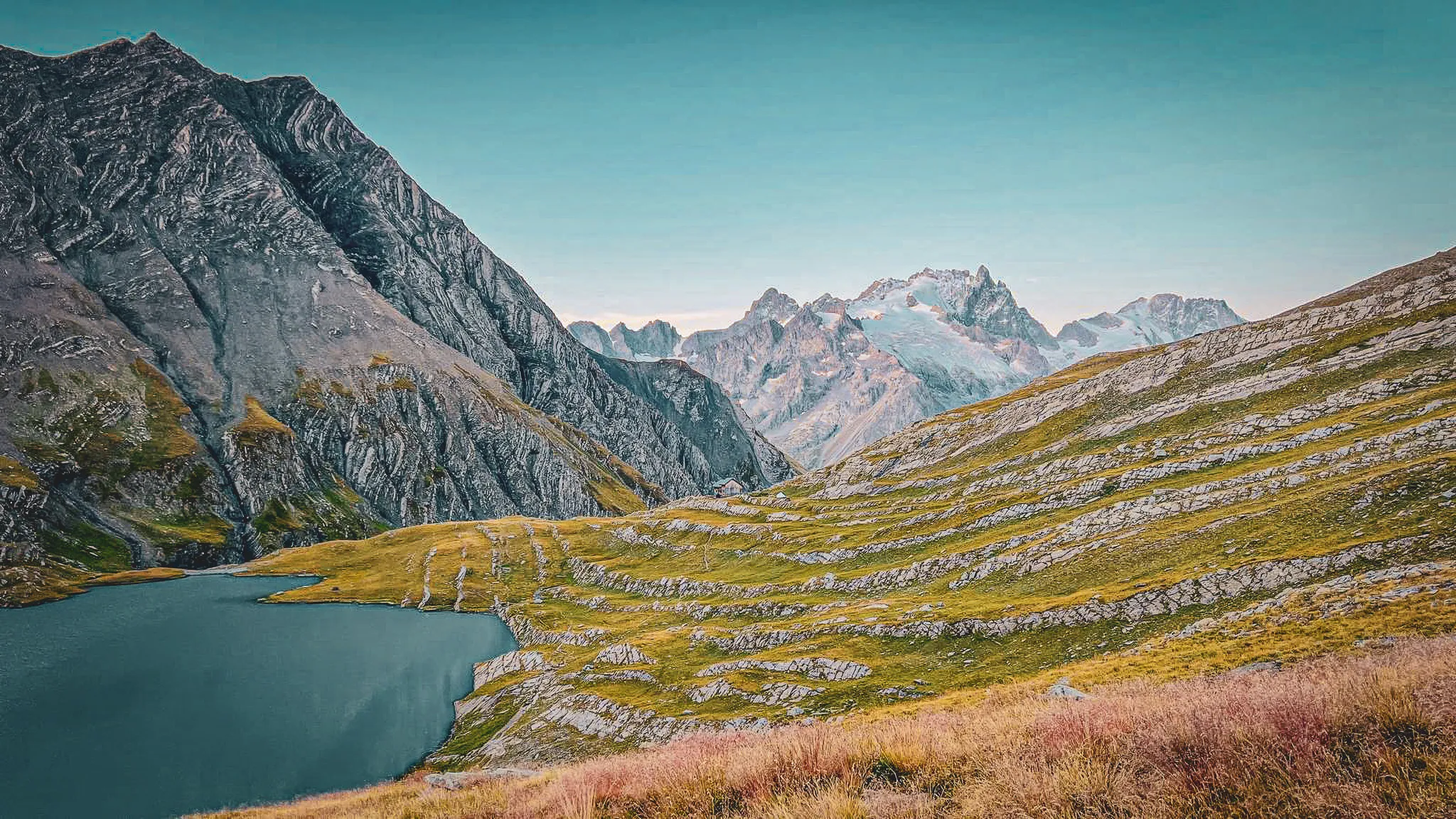
| Aiguilles d'Arves, bivouac version | 4 days | Bivouac, 3 nights | up to 1200 m | Technical, mineral terrain | Nights at Lac du Goléon and Rieu Blanc |
| Plateau d'Emparis and Pic du Mas | 4 days | Bivouac, 3 nights | One sustained day above 3000 m | Self-sufficient endurance | Summit above 3000 m facing La Meije |
| Tour des Dents du Midi | 5 days | Huts/lodges | up to 1200 m, 5000 m over the trip | Occasional technical steps (Pas d'Encel) | Optional Haute Cime summit, 3257 m |
So which itinerary, for which goal?
If you want the complete alpine arc, the one that starts in France and ends with one last pass before dropping back down to Chamonix eleven days later, the only honest format is Trek the tour du Mont Blanc: The full circuit, guided on the ground by Anaïs. If you want a slice of that technical intensity without the weight of a bivouac, Tour of the Aiguilles d'Arves in 5 days, guided by Lisa, condenses the Col de l'Épaisseur and the Buffe ridge into five hut-based days.
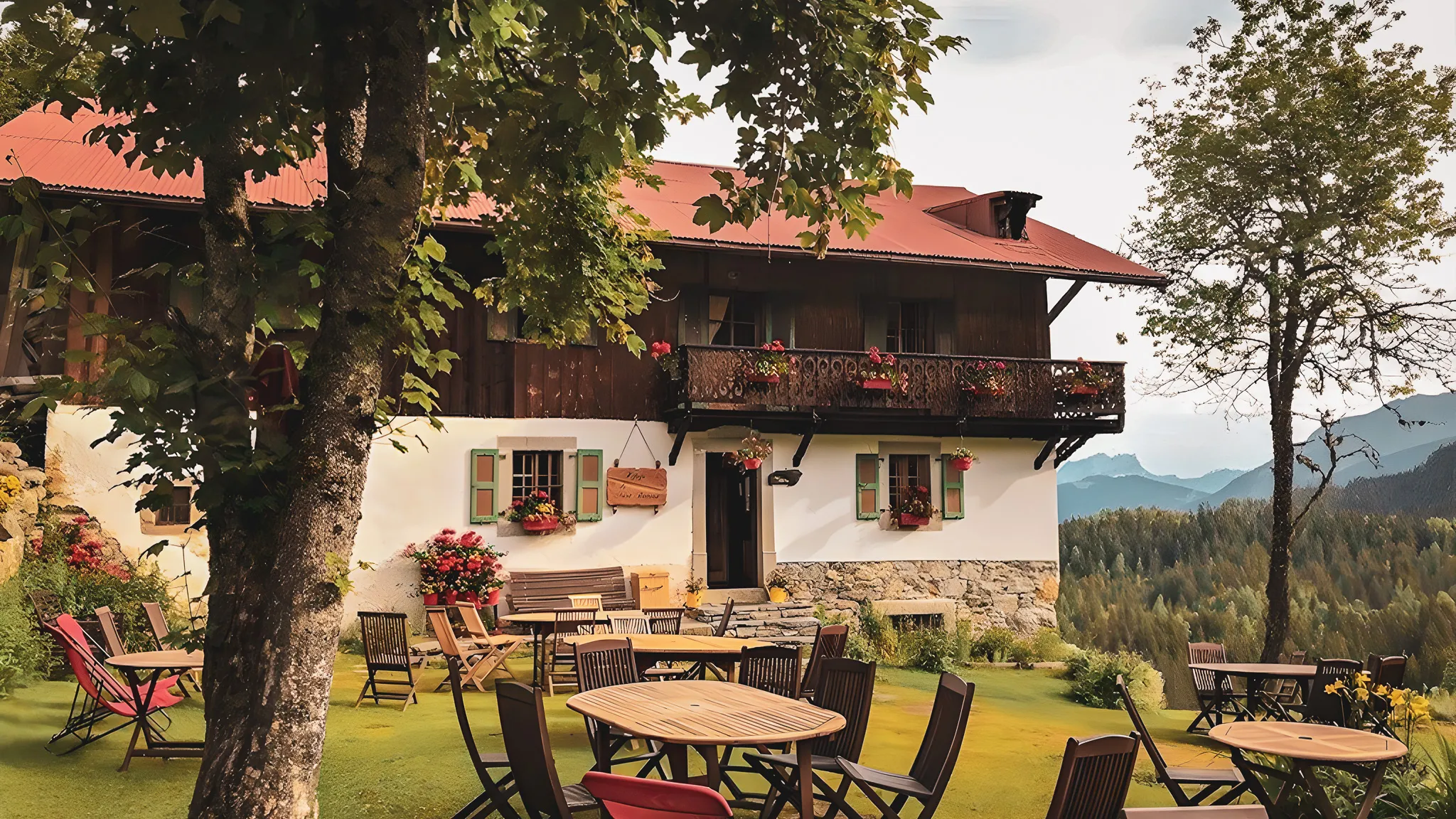
If you'd rather have a short, wild immersion where the bivouac is part of the point, Hiking and bivouac around the Aiguilles d'Arves, guided by Patrick, pitches the tent by Lac du Goléon and then at Rieu Blanc, facing the Aiguilles d'Arves. Surge to Pic du Mas beneath La Meije, guided by Cyril, pushes to a summit above 3000 m, the Pic du Mas de la Grave, over three nights facing La Meije. And if you want a compact format that still sleeps in huts, with a real optional summit, Trek the tour des Dents du Midi in 5 days, guided by Virginie, runs five days between the Cabane de Susanfe and the Cabane d'Anthème, with the option to climb the Haute Cime at 3257 m.
None of these formats is a consolation prize next to the Tour du Mont Blanc. They're different choices, not lesser versions of one another. Answer the three questions above honestly, then open the itinerary that matches the time you actually have and the night you're after, hut or bivouac, ten days or four.

Find your next adventure
Browse curated expeditions matching the categories of this article and start planning your next trip.
Find your dream adventure
 Find your dream adventure
You might also like these adventures …
Hand-picked to echo the spirit of this article.

More to discover
Keep exploring with these pages and stories picked for you.
Mont Blanc or the Arves: choose your ideal alpine traverse
Compare three advanced Alpine formats, technical ridge, high bivouac and ridge-and-hut, across four real itineraries, to match your season, effort and style.
Devoluy or elsewhere? Pick your ideal alpine trek
Compare four similar alpine itineraries by effort, terrain, shelter style and season to choose between the mineral Devoluy and close alternatives.
Tour du Queyras in 5 days: how to prepare your legs for the GR58
An 8-week plan for the GR58: hut nights at 2580 m, an optional summit at 3025 m, and legs ready for the descent into the wild Bouchouse valley.
High-altitude traverse or technical camp: your summer choice
Torn between a high-altitude traverse and a technical camp? Compare the 5-day Beaufortain tour with three shorter options by level, season and goals.
Northern lights or high lakes: choose your hike by effort and aim
Compare the daily effort and real aim of five real trips, from Valgaudemar to Senja, and pick observation or itinerant performance to match your level and season.
Dents du Midi itinerary in 5 days day by day
A day-by-day Dents du Midi itinerary detailing key stages, altitudes, tough sections and high points so advanced hikers know exactly what awaits.
