Where to go ski touring: the right area for your level
 By Maxime
From a first hut weekend to the Haute Route: French and Swiss ski touring areas ranked by level, with real climbs per day. Find where to start.
Where should you go ski touring if you have never put skins on your skis, and where should you go three seasons later, once a 1,000-metre day no longer scares you? The answer has less to do with how beautiful a range looks than with two numbers: the vertical you can climb in a day, and the slope angle you can ski down. This guide sorts the ski touring areas of France and Switzerland by level, based on the routes our guides lead every winter, from first tracks at La Grave to the Haute Route from Chamonix to Zermatt.
In this guide
- How to tell your ski touring level
- Before your first range: marked uphill routes in resorts
- Beginner: three areas for your first tracks
- Intermediate: linking days and huts
- Advanced: first glaciers and multi-day tours
- Expert: the Haute Route and the Monte Rosa 4000s
- The table to pick your area
- When to go, area by area
- Before every tour: read the avalanche bulletin
How to tell your ski touring level
In ski touring, your level sits on two axes: how much vertical you can climb in a day, and how steep a slope you can ski in ungroomed snow. A strong piste skier who has never skinned uphill is still a ski touring beginner. So is a very fit hiker who skis badly, just for a different reason.
Guidebooks use a grading scale for the descent, often the French Toponeige scale, from 1.1 to 5.6. Level 1 means slopes under 30°, level 2 stays under 35°, level 3 goes up to 35° with short sections above 40°, and level 4 is couloir skiing above 40° (the scale is explained in detail in this French guide to ski touring grades).
On our trips we use more concrete markers, which you can check yourself before booking:
- Ski touring beginner: you are comfortable on black runs, you have tried some off-piste, and you can climb 500 to 1,000 m in a day.
- Intermediate: you have done several tours, kick turns and your avalanche transceiver hold no secrets, and you climb 700 to 1,200 m with a 5 to 8 kg pack.
- Advanced: you have already completed a multi-day tour, you climb up to 1,400 m and you ski powder as well as hard snow.
- Expert: you string together 1,200 to 1,700 m a day for a week, with 40-45° sections and 8 to 10-hour days.
(Yes, even the beginner level asks you to be at ease on a black run. You learn the uphill in a morning. Skiing variable snow takes a lot longer.)
Before your first range: marked uphill routes in resorts
If you have never used skins, the best first terrain is not a wild valley but a resort with marked uphill routes. You climb alongside the pistes, test your rental gear, get a feel for what a few hundred metres of ascent means, and ski back down on groomed snow. It is also the advice given to beginners by the professionals in Tignes: stay on marked routes until you can handle off-piste descents.
These routes exist in the Alps and the Pyrenees alike. On the Pyrenean side, the French hiking federation listed eighteen marked routes across five resorts in 2022, from Font-Romeu to Cambre d'Aze and from Gavarnie to Hautacam (see the FFRandonnée selection, in French). Two or three outings like this are enough to know whether you enjoy the climb, before committing to a hut trip. For gear and budget, we broke down what ski touring rental really costs.
Beginner ski touring: three areas for your first tracks
For a first trip, look for wide slopes under 30°, a staffed hut you can reach in half a day, and a guide who takes the time to explain kick turns. These three tick every box, each with its own character.
La Grave and Le Chazelet, facing the Meije (Écrins)
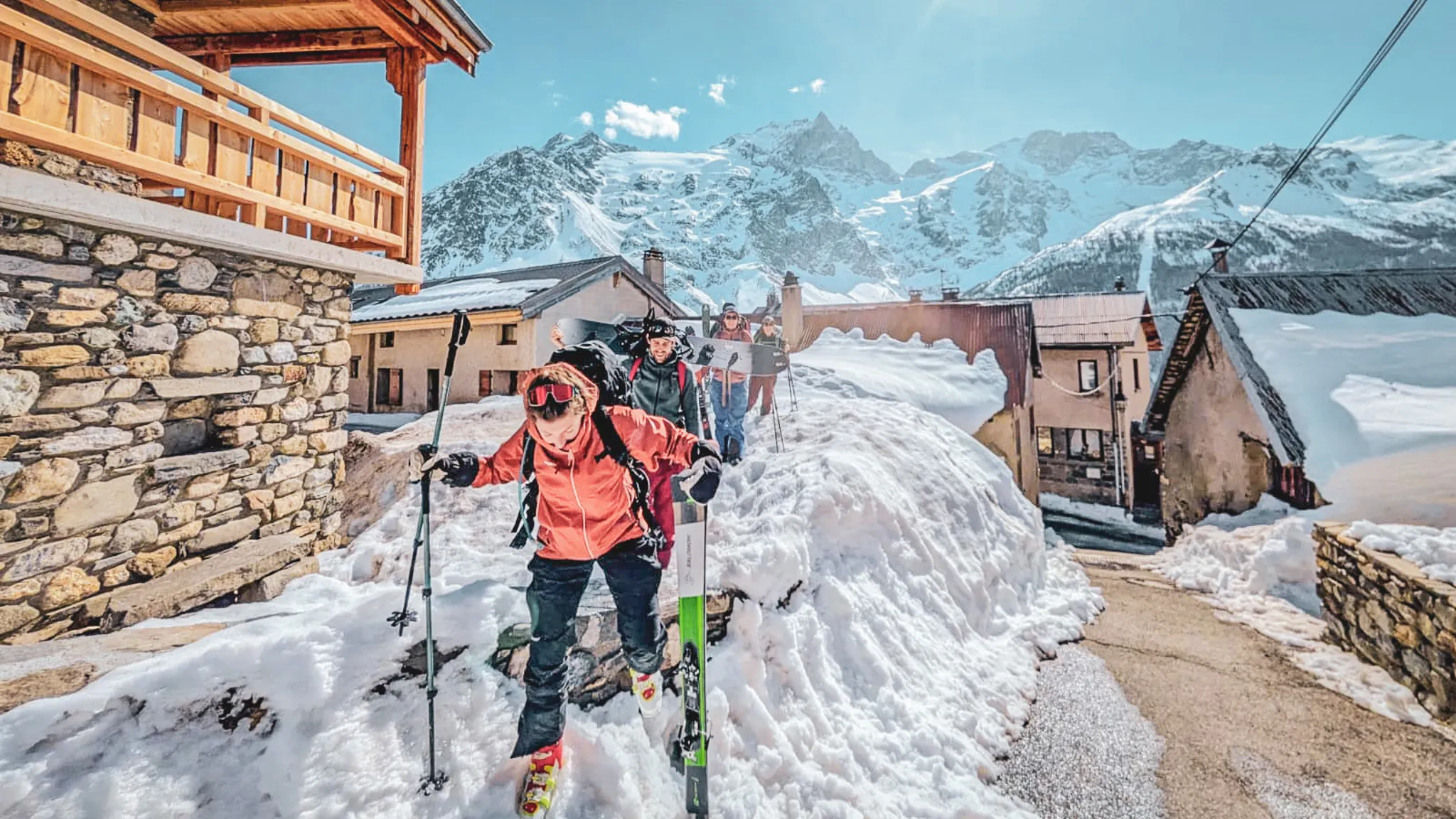
La Grave is one of the historic places of mountain skiing in Europe, and it is also a very good place to start. Day one is spent at Le Chazelet on gentle slopes towards Côte Belle or Pointe Laurichard: kick turns, pacing, reading the terrain. Then come two nights at the Pic du Mas de La Grave hut, with the Meije outside the window, and a climb to the Cime du Rachas for a picnic facing the Écrins glaciers.
Level marker: 800 to 1,000 m of ascent a day, 5 to 6 hours on skis. Season: February and March. This is the programme of our beginner ski touring course in La Grave.
The Great St Bernard Pass, Swiss side (Valais)
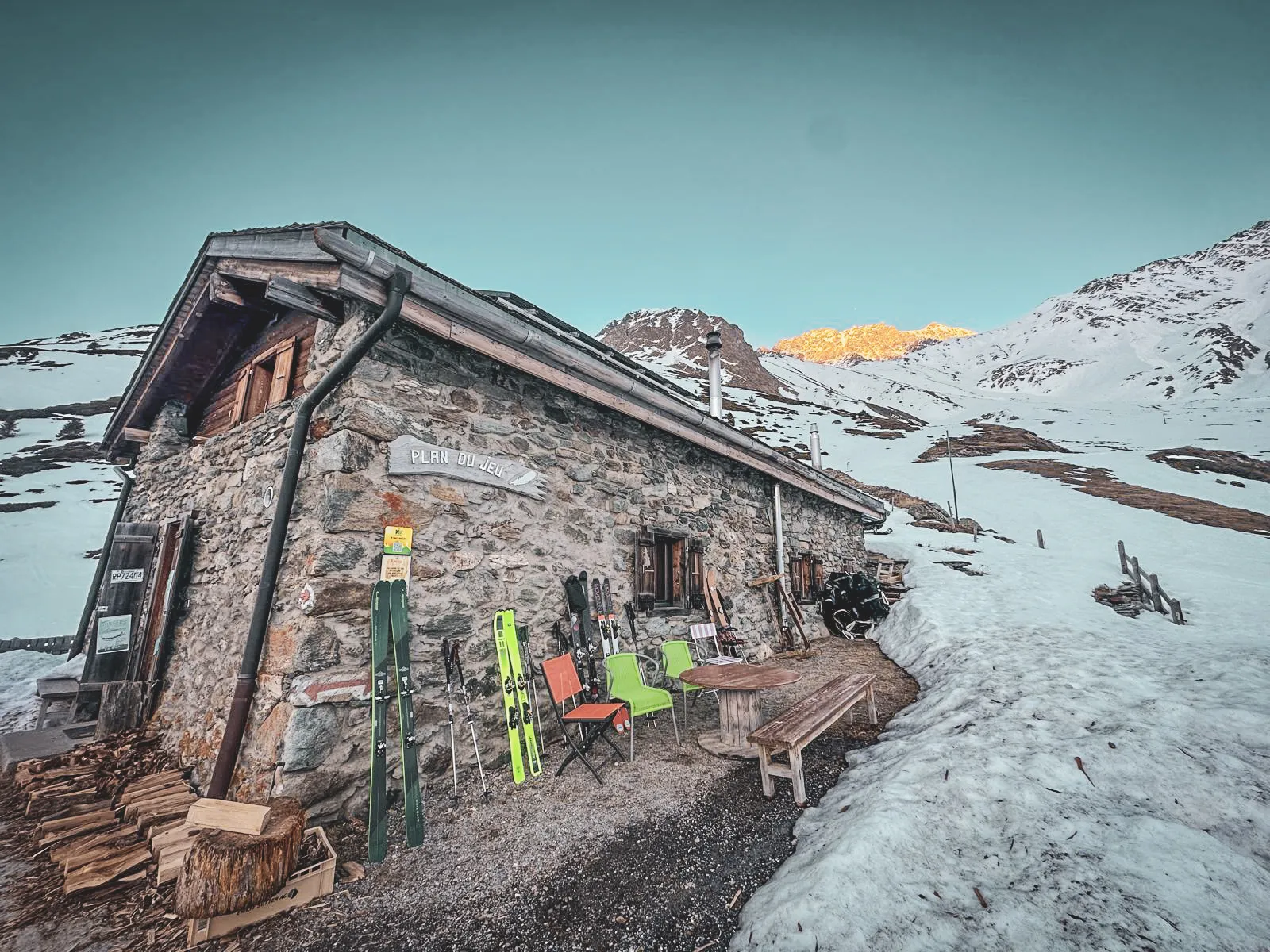
If you want to start in Switzerland, this is probably the easiest place on the legs: 500 to 900 m of ascent a day. You set off from Bourg-Saint-Bernard (1,918 m), spend two nights at the Plan du Jeu hut, then one night at the Great St Bernard Hospice, where dinner is shared with the canons who run it. On the last day, Mont de Proz (2,950 m) via the Proz glacier gives a first taste of high mountains, with a few more technical sections near the top.
Catherine, who joined this first ski touring trip at the Great St Bernard, sums up what matters at this level (translated from French): "First experience on a 4-day introductory ski touring trip. A great experience: our guide […] gave the group confidence, built a strong team spirit and adapted to each of our needs."
Les Contamines, the quiet side of Mont Blanc
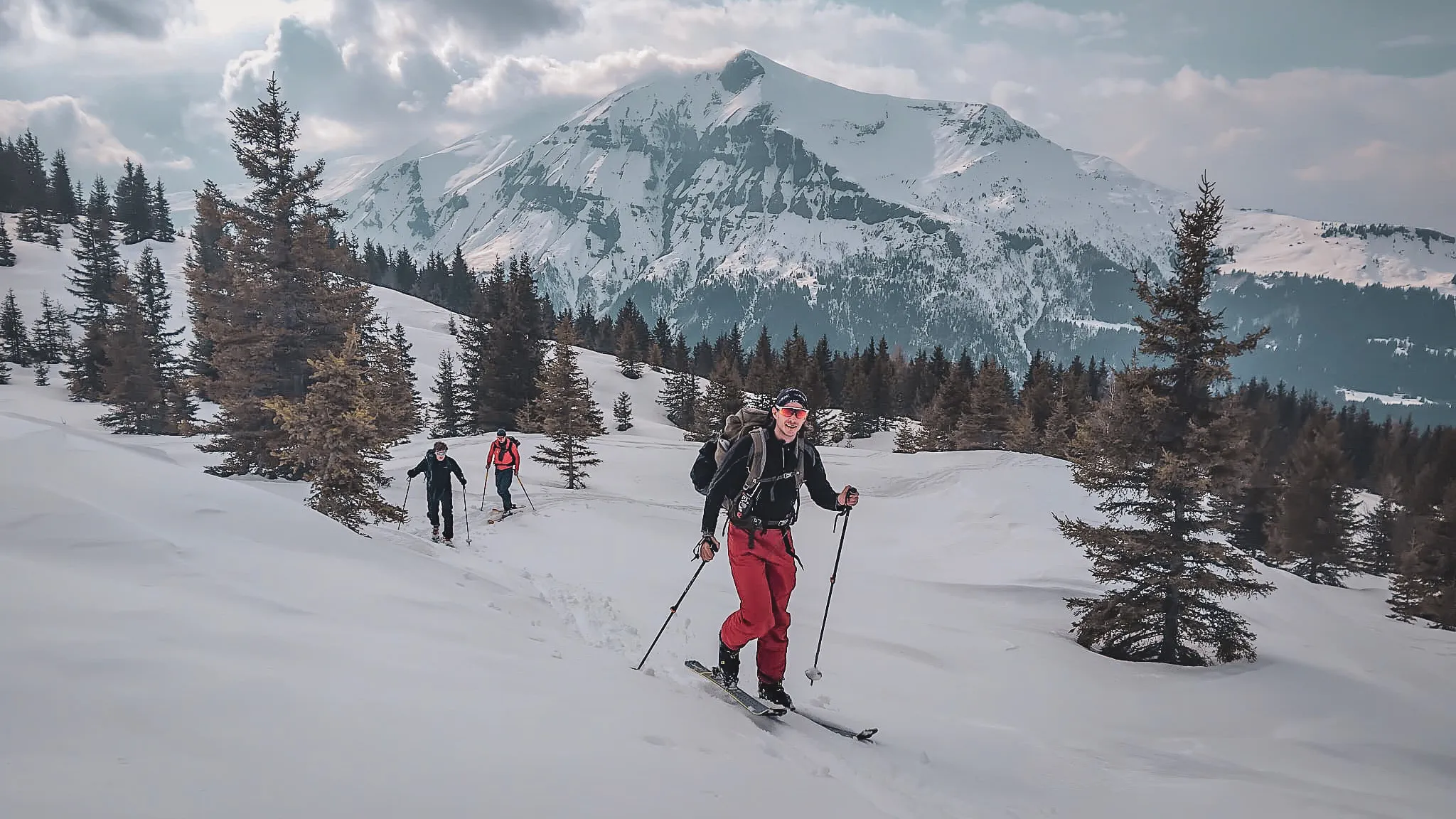
The Mont Blanc massif is not just for mountaineers. From Les Contamines, first turns happen on Mont Truc, above the Miage glacial valley. Then you climb to the Refuge des Prés, inside the Contamines nature reserve, and cross the Cicle and Gittaz passes, where four ranges come into view at once: Beaufortain, Aravis, Écrins and Mont Blanc.
Level marker: 500 to 900 m of ascent a day. Season: January to April. This is the terrain of our first ski touring summits around Mont Blanc.
Intermediate: areas for linking days and huts
Once kick turns come naturally and you know your transceiver by heart, the next step is not steeper skiing. It is linking things together: several days in a row, a slightly heavier pack, a night in a hut you reach under your own steam. The pre-Alps and the southern Alps are ideal for this.
The Queyras, the sunniest range to progress in
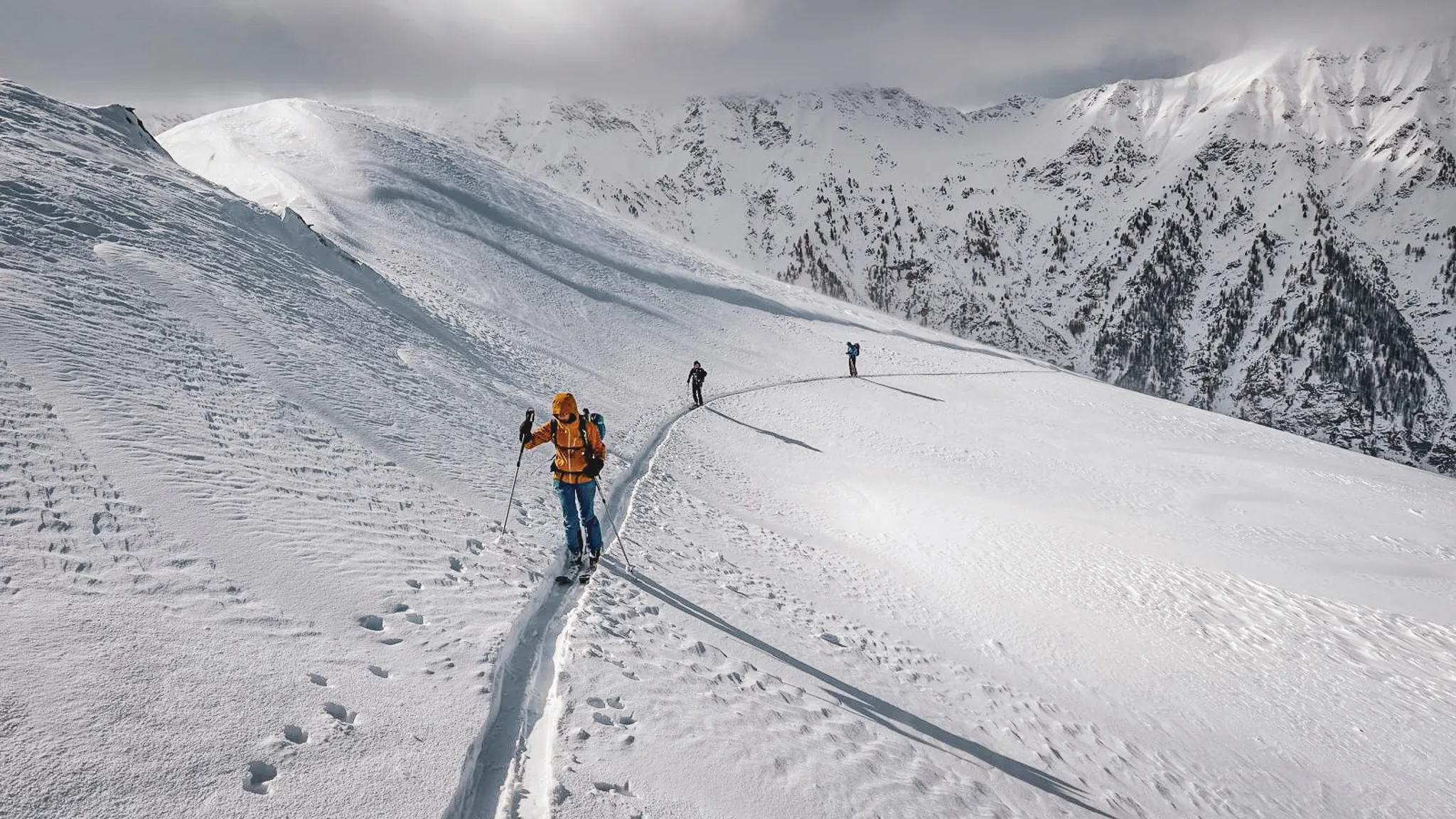
The Queyras has earned its reputation: few people, lots of sun, and wide larch forests where powder lasts. To gain autonomy, the format that works is day tours from a base, then a short hut-to-hut tour. Three days from a gîte in Abriès (the Chalvet ridge, the Col du Tronchet, the summit of Gilly at 2,467 m facing Monte Viso), then two days on the move with a night in a remote staffed hut above Molines-en-Queyras. The Col de la Mayt, nicknamed "no man's land", is worth the trip on its own.
Level marker: 900 to 1,200 m of ascent, 6 to 8 hours on skis. Season: January to May. Thibaut, an IFMGA guide, leads our trip to become an independent ski tourer in the Queyras.
The Beaufortain, around the Pierra Menta
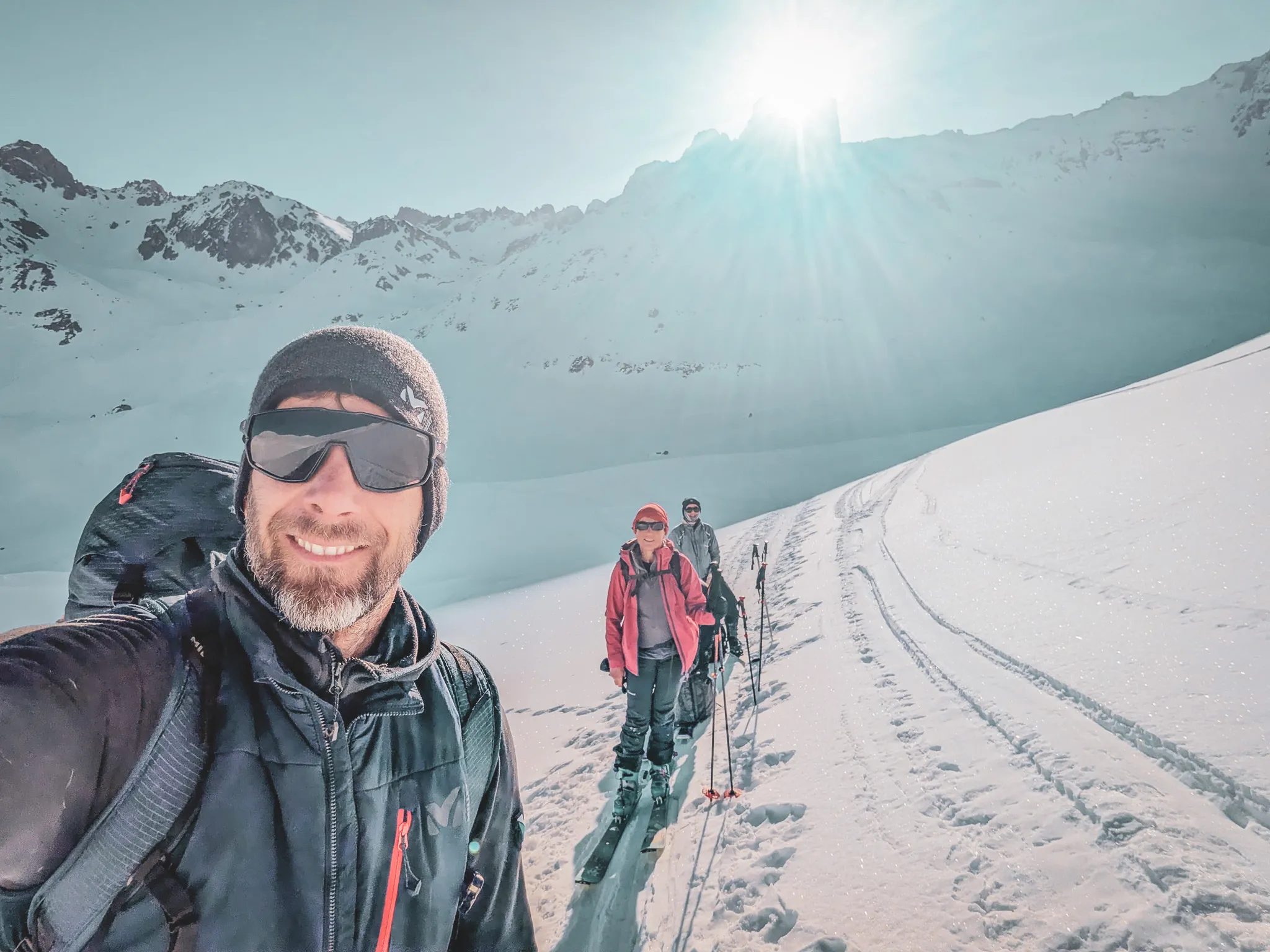
The Beaufortain means snowy summer pastures, wide bowls and the Pierra Menta (2,714 m) as a constant landmark. It is good terrain for a real hut-to-hut tour without glaciers: a first night at the unstaffed Refuge de la Coire (you cook together), then two nights at the Refuge du Presset (2,514 m), right opposite the Pierra Menta. The last day ends with a 1,200 m descent down the Treicol valley.
Agathe, who joined this Beaufortain ski tour, describes a week when the weather did not help (translated from French): "everything was perfectly organised, with last-minute changes because of tricky conditions […] he showed us different routes every day".
The Aravis, for a hut weekend
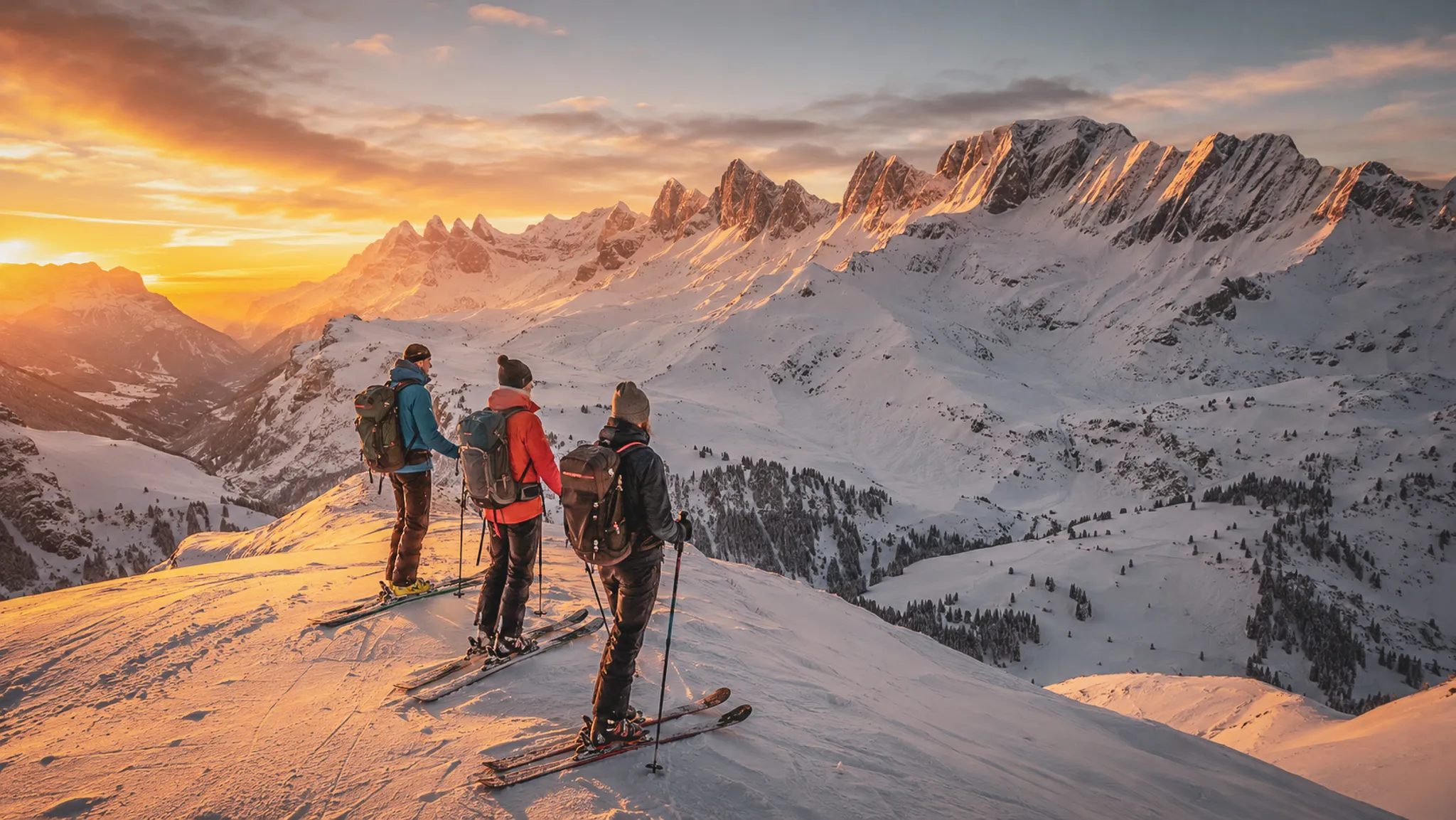
No time for four days? The Aravis suit a short format. Start from Le Grand-Bornand, skin up to the Pointe Percée hut (300 to 500 m of ascent on day one, with an avalanche transceiver session), then the next day go for the Pointe des Carmélites (2,477 m) or the Col des Verts (2,499 m), with Mont Blanc straight ahead. Level marker: 500 to 900 m a day, but you need a few tours behind you and the ability to ski any snow. This is our ski touring weekend in the Aravis.
Advanced: first glaciers and multi-day tours
The advanced level is when you leave the pastures for the glaciers. Days climb to 1,200 or 1,400 m of ascent, and most of these routes require at least one multi-day tour under your belt.
Haute-Maurienne, from Bonneval to the Albaron (Vanoise)
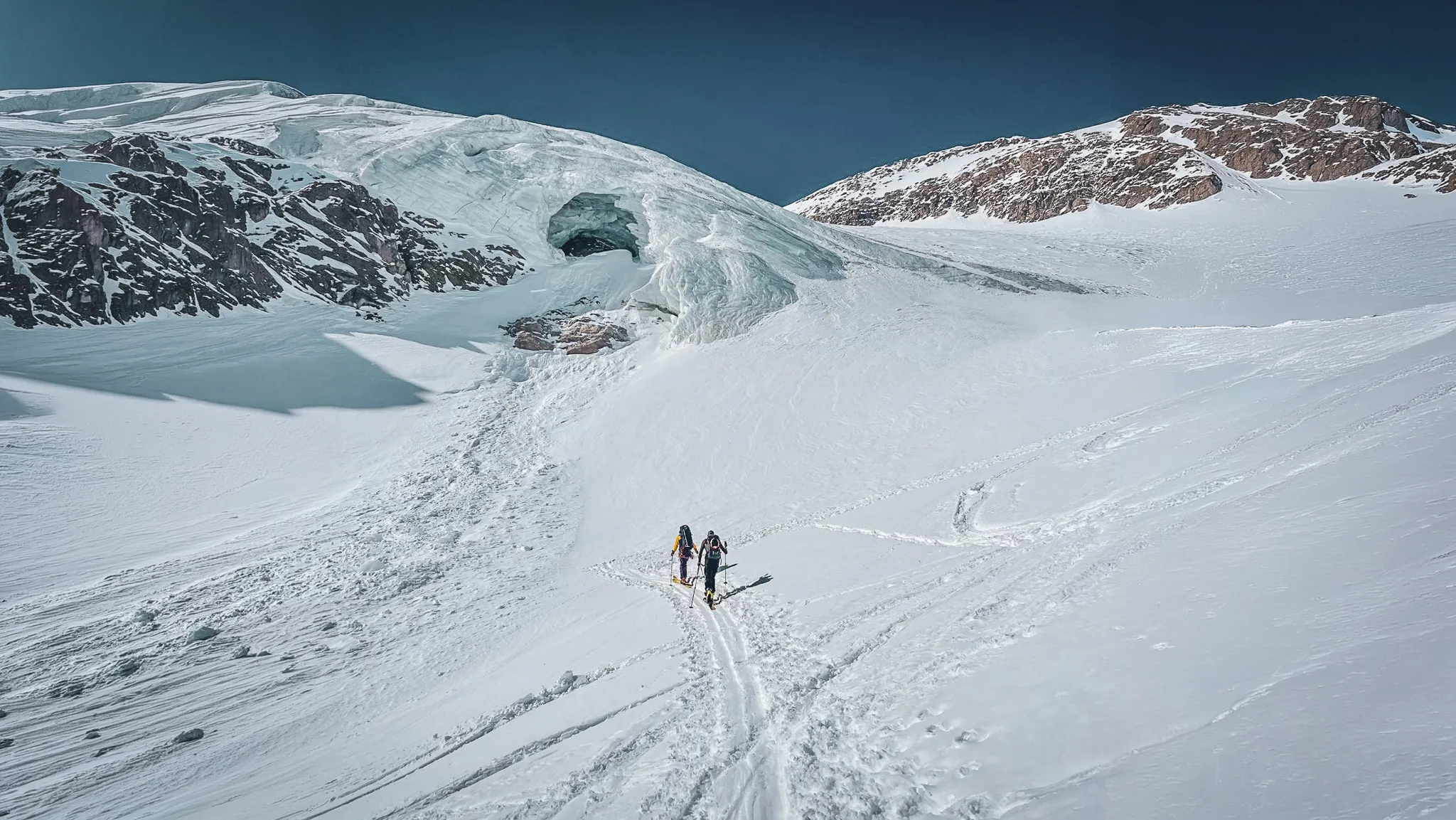
At the head of the Maurienne valley, Bonneval-sur-Arc is the gateway to four days of hut-to-hut touring without dropping back to the valley: the Évettes hut (2,590 m), a crossing into Italy over the Petite Muraille d'Italie (3,400 m) to the Gastaldi hut, the Col d'Arnes, the Avérole hut, then the Signal de l'Albaron (3,637 m) and its view over three countries. Level marker: 900 to 1,400 m of ascent, at least one previous multi-day tour. Season: March and April. See our Vanoise glacier ski traverse.
Three glaciers around Mont Blanc, between France and Switzerland
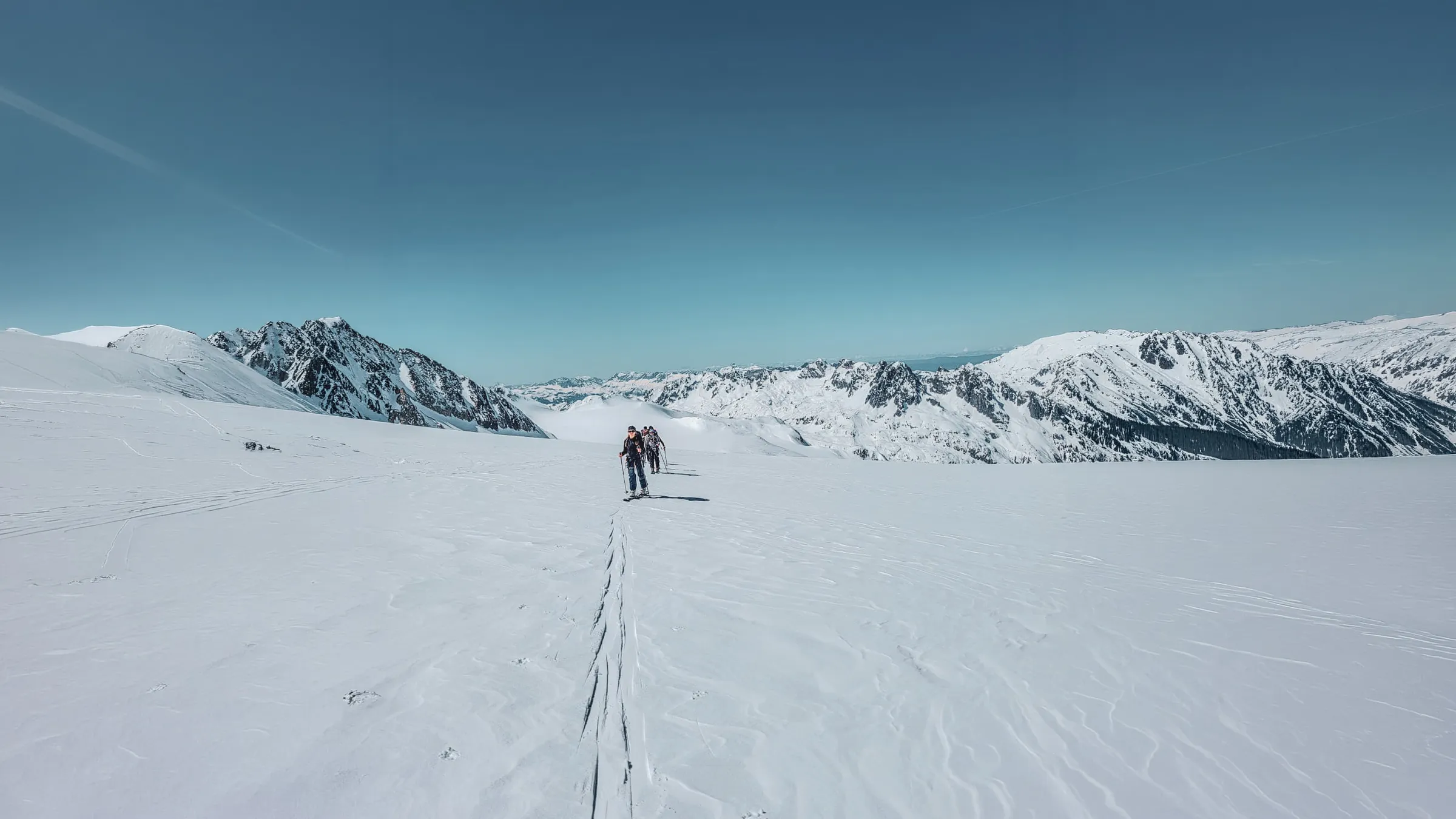
Argentière, Saleina and Trient: three glaciers linked in three days, with the Col du Chardonnet in crampons and an abseil down onto the Saleina glacier on the Swiss side. A night at the Trient hut (3,170 m), then a descent of about 2,000 m down the Tour glacier. It is a great test before the Haute Route because it throws every kind of terrain at you: steep slopes, rope work, long glacier crossings. This is the programme of our three glaciers in three days around Mont Blanc.
Expert: the Haute Route and the Monte Rosa 4000s
At expert level, we are talking about 8 to 10-hour days, 1,200 to 1,700 m of ascent, 40-45° slopes and an 8 to 12 kg pack. These routes are prepared over several weeks, not on a whim.
The Chamonix-Zermatt Haute Route
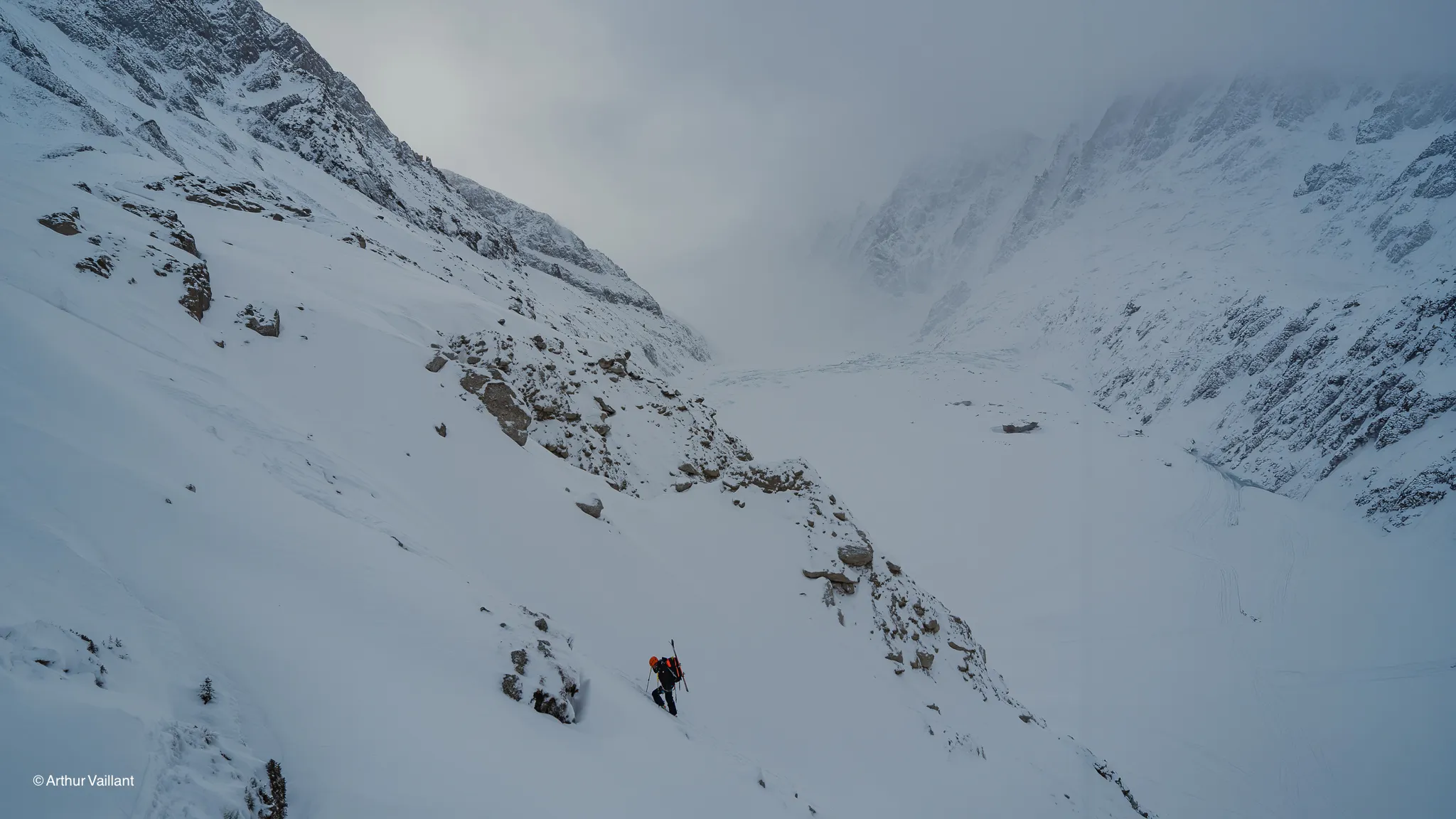
Seven days between Chamonix and Zermatt, via the Argentière hut, Champex, the Prafleuri hut, the Pigne d'Arolla (3,796 m) and the Col de Valpelline (3,556 m), before arriving beneath the Matterhorn. It is the classic ski tour of Switzerland, and its difficulty comes mostly from the accumulation: six hard days in a row at altitude. We told its story in our guide to the Chamonix-Zermatt Haute Route, and the full itinerary is on the Haute Route ski tour page.
The Monte Rosa 4000s, between Switzerland and Italy
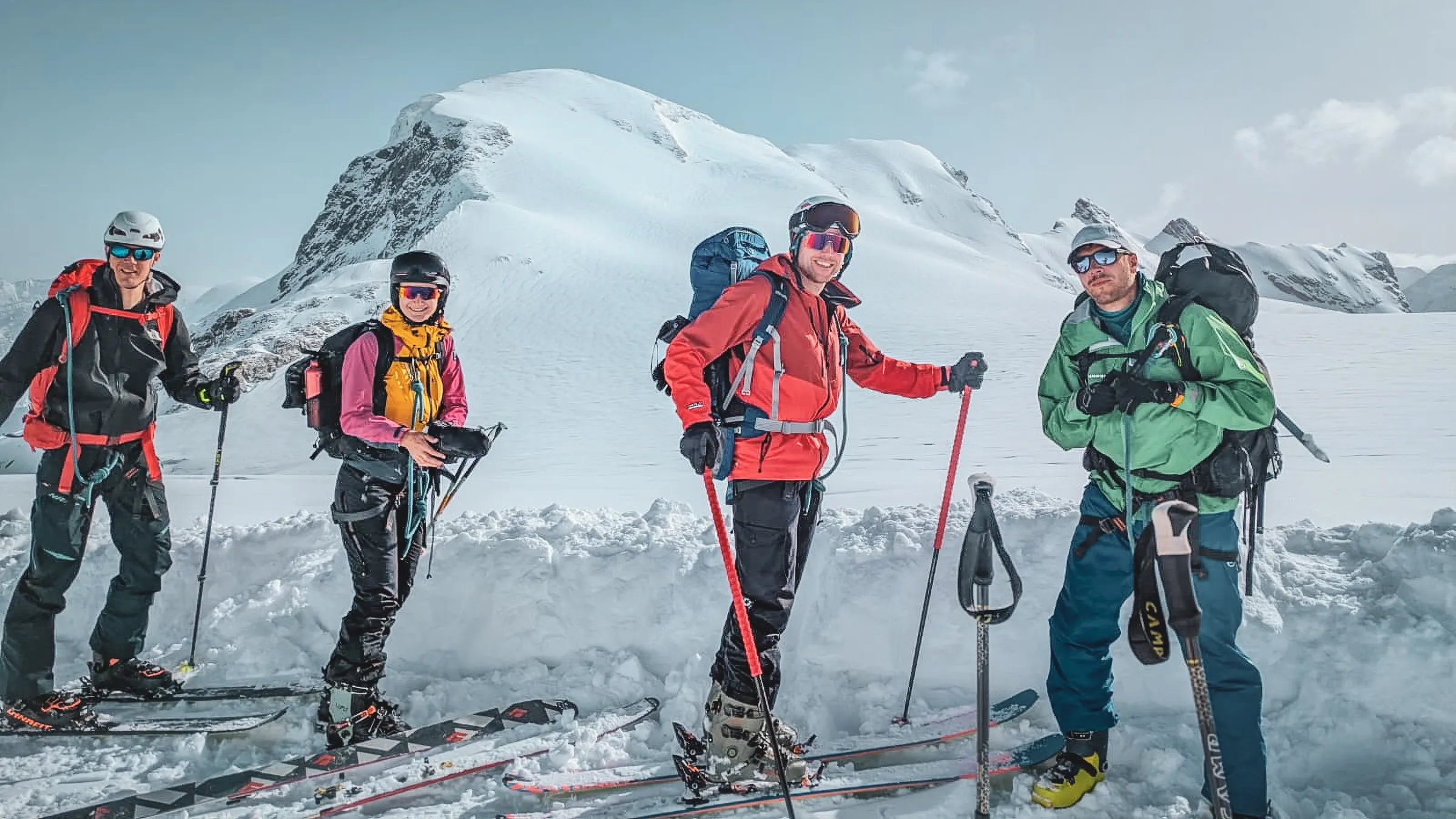
Monte Rosa is one of the largest glaciated areas in the Alps. In four days: the Breithorn (4,164 m) on day one, the Monte Rosa hut (2,883 m) on the Swiss side, the Cima di Jazzi, then the Punta Gnifetti (4,554 m), home to the Margherita hut, the highest staffed hut in Europe. Level marker: the same as the Haute Route, with more altitude. See our ski tour over the Monte Rosa 4000s.
The table to pick your ski touring area
| Area | Country | Level | Ascent per day | Format | Season |
|---|---|---|---|---|---|
| Resorts with marked uphill routes | France, Switzerland | Very first time | A few hundred m | Day trip | While the resort is open |
| La Grave (Écrins) | France | Beginner | 800 to 1,000 m | 4 days, hut | February-March |
| Great St Bernard | Switzerland | Beginner | 500 to 900 m | 4 days, hut and hospice | January-April |
| Les Contamines (Mont Blanc) | France | Beginner | 500 to 900 m | 4 days, hut | January-April |
| Queyras | France | Intermediate | 900 to 1,200 m | 5 days, base and short tour | January-May |
| Beaufortain | France | Intermediate | 700 to 1,000 m | 4 days, huts | January-March |
| Aravis | France | Intermediate | 500 to 900 m | Weekend, hut | January-March |
| Haute-Maurienne (Vanoise) | France, Italy | Advanced | 900 to 1,400 m | 4 days, hut-to-hut | March-April |
| Argentière, Saleina, Trient | France, Switzerland | Advanced | 900 to 1,200 m | 3 days, glaciers | February-April |
| Chamonix-Zermatt Haute Route | France, Switzerland | Expert | 1,200 to 1,700 m | 7 days, hut-to-hut | March-April |
| Monte Rosa | Switzerland, Italy | Expert | 1,200 to 1,700 m | 4 days, 4000 m peaks | March-April |
If you are torn between two rows, pick the upper one. A good first season on an easier range makes you want to come back far more than a tour that is too long, where every climb feels like a grind.
When to go ski touring, area by area
The season is not the same everywhere. Beginner and mid-altitude areas (Aravis, Beaufortain, Contamines) are mostly skied from January to March, once snow has settled in the forests and bowls. The Queyras, higher and further south, often holds until May. Glacier tours (Haute-Maurienne, Haute Route, Monte Rosa) run in March and April: the days are longer and many high huts open for the spring season.
One thing to keep in mind late in the season: below 2,000 m, snow can run short in April even when the summits are still white. A guide who knows the range will then adapt the route or move to a higher sector.
Before every tour: read the avalanche bulletin
Whatever the range, the first step of a ski touring day is always the same: read the avalanche bulletin published the evening before. In France it is issued range by range by Météo-France. In Switzerland, it is the SLF avalanche bulletin. Danger level, aspects and altitudes change from one range to the next, sometimes from one valley to the next.
Transceiver, shovel and probe are mandatory as soon as you leave the pistes, and they only help if you can use them fast. To go further, we wrote about managing avalanche risk, and about getting started in ski touring (level, gear, first outing).
If you are mostly looking for a first route outside the French Alps, our selection of beginner ski touring routes in Europe runs from Austria to the Tatras. All our trips, from a first weekend to a glacier tour, are gathered on the ski touring trips and tours page.

Find your next adventure
Browse curated expeditions matching the categories of this article and start planning your next trip.
Find your dream adventure
 Find your dream adventure
You might also like these adventures …
Hand-picked to echo the spirit of this article.