Climbing grades explained: the French scale for beginners
 By isabelle
Numbers, letters, gym or crag: learn to read climbing grades and see which level to aim for before your first routes on real rock.
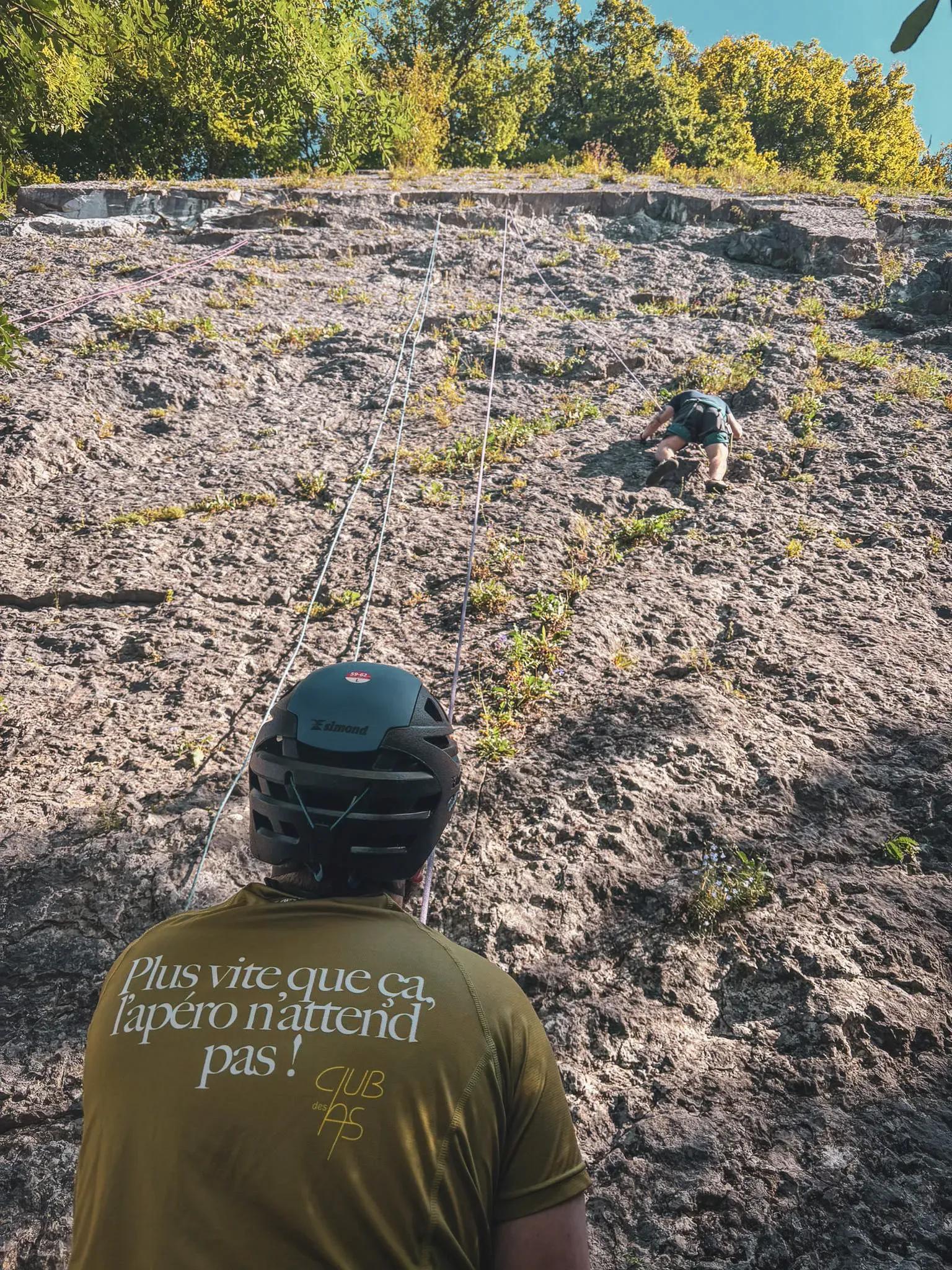
Climbing grades are those little codes (4c, 5b, 6a+) stuck at the foot of every route at the gym or printed in a crag guidebook. They tell you how hard the toughest move on the route is. When you're starting out, it's tempting to read them as a score on yourself, which misses the point: understood properly, the French grading scale is a map for picking routes, tracking your progress and knowing when you're ready to swap the gym for real rock. Here's how to read it, why it shifts from one wall to the next, and what it means in practice for your first days outside.
In this article:
- How to read a climbing grade
- Who decides a route's grade?
- What level are you at as a beginner?
- From gym to crag: what grades really tell you
- Bouldering grades: a different scale
- Foreign scales: UIAA, American, conversion table
- Via ferrata and mountaineering: grades that measure something else
How to read a climbing grade
In France, Belgium and most European gyms, routes use the French scale. It combines a number from 3 to 9, a letter (a, b or c) and sometimes a "+". A 5c is harder than a 5b, a 6a+ harder than a 6a, and each number covers six steps: a, a+, b, b+, c, c+. Below grade 5, some gyms and guidebooks just use the number, since the gap between a 4a and a 4b is small.
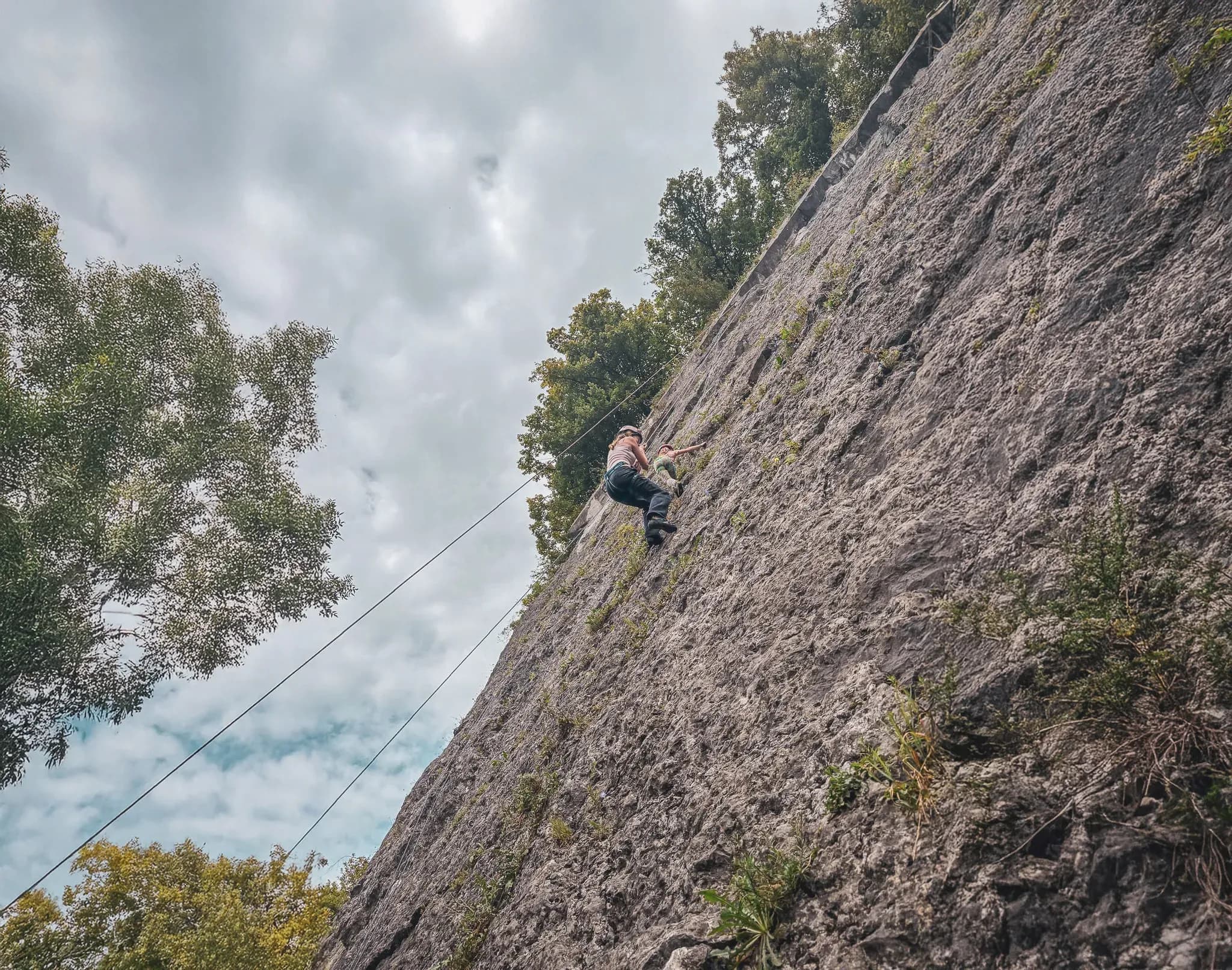
The grade reflects the technical and physical difficulty of the hardest move, not the length or height of the route. A 12-metre route graded 5a can be climbed in one go, while a 30-metre 5a on a crag also asks you to manage your energy and your nerves. Unlike some other systems, the French scale never uses a "-". For the history behind the different scales, theCrag has a solid overview.

Photo: Corentin Bruneau, Unsplash
Who decides a route's grade?
On a crag, whoever bolts the route proposes a grade. Climbers who repeat it then confirm it, or downgrade it if they find it easier. So a grade is a consensus, never a measurement. A route is "soft" when it's easier than advertised and "sandbagged" when it's harder.
At the gym, the setters decide, and every gym has its own hand. Climbing forums are full of the same complaint: why can I climb 6a here but not at the gym down the road? A 5c at your gym isn't necessarily a 5c at the next one, let alone on real rock. If a route feels impossible at your usual level, it might not be you.
What level are you at as a beginner?
On a first session you'll usually climb grade 3 and 4: big holds, a gentle wall, and an instructor belaying you on top rope (the rope already runs through the top of the route, so any fall is short). These are rough benchmarks, not official tiers:
| Grade | What it usually means |
|---|---|
| 3 to 4c | Discovery: first sessions, big holds, learning to trust your feet |
| 5a to 5c | Regular beginner: linking routes, starting to lead |
| 6a to 6c+ | Intermediate: route reading and footwork make the difference |
| 7a to 7c+ | Advanced: specific training, routes worked over several attempts |
| 8a and above | Very high level, then world elite |
For a lot of regular climbers, 6a is the milestone. At the very top of the scale sits Silence, in Norway, the first route proposed at 9c, by Adam Ondra in 2017, a grade still waiting to be confirmed by a repeat. Worth remembering next time a 5b feels hard.
From gym to crag: what grades really tell you
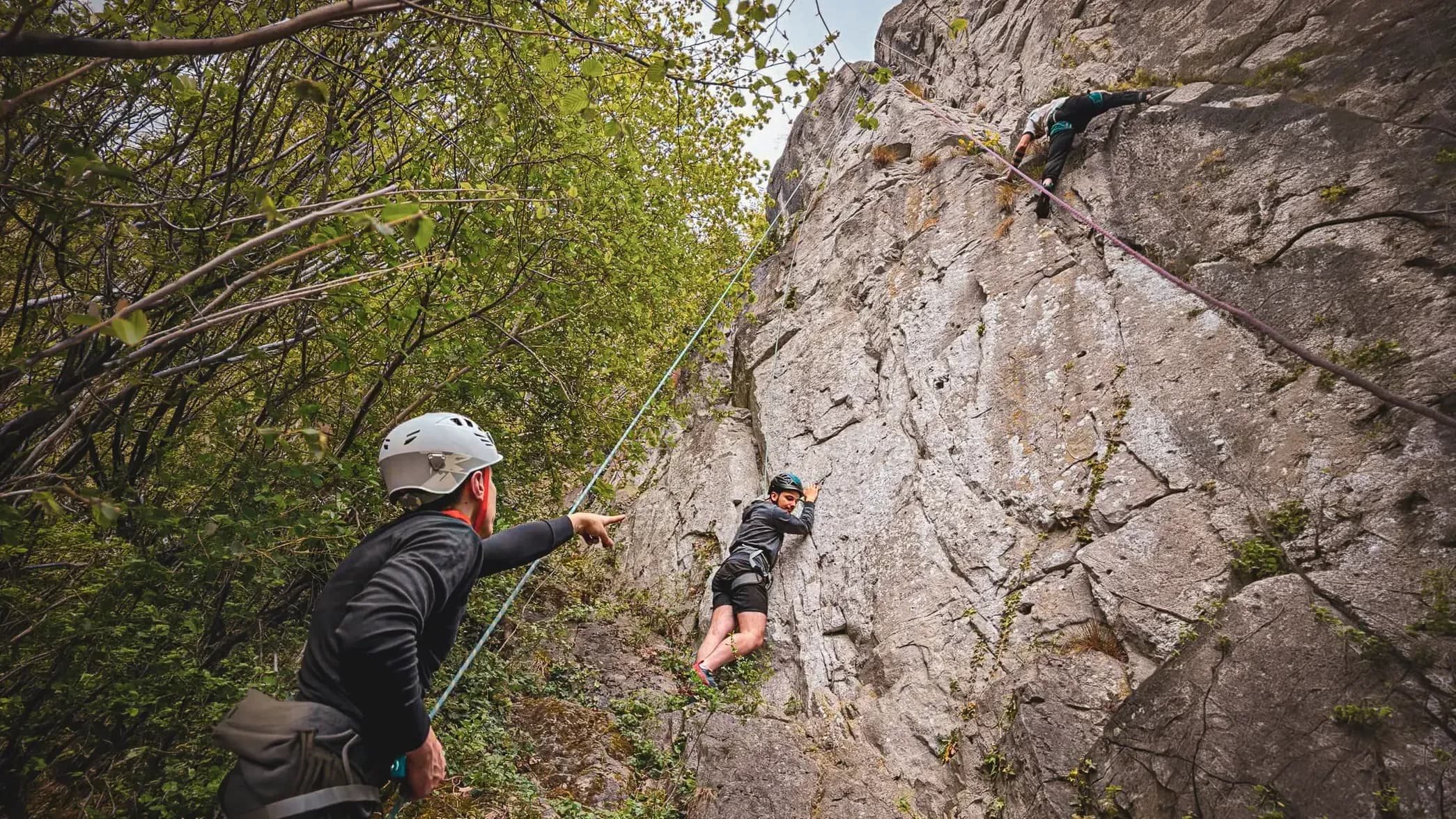
Outside, the holds aren't colour-coded. You have to find them, judge whether a foot will stick on limestone, and accept that the line doesn't always go straight up. Many gym climbers drop one or two grades on their first days on real rock. That's normal, and it comes back quickly.
That's why our crag days list an indoor level rather than an outdoor one. The introduction to rock climbing at Yvoir, in Belgium, asks that you've climbed at least once before and feel comfortable around 4c or 5a indoors. Over the day, Alban, one of the instructors, starts with safety and belaying, then first routes on top rope, and the afternoon moves on to lead climbing and rope work at the anchor.
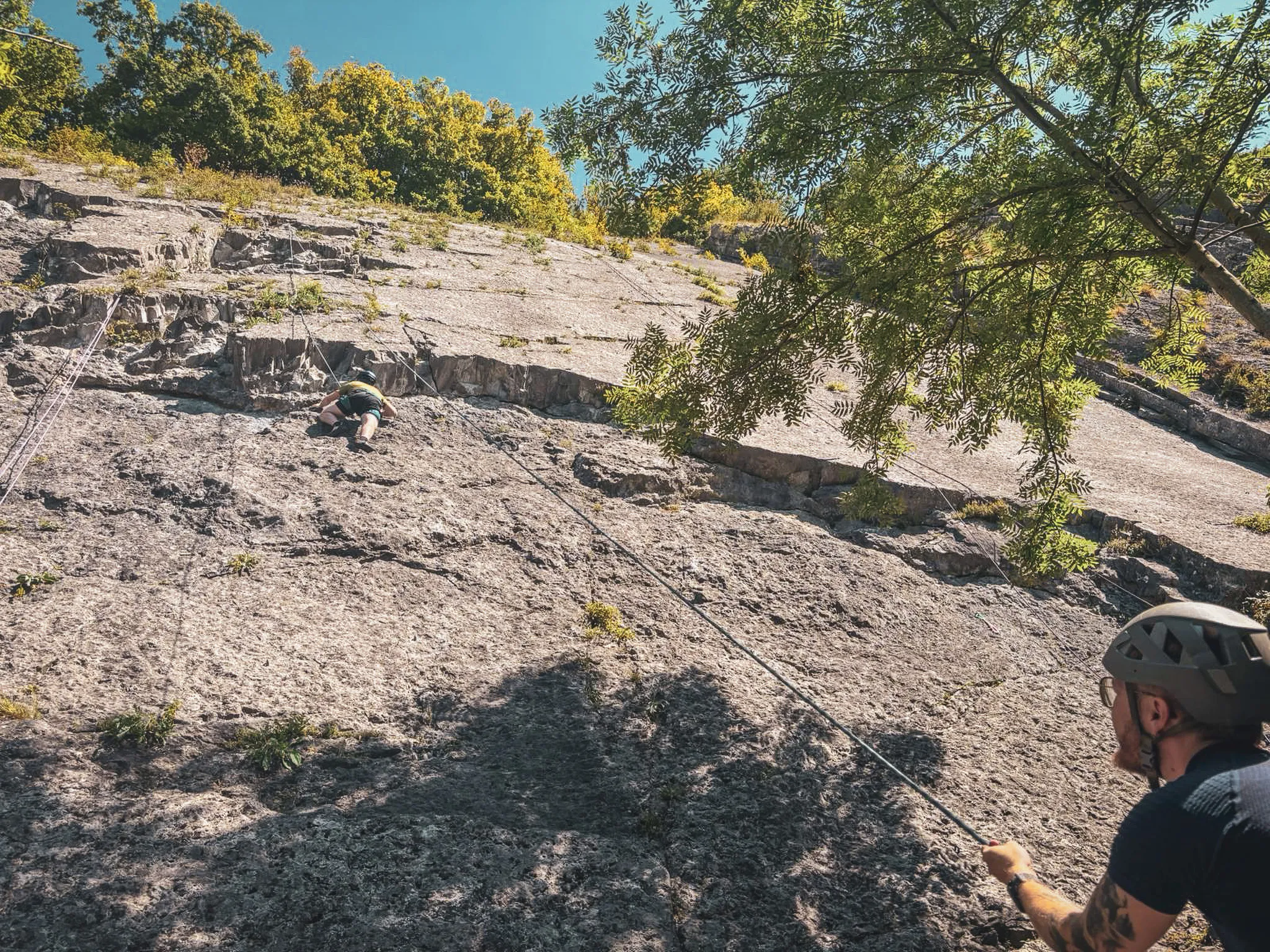
The level on paper isn't the whole story, either. What holds people back most is in their head. Emile, who joined a day at Yvoir, put it this way (translated from French):
"At my age it was a challenge, I even thought about cancelling my booking 😂, but once I was there... with the guide's reassurance... no words. It was SUPERB!!!" Emile, participant in the Yvoir rock climbing introduction
One step up, the 6-day climbing course in Finale Ligure, Italy, is aimed at climbers who lead around 5b, indoors or outside. With Patrick, a high-mountain guide, you learn multi-pitch: building an anchor, belaying a second, abseiling, on a site with more than 3,000 routes. Here too, the number matters less than wanting to string several pitches together in a day.
Bouldering grades: a different scale
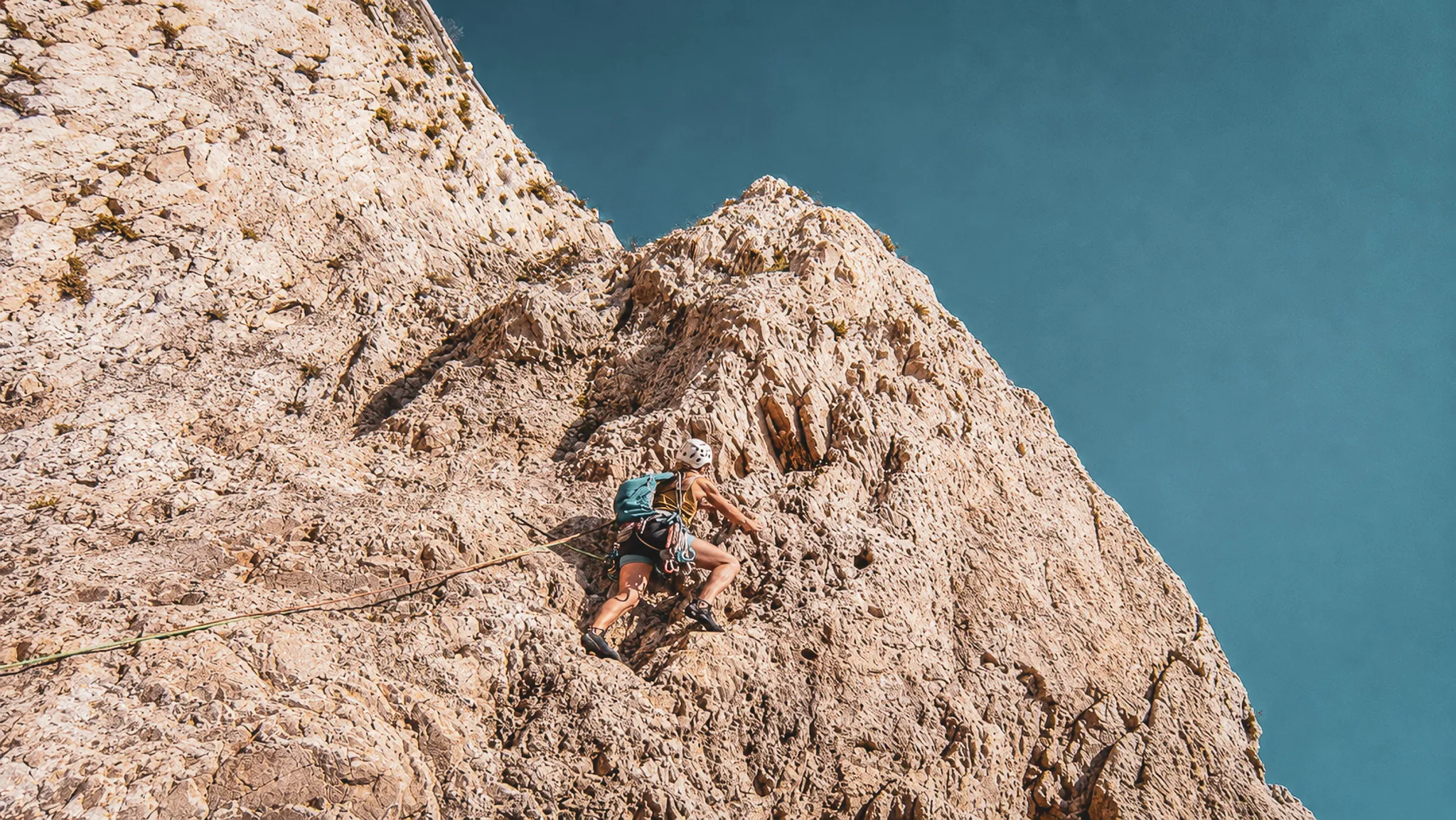
Bouldering means climbing without a rope on walls or rocks a few metres high, above a crash pad. Its grades come from Fontainebleau and follow the same pattern (number, letter, +), but are often written in capitals to tell them apart: 6A for a boulder, 6a for a route. At the same number, a boulder problem is usually harder than a route, because all the difficulty is packed into four or five moves. In the US you'll see the V scale instead.
Many bouldering gyms swap grades for colours: a yellow circuit, a green one, a blue one, each covering a range. Handy when you start, but the colours aren't universal. Every gym has its own scale, posted at the entrance.

Photo: David Pisnoy, Unsplash
Foreign scales: UIAA, American, conversion table
In Germany, Austria and parts of Switzerland, guidebooks use the UIAA scale, in Roman numerals with "+" and "-". In the US, it's the Yosemite Decimal System (YDS), which starts with 5. followed by a number. Conversions are approximate, and two serious tables can be one step apart:
| French | UIAA | American (YDS) |
|---|---|---|
| 5a | V | 5.7 |
| 5c | VI- | 5.9 |
| 6a | VI+ | 5.10a |
| 6b | VII | 5.10c |
| 7a | VIII | 5.11d |
| 8a | IX+/X- | 5.13b |
The comparison published by the Swiss Alpine Club (Neuchâtel section) goes into more detail. A useful habit when travelling: trust the local guidebook and climb one or two easy routes before judging your level.
Via ferrata and mountaineering: grades that measure something else
The letters F, PD, AD, D, TD and ED don't rate a single move, they rate a whole route: how committing it is, how exposed, how hard overall. You'll find them on via ferrata routes, where F and PD are the right place to start, and in mountaineering, where a PD route can mix glacier walking with grade 3 rock sections.
So, how do you progress?
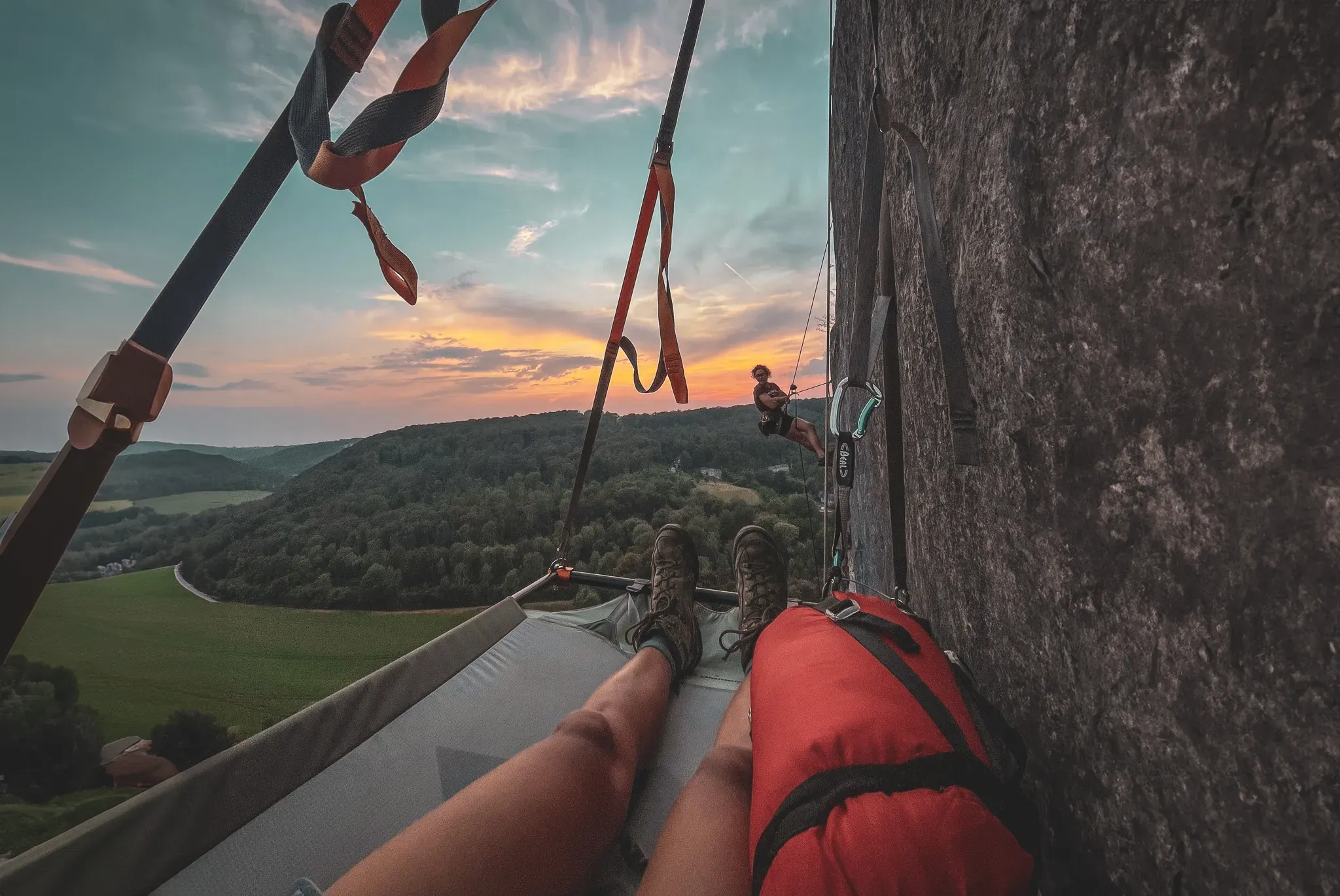
After a first introduction, the next question is almost always the same: how do I keep improving? That's exactly what grades are for. Note the routes you send, aim one grade higher when a route feels smooth, and remember that a grade lost on real rock isn't a step back. If you're still torn between gym and crag to begin with, our guide to climbing for beginners, gym or rock helps you choose. Once grade 5 feels comfortable indoors, a day at Yvoir is the natural next step. Later on, climbing by day, portaledge by night at Freyr asks for regular indoor climbing and some experience on rock, for a night hanging above the Meuse with Lorraine.
And when you miss the rock between sessions, here are all our climbing and mountaineering trips.

Find your next adventure
Browse curated expeditions matching the categories of this article and start planning your next trip.
Find your dream adventure
 Find your dream adventure
You might also like these adventures …
Hand-picked to echo the spirit of this article.


More to discover
Keep exploring with these pages and stories picked for you.
Beginner outdoor climbing: where to go for your first day
Gym or crag? Gear, grading and 3 real spots for your first day outdoor climbing, plus the next step, in Belgium and France.
Climbing for beginners: gym or rock, gear, first routes
Fear of heights, gym or rock, gear to rent: the complete guide to taking your first steps in climbing with confidence.
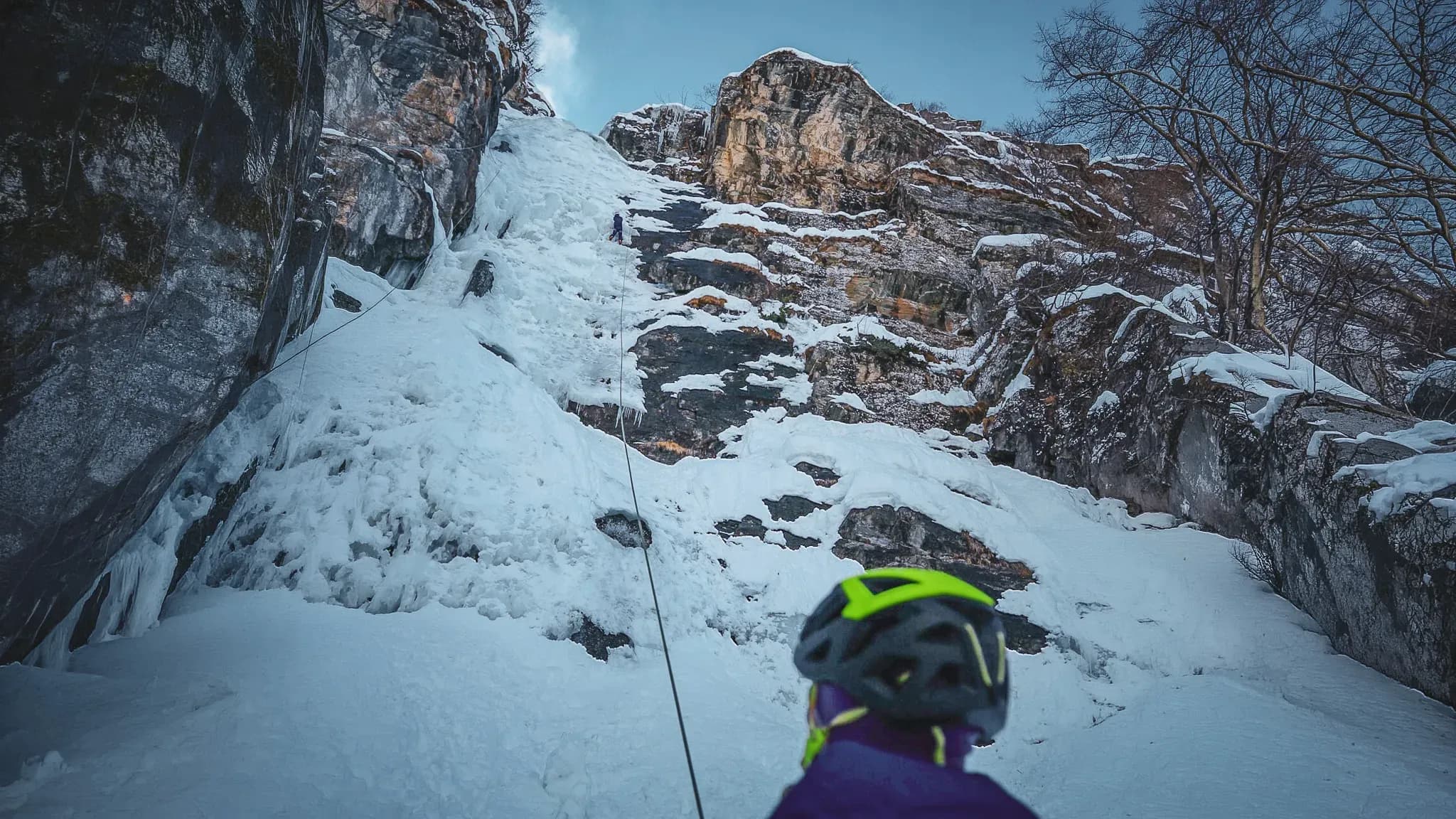
Ice climbing terms: the vocabulary explained for beginners
Top rope, ice screw, Abalakov, belay station, 3/II: the ice climbing vocabulary explained simply, with the French words you will hear from your guide.
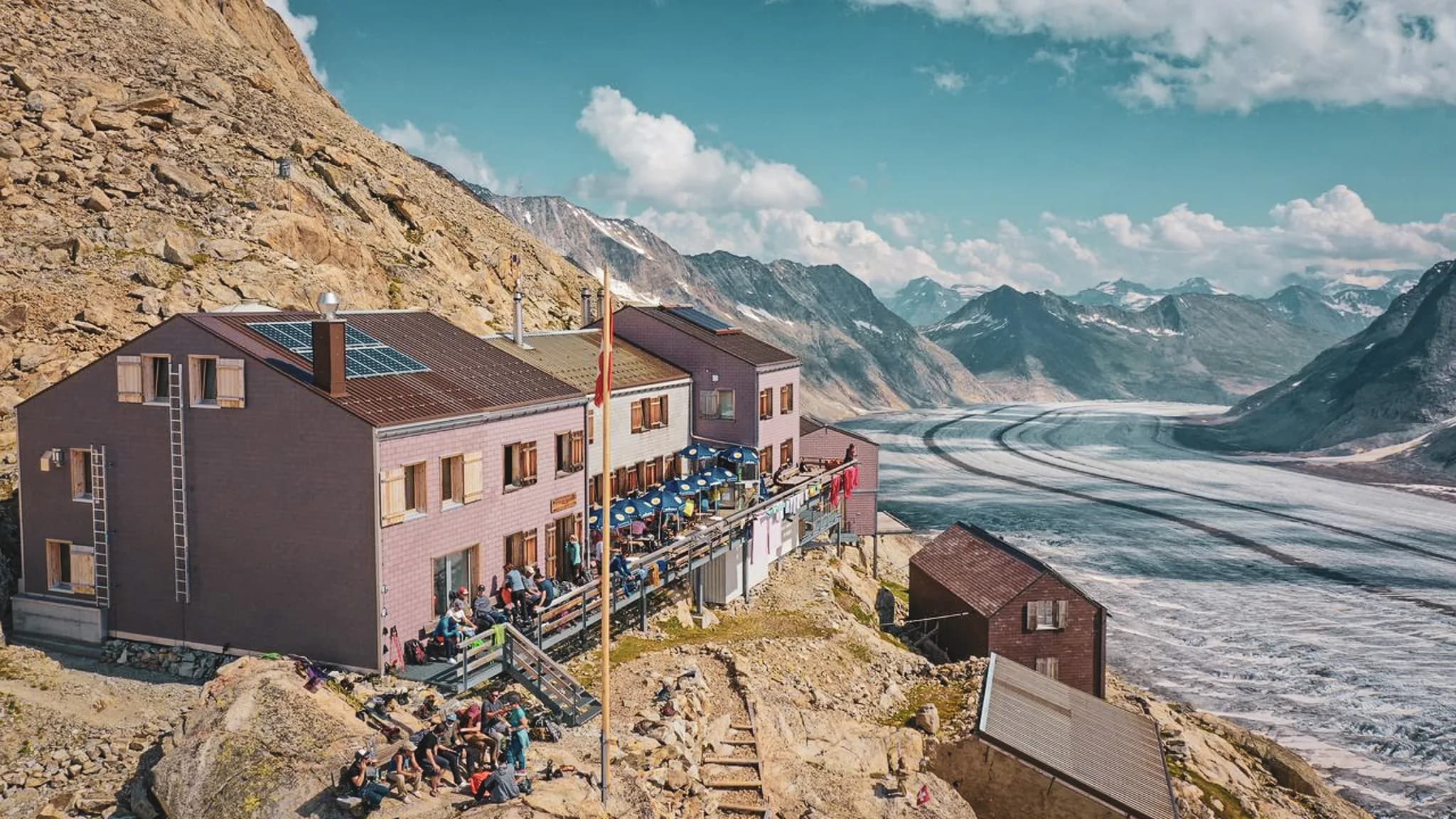
Types of summer mountaineering: how to choose by level
Glacier hike, traverse, first 4,000m summit, iconic peak, ridge climb: the 5 types of summer mountaineering, by level, with real Wildhartt trips.
Ski touring sunrise ascents with night starts
Chase ski touring sunrise ascents with night starts. Tackle Mont Blanc, Mont Rose, the Haute Route and Chamonix glaciers with IFMGA guides.
New Year snowshoe trips, guided hut stays in the French Alps
New Year snowshoe trips in the French Alps, from cozy Vercors inns to huts and an igloo, guided small groups, festive dinners and sunrise views.
