Survival Course: How to Choose the Right Format
 By Thibault
Forest reset, multi-day trek or high-altitude bivouac: compare real survival course formats, actual guides and honest level requirements to pick yours.
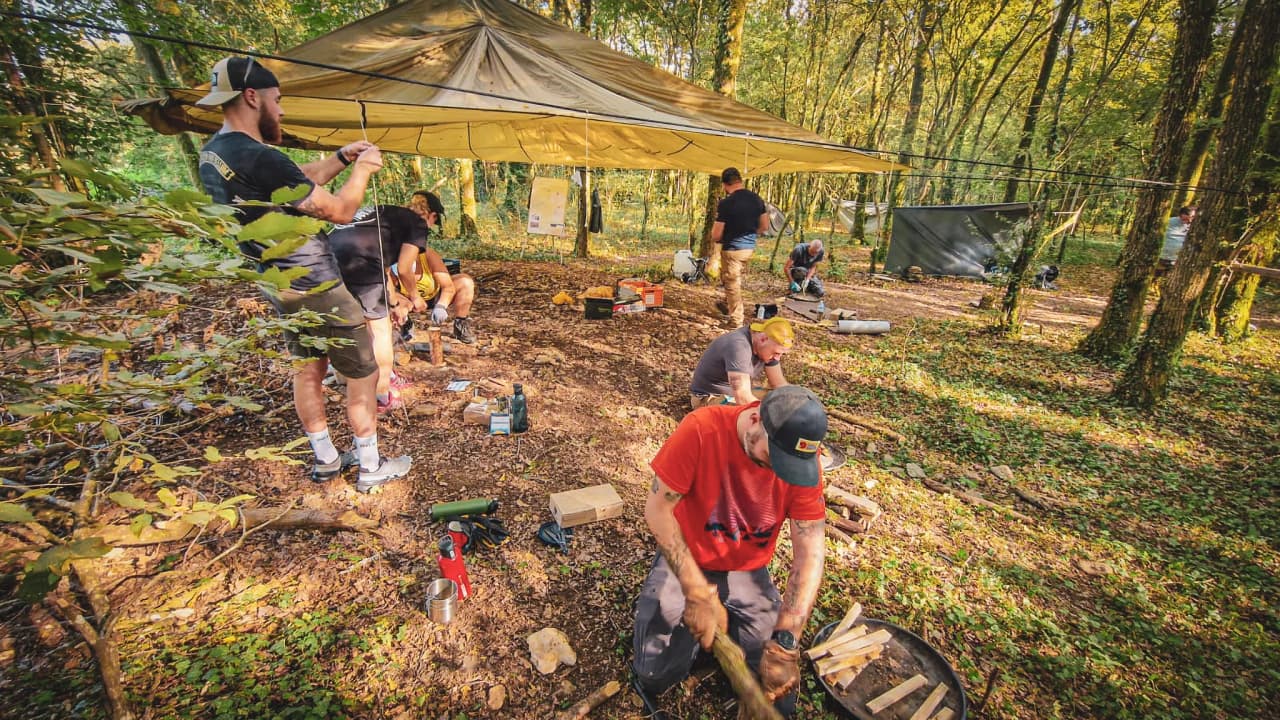
A survival course isn't just about rubbing two sticks together. It's a weekend, or a few days, spent relearning how to read a landscape, stay warm without a radiator, and sleep outside without flinching at every sound. The modern world is built so you never have to feel cold, hungry or lost in the dark; a survival course does the opposite on purpose for two or three days, which is exactly why it's worth doing. You don't come back with photos, you come back with steadier hands.
The core skills are the same everywhere: fire, water, shelter, orientation. What changes from one course to another is intensity, duration, terrain and how much autonomy you're asked to manage. To help you place your own project, here are the three broad families of survival course, each illustrated by a real Wildhartt format: the Belgian Ardennes for a forest reset, the Vercors for a multi-day trek, and the Alps for altitude.
| Format | Forest reset | Forest trek | High-altitude expedition |
|---|---|---|---|
| Who it's for | Anyone curious, low commitment | Beginner or intermediate, ready to carry a pack for 3 days | Solid fitness, comfortable with discomfort and the unexpected |
| Duration | 2 days, 1 night | 3 days, 2 nights | 3 days, 2 nights at altitude |
| Intensity | Light pack, short walks | 40L pack carried daily, about 6 km | Heavier pack, up to 800 m ascent, 2400 to 2800 m |
| Season | Year round | May to November | June to October |
| Meals | Included (Saturday evening to Sunday lunch) | Included (day 1 dinner to day 3 lunch) | Not included, you bring freeze-dried meals |
| You learn | Fire, shelter, water, basic orientation | + compass, altimeter, repeated bivouacs | + altitude thermoregulation, isolated autonomy |
| Wildhartt example | Intro to wilderness survival in Belgium | Learn to survive in the wild: 3 days off-grid in the Vercors | Master survival skills in the southern Alps |
Three families of survival course, illustrated by real formats
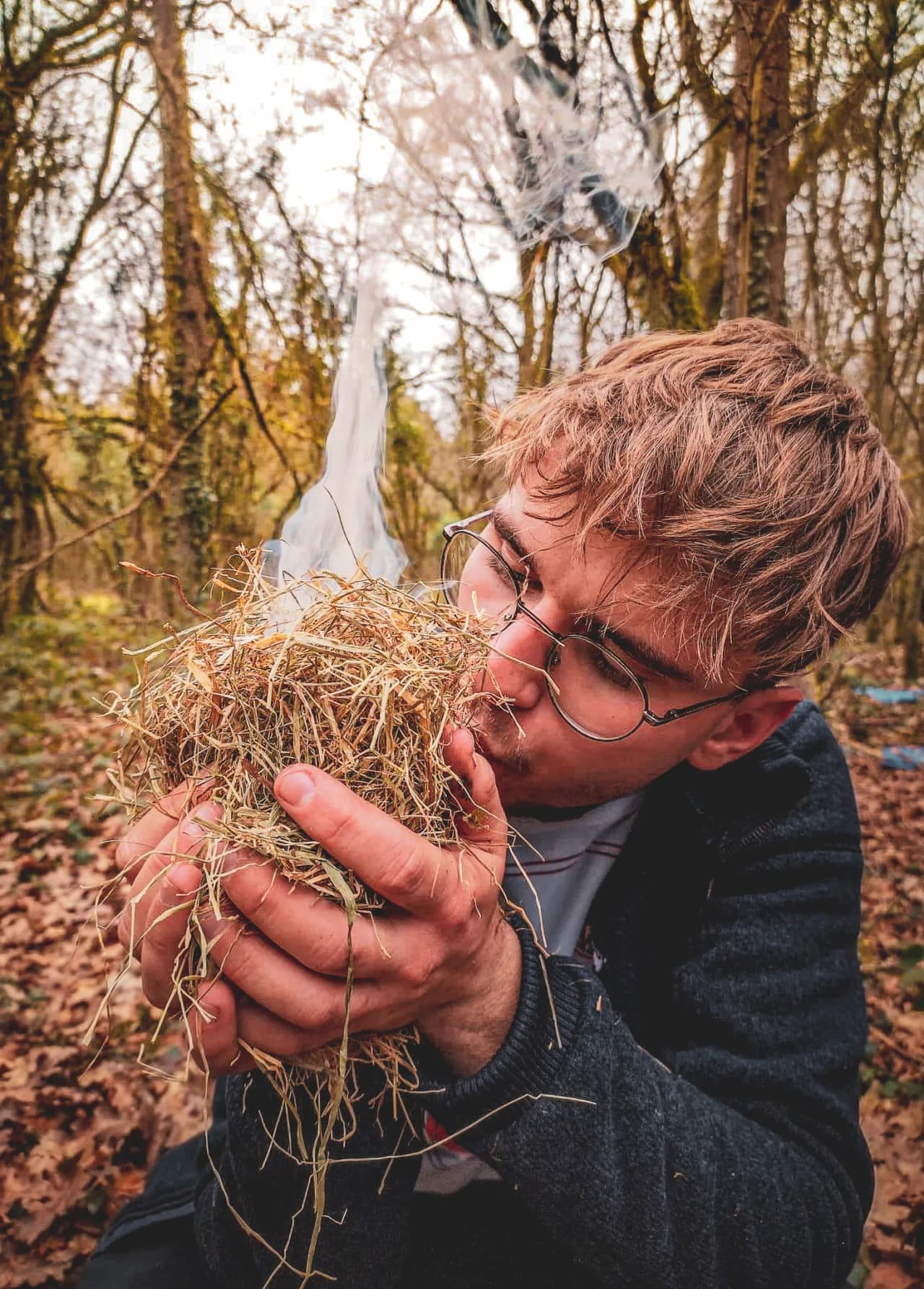
If your goal is a gentle reset and the fundamentals without a big commitment, a short forest format fits. At Wildhartt that looks like the Intro to wilderness survival in Belgium: Marc and Adeline meet you at 9am in Viroinval for a briefing, then day 1 covers useful knots, tarp shelter and fire-lighting before you choose and build your bivouac for the night. Day 2 starts with cooking breakfast over the fire, a full water cycle from finding to purifying, and an orienteering walk to identify what's edible nearby. Meals are included from Saturday evening to Sunday lunch, and you're back by 4pm.
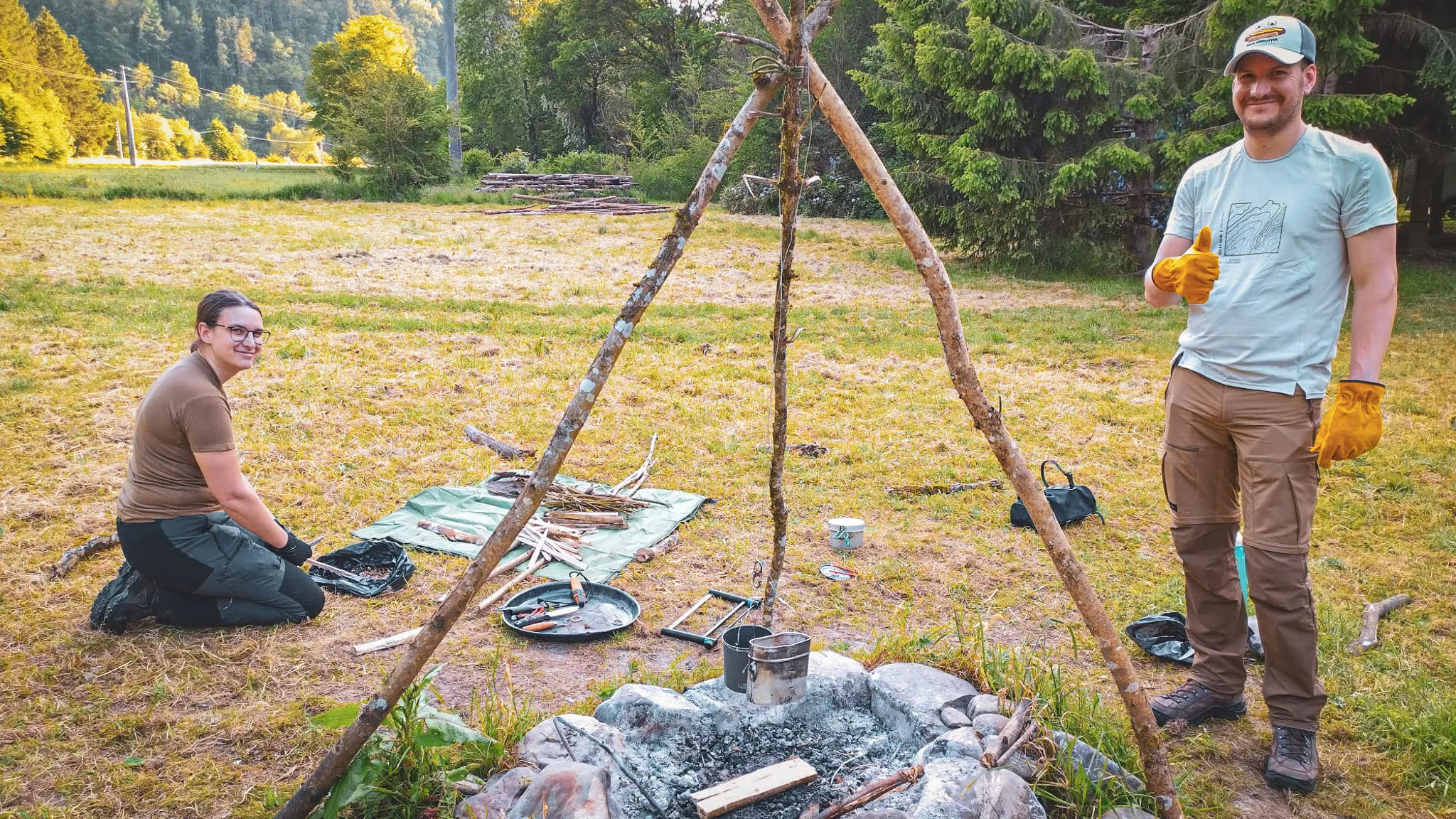
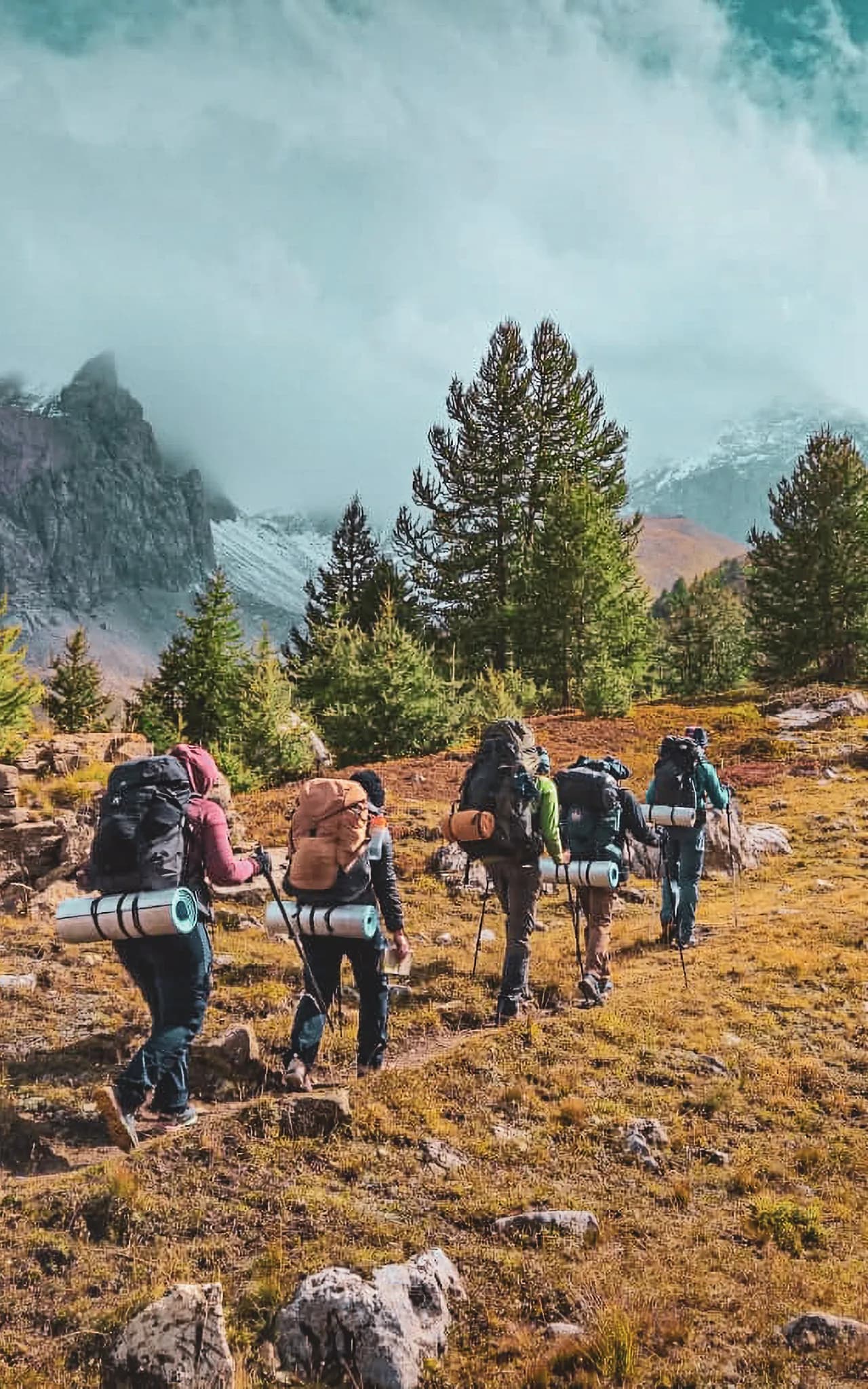
If you want to level up toward self-reliance over several days, look for a structured forest trek. That's the logic behind Learn to survive in the wild: 3 days off-grid in the Vercors: you meet Raphael at Valence TGV station at 11.15am for the first navigation drills and plant identification on day 1. Day 2 turns a 6 km walk into a compass and altimeter practice loop, then you build your bivouac and revisit your knots. Day 3 links terrain to map on the way back, closing with safety exercises. Worth knowing: Wildhartt's own course page states plainly that no prior experience is required, you just need to manage about 4 hours of walking with 400 m of elevation gain and carry your own pack for three days straight.
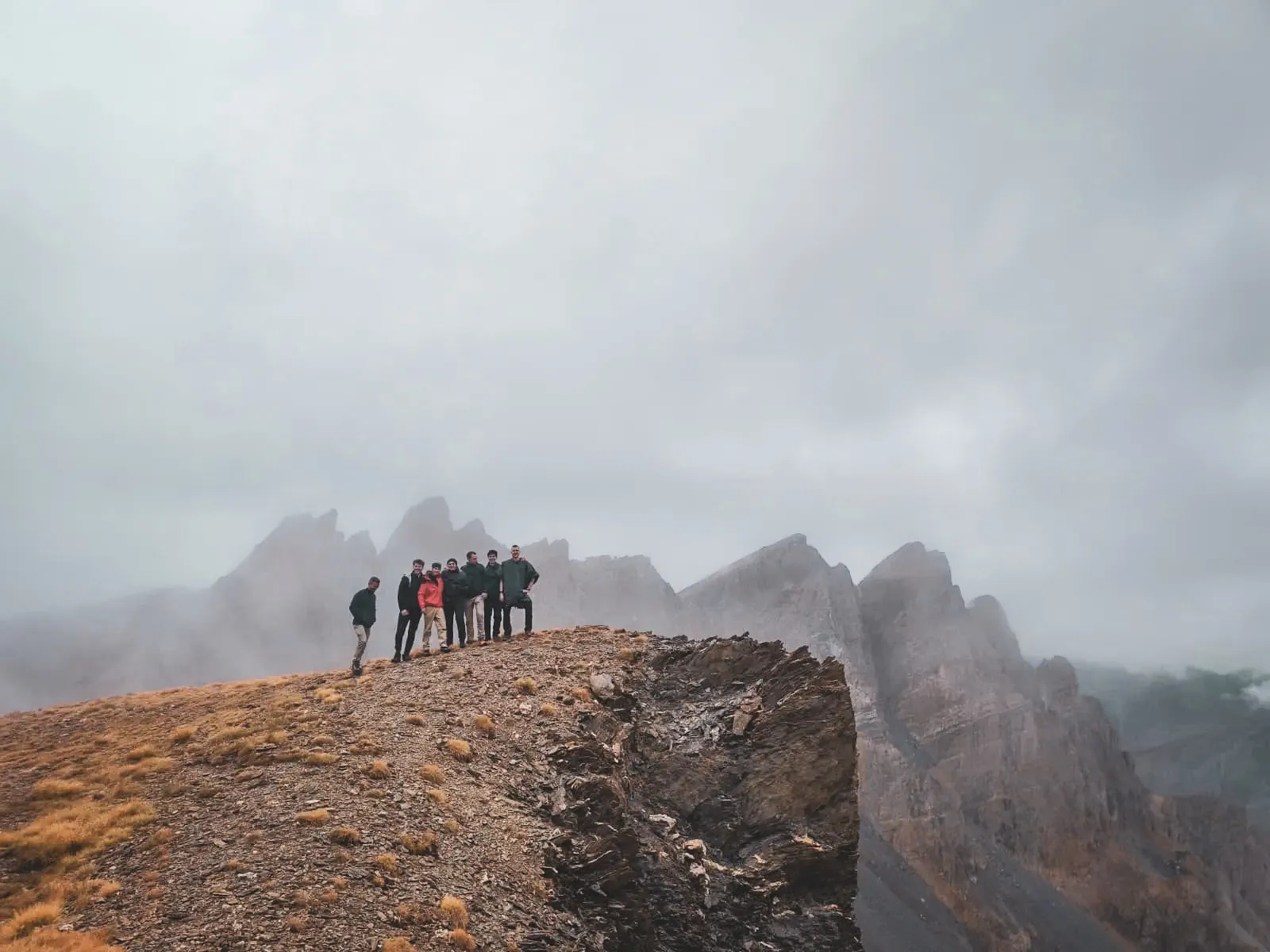
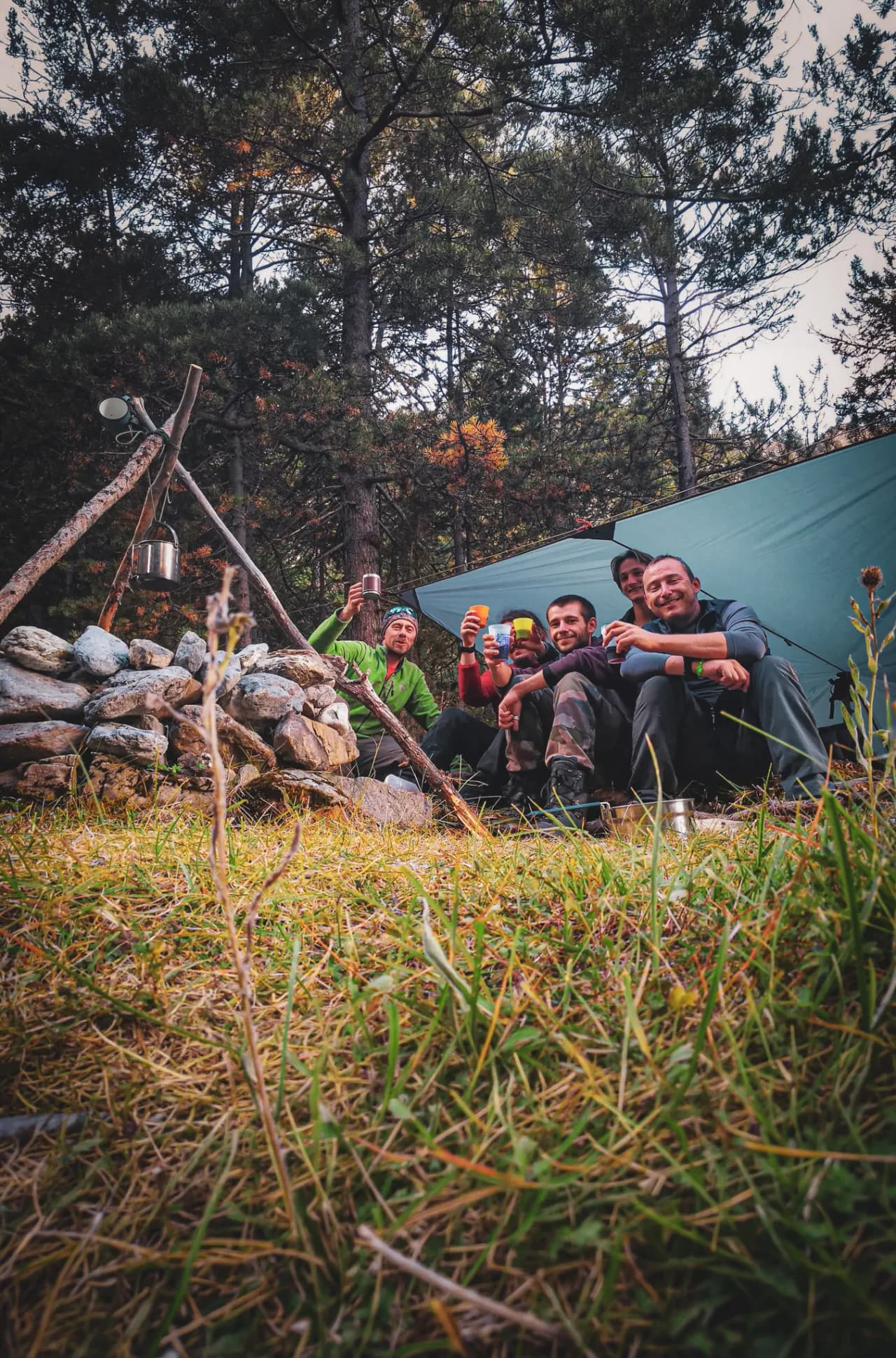
If what drives you is altitude, the mountains are the answer. Master survival skills in the southern Alps starts in La Fouillouse, a hamlet at the end of a valley with no phone signal, where Damien sets the pace from 9.30am. After building your first bivouac in partial autonomy, day 2 climbs to 2400-2800 m, and day 3 consolidates everything near Lacs Premier and Lac des Neuf Couleurs. One practical difference worth planning around: meals aren't included here, you bring your own freeze-dried food, unlike the Ardennes and Vercors courses where catering is covered.
To place yourself: are you after calm and the basics, a multi-day progression, or a real physical test; can you handle cold weather and discomfort, or do you prefer forest cover; are you already comfortable with map and compass, or do you want to learn from scratch; can you carry a pack for several days straight, or do you want to try one night first.
Skill level: what's actually required
Across all three, the reassuring constant is that none require prior technical experience. What varies is stamina and logistical autonomy. In the Ardennes, you need to manage a 5-8 km hike in under 2 hours and a moderate effort for 5-6 hours a day, without fear of sleeping in a natural shelter for two nights without facilities. It's open to families, from age 8.
In the Vercors, Wildhartt's own listing is explicit: this trip is designed to teach the basics in a friendly, progressive atmosphere, no prior experience needed. What it asks for is decent fitness, roughly 4 hours of walking with 400 m of elevation, and the willingness to carry your own pack in autonomy for three days.
In the Alps, the bar rises, less on technique than on resilience: walking several hours a day with up to 800 m of ascent, working in partial autonomy with no phone signal, accepting a group pace and changeable weather. It's the format to aim for once you've already spent at least one night outdoors.
Physical effort and headspace
In the Ardennes, you carry a manageable pack for one simple overnight, and workshops structure the day. It's physically light, teaching-focused, with one night out to nudge your comfort zone without pressure.
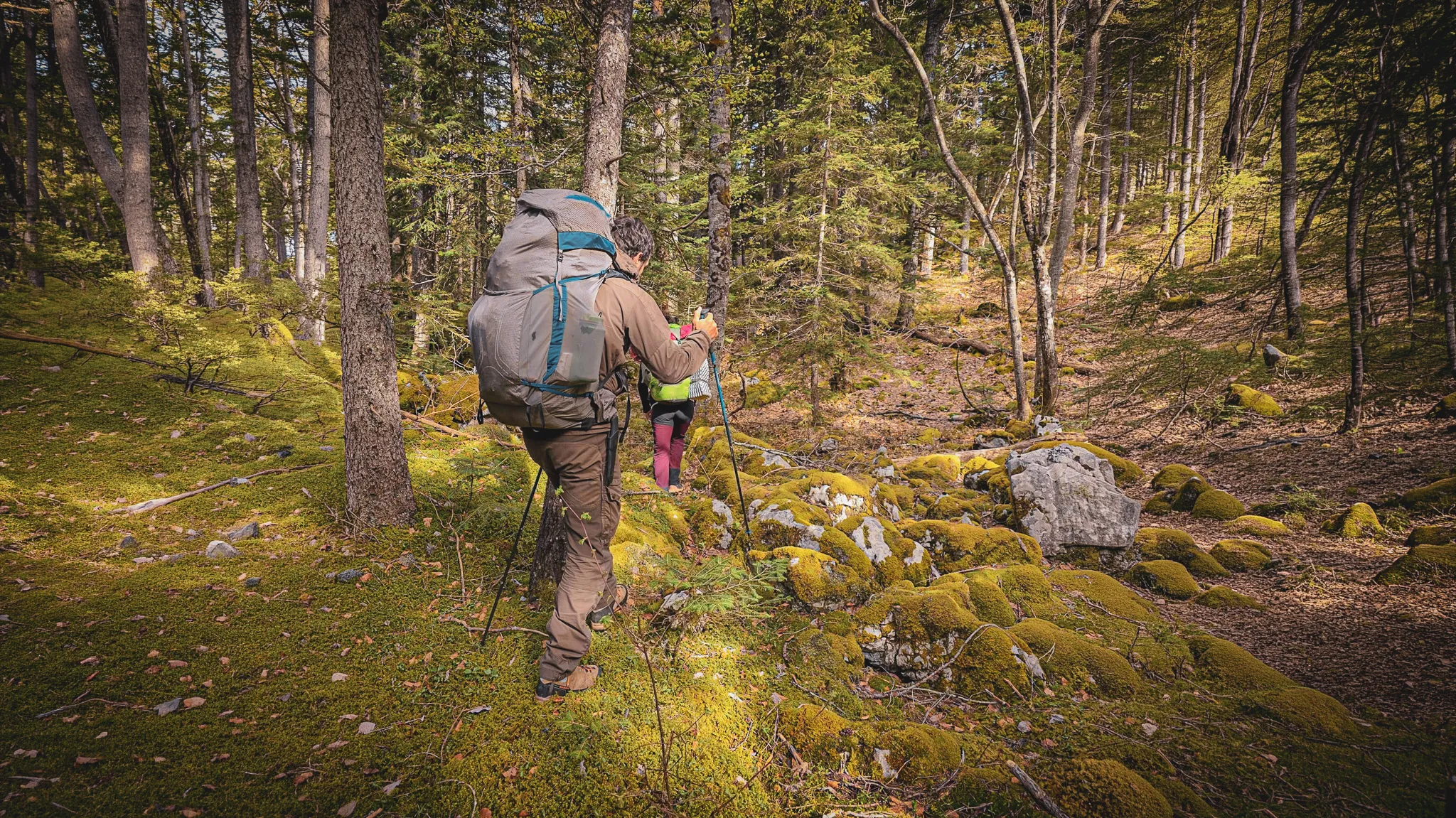
The Vercors adds itinerancy: you move daily with a 40L pack, chaining navigation and bivouac decisions. Forest cover often blocks the wind, but evening humidity and cold make ground insulation matter. Mentally it's a real step up, because your daily choices shape your comfort that same evening.
The Alps ask for deeper reserves. One participant who did the course put it plainly: "it was between 0 and 4°C at night, you sleep under a tarp with your sleeping bag, you need to prepare properly." The no-signal valley also changes your relationship with the unexpected. To prepare, build steady cardio, walk with a gradually loaded pack, and practise pitching a shelter fast and cleanly.
Season, duration and gear: the details that matter
On the calendar, the Ardennes run year round: winter sharpens shelter and fire skills in the cold, summer makes orientation and foraging easier. The Vercors window runs May to November, while forest conditions stay workable with enough daylight. The Alps course runs June to October to limit late-snow risk and keep the weather more stable.
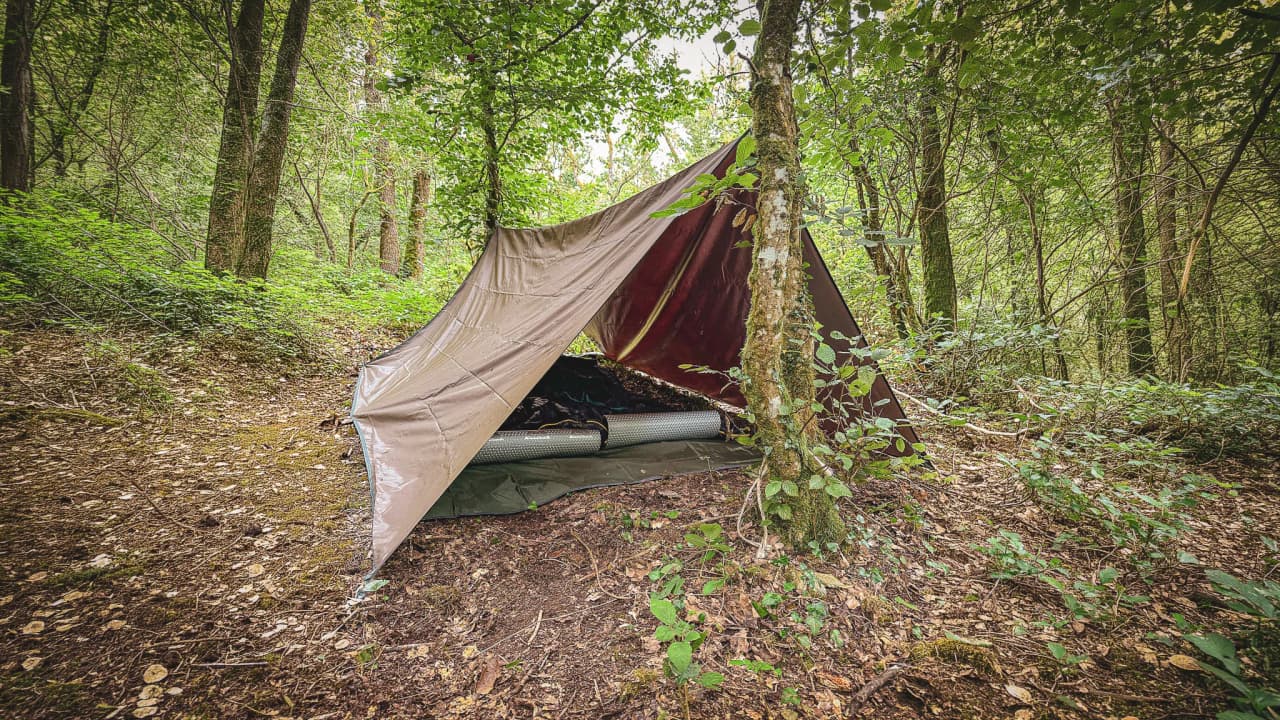
For gear, match the terrain rather than chasing a generic list. In the Ardennes, paracord and a 3x3m tarp form your shelter's backbone, with leather gloves and a 50L pack. In the Vercors, three days of itinerancy call for a well-organised 40L pack, a season-appropriate sleeping bag and a reliable headlamp. In the Alps, a warmer bag and a genuinely insulating mat become priorities since you spend two nights above 2000m, and the official kit list bumps leather gloves up to its highest importance rating.
Logistics follow the same logic. The Ardennes are easy to reach via Viroinval, by train through Namur or by car with free on-site parking. The Vercors needs no car at all thanks to the Valence TGV meeting point, shuttle included. The Alps require getting to La Fouillouse, at the end of an isolated valley, by train via Aix-en-Provence and bus, or by carpooling arranged on the trip's WhatsApp group.
- Want to try it without a big commitment: Intro to wilderness survival in Belgium, 2 days, open from age 8, year round.
- Regular hiker ready to level up navigation and bivouac skills: Learn to survive in the wild: 3 days off-grid in the Vercors, no technical experience needed, but solid fitness required.
- After a real altitude challenge without technical climbing: Master survival skills in the southern Alps, plan your freeze-dried meals and wait for a stable weather window.
You can build a coherent path: start in the Ardennes or the Vercors to lock in the fundamentals with no prior experience needed, then move to the Alps once you're ready to test your choices at altitude. If you're still unsure, write down your main objective and weigh it against season, effort and logistics, then check the full details of the Ardennes, Vercors and Alps courses to finalise your choice.

Find your next adventure
Browse curated expeditions matching the categories of this article and start planning your next trip.
Find your dream adventure
 Find your dream adventure
You might also like these adventures …
Hand-picked to echo the spirit of this article.


More to discover
Keep exploring with these pages and stories picked for you.
Which survival course to choose for your goal
Unsure which survival course to choose? Compare Ardennes 2 days, Vercors 3 days and Alps 3 days by level, season, effort and the skills you’ll gain.
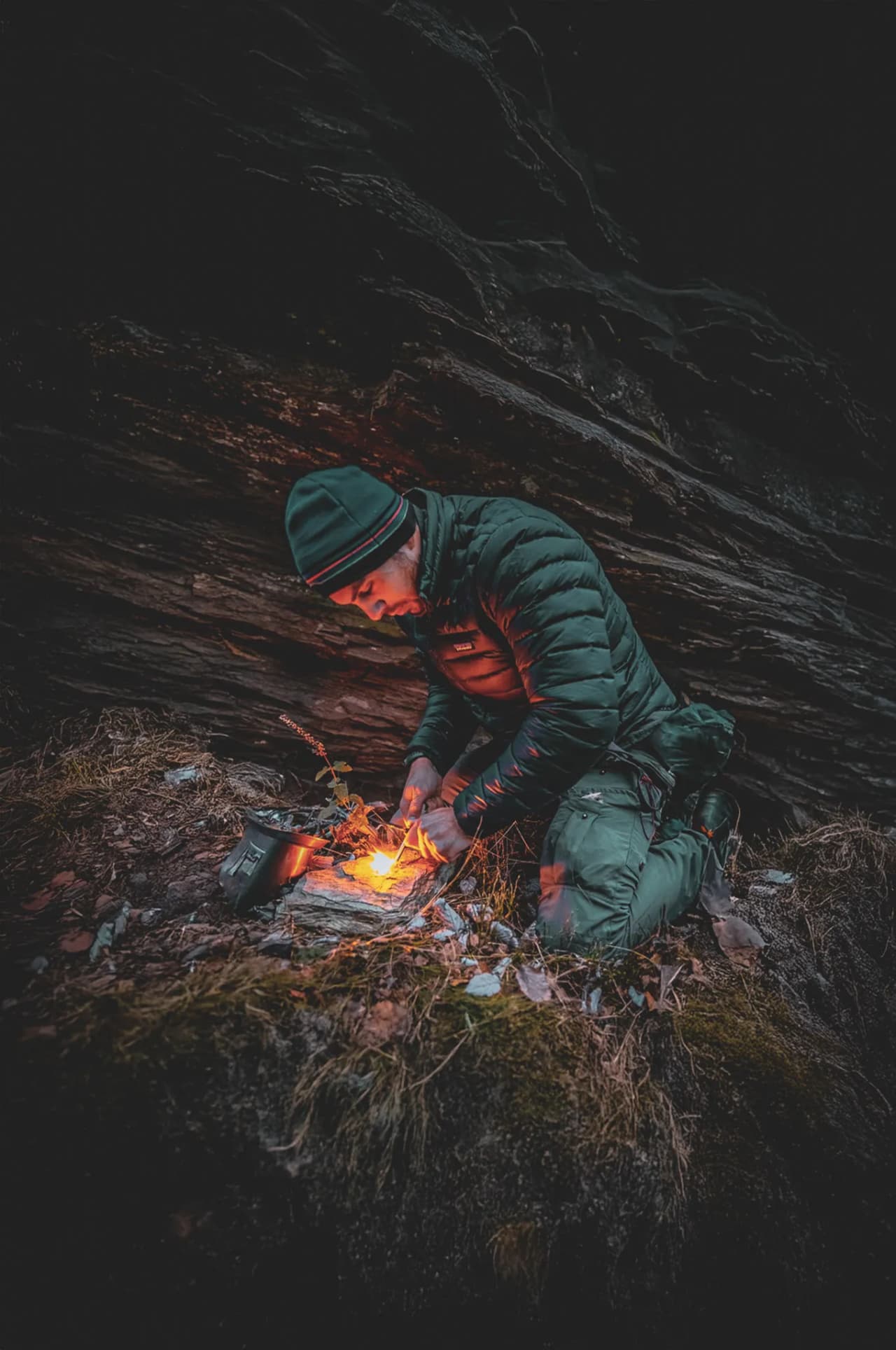
Forest survival courses, weekends and trips in France and Belgium
Discover forest survival courses in France and Belgium with expert guides. Small groups, real skills from fire and shelter to navigation and tarp bivouacs.
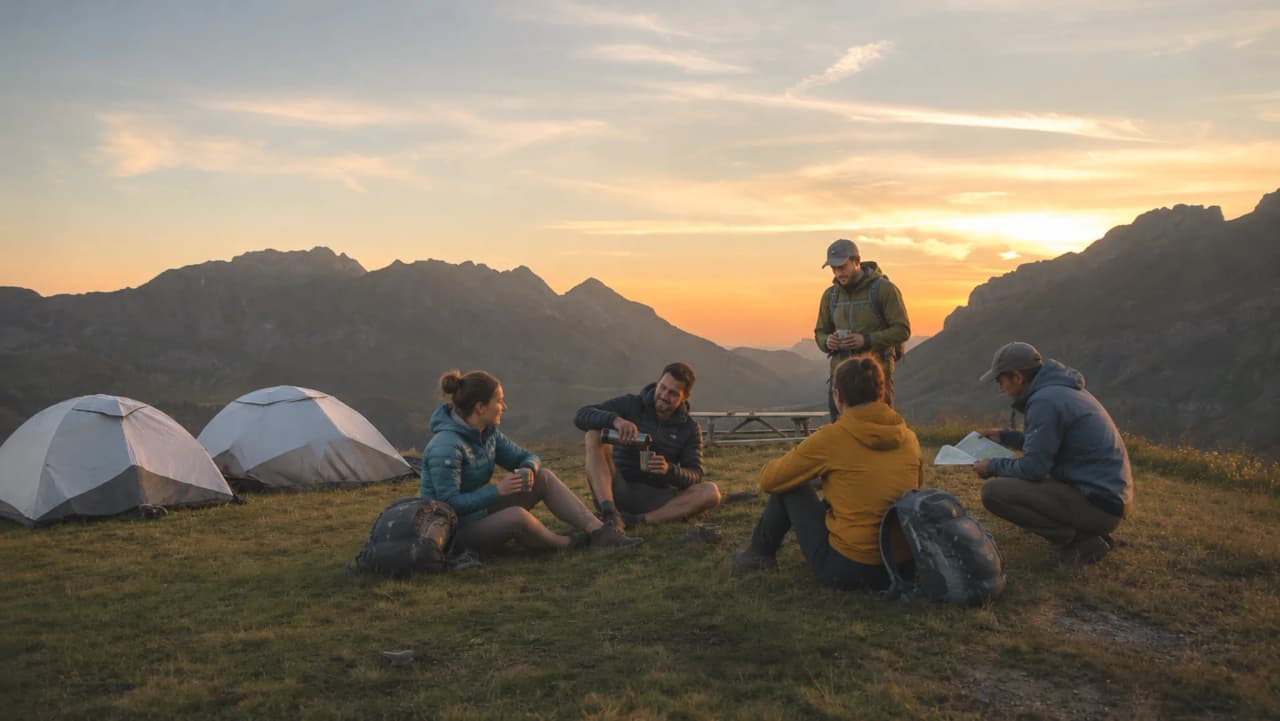
High-altitude traverse or technical camp: your summer choice
Torn between a high-altitude traverse and a technical camp? Compare the 5-day Beaufortain tour with three shorter options by level, season and goals.
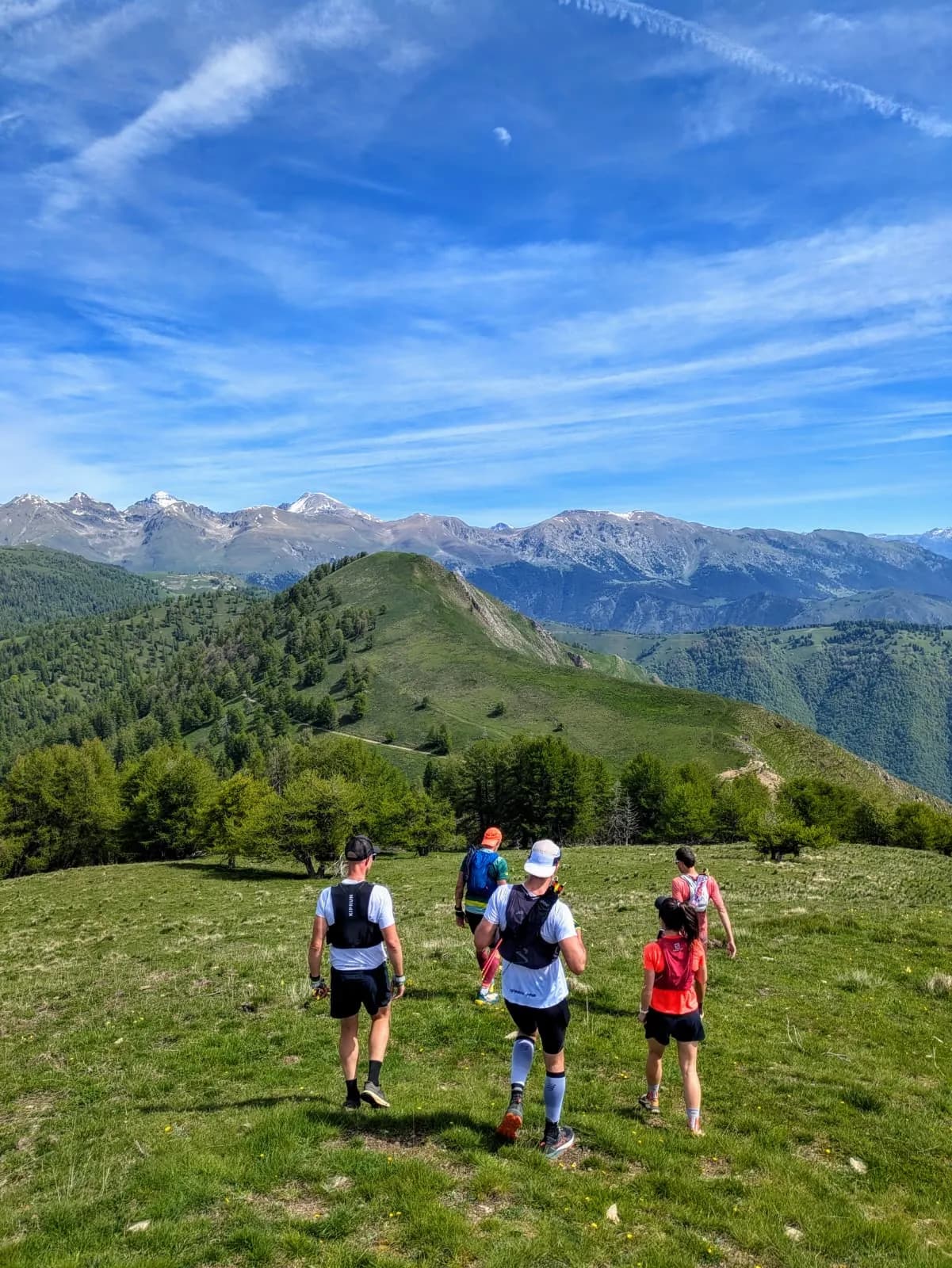
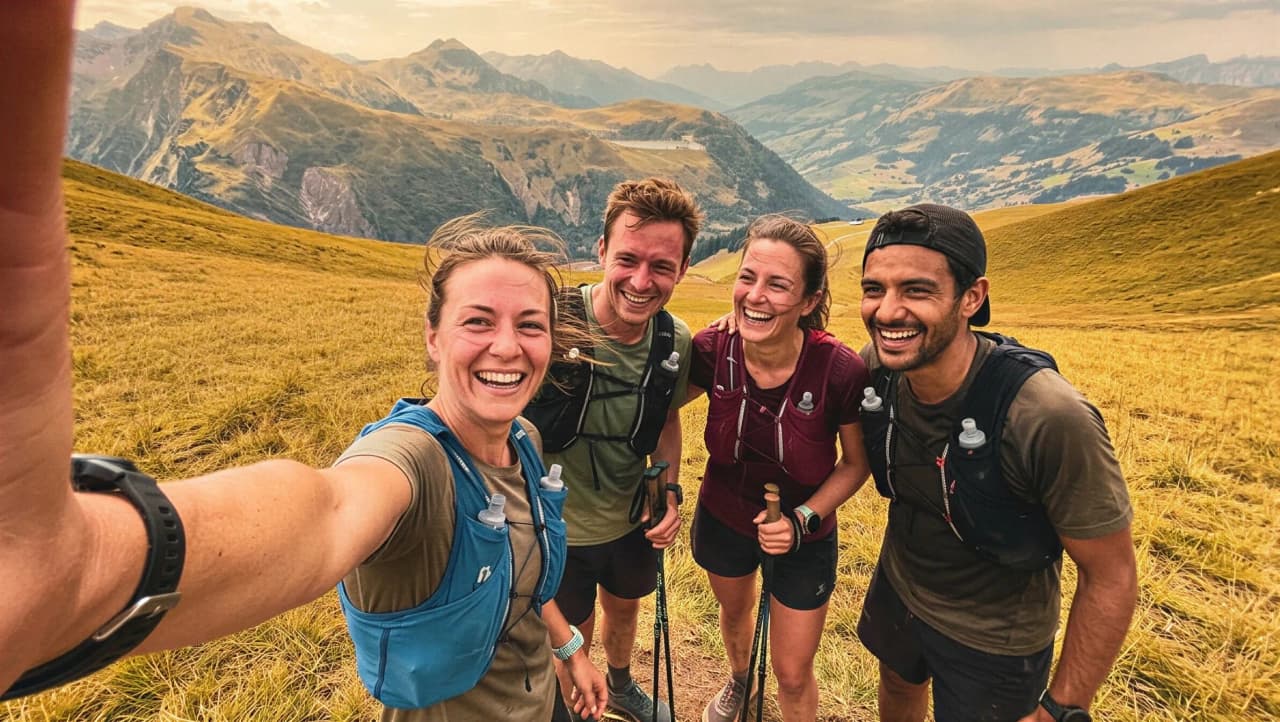
Mountain trail training course in France: which one to choose?
Discover the ideal mountain trail course: compare destinations, levels and objectives to quickly book the right course in France.
Mont Blanc or the Arves: choose your ideal alpine traverse
Compare three advanced Alpine formats, technical ridge, high bivouac and ridge-and-hut, across four real itineraries, to match your season, effort and style.
Northern lights or high lakes: choose your hike by effort and aim
Compare the daily effort and real aim of five real trips, from Valgaudemar to Senja, and pick observation or itinerant performance to match your level and season.
