Train for the 3-day Jura trail camp in 10 weeks
 By Maxime
A gentle 10 week plan to arrive ready for the Jura trail camp with Manon and Patrick: progressive training and basic technique, no performance chasing.
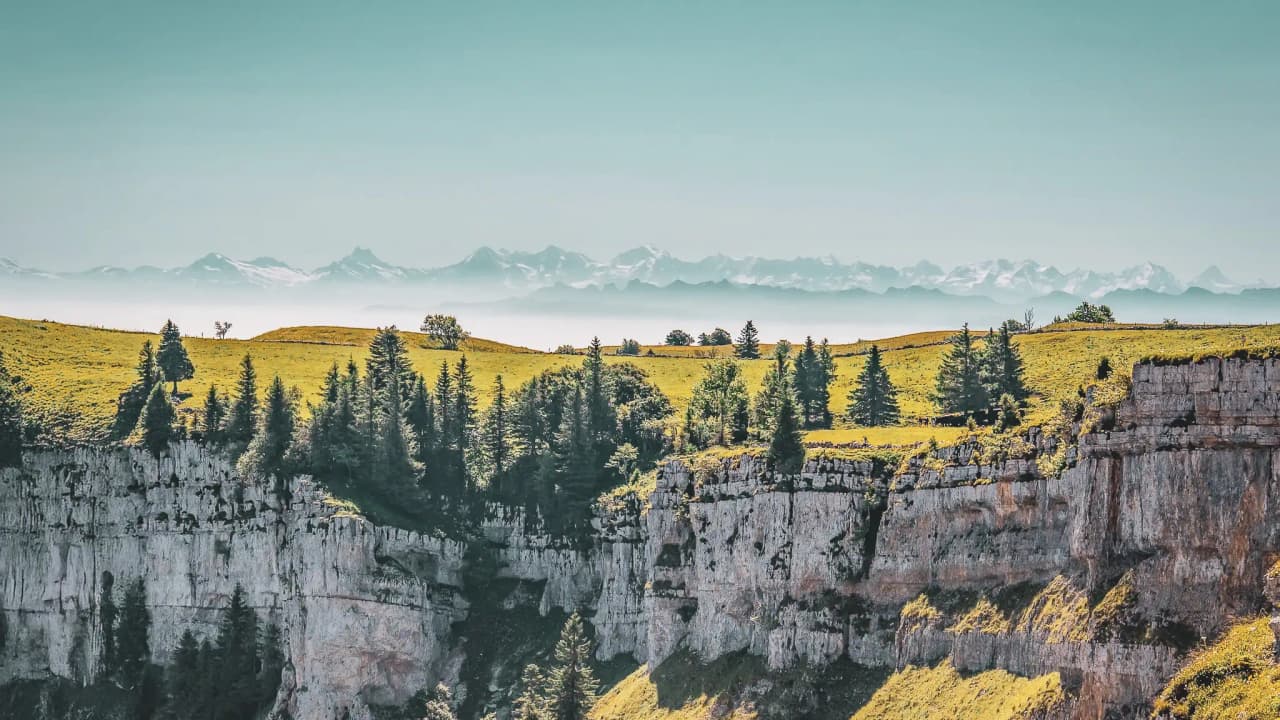
Three days of trail running in the Jura, mixing forest trails, hands-on workshops and easy evenings, are best prepared for by arriving relaxed and curious, not wiped out after the first climb. If you're aiming for Wild trail series: Run in the Jura with Manon and Patrick in September and you already run a bit regularly, this 10 week plan helps you arrive comfortable for the days ahead, without chasing performance. The camp stays accessible: you just need to be able to run around 10 km a day over varied terrain, with an average of 400 metres of ascent (often shortened to D+, it simply means the total metres you climb on an outing). Manon and Patrick, two top-level athletes, guide the group alongside Damien, a mountain leader: their advice adapts to every level, not only strong runners.
A gentle 10 week plan
Keep the weekly structure simple: two easy outings of 30 to 45 minutes, one outing with a bit of climbing where you mix running and brisk walking, one longer weekend outing that grows week by week, plus a short 10 to 15 minute mobility routine if that's already part of your habits. No special gear or technical vocabulary needed to start: the only thing that matters is being able to talk in short sentences while you move.
Weeks 1 and 2, just find your footing. Two easy 30 minute runs, one weekend outing of around 45 minutes to an hour on rolling ground, no pressure on pace. If running 30 minutes straight still feels new, mix running and walking without a second thought, that's exactly what you'll do on the trails in the Jura too.
Weeks 3 and 4, add a little climbing. Pick an outing with a few short hills and try power hiking on the steeper parts: lean your chest slightly forward, hands resting on your thighs, short steps. It's the technique every trail runner uses on climbs, not just beginners. The weekend outing grows to 1h15-1h30.
Weeks 5 and 6, the weekend long run reaches 1h45 to 2h, with 150 to 250 metres of ascent if the terrain allows. Start working on descents: look a few metres ahead, keep your shoulders relaxed, and let your steps stay short instead of braking with every stride.
Weeks 7 and 8, move closer to the camp's format: aim for a 2h to 2h15 outing with 300 to 400 metres of ascent, close to what you'll find on the Jura's trails. If you have poles, bring them along on this outing to get used to the feel of them, without chasing perfect technique: Patrick's workshop on day 2 will teach you how to use them properly.
Weeks 9 and 10, ease off. Trim the long run to 1h15-1h30, keep your two easy runs, and cut the volume by half in week 10. Sleep well, pack your bag, and arrive rested rather than overtrained.
What you'll learn on site: poles, climbs and descents
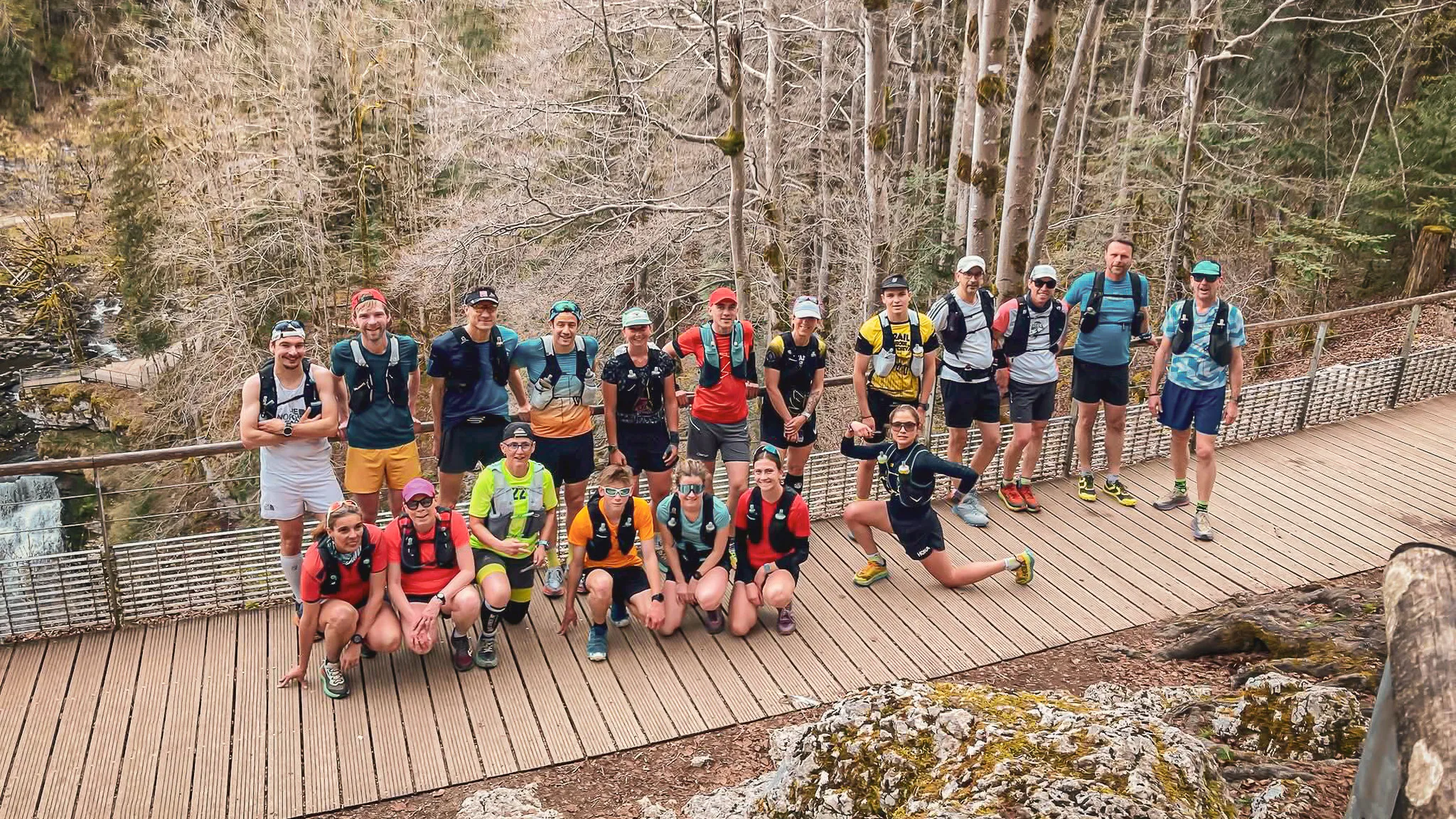
Day 1 is mostly about finding your bearings. The first outing, guided by Damien, Manon and Patrick, mixes descents, rolling sections and climbs across varied terrain: forest singletrack (the narrow trail you run in single file), small limestone steps, flowing descents. The goal isn't to hold a precise pace, but to learn to feel your effort and adjust it.
You don't need to master poles before you arrive. Patrick's workshop on day 2 teaches you how to use them uphill and downhill, walking or running. If you want a little practice beforehand, just bring them on a climb during your long outing in weeks 7 and 8, without worrying about technique.
Another day 2 workshop, led by Damien, shows how to recreate a climbing session even if you train somewhere flat: stairs, gently rolling ground, or simply a longer outing at an easy pace. Useful if the Jura is far from home.
Fueling and drinking during effort
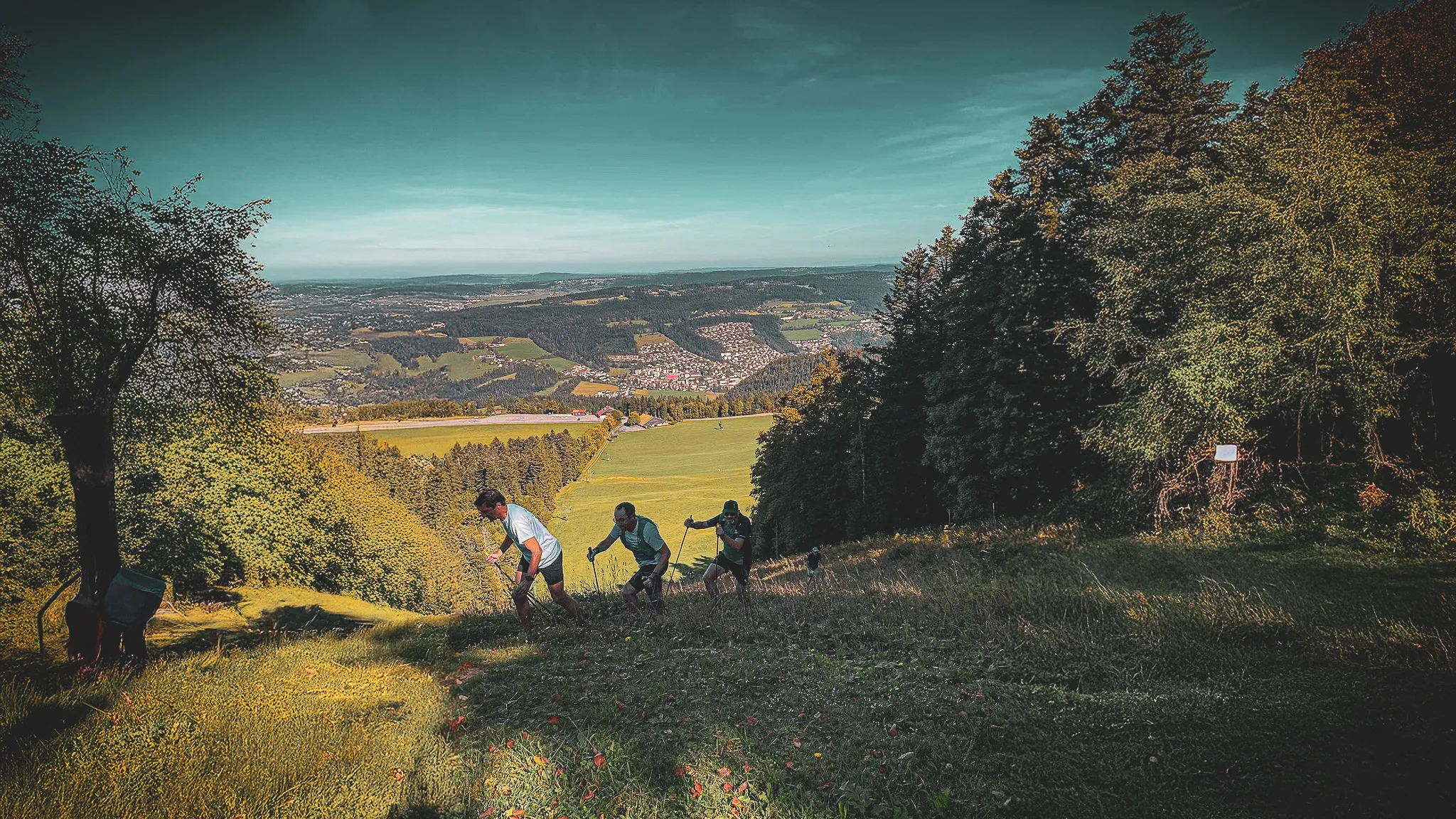
Nothing complicated to remember. Before a weekend outing, eat a simple, easy to digest meal 2 to 3 hours before you set off. During the effort, carry water and a small snack, dried fruit or a bar, and nibble as soon as you feel hungry rather than waiting until you're running on empty. Afterward, a normal meal within the hour is plenty, no need to count grams of carbohydrate.
On site, Manon runs a nutrition workshop on day 2 where she shares her own habits, adapting to the group's questions, beginners included. One detail worth planning around: the day 1 picnic lunch isn't included in the camp price, unlike every meal after it. Bring your own. The rest follows the program's rhythm: day 1 ends with a Jura-style aperitif, local beers, cheeses and cured meats, then every meal is covered through to the picnic on the last day.
Mind and recovery: hypnosis, filmed tests and yoga
A gentle moment before day 2's effort
Day 2 opens with an optional relaxation hypnosis session, centred on grounding and recentring. No preparation needed: it's a moment to breathe, not an exercise to get right.
In the afternoon, Manon, Patrick and Damien guide an uphill VMA test and a downhill VMA test (VMA simply stands for maximal aerobic speed, a standard running measure). Here, these tests are filmed to give you personal feedback on your technique, with no clock to beat and no performance target: it's a learning moment, not a challenge.
Recovery, yoga and the evening at the gîte
The camp closes with a yoga session with Patrick on day 3, centred on mindfulness and feedback. No yoga experience needed, the poses stay accessible and are never forced.
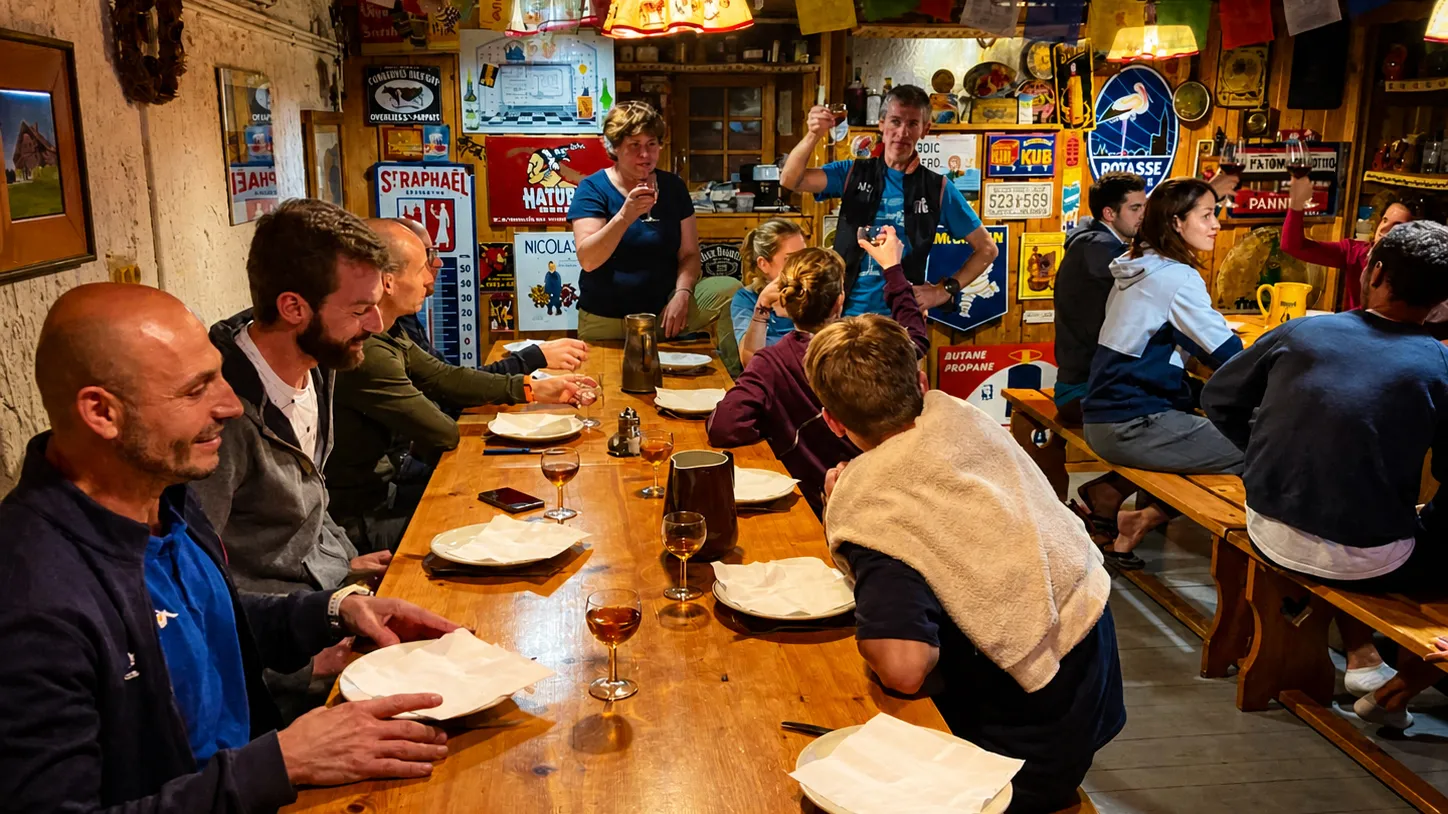
The gîte itself is part of the recovery: comfortable shared rooms, a sauna, a reading corner, a terrace, a pool table. Pack earplugs if shared dorms keep you up, and a deck of cards for the evening.
Taper week and packing for the Jura
In the final week, cut volume by roughly half and sleep more. Pack two or three days ahead, September weather in the Jura can shift quickly within a single day.
- Broken-in trail shoes, and poles if you have some
- Trail vest, 8 to 12 litres, hydration bladder or bottles, 1.5 to 2 litres a day
- Waterproof breathable jacket, light gloves, category 3 sunglasses
- Charged headlamp, sleeping bag liner for the gîte
- Breathable tees, trail shorts or tights, technical socks
- 20 to 30 litre pack for the whole stay, a small personal first aid kit
- A picnic for day 1
Arriving by train, the nearest station is Frasne, with a shuttle on to the gîte. By car, free parking waits at the meeting point.
Tick these off before you travel: one 2 hour outing with a bit of climbing, one descent where you feel comfortable, and the day 1 picnic packed. You'll arrive at Wild trail series: Run in the Jura with Manon and Patrick ready to discover trail running at the pace Manon, Patrick and Damien set for these three days, with no competitive pressure, surrounded by a group matched to your level.

Find your next adventure
Browse curated expeditions matching the categories of this article and start planning your next trip.
Find your dream adventure
 Find your dream adventure
You might also like these adventures …
Hand-picked to echo the spirit of this article.
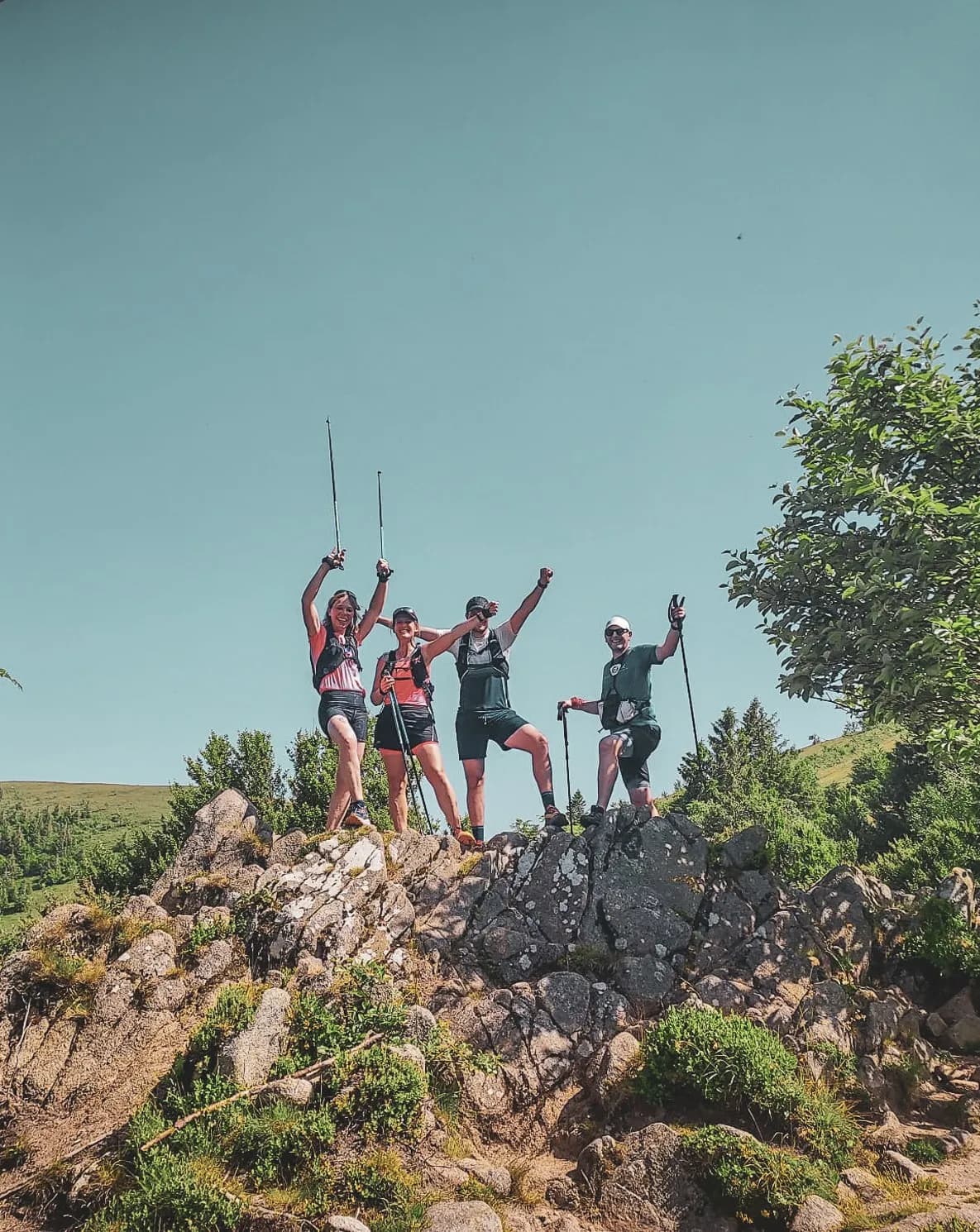
Intro to trail running in the Vosges
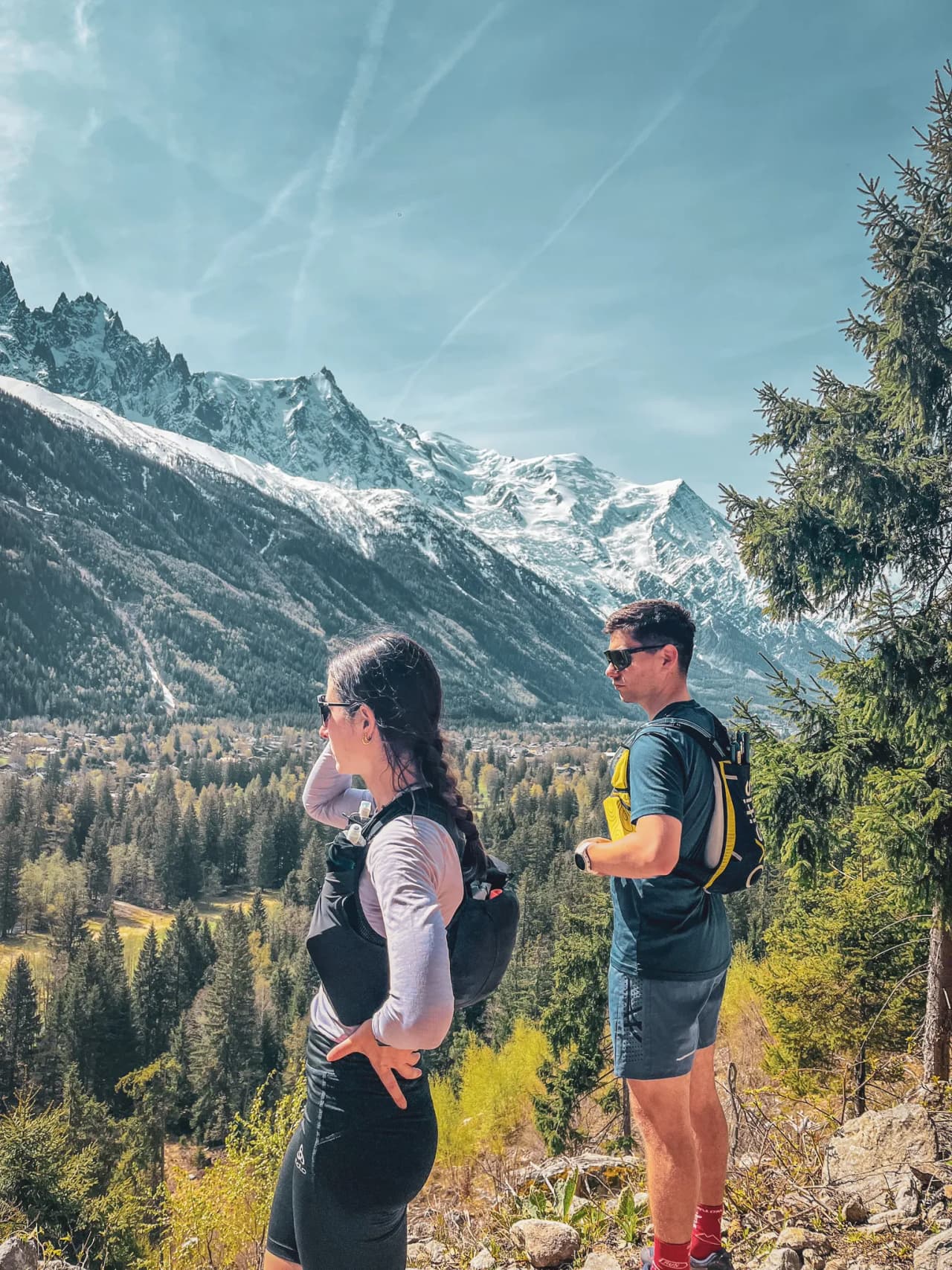
Introduction to trail running in Chamonix, a running camp in the heart of the Mont Blanc massif
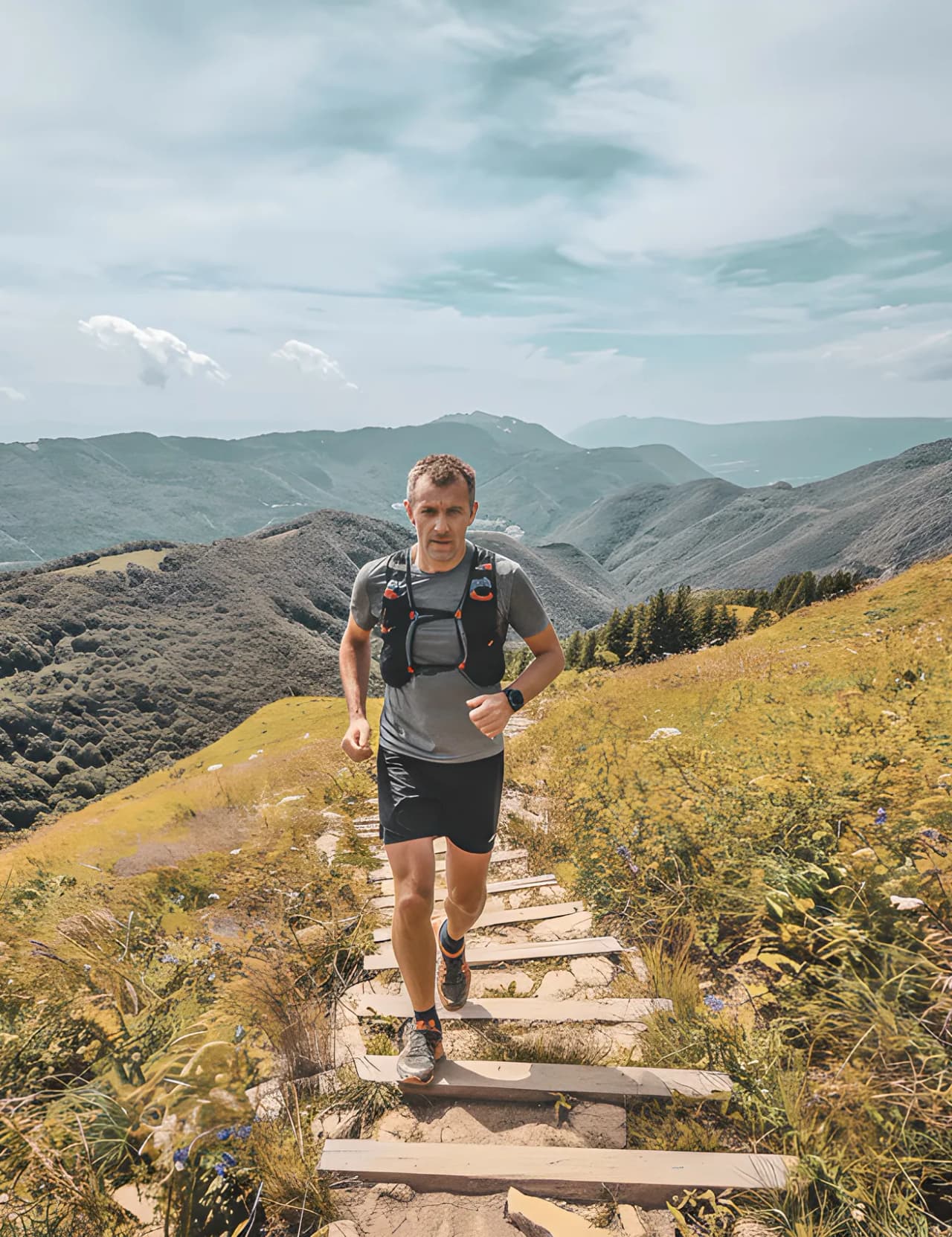
Learn to Trail Run in the Jura mountains
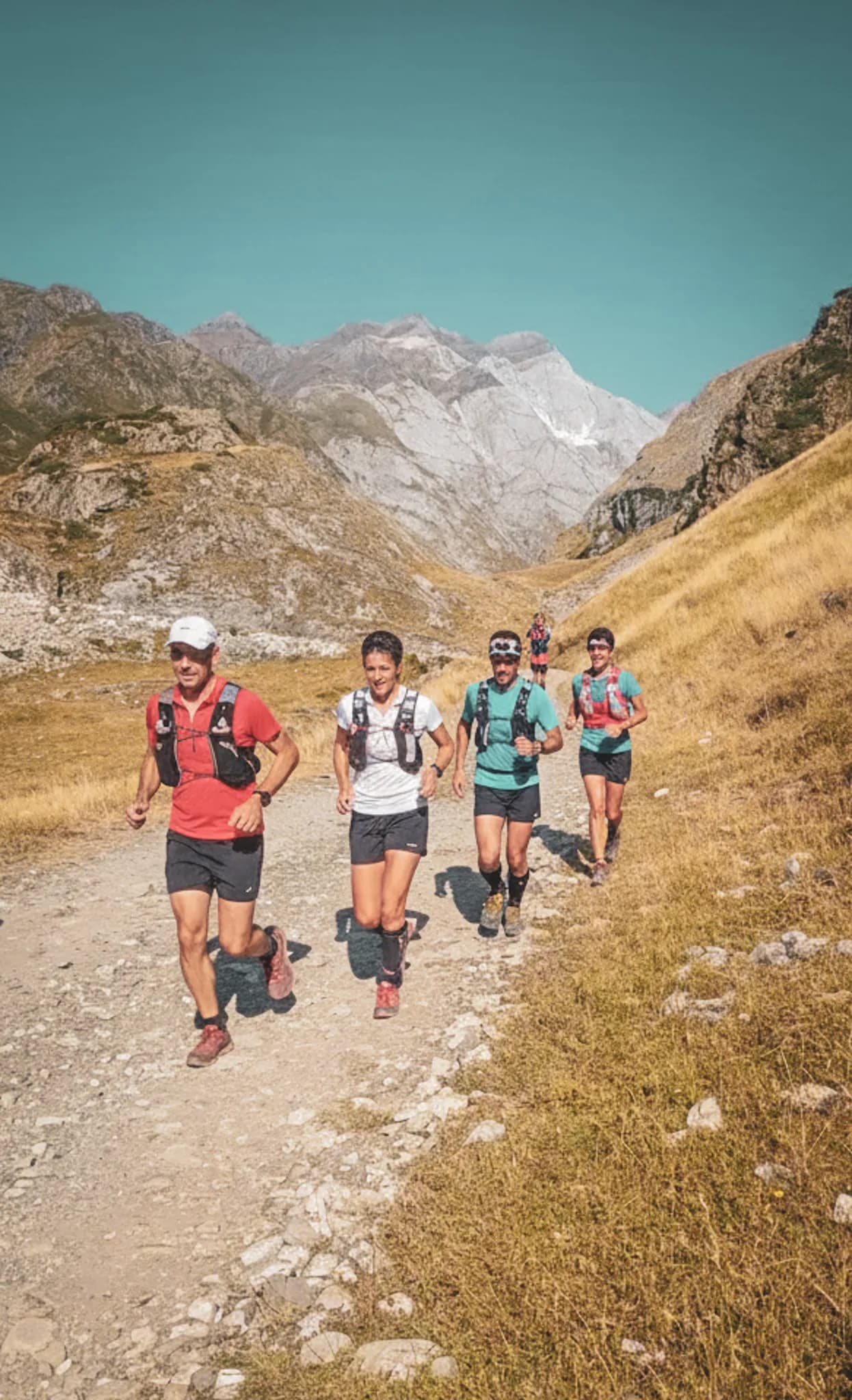
Trail Running Beneath the Cliffs of the Vignemale
More to discover
Keep exploring with these pages and stories picked for you.
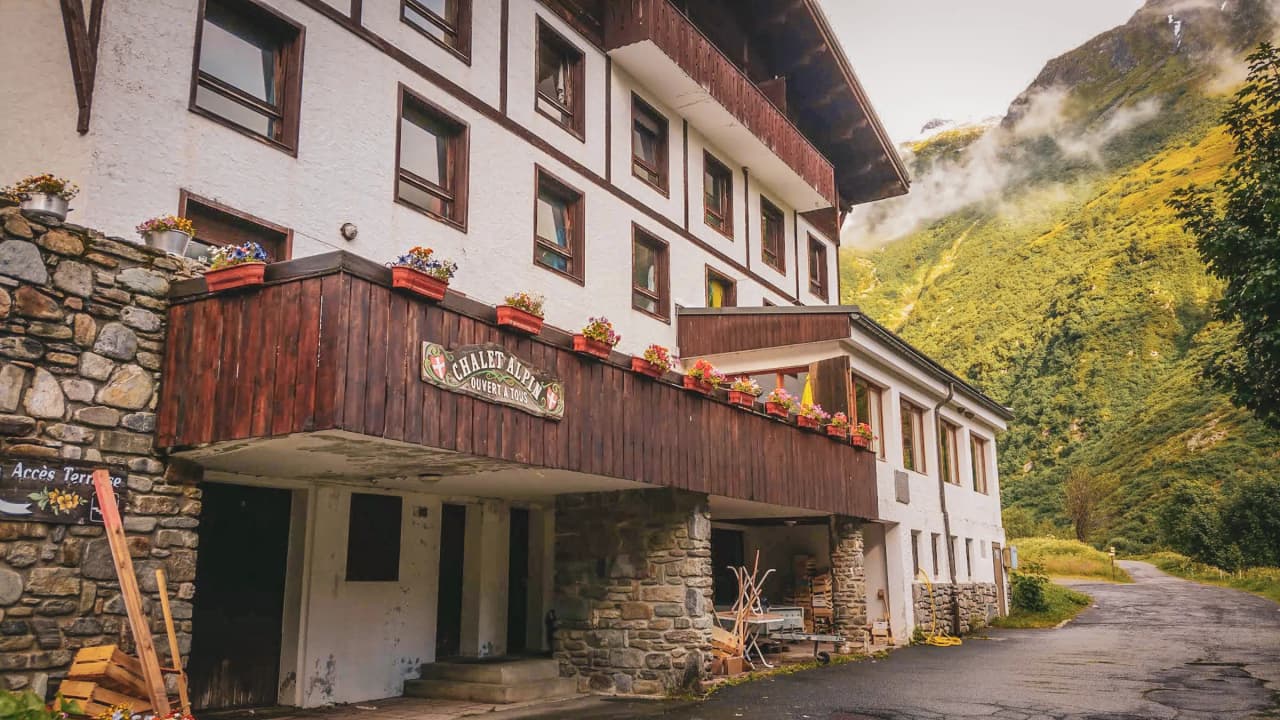
Train for the 3-day Chamonix trail camp in 6 weeks
A gentle six week plan to arrive ready for the Chamonix trail camp with Violette: basic climbing and descending technique, no performance chasing.
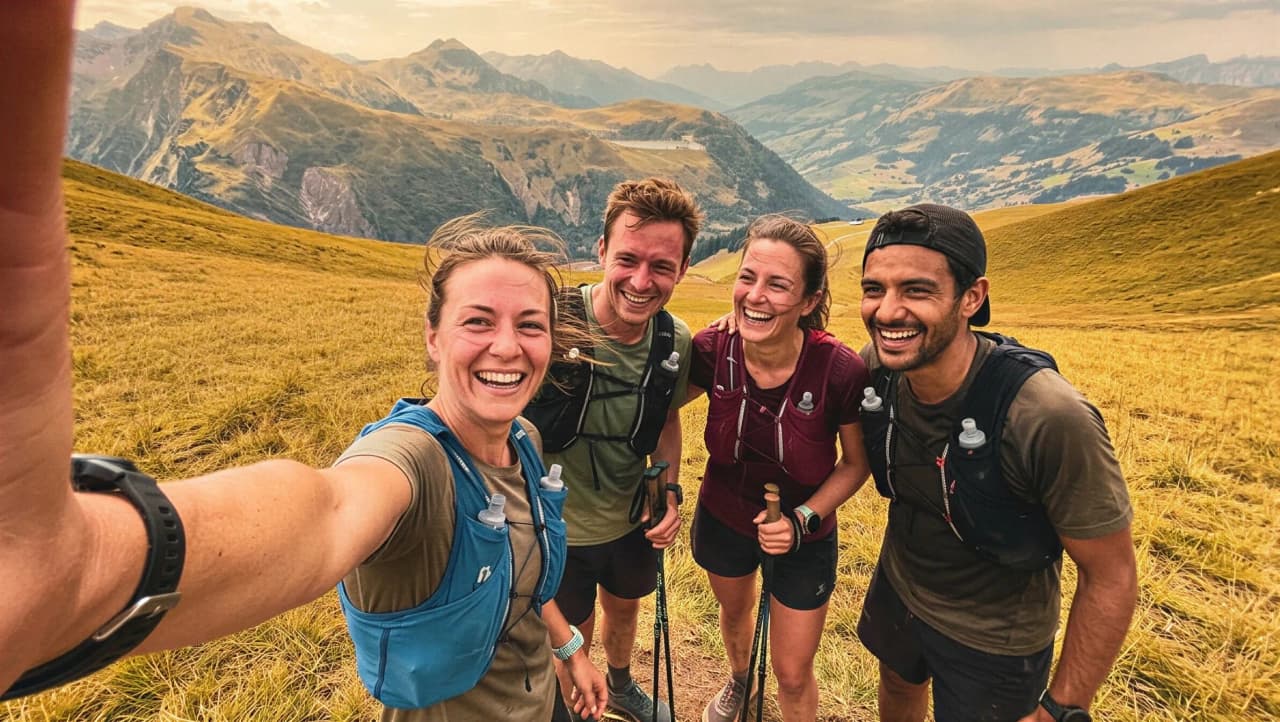
High-altitude traverse or technical camp: your summer choice
Torn between a high-altitude traverse and a technical camp? Compare the 5-day Beaufortain tour with three shorter options by level, season and goals.
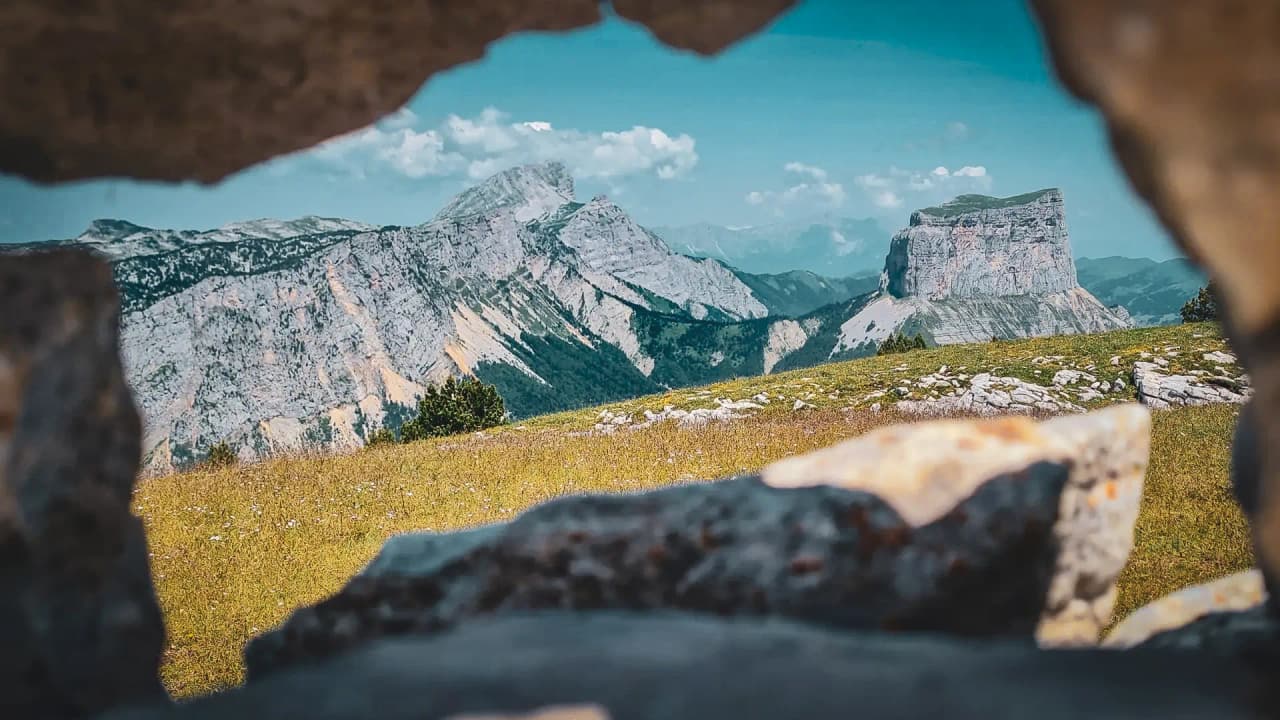
Train in 6 Weeks for the Wild Vercors High Plateaus Trek
Carrying 8 to 10 kg for four days in a row takes real preparation. Here is the full 6 week training plan for the Vercors High Plateaus trek, day by day.
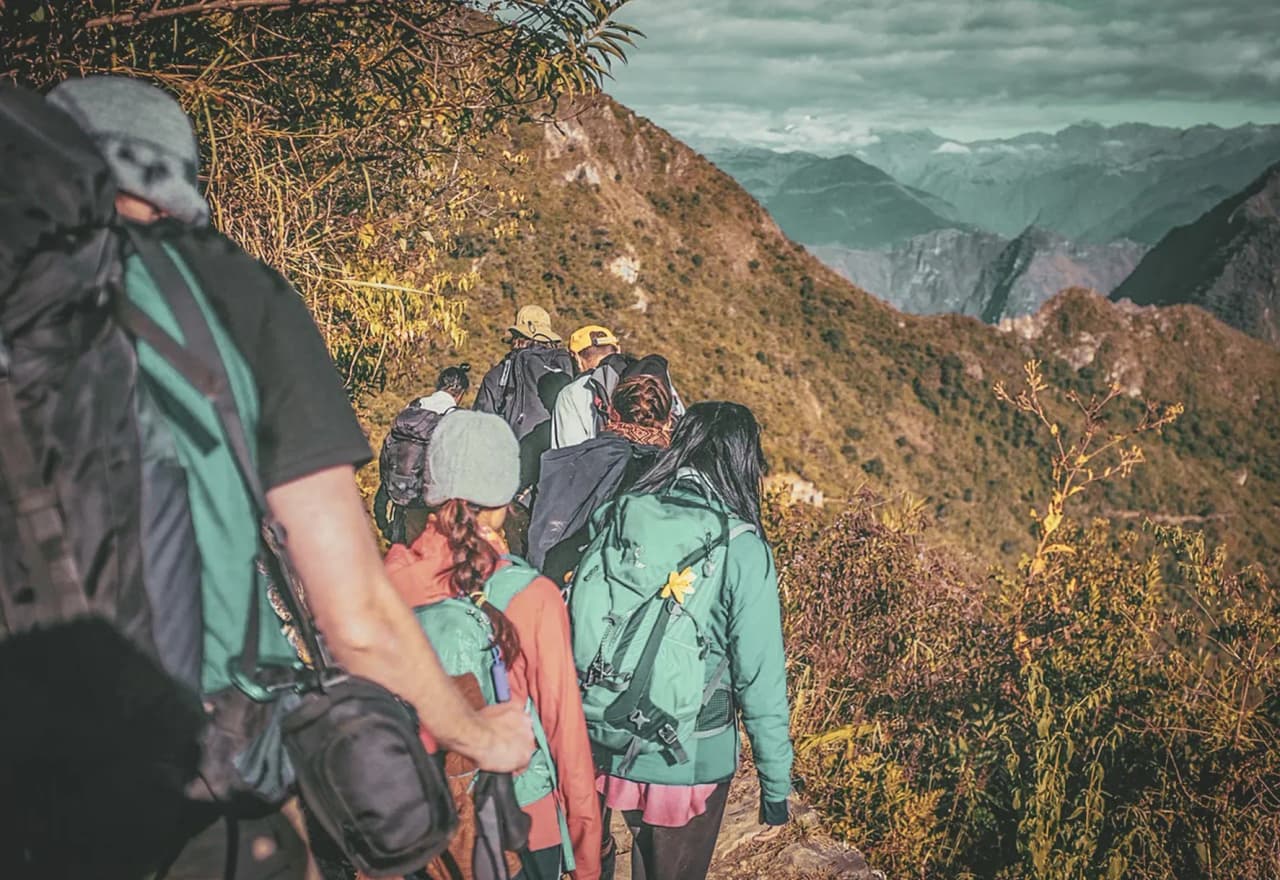
Tour du Queyras in 5 days: how to prepare your legs for the GR58
An 8-week plan for the GR58: hut nights at 2580 m, an optional summit at 3025 m, and legs ready for the descent into the wild Bouchouse valley.
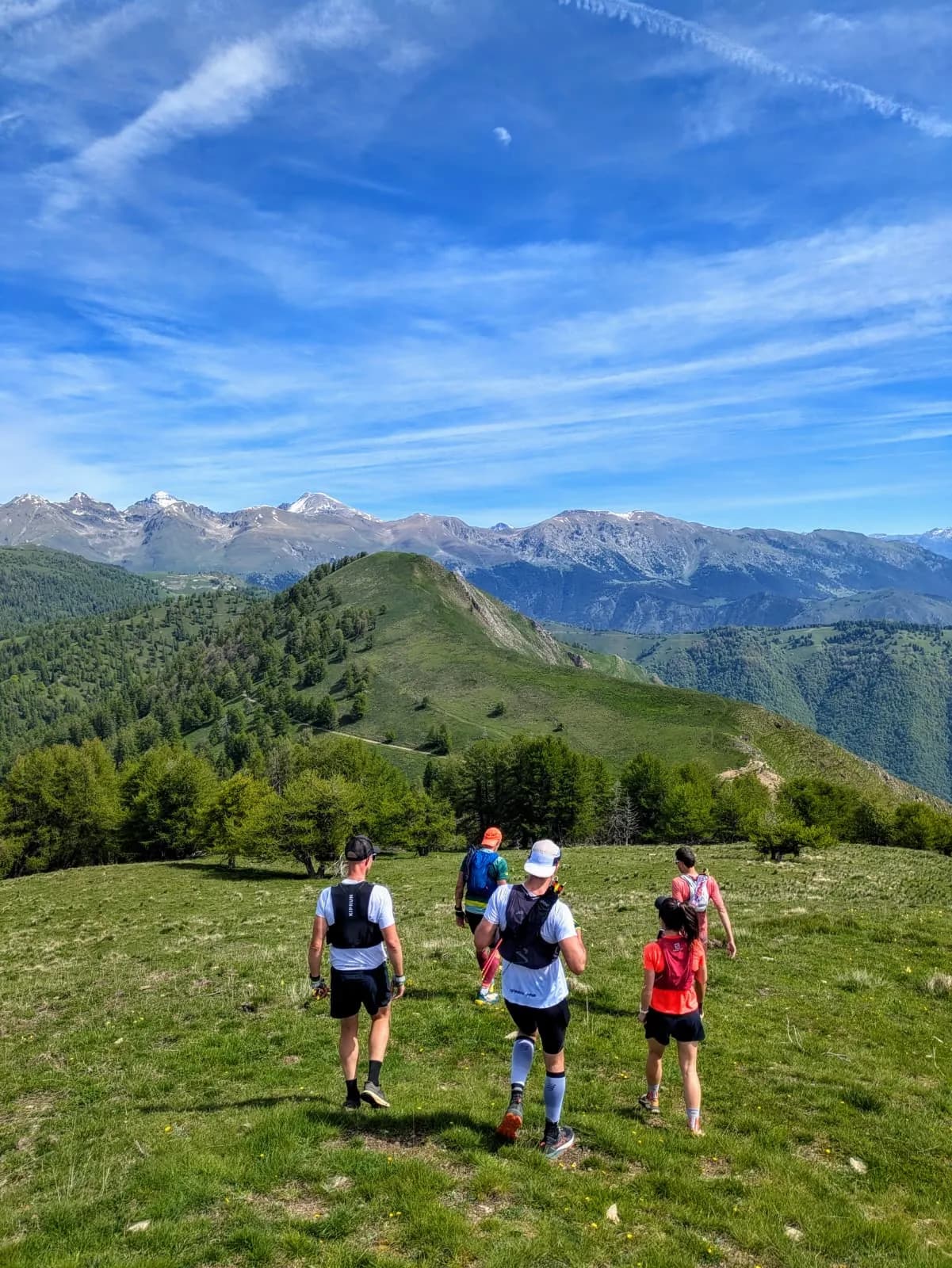
Mountain Trail-Running Camps in France: How to Choose
Compare mountain trail-running camps by destination, level and goals to choose a format that fits your running.
Trail running camps with mountain huts and guesthouses
Explore trail running camps in the Vosges, Chamonix, the Pyrenees, Chartreuse and the Jura, 3 to 4 days with nights in huts or guesthouses.
